
Executive Overview
To the average commuter navigating a bustling airport terminal, grabbing a quick bite in a packed restaurant, or weaving through a dense shopping center, the modern world can feel overwhelmingly chaotic. Sirens blare, crowds surge, luggage wheels clatter against tile floors, and a symphony of unfamiliar noises reverberates through the air. For individuals with disabilities, moving independently through these high-sensory environments once presented monumental, sometimes insurmountable, barriers. Today, however, thousands of individuals traverse these spaces with confidence and autonomy, anchored by a silent, focused, and impeccably behaved partner: the working service dog.
The preternatural calm exhibited by these canine companions in public spaces is neither accidental nor innate. It is the culmination of years of meticulous breeding, early developmental socialization, and thousands of hours of advanced professional conditioning. At the heart of this transformation is public access training—a specialized curriculum that prepares service dogs to accompany handlers into everyday public accommodations while remaining entirely focused, non-reactive, and disciplined.
Unlike emotional support animals, whose primary value stems from companionship, or pet dogs trained merely in basic household obedience, service dogs are legally defined under the Americans with Disabilities Act (ADA) as animals individually trained to perform specific tasks directly related to a person’s disability. Public access training bridges the gap between these task-specific capabilities and the unpredictable realities of the outside world. This in-depth report explores the anatomy of service dog public access training, the unique challenges of high-stimulus environments, the psychology of distraction-proofing, and the vital community ecosystem that transforms ordinary puppies into extraordinary, life-changing working partners.
Detailed Chronology: The Lifecycle of a Service Dog in Training
The path from a curious, playful puppy to a fully certified service dog is a carefully sequenced journey spanning roughly 18 to 24 months. Understanding this timeline reveals the deliberate, tiered approach organizations take to ensure long-term success.
Phase 1: Early Infancy and Foundation (Months 0–2)
The journey begins well before formal training commences, rooted in selective breeding programs that prioritize health, temperament, and genetic resilience—qualities heavily prevalent in breeds like Labrador Retrievers and Golden Retrievers. During their first two months of life, puppies are raised in controlled nursery environments where they are introduced to gentle tactile stimulation, varied surfaces, and basic human handling designed to foster early confidence and emotional stability.
Phase 2: Puppy Raising and Generalization (Months 2–12)
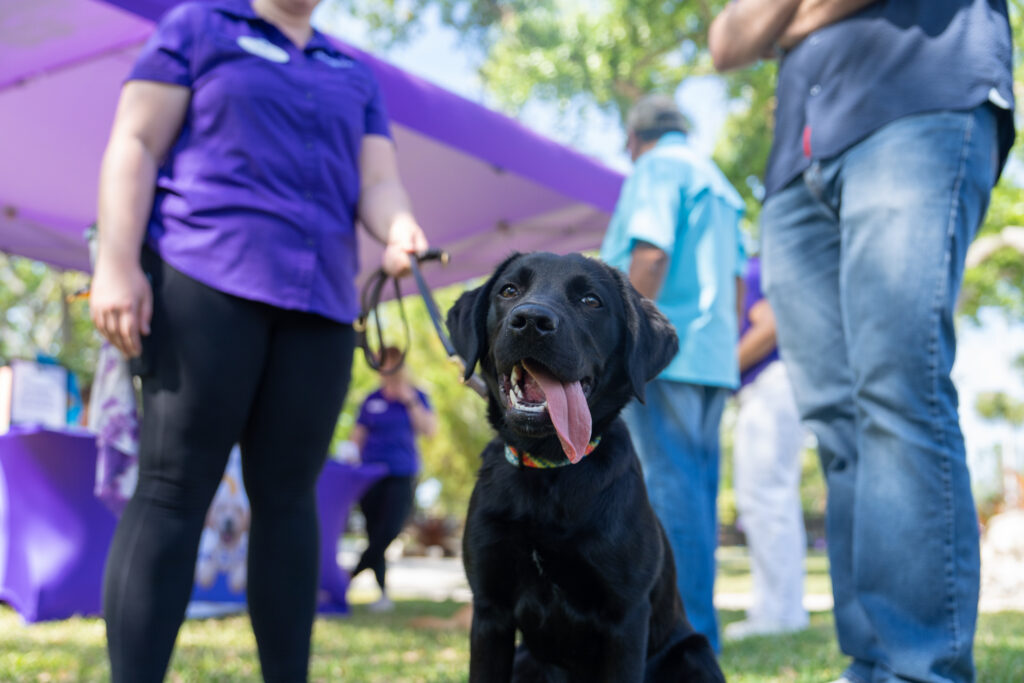
At approximately eight weeks of age, puppies transition to volunteer "puppy raisers." This critical developmental window is defined by socialization and environmental exposure. Raisers introduce the young dogs to a vast array of sights, sounds, and textures:
- Riding in cars, buses, and elevators.
- Walking across metal grates, slick tile floors, and uneven gravel paths.
- Encountering diverse groups of people, including children, individuals using wheelchairs, and people wearing hats or carrying umbrellas.
During this phase, puppies learn fundamental house manners and basic obedience, building a baseline of adaptability that will support all future training.
Phase 3: Advanced Task and Public Access Training (Months 12–18)
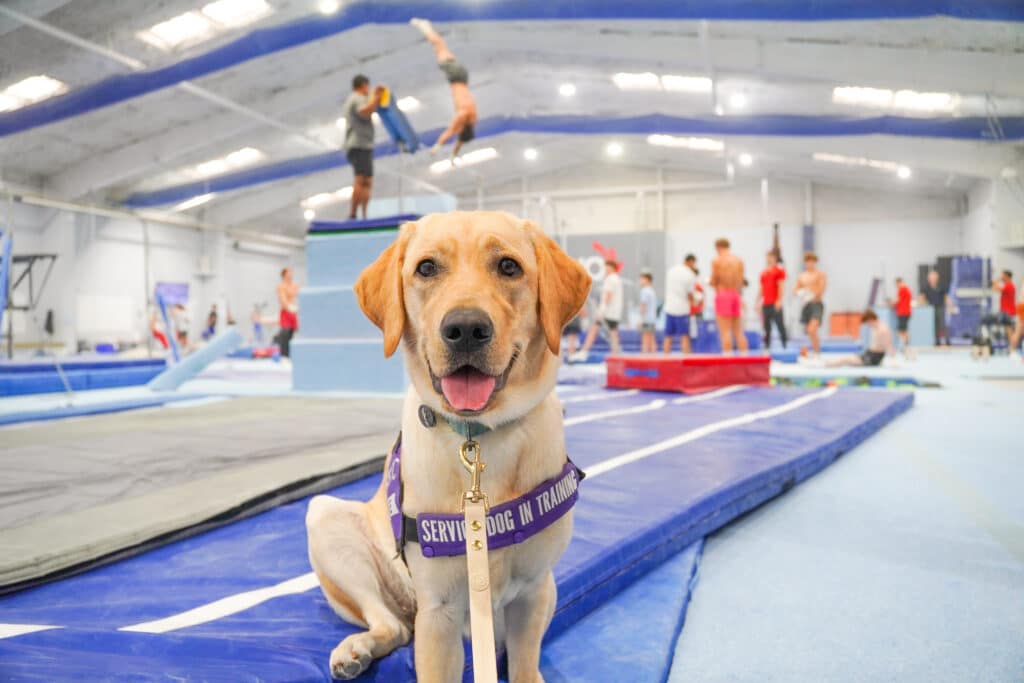
Once the puppy returns to a professional training facility, the focus shifts to advanced skill acquisition. Trainers layer specific mitigation tasks—such as mobility support, medical alert, or deep pressure therapy for Post-Traumatic Stress Disorder (PTSD)—on top of rigorous public access drills. Dogs begin transitioning from quiet suburban settings to high-stimulus urban environments, learning how to behave in commercial retail spaces, public transit hubs, and corporate offices.
Phase 4: Final Evaluation and Placement (Months 18–24+)
Before graduation, every candidate undergoes comprehensive evaluations. Professional instructors test the dog’s impulse control, reliability under extreme distraction, and public decorum. Once certified, the dog is matched with a handler during an intensive team training camp, ensuring a seamless transition into a lifelong working partnership.
Supporting Context & Metrics: The Science of Public Access
To fully appreciate public access training, one must understand the distinct pedagogical philosophies that differentiate it from standard obedience training.
Behavior vs. Task: The Core Distinction
The ADA makes a critical legal distinction: a service animal must be trained to perform tasks (e.g., retrieving dropped items, opening doors, interrupting panic attacks, or guiding individuals with visual impairments). However, possessing a task skill does not grant public access rights. A dog that performs a medical alert but barks at strangers, lunges at food carts, or demonstrates fear aggression in a crowd fails to meet legal and ethical standards for public access.
Public access training focuses entirely on behavioral regulation. It instills three core competencies:
- Impartiality: The dog must remain completely indifferent to members of the public, other animals, and environmental interruptions.
- Spatial Awareness: The dog must maintain a heel position or designated settle area without obstructing pathways or interfering with other patrons.
- Stress Resilience: The dog must process unexpected stimuli (such as a sudden loud noise or a dropped object) without panicking or shutting down.
Navigating High-Stir Environments: Airports, Restaurants, and Crowds
Certain environments present unique challenges that require targeted training modules:
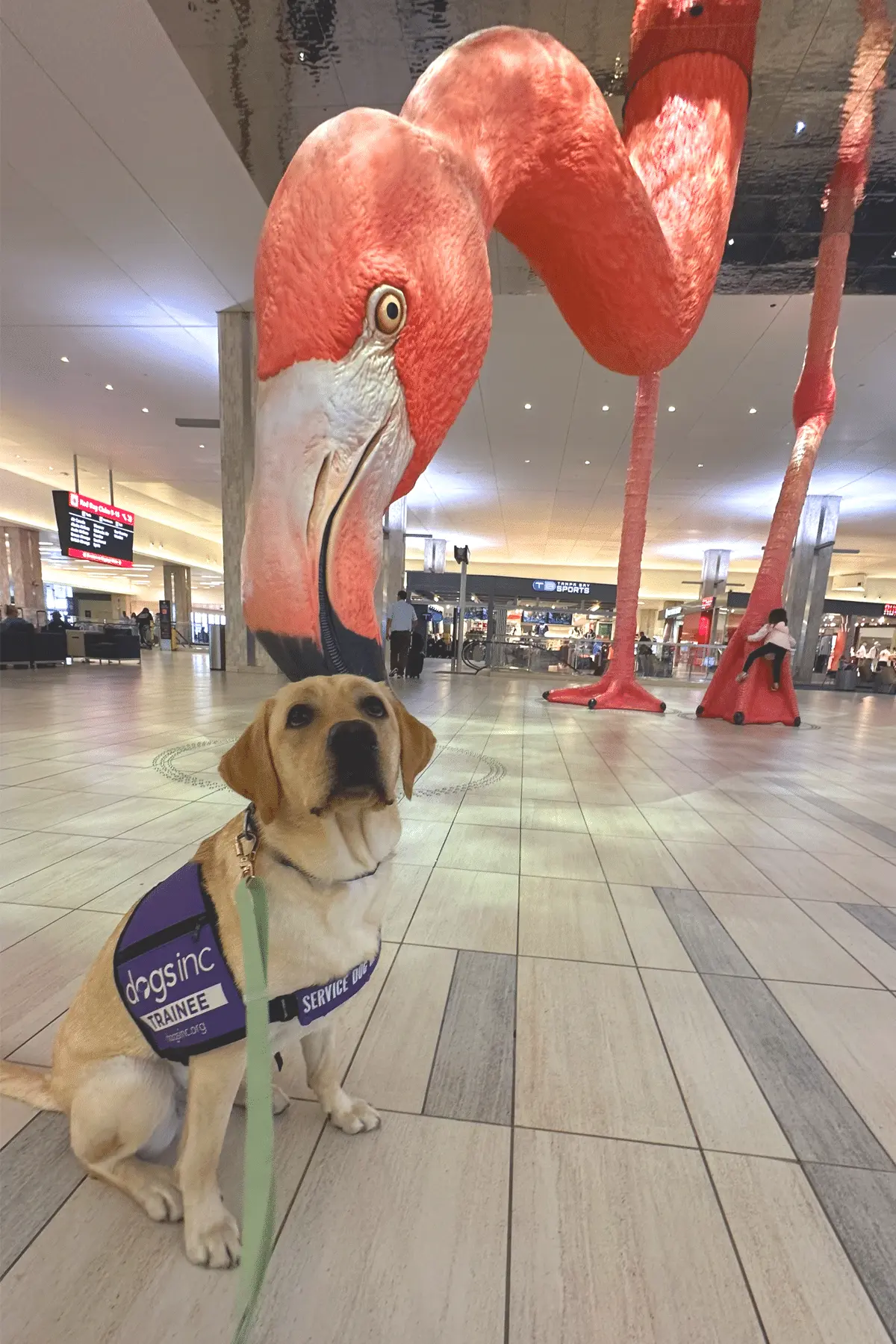
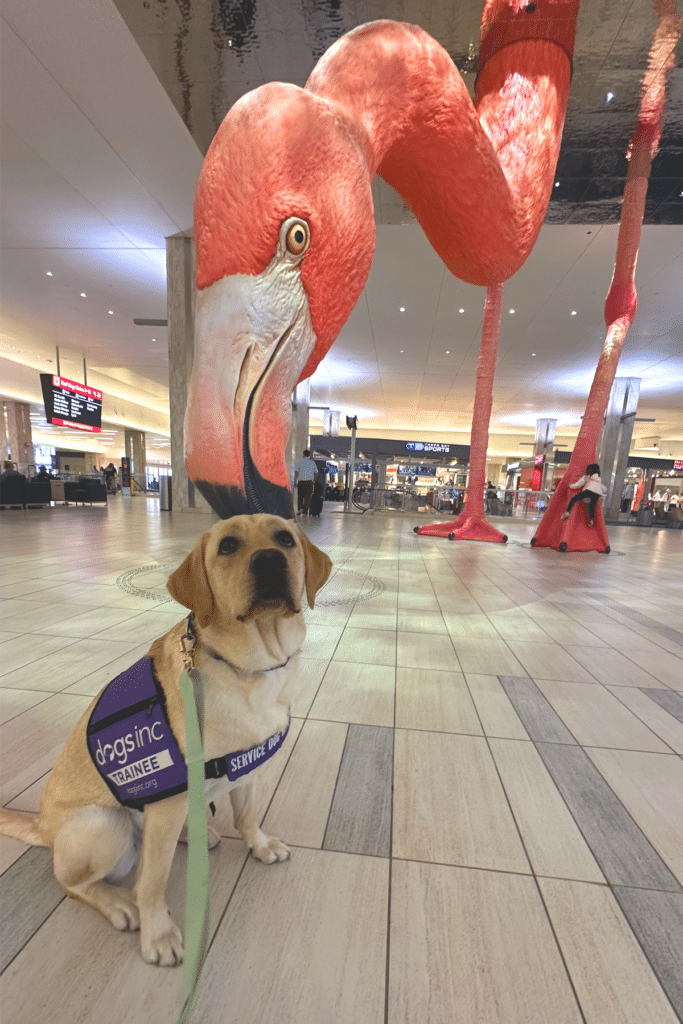
- Airports: Service dog airport training exposes candidates to rolling luggage, security checkpoints, metal detectors, moving walkways, and echoing overhead announcements. Dogs learn to navigate tight terminal queues and sit calmly during extended gate waits, treating air travel as routine.
- Restaurants: Restaurant training introduces complex olfactory and spatial challenges. Surrounded by the rich aromas of food, dropped crumbs, and cramped table clearances, dogs are taught the "under-table settle." They must lie quietly for the duration of a meal, ignoring food temptations and human traffic.
- Crowded Public Spaces: Festivals, shopping malls, and transit hubs test canine crowd tolerance. Dogs encounter running children, shopping carts, and unpredictable animal interactions, learning to maintain absolute focus amidst sensory overload.
The Mechanism of Distraction-Proofing
Distraction training is progressive and systematic. Instructors utilize positive reinforcement to reward dogs for maintaining attention despite escalating temptations. A trainer might begin in a quiet room with a single toy, gradually progressing to a busy sidewalk with food items, bicycles, and other dogs moving past. Through consistency and high-value rewards, the dog develops impulse control, learning that attending to the handler is always more rewarding than engaging with environmental distractions.
Official Statements & Industry Perspectives
Industry leaders emphasize that the success of a service dog is deeply intertwined with community education, animal welfare, and rigorous evaluation standards.
Dr. Elena Vance, Director of Canine Research and Training at a prominent national service organization, underscores the philosophy of positive reinforcement:
"Confidence cannot be forced upon a dog through intimidation or correction. True working confidence is cultivated. By exposing puppies and young dogs to novel environments incrementally and pairing those experiences with positive reinforcement, we foster natural curiosity. We want a dog that looks at a noisy, crowded terminal not with fear, but with calm, quiet resilience."
Furthermore, legal compliance experts stress the importance of maintaining high standards to protect the integrity of the service dog community. Marcus Holloway, an advocate for disability rights and public accommodation compliance, notes:
"The ADA provides vital access rights that transform lives, but those rights depend entirely on public trust. When an improperly trained dog enters a restaurant or grocery store, it undermines public confidence and creates safety hazards for legitimate working teams. Public access training is the shield that protects both the handler’s independence and the public’s well-being."
Trainers also highlight the unsung heroes of the process: the puppy raisers. Without their dedication to early socialization and community exposure, advanced trainers would lack the foundational canvas necessary to build reliable working dogs.
Future Outlook: The Evolution of Service Animal Partnerships
As urban centers grow denser, air travel becomes more complex, and awareness of invisible disabilities—such as PTSD, autism, and severe neurological conditions—expands, the demand for highly trained service dogs continues to rise. The future of service dog training is poised to leverage several evolving trends:
- Data-Driven Behavioral Analytics: Organizations are increasingly utilizing behavioral tracking metrics during the puppy-raising phase to predict which candidates are best suited for high-stress environments like airports versus quieter working roles.
- Enhanced Public Education Campaigns: As misinformation regarding emotional support animals and service dogs persists, training organizations are investing heavily in public awareness initiatives to educate business owners and patrons on service dog laws and etiquette.
- Innovative Socialization Venues: Training pipelines are expanding to include virtual reality exposure for sound desensitization and partnerships with specialized commercial facilities to simulate emerging public environments like automated retail hubs and high-speed transit networks.
Ultimately, public access training is about far more than obedience—it is about forging an unbreakable alliance of trust. When a handler steps onto a crowded subway platform or checks into a bustling hotel lobby accompanied by their service dog, they are supported by years of expert design, compassionate training, and community dedication. The result is a profound liberation: a life defined not by the barriers of a disability, but by the boundless freedom of independence.