
Executive Overview
For decades, the prevailing narrative of wildlife conservation has operated on a reassuringly simple equation: animals taken from the wild by the illegal trade belong back in the wild. Rescue, rehabilitate, release. To the general public, the moment a confiscated creature steps out of a transport crate and into the embrace of a forest canopy is the ultimate victory—a heartwarming conclusion to a tragic story of human exploitation.
However, a landmark scientific study published in the journal Global Ecology and Conservation shatters this comforting illusion. Spearheaded by renowned primatologist Professor Anna Nekaris OBE of Anglia Ruskin University, alongside collaborators from the conservation group Plumploris e.V. and the University of Western Australia, the research reveals a sobering truth: for certain vulnerable species, well-intentioned release programs can transform the natural world into a fatal arena. In some instances, the wild becomes a "death trap."
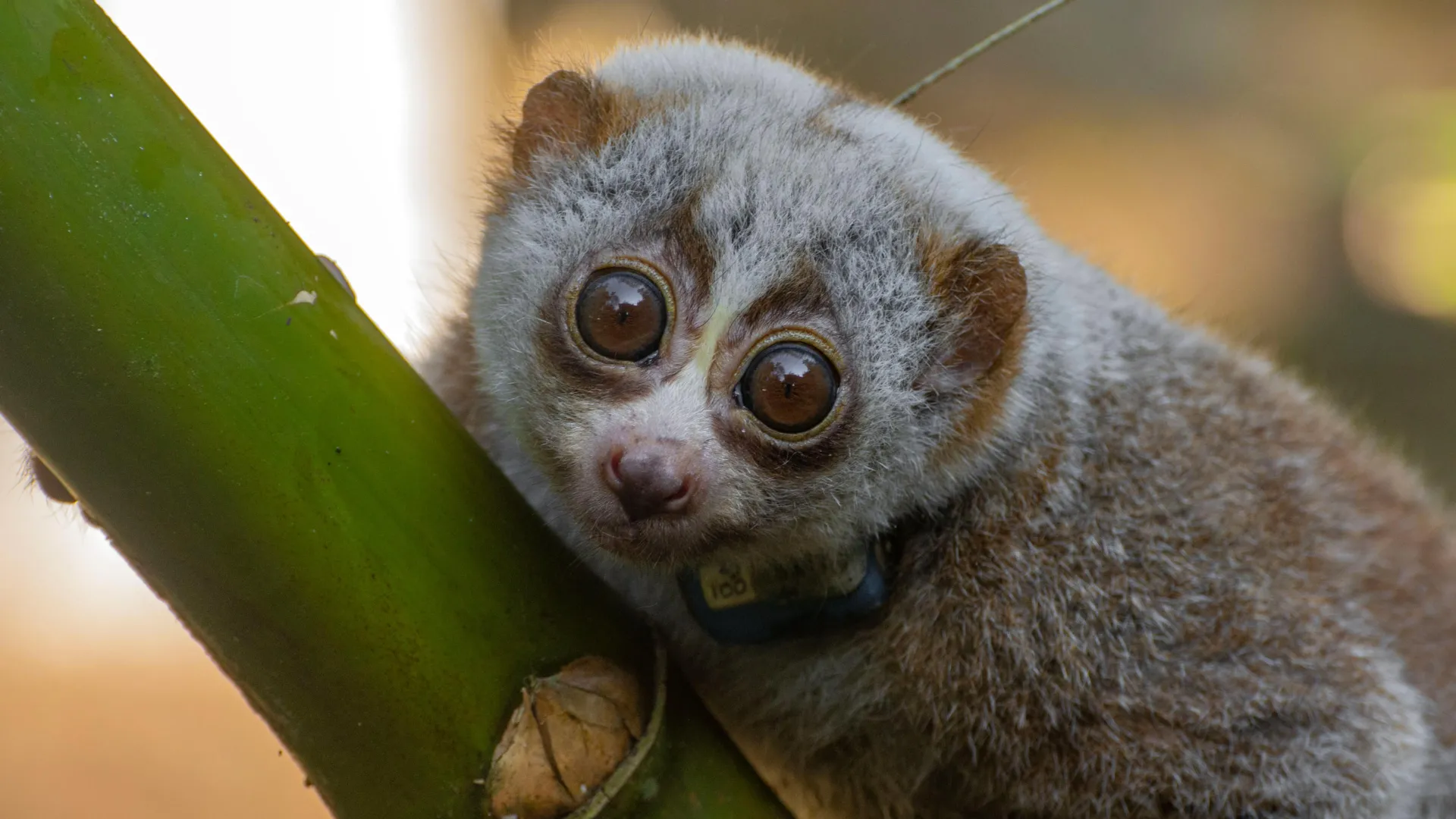
Focusing on the Bengal slow loris (Nycticebus bengalensis), an endangered primate native to South and Southeast Asia, the international research team tracked the post-release fates of individuals returned to a national park in northeastern Bangladesh. The findings were not just disappointing; they were catastrophic. Out of nine radio-collared lorises released into a protected habitat, an astonishing seven perished within months. Compounding the tragedy, forensic evidence recovered from the carcasses revealed that these animals were not victims of starvation, disease, or traditional predators, but rather of brutal, territorial turf wars waged by members of their own species.
This groundbreaking study forces the global conservation community to confront an uncomfortable reality. While high-profile species like big cats, elephants, and rhinos are often subjected to rigorous, multi-year post-release monitoring protocols, smaller, less charismatic animals—such as slow lorises, pangolins, and various reptiles—are frequently returned to the wild with little to no follow-up. Driven by public pressure, space constraints in rescue centers, and logistical expediency, conservationists and authorities often treat release sites as convenient dumping grounds.
The consequences of this practice are profound. As human encroachment shrinks global forests, remaining wildlife habitats are frequently packed to maximum carrying capacity. Releasing captive, traumatized animals into these densely populated ecosystems without accounting for territorial dynamics, social hierarchies, or individual psychological profiles is not conservation—it is a sentence to a violent death. As the scientific community digests these findings, the pressure is mounting to overhaul global wildlife rescue, rehabilitation, and reintroduction frameworks before well-meaning efforts continue to do more harm than good.
Detailed Chronology: Tracking the Bengal Slow Lorises
To understand how a routine conservation release turned into a survival nightmare, researchers had to closely monitor the day-to-day realities of reintroduced Bengal slow lorises. The project, conducted in a prominent national park in northeastern Bangladesh—a site frequently utilized for previous government and NGO wildlife releases—marked one of the most intensive investigations into the post-release behavior of small, arboreal primates.
The Setup and the Subjects
The research team selected nine Bengal slow lorises that had been confiscated from the illegal pet trade and rehabilitated. Before their return to the wild, each animal was fitted with a specialized radio collar, allowing researchers to track their precise movements, ranging patterns, and survival status on a daily basis.
Slow lorises are notoriously difficult to study in dense forest canopies under the cover of darkness due to their nocturnal habits and stealthy movements. The radio telemetry data, however, provided an unfiltered, real-time window into their final weeks.
The Grim Timeline of Survival
The results of the tracking initiative were stark and immediate:
- Days 1 through 10: The initial period following release is widely recognized as the most critical vulnerability window for captive-bred or rehabilitated wildlife. The data confirmed this fear with devastating speed. Within just 10 days of being introduced to the national park, three of the nine slow lorises were dead.
- Months 1 through 6: Over the subsequent weeks and months, the attrition continued. Four more animals succumbed to their environment. By the conclusion of the monitoring period, a staggering 77.8% of the cohort—seven out of the nine lorises—had perished.
- The Survivors: Only two of the nine individuals managed to navigate the treacherous landscape and survive the monitoring period.
Forensic Findings: Death by Confinement and Conflict
Of the seven animals that died, researchers successfully recovered four of the carcasses for post-mortem examinations. The physical evidence told a horrifying story of violent encounters. Every single recovered body bore severe, unmistakable bite wounds concentrated on the head, face, and digits.
These injuries are the classic signature of slow loris aggression. Unlike many other primates that settle disputes through vocalizations or ritualized displays, slow lorises engage in physical combat. Worse still, they possess a biological weapon unique among primates: a brachial gland gland on the inner arm that, when mixed with saliva, produces a potent, flesh-rotting toxin. They deliver this venom via specialized, comb-like lower teeth.
The physical trauma observed on the recovered carcasses indicated that the released lorises had run afoul of resident animals defending their established territories. Rather than integrating peacefully into a welcoming social fabric, the newcomers were treated as hostile invaders and systematically attacked by resident conspecifics protecting their home ranges.
Supporting Context & Metrics: The Plight of the Slow Loris
To fully grasp the tragedy unfolding in the forests of Bangladesh, one must understand the precarious status of the slow loris and the relentless commercial pressures driving them into captivity.
Victims of the Illegal Pet Trade
Slow lorises are undeniably charismatic. With their huge, soulful eyes, diminutive stature, and slow, deliberate movements, they possess neotenic facial features that trigger powerful human nurturing instincts. Unfortunately, this evolutionary adaptation has proved to be their undoing.
Over the past two decades, the rise of social media has fueled an explosive global demand for slow lorises as exotic pets. Viral videos showing tickled lorises raising their arms in apparent enjoyment—which is actually a defensive posture indicating extreme fear and the release of venom—have normalized the illegal trade of these wild animals.
To supply this market, poachers scour the forests of South and Southeast Asia, frequently using bright lights to freeze the nocturnal animals before snatching them from the trees. To make them "safe" for the pet trade, traders routinely clip or yank out the animals’ venomous teeth with wire cutters without anesthesia—a barbaric practice that leads to severe hemorrhaging, systemic infections, and agonizing slow deaths for a large percentage of captives before they even reach a buyer.
Endangered Status and the Rescue Paradox
Recognizing the severity of the threat, the International Union for Conservation of Nature (IUCN) lists all slow loris species as Critically Endangered, Endangered, or Vulnerable. National and international laws, including CITES (the Convention on International Trade in Endangered Species), strictly prohibit their capture, sale, and transport.
When law enforcement agencies raid illegal wildlife markets or intercept smugglers, they are frequently left with dozens of traumatized, malnourished, and injured slow lorises. Local wildlife departments and rescue centers are overwhelmed. With limited funding, inadequate infrastructure, and a constant influx of new victims, sanctuaries face severe capacity constraints.
This creates immense pressure to "free" animals as quickly as possible. The public—and often the governing bodies funding rescue operations—demands visible proof of conservation success. Consequently, the release of rescued wildlife is viewed as a mandatory happy ending, masking the grim ecological realities of what happens after the camera crews leave.
Behavioral Anomalies in Captivity
The study in Global Ecology and Conservation illuminated several critical factors that predict whether a released loris will live or die:
- The Duration of Captivity: The research revealed a direct negative correlation between the time spent in captivity and post-release survival rates. Animals that had endured longer stints in cages tended to survive for fewer days in the wild. Prolonged captivity erodes natural foraging instincts, reduces physical stamina, and alters behavioral baselines.
- Hyper-Activity and Hyper-Vigilance: Released lorises displayed abnormal behavioral patterns compared to their wild counterparts. They moved around significantly more and appeared hyper-alert. This erratic pacing and increased movement likely advertised their presence to resident animals, drawing unwanted attention and triggering territorial aggression.
- The Survival Strategy of the Survivors: Interestingly, the only two animals that survived the study period were those that traveled across markedly larger geographic areas than their peers. Researchers deduced that survival hinged on an animal’s ability to navigate away from densely populated core areas, actively evading established territories and minimizing lethal confrontations with resident lorises.
Official Statements and Expert Perspectives
The findings of this study have sent ripples through the international conservation community, prompting leading experts to call for an immediate re-evaluation of current rescue and reintroduction protocols.
Professor Anna Nekaris OBE: Challenging the "Feel-Good" Conservation Narrative
Professor Anna Nekaris, senior author of the study, Professor of Ecology, Conservation and Environment at Anglia Ruskin University, and head of the pioneering Little Fireface Project, pulls no punches when discussing the flaws in current release paradigms.
"It’s assumed that returning confiscated or rescued animals to the wild is always a positive conservation story," Professor Nekaris noted. "Our research shows that for highly territorial species like slow lorises, releasing them into areas that are already densely populated can be a death trap."
She emphasizes that public expectations must not dictate scientific conservation strategy.
"Many rescued endangered species are often released because the public expects it, but for animals such as the Bengal slow loris, this is not always the best course of action. Without fully understanding the animal’s behavior, its time spent in captivity, and the density of resident populations at the release site, reintroductions may do more harm than good."
Hassan Al-Razi: The Perils of "Logistical Convenience"
Hassan Al-Razi, lead author of the study and team leader of Plumploris e.V. Bangladesh, highlighted the systemic operational failures that plague wildlife rescue efforts on the ground, particularly in developing nations grappling with high volumes of wildlife trafficking.
"Rescue and release have become an increasingly common practice in Bangladesh. Many wild animals, including slow lorises, are rescued and subsequently released back into the wild," Al-Razi explained.
However, he warns that the execution of these programs is frequently compromised by a lack of resources and ecological planning.
"In many cases, these releases are conducted inappropriately. For forest-dwelling species, release sites are often selected based on logistical convenience rather than ecological suitability. As a result, certain forests have effectively become dumping grounds for rescued animals and are no longer appropriate release sites."
Al-Razi and his co-authors emphasize that while their research specifically examined the Bengal slow loris, the underlying mechanisms—such as saturation of habitat, territorial aggression, and the consequences of inappropriate release site selection—likely threaten numerous other territorial, forest-dwelling species worldwide.
Future Outlook: Re-Engineering Wildlife Conservation Protocols
The revelation that well-intentioned conservation actions can inadvertently sentence endangered animals to violent deaths does not mean that wildlife rescue should be abandoned. Rather, it signals that the field must mature beyond emotional impulses and adopt rigorous, science-based protocols.
To prevent release sites from remaining "death traps," conservationists, government agencies, and international NGOs must implement a comprehensive reform agenda:
1. Rigorous Habitat Carrying-Capacity Assessments
Before any animal is cleared for release, comprehensive ecological surveys must be conducted to determine the population density of resident species in the target area. Releasing territorial animals into saturated habitats is a recipe for warfare. If suitable, unoccupied, or low-density habitats cannot be identified, authorities must consider long-term sanctuary care as a humane alternative to a doomed release.
2. Species-Specific Rehabilitation Guidelines
A "one-size-fits-all" approach to wildlife rehabilitation is obsolete. Protocols must be tailored to the specific behavioral, social, and ecological needs of each species. For cryptic, venomous, and highly territorial primates like slow lorises, rehabilitation must focus on minimizing human habituation, rebuilding physical conditioning, and potentially employing soft-release methods that allow animals to acclimate to a new environment gradually.
3. Mandatory Post-Release Monitoring
The practice of "release and forget" must end. Funding models for rescue operations must incorporate adequate budgets for post-release monitoring—utilizing radio telemetry, GPS tracking, and camera traps—to track animal survival and welfare. Without accountability and follow-up data, conservationists operate in the dark, repeating mistakes at the expense of endangered lives.
4. Public Education and Policy Reform
Conservation organizations must invest in public education to shift societal perceptions. The narrative must evolve from celebrating the instant, emotional gratification of a cage door opening to understanding the complex, long-term scientific requirements of true conservation success. Governments must also enact stricter legislation regulating wildlife rescue centers, ensuring they adhere to high standards of animal welfare and ecological science rather than bowing to public pressure for quick fixes.
Conclusion
The plight of the Bengal slow loris serves as a sobering reminder that nature is governed by laws far more complex than human desires. When we return an animal to the wild without understanding the brutal social politics of the forest canopy, we do not grant it freedom; we expose it to a slow, agonizing struggle against rivals who view it as an unwelcome intruder. By listening to the science, respecting ecological carrying capacities, and transforming rescue protocols from reactive gestures into proactive science, the conservation community can ensure that returning to the wild truly means a second chance at life, rather than a sentence to a forest death trap.