
Executive Overview
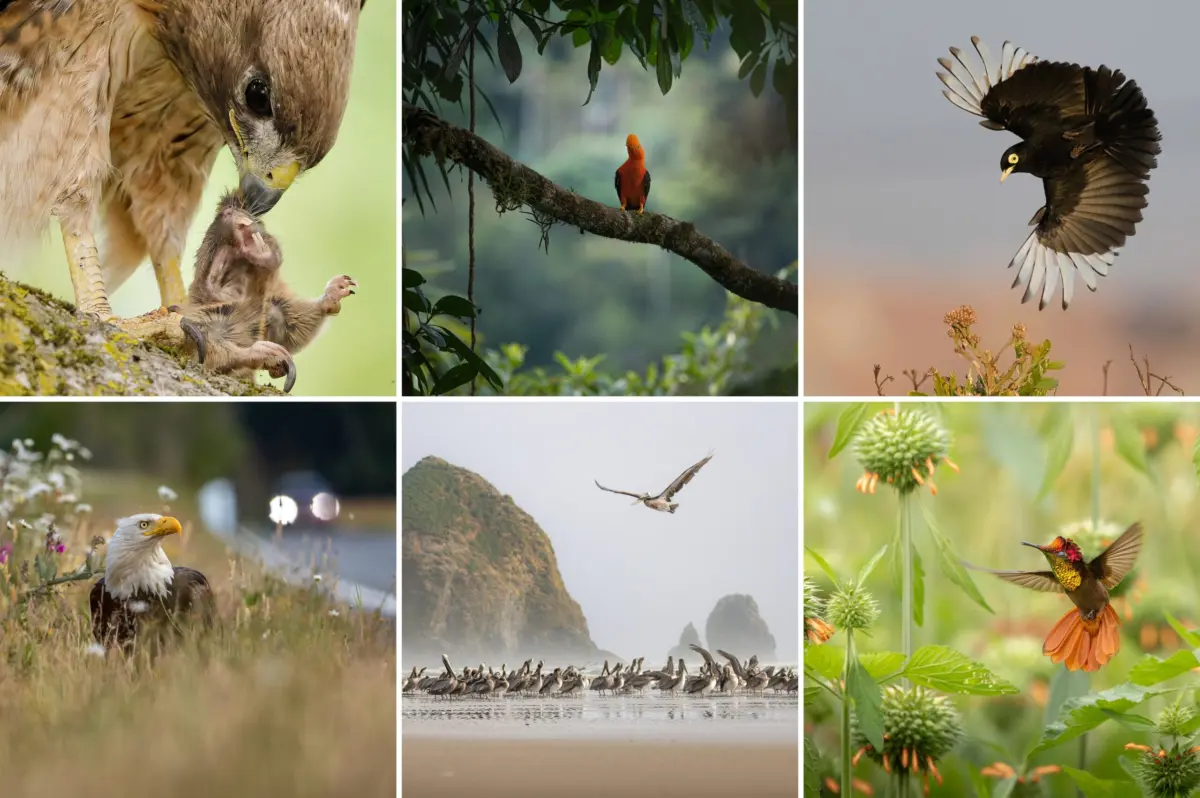
The intersection of wildlife conservation, technological mastery, and raw artistry has once again yielded breathtaking results. Following the initial reveal of the 2026 Audubon Photography Awards winners and finalists, the esteemed organization has released its collection of honorable mention images and videos. Culled from thousands of anonymous submissions across the United States, Canada, Chile, and Colombia, these visual entries offer an intimate glimpse into the avian world that is as scientifically revealing as it is visually arresting.
Reviewed by expert judging panels, the selected works span multiple categories—including Coastal Birds, Plants for Birds, Birds Without Borders, Birds in Landscapes, Youth, and Video. Beyond celebrating technical mastery under challenging field conditions, this year’s honorable mentions serve as vital visual dispatches from the front lines of global conservation. They document the precarious balance between fragile ecosystems and expanding human footprints, highlighting the resilience of species ranging from the high-altitude Andean Cock-of-the-rock to the coastal Red-legged Cormorant of South America.
This comprehensive report examines the stories behind the shots, the ecological significance of the featured species, and the broader environmental narratives championed by the competition’s judges.
Detailed Chronology and Behind-the-Lens Accounts
To fully appreciate the artistry of wildlife photography, one must examine the profound patience, endurance, and fieldcraft required to freeze fleeting moments in time. The 2026 honorable mention entries are characterized by extraordinary efforts by photographers who spent months, and sometimes years, tracking their subjects.
Coastal Dynamics and South American Horizons
In Pilolcura, Los Ríos, Chile, photographer Marcelo Cárcamo Vera successfully realized a long-held ambition. Having frequently visited the region to capture the elusive Red-legged Cormorant (Phalacrocorax gaimardi), Vera sought a composition framed by a natural rock arch during sunset. On a particularly luminous evening, after multiple failed attempts, he captured the bird with wings fully spread and head tilted upward, illuminated by light filtering through rolling Pacific waves.
Further north along the Chilean coast, in the Elqui River Wetlands of Coquimbo, Rubén Barraza experienced a similar breakthrough. Armed with a tripod and boundless patience, Barraza spent hours waiting to capture the territorial and courtship flight of the male Spectacled Tyrant (Hymenops perspicillatus). His final image freezes the bird at the apex of a 360-degree aerial flip, capturing anatomical symmetry and structural wing feathers that harness rushing air to produce a characteristic buzzy whistle.
Meanwhile, at Playa de Llolleo in Valparaíso, Chile, Rodrigo Vega documented an intimate chapter of avian survival. Volunteering with the Ojos del Mar Foundation to protect vulnerable nesting sites from stray dogs and vehicular traffic, Vega monitored three American Oystercatcher (Haematopus palliatus) chicks. His featured image focuses on "Alita" (Little Wing), navigating an environment cluttered with metal scraps and fishing debris—a poignant testament to shoreline resilience despite anthropogenic pollution.
Intimate Encounters in North America
In the United States and Canada, photographers captured equally compelling narratives of movement and predation. At Oregon’s iconic Cannon Beach, Erich Podbielski commemorated his wedding anniversary by tracking squadrons of Brown Pelicans (Pelecanus occidentalis) as they converged on a freshwater creek. Positioned at eye-level near Haystack Rock, Podbielski captured a solitary pelican joining a preening flock against a backdrop of soft fog—an image that speaks to the shared use of coastal zones by humans and wildlife.
In Cupertino, California, young photographer Parham Pourahmad captured a raw, unfiltered moment of nature. Spotting a Red-tailed Hawk (Buteo jamaicensis) carrying a gopher, Pourahmad tracked the raptor to an exposed oak tree branch. Waiting for the "decisive moment," he framed the hawk lifting the rodent’s head, creating a striking composition that emphasizes the emotional intensity of predation.
On the opposite coast, in Tampa, Florida, Peter Brannon secured a rare daylight sighting of a Common Nighthawk (Chordeiles minor). Known primarily as elusive, cryptic shadows at dusk, this female nighthawk banked toward Brannon’s 800mm lens, touching down on a natural snag and clearly displaying the smaller white wing patch critical for species identification.
Supporting Context and Metrics: Ecology and Conservation Status
The aesthetic brilliance of these photographs is underpinned by rigorous ornithological science. Each featured species occupies a specific ecological niche, often serving as an indicator of broader environmental health within its respective biome.
+---------------------------+-----------------------------------+-----------------------------------+
| Species                   | Primary Habitat                   | Current Conservation Status       |
+---------------------------+-----------------------------------+-----------------------------------+
| Red-legged Cormorant      | Cold nearshore Pacific waters     | Near Threatened                   |
| Golden-rumped Euphonia    | Andean forests and edge habitats  | Least Concern (Regional Pressures)|
| Brown Pelican             | Marine coasts and estuaries       | Least Concern (Recovered)         |
| Spectacled Parrotlet      | Lowland forests and woodland edges| Least Concern                     |
| Bald Eagle                | Aquatic ecosystems and shorelines | Least Concern (Conservation Win)  |
+---------------------------+-----------------------------------+-----------------------------------+
Marine and Coastal Dependencies
The Red-legged Cormorant relies heavily on the cool, nutrient-rich waters of the Humboldt Current along the Pacific coast of South America. However, due to localized habitat degradation and human disturbance, populations have experienced serious declines, placing the species on the Near Threatened list. Similarly, Brandt’s Cormorants (Urile penicillatus) along the California coast depend on marine vegetation like surfgrass to construct their nests, tethering the success of terrestrial reproduction directly to the ecological health of nearshore marine ecosystems.
Andean Biodiversity and Plant Interactions
In the lush landscapes of Caldas, Colombia, the Golden-rumped Euphonia (Euphonia cyanocephala) demonstrates a vital symbiotic relationship with local flora. Once misclassified as tanagers and now recognized as close relatives of finches, euphonias feed extensively on mistletoe berries—parasitic plants that form the cornerstone of their diet. By utilizing dried mosses, lichens, and plant fibers for nest construction in epiphyte-laden trees, these birds reinforce the intricate web of forest life.
In the Andean foothills of Caquetá, Colombia, Cristian Camilo Castaño Vargas documented the high-stakes courtship rituals of the Andean Cock-of-the-rock (Rupicola peruvianus). Gathering at forest leks, males engage in complex displays of bows, leaps, and vocalizations to impress visiting females. Despite the pressures of deforestation for coffee plantations and pastures, these leks remain critical focal points for localized conservation awareness.
Official Statements from Expert Judging Panels
The selection process for the Audubon Photography Awards relies on diverse panels of conservationists, professional photographers, and ornithologists who evaluate entries based on technical execution, originality, and narrative depth.
- Sebastian Herzog, reflecting on Marcelo Cárcamo Vera’s image of the Red-legged Cormorant, noted: "The rocky arch frames the sun-drenched waves at sunset, while a solitary cormorant spreads its wings, about to land. Light and composition dance in this unique scene."
- Sabine Meyer, evaluating Parham Pourahmad’s youthful capture of a Red-tailed Hawk with its prey, remarked: "Predation is part of nature’s order, but I was impressed that this young photographer did not shy away from this deadly encounter and worked on recording this ‘decisive moment.’ We are compelled to stare at the gopher’s expression, despite the horror it captures."
- Katherine Sanhueza, commenting on Rodrigo Vega’s documentation of the American Oystercatcher amid coastal debris, emphasized: "This image captures the immense resilience of a tiny oystercatcher. In the warm light of sunset, the tiny chick bravely makes its way through the trash left behind by humans, reminding us that even amid pollution and a fragile environment, life finds a way to flourish."
- Maddy Rifka, analyzing Xiao Hu’s video footage of a Barred Owl preening its young, observed: "The Barred Owl is a species written into different stories across North America—belonging in one place, contested in another. Yet here, all of that falls away. What remains is life’s intimate, knowable act of care: A mother tends to her chick with a quiet certainty that outlasts the noise of opinion."
Future Outlook: Photography as a Catalyst for Conservation
As human development, climate change, and habitat fragmentation continue to alter global landscapes, the role of wildlife photography has evolved beyond mere aesthetic documentation. Imagery from platforms like the Audubon Photography Awards acts as a powerful bridge between the scientific community and the general public, translating complex ecological data into visceral emotional connections.
The honorable mention entries underscore the reality that birds do not recognize political borders or urban boundaries. From Bald Eagles scavenging alongside busy Washington roadways to Brandt’s Cormorants gathering surfgrass from industrialized Pacific coastlines, avian species are forced to adapt to human-dominated ecosystems.
Conservationists emphasize that safeguarding these species requires sustained grassroots engagement, such as the environmental education programs in Alto del Zarzo or habitat monitoring initiatives at Playa de Llolleo. By fostering a deeper appreciation for both charismatic raptors and overlooked shorebirds, these photographs inspire the stewardship necessary to protect fragile habitats across the Americas.
Avian enthusiasts and photography patrons are encouraged to watch for the official release of the judges’ Top 100 photos from the 2026 awards, scheduled for publication on September 23.