
Executive Overview
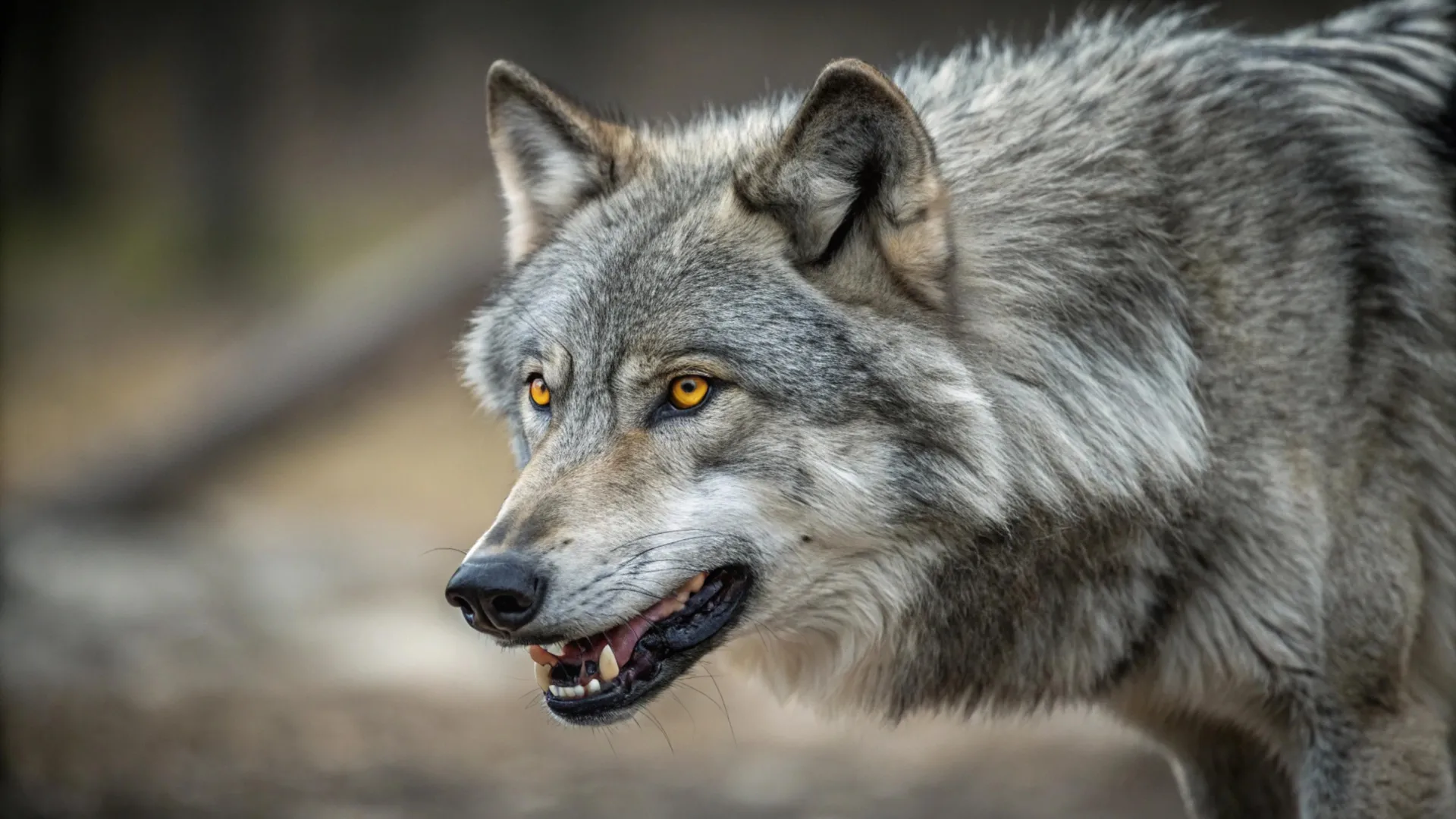
In the rugged, remote wilderness of Prince of Wales Island, Alaska, a profound ecological shift is quietly unfolding along the shoreline. Gray wolves (Canis lupus), traditionally understood as apex terrestrial hunters of deer, elk, and moose, are taking to the cold Pacific waters to hunt an unexpected and formidable prey: sea otters.
This behavioral pivot is more than just a local wildlife curiosity; it represents a rare, cross-boundary interaction between marine and terrestrial food webs. While Indigenous knowledge holders and local observers have noted occasional aquatic predation for over two decades, the scientific community is only now beginning to systematically examine the mechanics, ecological implications, and physiological consequences of this behavior.
At the forefront of this investigation is Patrick Bailey, a Ph.D. candidate in the Department of Natural Resources Science at the University of Rhode Island. Working within Sarah Kienle’s CEAL Lab, Bailey is spearheading a multi-faceted research initiative to decode how these coastal gray wolves navigate the marine environment, how their dietary shifts compare to inland populations, and what this predator-prey dynamic means for the recovering sea otter population. Utilizing cutting-edge trail camera arrays, stable-isotope tooth chemistry, and historical museum specimens, Bailey’s research bridges the gap between land and ocean ecosystems.
However, this marine diet comes with hidden, high-stakes trade-offs. Recent collaborative findings reveal that feeding on marine mammals exposes these wolves to staggering concentrations of methylmercury—up to 278 times higher than those found in their inland counterparts. As Bailey and his collaborators continue their exhaustive fieldwork, their findings promise to reshape our understanding of ecological connectivity, apex predator adaptability, and the cascading impacts of ecosystem recovery.
Detailed Chronology: Uncovering the Marine Wolf Phenomenon
Recognizing the Shift
For generations, the standard ecological paradigm placed a strict boundary between terrestrial and marine predators. While coastal wolves in Alaska were known to occasionally scavenge marine mammal carcasses washed ashore or snap up intertidal fish and invertebrates, actively hunting a dynamic marine mammal like the sea otter was largely unrecorded in formal scientific literature until relatively recently.
Though anecdotal and official reports of wolves pursuing aquatic prey have surfaced over the past 20 years, the precise behavioral mechanisms have remained shrouded in mystery. How do land-evolved canids manage to outmaneuver agile swimmers in the surf? What triggers an entire population to expand its ecological niche into the ocean? These are the foundational questions that drove Bailey to Prince of Wales Island, establishing a rigorous scientific framework to document what had previously been dismissed as isolated anomalies.
Establishing the Field Site and Local Collaboration
Launching a comprehensive ecological study in the dense, temperate rainforests of Southeast Alaska is a monumental undertaking. The landscape is notoriously rugged, rural, and difficult to traverse, compounded by the intelligence, warping elusiveness, and vast home ranges of gray wolves.
To overcome these barriers, Bailey forged vital partnerships with regional experts, most notably Alaska Department of Fish and Game wildlife biologist Gretchen Roffler and local research technician Michael Kampnich.
"I cannot emphasize enough how much these two have helped me," Bailey notes, acknowledging that the project would be functionally impossible without their regional insights. Kampnich, with decades of experience on Prince of Wales Island, has served as an invaluable guide to the island’s unique micro-ecologies and treacherous terrain. This collaboration highlights a critical ethos in modern wildlife biology: blending cutting-edge academic methodology with the profound, generational perspective of local researchers and residents who understand the pulse of the landscape.
Deploying Modern Technology in the Wild
Historically, documenting elusive predatory events in remote marine-terrestrial ecotones was severely limited by technology. Earlier video footage of coastal wolf hunts lacked the optical clarity, framing, and temporal resolution required to analyze fine-scale behavioral strategies.
To pierce this veil of uncertainty, Bailey deployed an extensive network of high-resolution trail cameras across strategic coastal zones of Prince of Wales Island. Positioned carefully to monitor key intertidal bottlenecks and otter haul-out areas, these cameras have been systematically capturing the hidden lives of the island’s wolves.
The data processing pipeline is equally immense. Since December of the previous year, this camera network has generated a staggering backlog of more than 250,000 images. To parse through this digital mountain of evidence, Bailey trained a specialized team of seven University of Rhode Island undergraduate students. Tasked with meticulously reviewing these hundreds of thousands of frames, the student team is hunting for the elusive visual proof that details exactly how wolves capture sea otters in the turbulent Pacific surf.
Supporting Context & Metrics: Science at the Intersection of Land and Sea
Linking Terrestrial and Aquatic Food Webs
To grasp the significance of Bailey’s research, one must understand the traditional role of the gray wolf. Across North America, wolves are classic "apex regulators." By hunting large ungulates, they trigger cascading effects—often called trophic cascades—that shape vegetation structure, river morphology, and the populations of secondary predators.
Bailey suspects that a similar, yet poorly understood, cascade connects aquatic and terrestrial systems. "We don’t have a clear understanding of the connections between water and land food webs, but we suspect that they are much more prevalent than previously understood," Bailey explains. "Since wolves can alter land ecosystems so dramatically, it is possible that we will see similar patterns in aquatic habitats."
Stable-Isotope Analysis: Reading Teeth Like Tree Rings
Pinpointing historical dietary shifts across generations of wolves requires looking backward in time. To achieve this, Bailey employs sophisticated stable-isotope techniques on gray wolf teeth sourced from both museum archives and recently deceased specimens.
Teeth are remarkable biological archives. Much like the rings of a tree, dental tissues grow in incremental layers over the life of an animal, locking in chemical signatures derived from the food they consume.
"If large enough, we can individually sample each of these growth rings to track an individual’s feeding patterns over time," Bailey details. By isolating carbon and nitrogen isotopes within these sequential layers, researchers can reconstruct an animal’s diet across seasons and years. "When we gather enough samples across individuals, we can then analyze how prevalent these dietary trends are throughout a population."
This geochemical detective work intersects directly with the history of the Pacific Coast ecosystem. Sea otters, currently classified as an endangered species in many regions, were hunted to near-extinction during the aggressive maritime fur trades of the 18th and 19th centuries. As conservation efforts and legal protections allow sea otter populations to slowly rebound, modern wolves are encountering a marine resource that was largely absent for generations of their ancestors. Bailey’s dental analysis aims to determine whether this predator-prey interface is an entirely new evolutionary adaptation or the revival of an ancient, forgotten ecological relationship.
Morphological Comparisons and Geographic Expansion
While the immediate ecological theater is set in Southeast Alaska, Bailey’s investigative scope extends across the continent. In a separate chapter of his dissertation, he is expanding his geographic aperture to include historical populations from the eastern seaboard of North America.
Utilizing skull specimens provided by the Harvard Museum of Comparative Zoology, Bailey is analyzing morphological differences in cranial structure. He aims to uncover whether wolves that habitually exploit coastal and marine resources exhibit distinct physical adaptations—such as differences in jaw strength, skull breadth, or tooth wear patterns—when compared strictly to inland, ungulate-specialist populations. This comparative morphology will help evolutionary biologists understand how phenotypic plasticity allows a single species to thrive across radically divergent ecosystems.
Official Statements and Expert Insights
The convergence of marine biology, toxicology, and terrestrial mammalogy has drawn commentary from leading researchers directing the initiative:
- On Behavioral Adaptations: Dr. Sarah Kienle, head of the CEAL Lab at the University of Rhode Island, emphasizes the immense evolutionary gap between terrestrial and marine hunting. "Capturing and eating prey in the marine environment is very different from doing it on land," Kienle observes. "We are super curious to see if these coastal wolves have behavioral adaptations that are different from terrestrial wolves."
- On the Mechanics of Predation: Patrick Bailey underscores the novelty of documenting the actual hunt. "Although there have been official reports of wolves eating aquatic prey for more than 20 years, many details remain unknown. What hasn’t been explored, and what I am really interested in documenting, is how exactly wolves are able to capture sea otters."
- On Local Expertise: Acknowledging the indispensable nature of regional collaboration, Bailey reiterates the guidance provided by his field partners. "Working with locals is so important because they have decades of experience and perspective that we as outside researchers simply do not have. This project would not be possible without their input and guidance."
- On Toxicological Hazards: Discussing the hidden dangers of the marine food web, Bailey highlights the physiological fallout of top-down marine predation. "Methylmercury accumulation can cause a suite of problems related to reproduction, body condition, and behavioral abnormalities."
The Hidden Cost: Mercury Risks Move Up the Food Chain
While the behavioral marvel of wolves hunting sea otters captures the scientific imagination, it introduces a severe and potentially dangerous physiological consequence: environmental toxicity.
Recent findings by project collaborator Gretchen Roffler point to a troubling ecological reality. Sea otters, operating as high-level consumers in the nearshore marine environment, act as bioaccumulators, absorbing and concentrating heavy metals from their prey base of crabs, urchins, and bivalves. Chief among these toxins is methylmercury, a highly bioaccumulative and toxic organic compound of mercury.
When gray wolves incorporate sea otters as a staple of their diet, they step directly into this bioaccumulation pathway. Toxicology analyses of liver samples retrieved from coastal gray wolves reveal an alarming reality: their mercury concentrations are up to 278 times higher than those measured in inland wolf populations that subsist entirely on terrestrial game.
This massive physiological load exposes the coastal canids to profound health hazards. Chronic exposure to high levels of methylmercury is well-documented in mammalian physiology to induce neurological damage, compromise immune function, diminish reproductive success, alter body condition, and trigger severe behavioral abnormalities. As Bailey and his colleagues continue to monitor these populations, the question remains whether this marine foraging strategy represents an evolutionary trap—where a calorie-rich novel food source simultaneously degrades the long-term health and viability of the predator population.
Future Outlook
The research unfolding on Prince of Wales Island represents a pioneering chapter in mammalian ecology, forcing textbooks to reconsider the rigid boundaries separating terrestrial carnivores from marine ecosystems. By marrying historical museum collections with modern stable-isotope chemistry, artificial intelligence-assisted image sorting, and grassroots local collaboration, Patrick Bailey and his team are establishing a comprehensive baseline for understanding how apex predators adapt to changing coastal landscapes.
As data collection continues and is projected to span several more years, the immediate horizon holds a return to the field. Bailey plans to head back to Prince of Wales Island next summer to expand his trail camera monitoring, gather fresh biological samples, and continue piecing together the precise tactics wolves use to hunt in the surf.
Ultimately, this research transcends the biology of a single island or a single predator-prey dyad. It serves as a vital case study in ecological resilience, predator adaptability, and the unseen ripple effects of marine species recovery in an era of rapid environmental change. Whether these maritime wolves will successfully navigate the evolutionary opportunities—and the toxicological perils—of the Pacific coastline will depend on biological dynamics that researchers are only just beginning to bring to light.