
Executive Overview
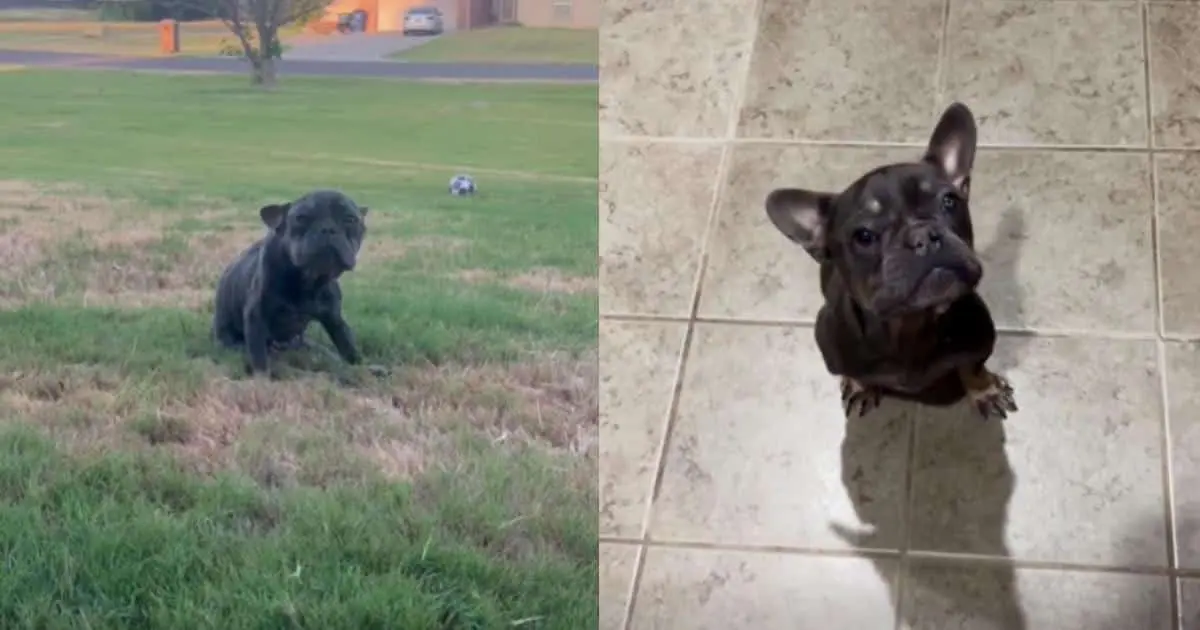
In the realm of animal rescue, certain cases transcend the ordinary boundaries of veterinary medicine, standing as stark testaments to both the depths of human depravity and the profound resilience of the canine spirit. The case of "Mango," a young French Bulldog rescued in Oklahoma, represents one of the most egregious examples of multi-layered animal abuse documented in recent regional history.
Found in a state of extreme emaciation, weighing a mere 12 pounds—less than half the healthy weight of an adult female of her breed—Mango was the victim of a coordinated sequence of violence. Investigative details indicate she was subjected to two close-range gunshot wounds to the head, suffered severe facial fractures, and was subsequently ejected from a moving vehicle.
Despite this catastrophic combination of starvation, blunt force trauma, and ballistic injury, Mango achieved a milestone that has stunned the veterinary community: within 48 hours of her admission to a specialized rescue facility, she stood up and walked.
Currently under the highly specialized custody of Angel Fund OKC, a non-profit organization dedicated to providing emergency medical funding and advocacy for abused and neglected animals in Oklahoma, Mango’s survival remains highly precarious. While her initial mobility offers a beacon of hope, she faces a multi-phase, month-long clinical rehabilitation process.
This investigative report dissects the chronology of Mango’s rescue, the complex veterinary science behind her ongoing treatment, the systemic challenges facing brachycephalic breeds in neglect cases, and the clinical roadmap designed to reconstruct her shattered body.
Detailed Chronology: From Roadside Abandonment to Emergency Triage
[Trauma Event] -> [Roadside Rescue] -> [Triage at Angel Fund OKC] -> [48-Hour Milestone]
  * Gunshot Wounds  * Witness Report     * Starvation Protocol        * Proprioceptive Walking
  * Vehicle Ejection * 12-lb Emaciation   * Fracture Diagnostics       * Neurological Spark
The timeline of Mango’s rescue and early recovery reveals a rapid sequence of life-saving interventions and surprising physiological milestones.
The Trauma Event and Roadside Discovery
The sequence of events began on a rural stretch of road in Oklahoma. According to eyewitness accounts, a vehicle slowed down briefly to discard a small bundle onto the roadside. Upon closer inspection, witnesses discovered the motionless, skeletal body of a French Bulldog. Local animal welfare advocates were immediately dispatched, transporting the dog to emergency veterinary partners affiliated with Angel Fund OKC.
Triage and Diagnostic Revelations
Upon arrival at the clinical facility, Mango was immediately assessed as a critical triage patient. The primary physical findings were severe cachexia (muscle wasting) and profound dehydration. However, as clinicians began clearing dirt and dried blood from her coat, the true extent of her trauma emerged:
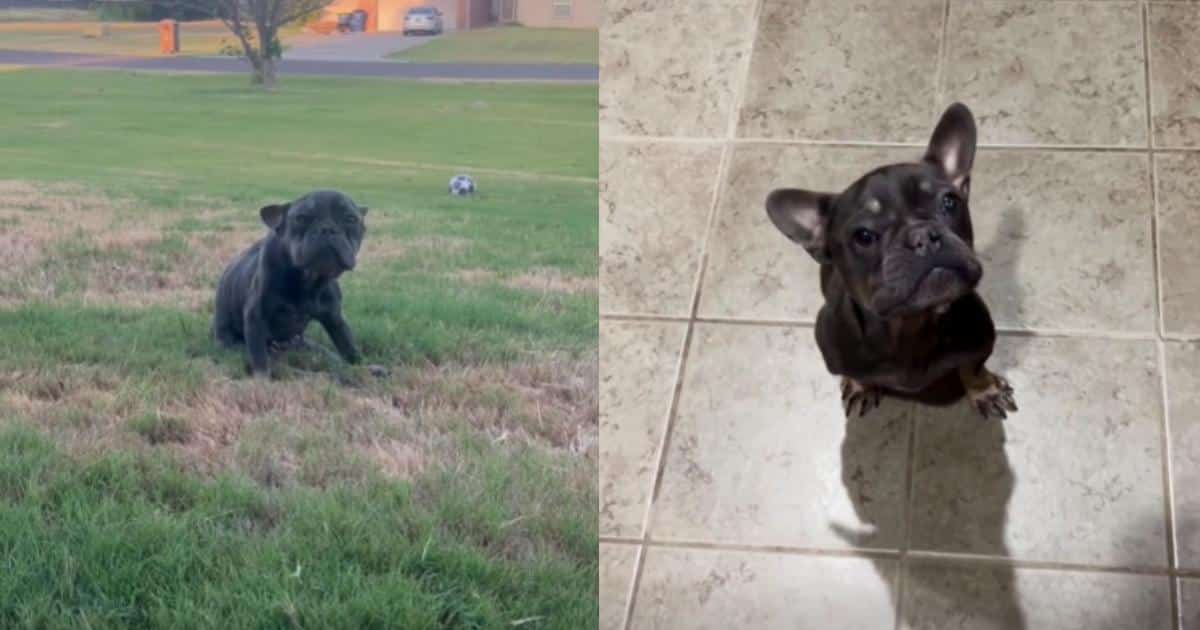
- Ballistic Trauma: Caregivers identified two distinct entry wounds consistent with small-caliber gunshot strikes to her cranium.
- Radiographic Analysis: X-rays confirmed multiple comminuted fractures involving her skull, her orbital socket (eye socket), and her mandible (jaw).
- Soft Tissue Injury: A deep, weeping wound beneath her jaw was identified, continuously discharging a mixture of blood and clear fluid, suggesting a ruptured salivary duct or a direct fistulous tract communicating with her oral cavity.
The 48-Hour Miracle
Given the severity of her skull fractures and the muscle atrophy resulting from prolonged starvation, veterinary neurologists expected Mango to remain recumbent for days, if not weeks. The lack of skeletal muscle mass meant she had virtually no structural support to hold her own frame.
Yet, on her second day of hospitalization, driven by an extraordinary neurological spark, Mango successfully coordinated her limbs, pushed her 12-pound body off the intensive care bedding, and took several deliberate, albeit unsteadily balanced, steps.
Supporting Context & Medical Metrics: The Science of Recovery
To understand the complexity of Mango’s clinical management, one must look at the physiological hurdles her veterinary team must navigate. Her recovery cannot be rushed; doing so could prove fatal.
+---------------------------------------------------------------------------------+
|                         MANGO'S CLINICAL CHALLENGES                             |
+---------------------------------------------------------------------------------+
|  1. Refeeding Syndrome Risk  --> Requires slow, calculated caloric introduction |
|  2. Muscle Atrophy           --> Managed via Neuromuscular Stimulation (NMES)   |
|  3. Open Salivary Fistula    --> Requires eventual surgical reconstruction     |
|  4. Craniofacial Fractures   --> Deferred until anesthetic risk decreases      |
+---------------------------------------------------------------------------------+
The Refeeding Dilemma: Rebuilding from Deprivation
The most immediate threat to Mango’s life is not her fractures, but the biological reality of her starvation. When an animal is starved for an extended period, its metabolism shifts into a catabolic state, relying on the breakdown of internal fat and muscle to maintain basic cellular function.
If such an animal is fed too rapidly, a phenomenon known as Refeeding Syndrome can occur.
$$Refeeding implies uparrow Insulin implies textRapid Intracellular Shift of P, K, Mg implies textCardiac & Respiratory Failure$$
This sudden shift can cause severe hypophosphatemia, leading to hemolytic anemia, muscle weakness, diaphragmatic paralysis, cardiac arrhythmias, and death. Consequently, Mango’s caloric intake must be calculated with extreme precision, utilizing highly digestible, elemental nutrition introduced in micro-meals throughout the day, while her serum electrolyte levels are continuously monitored.
Neurological and Musculoskeletal Rehabilitation
To combat her profound muscle wasting, clinicians are planning a multi-faceted physical rehabilitation program.
- Neuromuscular Electrical Stimulation (NMES): This modality uses low-level electrical currents to stimulate specific muscle groups, forcing them to contract. NMES prevents further muscle atrophy and helps rebuild mass in patients too weak to perform active exercise.
- Proprioceptive Retraining: Proprioception is the brain’s awareness of where the limbs are in space. Due to her head trauma and weakness, Mango struggle with "knuckling" (folding her paws under when walking). Therapists use tactile stimulation, such as walking her over uneven surfaces and manually correcting her paw placement, to re-establish these neural pathways.
- Hydrotherapy (Water Therapy): Once her open wounds have healed and her skin barrier is secure, Mango will transition to an underwater treadmill. The buoyancy of water reduces the weight-bearing load on her fractured joints while providing gentle resistance to build strength.
| Therapy Modality | Primary Target | Clinical Objective |
|---|---|---|
| NMES | Skeletal Muscle Groups | Combat disuse atrophy; stimulate protein synthesis |
| Proprioceptive Drills | Central Nervous System | Correct paw placement; restore spatial awareness |
| Hydrotherapy | Cardiovascular & Muscular | Low-impact resistance training; joint mobilization |
The Surgical Roadblock: Anesthetic Risk Management
Mango’s facial injuries, including her fractured jaw and the leaking submandibular wound, require surgical intervention. However, the veterinary team has placed a strict hold on any procedures requiring general anesthesia.
Starved animals suffer from severe hypoalbuminemia (low blood protein levels), which severely affects how anesthetic drugs are bound and metabolized in the body. Furthermore, her compromised cardiovascular system and the physical stress of her head trauma make the risk of anesthetic-induced hypotension or cardiac arrest unacceptably high.
Surgeons must wait until her blood chemistry panels stabilize, her red blood cell count normalizes, and she gains sufficient body fat to safely process anesthetic agents.
Official Statements & Investigative Perspectives
The case of Mango has sparked intense discussion among animal welfare advocates, law enforcement, and veterinary professionals regarding the rise in violence against specific domestic breeds.
Representatives from Angel Fund OKC released a statement highlighting the critical nature of community support in handling high-level abuse cases:
"Mango’s case is a painful reminder of the cruelty some animals are forced to endure, but her response to treatment is also a beautiful demonstration of their will to live. Our primary focus right now is slow, steady stabilization. We cannot rush her body’s healing process. Every step she takes is a victory, but we are preparing for a long, resource-intensive journey to get her to the point where she can undergo reconstructive surgery."
Veterinary behaviorists and forensic investigators note that French Bulldogs have increasingly become targets of theft, extreme neglect, and physical abuse due to their high market value and subsequent exploitation by unauthorized backyard breeders.
When these dogs develop congenital health issues common to the breed—or when breeders find themselves facing legal or financial trouble—the animals are frequently abandoned or subjected to horrific acts of violence to dispose of them.
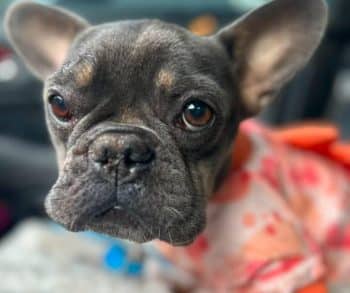
Local law enforcement agencies in Oklahoma continue to request any information from the public regarding the vehicle involved in Mango’s roadside abandonment, urging witnesses to come forward to help identify the perpetrators of this felony-level animal cruelty.
Future Outlook: The Long Road to Rehabilitation and Rehoming
Mango’s recovery is measured not in days, but in months. Her clinical pathway is divided into three distinct phases, each requiring careful veterinary management.
Phase 1: Stabilization (Weeks 1-4)
  ├── Controlled caloric ramp-up
  ├── Electrolyte monitoring
  └── Wound management & infection control

Phase 2: Reconstruction (Months 2-3)
  ├── Advanced CT scanning of skull and jaw
  ├── Surgical repair of facial fractures
  └── Closure of salivary fistula

Phase 3: Rehoming & Integration (Months 4+)
  ├── Psychological rehabilitation
  ├── Foster placement
  └── Final adoption to a specialized home
Phase 1: Stabilization and Nutritional Rehabilitation (Weeks 1–4)
The immediate goal is to safely transition Mango out of the high-risk window for refeeding syndrome, establish a positive caloric balance, and allow her initial bone fractures to begin the early stages of fibrous union. During this phase, she will remain under close clinical observation, receiving physical therapy to improve her mobility and strength.
Phase 2: Reconstructive Surgery (Months 2–3)
Once Mango’s systemic health has stabilized and she has reached a safer weight, she will undergo high-resolution computed tomography (CT) scanning of her skull and jaw. This will provide surgeons with a three-dimensional map of her fractures, allowing them to plan the placement of orthopedic plates or external fixation devices to stabilize her jaw. During this surgery, specialists will also explore the submandibular wound, identify the damaged salivary tissue, and perform a sialoadenectomy (removal of the damaged gland) or duct ligation to resolve the fluid leak.
Phase 3: Psychological Healing and Rehoming (Months 4 and Beyond)
The physical wounds are only part of the equation. Surviving gunshot wounds, severe starvation, and physical ejection from a vehicle leaves lasting psychological scars. Once she is physically healed, Mango will require intensive behavioral therapy in a quiet, structured foster home to help her overcome trauma, build trust in humans, and learn to navigate the world without fear.
The journey ahead for Mango is long, complex, and costly. Yet, by standing up and walking when her body suggested it should be impossible, this resilient 12-pound French Bulldog has made her intentions clear: she is not giving up, and the team of veterinary professionals and advocates standing beside her is committed to fighting for her every step of the way.