
Executive Overview
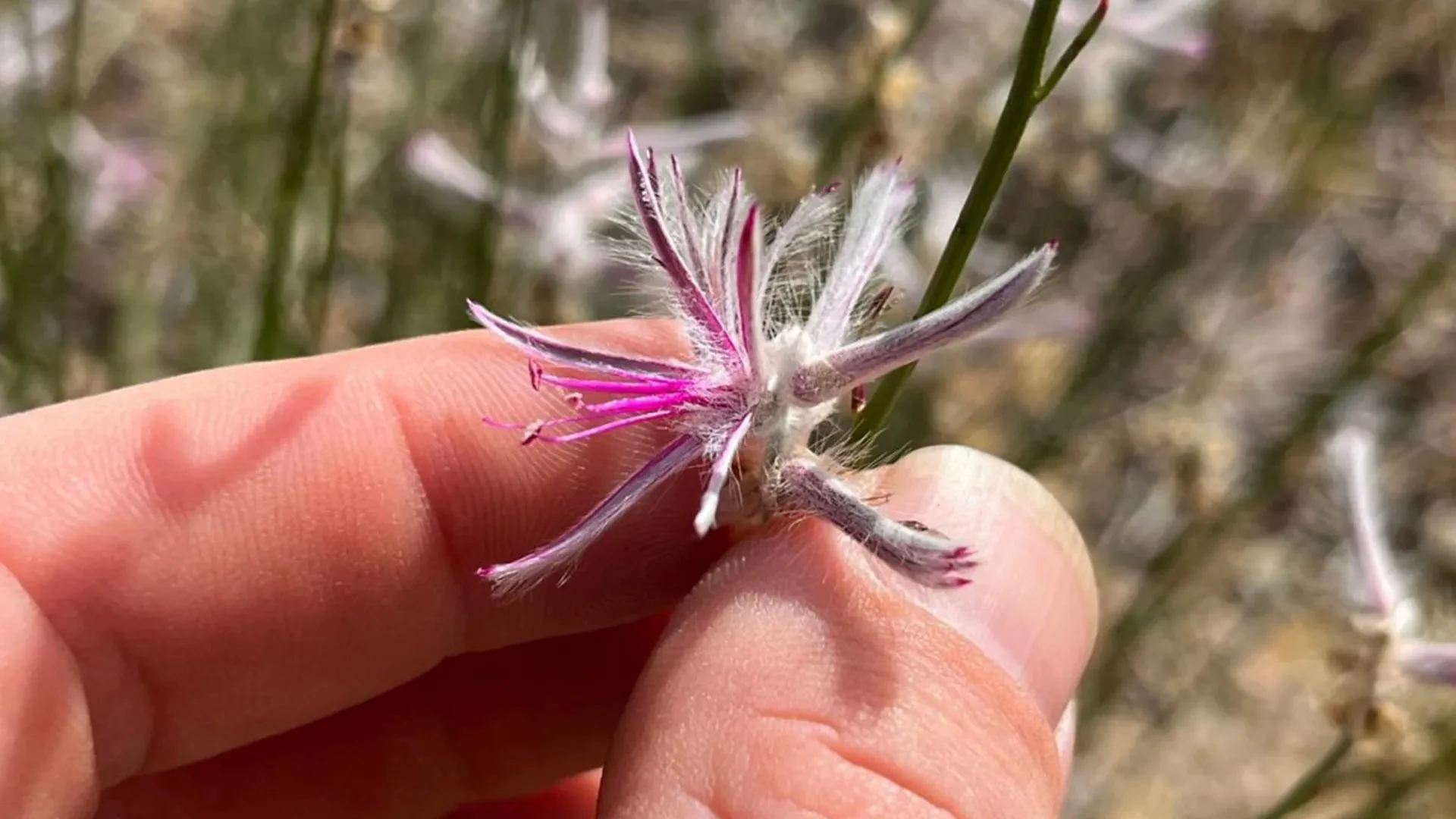
In the vast, sun-scorched expanse of northern Australia’s remote outback, a botanical ghost has walked back into the light. Ptilotus senarius—a delicate, low-lying shrub distinguished by its vibrant purple-pink blossoms that burst outward like miniature feathered fireworks—has been officially rediscovered nearly six decades after it was last documented. Widely presumed to have succumbed to the relentless pressures of habitat modification, climate variability, and ecological shifting, the species had languished in botanical limbo since 1967.
Its miraculous return was not orchestrated by a heavily funded institutional expedition or a team of career-tenured field botanists traversing the rugged escarpments of the Gulf of Carpentaria. Instead, the resurrection of Ptilotus senarius was catalyzed by a chance encounter, a smartphone camera, and the democratizing power of modern citizen science.
When Aaron Bean, a professional horticulturalist assisting with bird-banding operations on a sweeping private Queensland property, paused to photograph an unfamiliar shrub, he set off an improbable chain reaction. That single digital upload to the global biodiversity platform iNaturalist bridged the gap between remote wilderness and academic rigor. It ultimately landed on the screen of Anthony Bean—a botanist at the Queensland Herbarium who, through an extraordinary twist of fate, had formally described the species a decade prior to its disappearance from the scientific record.
This high-profile rediscovery underscores a profound paradigm shift in modern conservation biology. As professional researchers face mounting budgetary constraints, immense geographical territories, and restricted access to vast swathes of private land, everyday naturalists are increasingly stepping into the breach. Platforms like iNaturalist are no longer viewed merely as digital curiosities for hobbyists; they have matured into indispensable research infrastructure. By turning millions of smartphone users into an active, distributed global sensor network, citizen science is rewriting the playbook of biodiversity discovery—proving that sometimes, the key to finding what is lost lies simply in giving everyone the tools to look.
Detailed Chronology: Anatomy of a Botanical Resurrection
To understand how a plant lost to science for nearly 60 years was brought back into the taxonomic fold, one must trace a meticulous, serendipitous sequence of events that unfolded across months, digital networks, and rugged outback terrain.
Step 1: The Outpost Observation
The story begins in the field, far beyond the reach of cellular connectivity. Aaron Bean, an avid user of the iNaturalist platform and a trained horticulturalist, was lending his expertise to wildlife conservation efforts by banding birds on a sprawling cattle and conservation property near the Gulf of Carpentaria. While navigating the rugged terrain, his trained eye caught sight of a modest, herbaceous shrub adorned with striking, feathery purple-pink flowers. Recognizing that the morphology did not match the common flora of the immediate surrounds, he paused to capture a series of macro and wide-angle photographs.
Because the property sat deep within Australia’s remote interior, those digital files remained trapped on his device’s memory card until he returned to an area with reliable telecommunications service.
Step 2: The Digital Hand-off
Days later, upon regaining phone service, Aaron Bean uploaded his digital field notes and photographs to iNaturalist—a crowdsourced species identification network where amateur observations mingle with professional taxonomic reviews.
In the grand ecosystem of big data, this upload was initially just a drop in the ocean. Millions of photographs of flora, fauna, and fungi are uploaded to the platform annually from every corner of the globe. Yet, the algorithm and the community network act as an intellectual sieve. Over subsequent weeks, the imagery migrated through the platform’s identification queues until it crossed paths with an expert uniquely qualified to interpret it.
Step 3: The Expert Intersection
Among those monitoring Queensland’s botanical submissions was Anthony Bean (no relation), a seasoned senior botanist with the Queensland Herbarium. As an authority on regional Australian flora, Anthony Bean’s eyes scanned the uploaded images, and instant recognition struck. He did not merely identify the family or the genus; he recognized Ptilotus senarius—a species he had formally described and named a decade prior, but one that had not been documented in the wild since 1967.
For nearly six decades, the species had languished in herbarium archives as a historical ghost. Botanists had largely accepted that Ptilotus senarius had joined the grim tally of approximately 900 plant species documented as extinct globally since the dawn of the Industrial Revolution in the 1750s.
Step 4: Verification and Vouchering
An online photograph alone, however compelling, rarely satisfies the rigorous evidentiary standards of taxonomic science. To formally transition Ptilotus senarius from the "extinct" ledger back into active existence, physical verification was required.
Anthony Bean reached out across the digital divide, coordinating with Aaron Bean and the property owner. With the landholder’s explicit permission and active cooperation, a formal botanical expedition was mounted to locate the exact population. Researchers secured physical voucher specimens—the gold standard of botanical proof—which were subsequently deposited into the Queensland Herbarium.
This multi-step verification culminated in a formal scientific documentation of the event, penned by Thomas Mesaglio of the UNSW School of Biological, Earth and Environmental Sciences, and published in the Australian Journal of Botany. With the specimens safely cataloged and the population verified as extant, the International Union for Conservation of Nature (IUCN) red-list status for the plant was formally adjusted. Ptilotus senarius was officially struck from the "Extinct" registry and elevated to "Critically Endangered"—a designation that instantly unlocks legal protections, targeted funding, and intensive conservation planning.
Supporting Context & Metrics: The Scale of Modern Biodiversity Loss and Discovery
The miraculous recovery of a single shrub offers a narrative lens through which to examine broader, systemic challenges facing global biodiversity. Australia represents a unique frontline in this ecological drama.
The Megadiverse, Under-Resourced Continent
Australia is one of the world’s officially designated megadiverse nations, boasting an extraordinary rate of endemism—meaning a vast percentage of its plants and animals are found nowhere else on Earth. However, this biological wealth is matched by logistical tyranny. The continent spans nearly 7.7 million square kilometers, much of it characterized by arid interiors, dense tropical rainforests, and unforgiving terrain that defies easy or continuous monitoring by institutional science.
Compounding this geographical barrier is the issue of land tenure. Approximately one-third of the Australian landmass is held in private hands—comprising massive pastoral leases, agricultural holdings, Indigenous protected areas, and private conservation estates. Professional scientists cannot simply roam these private domains at will; access requires delicate negotiations, legal permissions, and logistical coordination that often leave large swaths of the continent entirely un-surveyed by professional botanists for decades at a time.
+-----------------------------------------------------------------+
|              THE AUSTRALIAN CONSERVATION CHALLENGE              |
+-----------------------------------------------------------------+
|  Geographical Scope  | 7.7 million sq km of highly diverse,     |
|                      | often remote terrain.                    |
+---------------------+-------------------------------------------+
|  Land Tenure        | ~33% of the continent is privately owned  |
|                      | or leased, restricting academic access.  |
+---------------------+-------------------------------------------+
|  Resource Deficit   | Professional taxonomic workforce is a     |
|                      | fraction of the species count.           |
+---------------------+-------------------------------------------+
|  The Citizen Net    | Millions of private citizens acting as    |
|                      | distributed ecological sensors.          |
+-----------------------------------------------------------------+
The Extinction Crisis vs. The "Lazarus Effect"
Globally, anthropogenic pressures have accelerated extinction rates to between 100 and 1,000 times the background rates typical of Earth’s evolutionary history. Since the mid-18th century, humanity has witnessed the confirmed extinction of hundreds of plant species.
In this climate of ecological pessimism, the rediscovery of species thought to be extinct—frequently termed the "Lazarus effect"—provides a vital counter-narrative. It proves that nature is resilient, and that populations can persist in refugia completely hidden from the academic eye. Yet, conservationists issue a stern caveat: rediscovering a species does not mean it is safe. Moving Ptilotus senarius from "Extinct" to "Critically Endangered" acknowledges that while the plant still breathes, its population remains agonizingly small, isolated, and vulnerable to stochastic events like extreme wildfires, severe droughts, or invasive herbivores.
Official Statements & Expert Perspectives
The intersection of grassroots observation and high-level academic research has provoked deep reflection within the scientific community regarding how data is gathered, validated, and valued.
Thomas Mesaglio, a leading researcher at the UNSW School of Biological, Earth and Environmental Sciences who documented the Ptilotus senarius rediscovery, emphasizes the sheer improbability of the event while championing the systemic shift it represents.
"It was very serendipitous," Mesaglio remarked, reflecting on the alignment of Aaron Bean’s presence on the property, his choice of hobby, and his eventual connection with Anthony Bean. "Aaron Bean is an avid iNaturalist user who opportunistically took some photos of a few plants that were interesting on the property. It’s one of these situations where everything had to fall into place and there was a bit of good fortune involved."
Beyond the poetry of serendipity, Mesaglio points to the hard mathematics of modern research. With professional taxonomists facing severe funding cuts and retirements globally, the traditional model of academic fieldwork is increasingly unsustainable.
"If you are the property owner or you’re someone who has permission from the owner to be there, then suddenly it opens up this whole new world," Mesaglio explained, highlighting the unique access private lands afford. "Engaging landholders themselves with science and the natural world and getting them more passionate about diversity makes them far more likely to be interested and invested in protecting that diversity."
Future Outlook: Empowering the Citizen Scientist
In response to the success stories emerging from platforms like iNaturalist, conservation organizations and government bodies are moving to institutionalize citizen science, transforming passive hobbyism into structured, high-yield ecological data collection.
Institutionalizing Grassroots Conservation: The Land Libraries Model
A premier example of this forward-thinking policy is unfolding in New South Wales through the "Land Libraries" project. Operated under the auspices of the state government’s Biodiversity Conservation Trust, this initiative provides rural landowners with specialized training, field guides, and digital equipment. The goal is to empower private landholders—farmers, graziers, and pastoralists—to systematically survey and document the flora and fauna inhabiting their properties.
By bridging the gap between land management and formal biodiversity databases, projects like Land Libraries turn private stewards into frontline conservationists. When landowners understand the rare ecological treasures living in their back paddocks, they become fierce defenders of those habitats, integrating conservation management directly into agricultural and pastoral operations.
Best Practices: Elevating the Quality of Citizen Observations
As citizen science matures, researchers are pushing to elevate the technical standard of crowdsourced data. A simple, out-of-focus snapshot of a flower petal is often insufficient for definitive taxonomic identification, particularly within complex plant families where species differentiation relies on microscopic or anatomical variances.
To maximize the scientific utility of platforms like iNaturalist, leading researchers have outlined critical guidelines for field observers:
- Holistic Documentation: Rather than photographing only the bloom, users should capture multiple angles—including leaves, bark, branching stems, root structures, and the overall habit/form of the entire plant.
- Contextual Metadata: Observers are encouraged to record environmental variables that cameras cannot capture. This includes soil composition (e.g., sandy loam, rocky sandstone), the presence of specific nearby overstory or understory vegetation, and hydrological indicators.
- Biological Interactions: Noting ephemeral details—such as the presence of specific insect pollinators, herbivory patterns, or distinct chemical fragrances—can provide critical taxonomic keys.
- Locational Precision: Utilizing device-level GPS tagging while remaining cognizant of endangered species masking protocols ensures that researchers can relocate populations without inadvertently inviting illegal poaching or over-collection.
The Global Horizon
The impact of this participatory scientific model extends far beyond Australian borders. In parallel research evaluating the global footprint of iNaturalist, Thomas Mesaglio and his colleagues discovered that data generated by the platform has already been formally cited in peer-reviewed scientific literature spanning 128 countries and thousands of distinct taxa.
As machine learning algorithms improve auto-identification capabilities, and as smartphone penetration deepens across the developing world, the volume of incoming biodiversity data will surge exponentially. Scientists believe that Ptilotus senarius will not be the last Lazarus plant to emerge from the digital ether. Deep within the millions of un-reviewed observations sitting on global servers, other presumed-extinct species are quietly waiting for the right pair of eyes to notice them, proving that in the battle for global biodiversity, every citizen with a camera is a potential savior.