
Executive Overview
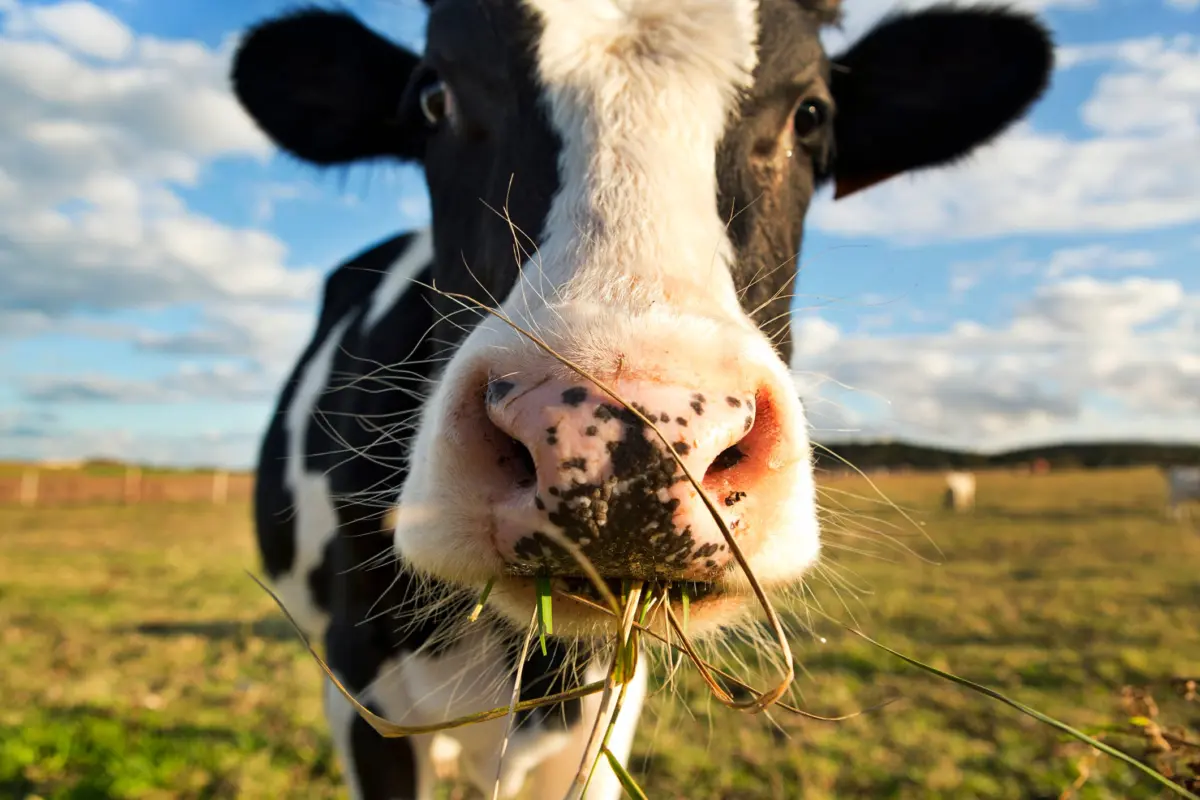
Global agriculture stands at a critical crossroads. As the international community intensifies its efforts to mitigate the worst impacts of climate change, the livestock sector faces unprecedented scrutiny regarding its environmental footprint. Methane ($textCH_4$), a potent greenhouse gas with a warming potential significantly higher than carbon dioxide ($textCO_2$) over a 20-year timescale, is a major byproduct of enteric fermentation in ruminant livestock such as cattle, sheep, and goats. Curbing these emissions has transformed from an academic aspiration into an urgent global imperative for food security and environmental stewardship.
In Japan, a groundbreaking strategic partnership is taking shape to tackle this challenge at its root. The Japan International Research Center for Agricultural Sciences (JIRCAS)—a national research and development agency operating under the jurisdiction of the Ministry of Agriculture, Forestry and Fisheries (MAFF)—has officially joined forces with cutting-edge biotechnology startup Kaginowa. Their mission is as ambitious as it is vital: to pioneer the open-ocean cultivation of Kagikenori, a native Japanese seaweed species proven to dramatically reduce methane emissions when integrated into cattle feed.
Moving decisively beyond the confines of laboratory test tubes and controlled greenhouse environments, this multi-year research agreement marks a monumental transition toward real-world marine cultivation. Scheduled to run through March 2028, the initiative seeks to establish a stable, scalable supply chain for methane-reducing feed ingredients. By marrying JIRCAS’s peerless scientific pedigree in marine and agricultural research with Kaginowa’s entrepreneurial aquaculture capabilities—forged from its roots as a spin-off of the Tokyo-based microalgae biotech pioneer Alnur—this collaboration aims to transform environmental mitigation into an economic engine for coastal fisheries communities.
This comprehensive report explores the scientific mechanisms of Kagikenori, the strategic contours of the JIRCAS-Kaginowa partnership, the technical hurdles of scaling marine cultivation, and the broader implications for the global livestock and agri-food sectors.
Detailed Chronology: From Lab-Scale Discoveries to Open-Ocean Trials
The genesis of this strategic partnership did not happen overnight; it is the culmination of years of targeted scientific inquiry, academic collaboration, and incremental technological breakthroughs.
The Foundation: Unlocking Artificial Seedling Production
The scientific momentum behind Kagikenori largely stems from the tireless work of Tatsuya Matsuda, a senior researcher in the Fisheries Division at JIRCAS and one of Japan’s foremost authorities on the species. Prior to the current joint venture, Matsuda spearheaded foundational research that unlocked the mechanism for the stable, artificial production of Kagikenori seedlings.
Achieving reliable artificial seed production was widely recognized within the marine bioscience community as the single most critical bottleneck to utilizing native Japanese macroalgae for industrial purposes. Without a controlled method to generate robust seedlings year-round, researchers and commercial entities alike were entirely dependent on unpredictable wild harvesting—a method utterly unviable for meeting the massive future demand of the global livestock feed industry.
Matsuda’s breakthrough, achieved in close collaboration with academic researchers at Nagasaki University, provided the necessary blueprint. By successfully cultivating early-stage seedlings in artificial systems, the scientific team eliminated the variability of nature’s reproductive cycles, laying the structural groundwork for commercial-scale aquaculture.
Transitioning to Land-Based Trials (2025)
Building upon the success of laboratory-scale and indoor propagation, Kaginowa took a major operational leap forward in 2025. The startup announced the successful completion of its very first harvest of Kagikenori derived from outdoor, land-based cultivation facilities.
These 2025 trials were specifically designed to test the limits of scaling up biomass production. By pushing operations toward a target volume exceeding 1,000 liters, Kaginowa engineers gathered invaluable empirical data regarding water filtration, nutrient uptake, temperature sensitivity, and lighting requirements in controlled, semi-natural terrestrial environments. While land-based systems offered unprecedented control over variables like salinity and biological contamination, the sheer capital expenditure and energy requirements of land-based tank farming underscored the necessity of finding a more cost-effective, scalable medium: the open ocean.
The 2026 Partnership Agreement and Beyond
Recognizing that terrestrial systems alone could not satisfy the looming commercial demand for methane-inhibiting feed additives, JIRCAS and Kaginowa formalized their strategic alliance. Announced as a formal joint research initiative, the partnership shifts the operational focus from land-based tanks to dynamic marine environments.
Under the current roadmap stretching through March 2028, researchers are deploying artificially produced seedlings directly into natural marine ecosystems, most notably within the nutrient-rich waters of Yamakawa Bay in Kagoshima Prefecture. This phase represents the ultimate stress test for Kagikenori: can laboratory-bred seaweed survive, thrive, and retain its potent methane-inhibiting biochemical properties when subjected to unpredictable ocean currents, natural predators, shifting water temperatures, and seasonal weather events?
Supporting Context & Metrics: The Science and Economics of Seaweed Feed Additives
To understand the profound significance of the JIRCAS-Kaginowa initiative, one must examine the broader environmental metrics governing enteric fermentation, as well as the unique biochemical properties of seaweed as a livestock supplement.
The Global Methane Challenge
According to the Intergovernmental Panel on Climate Change (IPCC) and various agricultural authorities, enteric fermentation—the natural digestive process of ruminant animals where microbes break down fibrous plant material—accounts for a staggering share of anthropogenic methane emissions. Methane is a short-lived climate pollutant, but its global warming potential is roughly 28 to 36 times greater than that of $textCO_2$ over a 100-year timescale, and upwards of 80 times greater over a 20-year horizon.
With global consumption of beef and dairy projected to rise to meet the nutritional demands of a growing human population, reducing livestock emissions is non-negotiable for nations striving to meet Net Zero commitments under the Paris Agreement. While genetic selection, improved feed efficiency, and optimized manure management have chipped away at the edges of the problem, dietary interventions offer the most immediate and dramatic reductions in enteric methane output.
Why Kagikenori?
While global headlines have frequently focused on tropical red seaweeds—most notably Asparagopsis taxiformis, which has demonstrated an ability to reduce cattle methane emissions by over 80% when added in minute quantities—scaling Asparagopsis presents immense geographic and ecological challenges. Native to warm tropical and subtropical waters, cultivating Asparagopsis in temperate regions like Japan introduces severe biosecurity risks, high energy costs for heating, and difficulties in regulating active compound stability.
Enter Kagikenori, a native Japanese seaweed species that offers a localized, ecologically harmonious alternative. According to data provided by Kaginowa and corroborated by JIRCAS researchers:
- Efficacy: Kagikenori has shown a remarkable ability to inhibit methanogenic archaea (the microbes in the rumen responsible for producing methane gas) when integrated into feed rations in very small quantities.
- Biochemical Stability: Unlike some imported seaweeds that degrade rapidly during processing and storage, Kagikenori’s active compounds—specifically halogenated compounds and specialized secondary metabolites—demonstrate strong persistence.
- Ecological Safety: Because Kagikenori is indigenous to Japanese marine ecosystems, cultivating it poses zero risk of invasive species introduction, dramatically lowering regulatory hurdles and ecological anxieties.
Dual Economic Value: Mitigating Emissions and Revitalizing Fisheries
Kaginowa’s operational philosophy extends far beyond simple environmental remediation. The startup is championing a holistic socio-economic model that intertwines livestock emissions reduction with the economic revitalization of local marine fisheries.
Japan’s coastal fishing communities have faced severe demographic and economic headwinds in recent decades, driven by aging populations, declining wild fish stocks, and rising operational costs. By introducing marine seaweed cultivation as a lucrative, high-value cash crop, Kaginowa provides fishermen with an entirely new revenue stream. Coastal cooperatives can utilize their existing vessels, local marine leases, and generational knowledge of sea conditions to manage rope-grown Kagikenori lines.
This creates a virtuous circular bioeconomy:
- Marine Cultivation: Fishermen cultivate Kagikenori in bays like Yamakawa, absorbing excess nitrogen and phosphorus while improving local water quality.
- Processing: Startups and biotech firms process the harvested biomass into standardized feed ingredients.
- Livestock Integration: Dairy and beef farmers incorporate the additive into cattle feed, drastically slashing greenhouse gas emissions.
- Market Premium: Farmers command higher prices for "low-carbon" or sustainably certified dairy and meat products, completing the economic loop.
Official Statements and Research Methodology
The collaboration between a premier national research institution and an agile biotech startup represents a model public-private partnership.
Methodological Rigor in Yamakawa Bay
The field trials currently underway in Yamakawa Bay are meticulously designed to answer fundamental scientific questions. Over the multi-year project running through March 2028, researchers are systematically tracking:
- Environmental Adaptability: Monitoring growth rates, thallus integrity, and disease resistance under varying seasonal water temperatures, salinity levels, and tidal flows.
- Active Compound Accumulation: Analyzing how different environmental stressors (such as light intensity and nutrient availability) influence the concentration of the specific metabolites responsible for methane inhibition.
- Laboratory Correlation: Cross-referencing field data with controlled laboratory culture experiments to build predictive mathematical models of seaweed growth and bioactivity.
Tatsuya Matsuda and his colleagues at JIRCAS emphasize that these steps are vital for transitioning from experimental success to commercial viability. Without empirical baseline data gathered across diverse real-world conditions, industrial-scale feed manufacturers cannot guarantee consistent potency or safety profiles.
The Biotech Backbone: From Alnur to Kaginowa
Kaginowa’s structural lineage provides a unique technological advantage. Spun out of Alnur, a Tokyo-based biotechnology firm renowned for its mastery of microalgae mass-cultivation technology, Kaginowa inherits decades of institutional know-how regarding algal physiology, photobioreactor design, and biochemical extraction.
While microalgae and macroalgae (seaweed) possess distinct biological structures, the underlying principles of mass production, bioreactor optimization, and commercial supply chain logistics share deep technical synergies. This pedigree allows Kaginowa to bridge the gap between delicate marine biology and rigorous industrial manufacturing standards.
Future Outlook: Scaling for Commercial Impact
As the JIRCAS-Kaginowa partnership charges toward its 2028 milestone, the implications of their work extend far beyond the shores of Kagoshima Prefecture. If the marine cultivation trials successfully prove that Kagikenori can be grown reliably, harvested efficiently, and processed economically at scale, Japan could establish a blueprint for agricultural decarbonization that resonates across the entire Asia-Pacific region and beyond.
Hurdles on the Horizon
Despite the boundless optimism surrounding the project, significant challenges remain on the path to widespread commercialization:
- Regulatory Approval: Feed additives designed to alter enteric fermentation must undergo rigorous safety evaluations by regulatory bodies (such as MAFF in Japan and equivalent international agencies) to ensure no toxic residues pass into milk or beef destined for human consumption.
- Supply Chain Infrastructure: Transitioning from pilot-scale marine cultivation to supplying millions of cattle across Japan requires massive investments in harvesting vessels, drying facilities, milling plants, and distribution networks.
- Cost Parity: For livestock farmers operating on razor-thin profit margins, seaweed-derived feed additives must either be heavily subsidized by carbon credits or cost-competitive with traditional feed ingredients unless market demand for low-carbon dairy justifies a consumer price premium.
A Beacon for Sustainable Agriculture
The collaboration between JIRCAS and Kaginowa serves as a powerful reminder of how modern science and traditional industries can converge to solve seemingly intractable global crises. By harnessing the natural power of native marine flora to neutralize agricultural greenhouse gases, Japan is not only safeguarding its domestic agricultural future but also offering a scalable, ecologically sound model for the planet.
As the green shoots of Kagikenori sway in the tidal currents of Yamakawa Bay, they carry the hopes of an industry eager to prove that sustainable nutrition and economic prosperity can—and must—grow side by side.