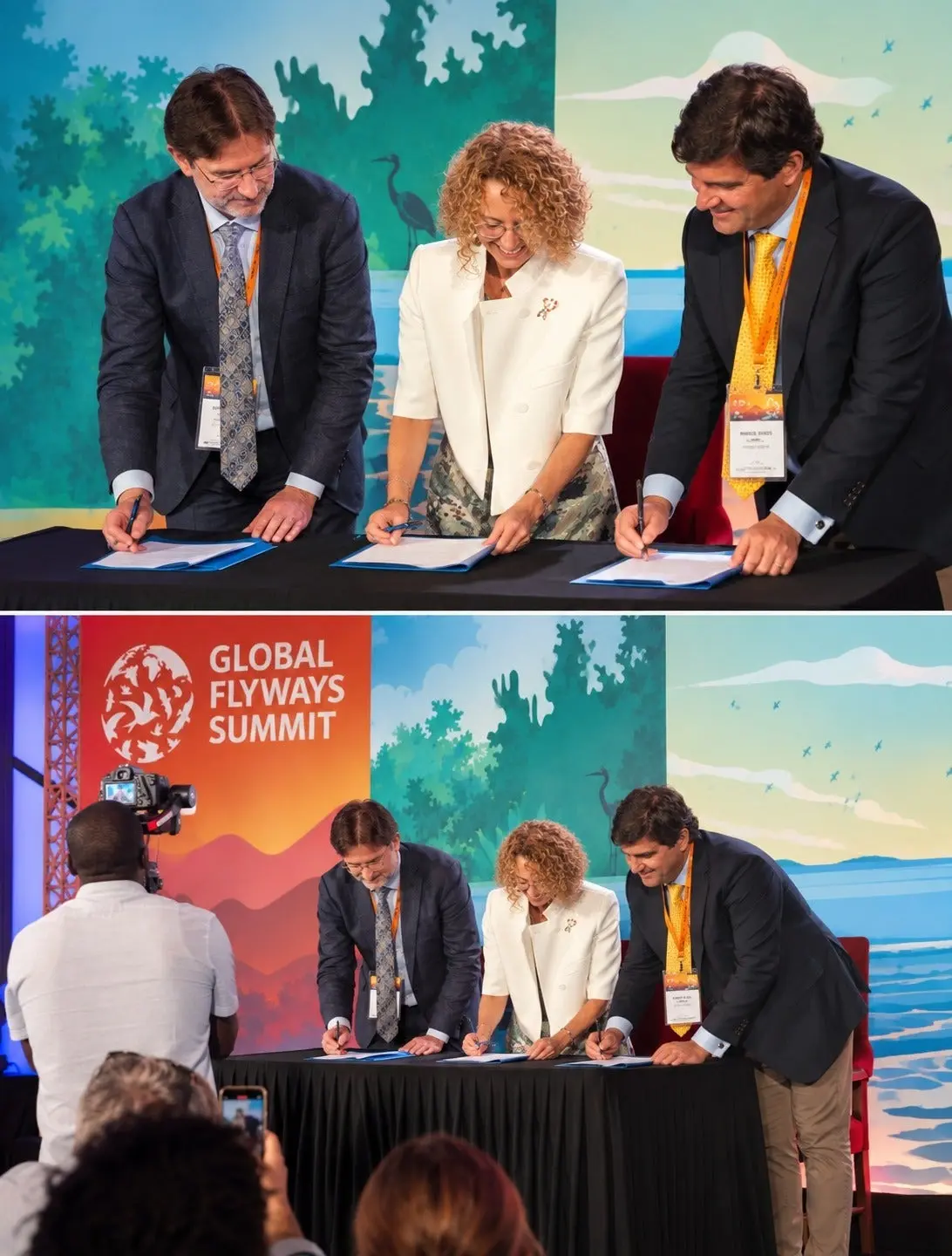

NAIROBI, KENYA — In a landmark convergence of rigorous science, environmental conservation, and international finance, three major global organizations have officially unveiled a financial instrument designed to safeguard the skies and ecosystems of the Western Hemisphere. Announced on September 11, 2026, the Flyways Nature Bond Framework represents a paradigm shift in how capital is directed toward biodiversity in Latin America and the Caribbean.
Developed collaboratively by BirdLife International, the National Audubon Society, and CAF (Development Bank of Latin America and the Caribbean), this innovative framework establishes strict, science-based criteria to evaluate and finance nature-based solutions and bird-friendly infrastructure. By bridging the gap between ecological preservation and capital markets, the initiative seeks to reverse the alarming decline of migratory birds while simultaneously fortifying regional climate resilience and supporting local human communities.
Executive Overview: A New Horizon for Conservation Finance
The Flyways Nature Bond Framework is not merely an environmental policy document; it is an active mechanism engineered to unlock unprecedented streams of sustainable capital. Born out of the Americas Flyways Initiative (AFI)—an ambitious hemispheric alliance uniting conservation science, sustainable development, and financial markets—the framework provides CAF with a systematic blueprint for evaluating and selecting projects destined for future funding.
At its core, the initiative addresses a fundamental challenge in modern conservation: the chronic lack of targeted, large-scale financial investment in transcontinental ecosystems. Migratory birds do not recognize political borders. Their survival depends upon a continuous, uninterrupted chain of healthy habitats spanning thousands of miles, from the breeding grounds of the Arctic to the wintering territories of Tierra del Fuego.
By integrating avian science directly into financial decision-making, the Flyways Nature Bond Framework ensures that investments made by development banks yield measurable ecological dividends. The ultimate benchmark of this multi-decade effort is as bold as it is vital: to contribute significantly to the protection of 10% of the populations of representative migratory bird species across the Americas by the year 2050.
Detailed Chronology: The Path to the Flyways Nature Bond Framework
The realization of the Flyways Nature Bond Framework is the culmination of years of strategic alignment, scientific synthesis, and institutional commitment among global conservation heavyweights and multilateral financial institutions.
Genesis of the Americas Flyways Initiative (AFI)
Long before the unveiling of the bond framework, leaders at BirdLife International, the National Audubon Society, and CAF recognized that traditional, siloed approaches to conservation were failing to keep pace with rapid environmental degradation. Conservation organizations possessed the science and the ground-level networks, but frequently lacked access to massive, transformational capital. Conversely, multilateral development banks possessed the financial might to fund major infrastructure and land-use projects, but historically struggled to systematically evaluate biodiversity impacts at a landscape scale.
The creation of the Americas Flyways Initiative bridged this divide. Designed as a hemispheric partnership, AFI set out to embed conservation science into the heart of development finance in Latin America and the Caribbean.
Developing the Scientific Metrics
Over subsequent months and years, avian biologists, geospatial analysts, and financial economists worked in tandem to construct the methodological architecture of the new framework. This was no simple task. It required translating complex population dynamics, migratory mapping data, and ecological vulnerability indices into standardized, audit-ready financial and environmental criteria.
The resulting framework was meticulously engineered to evaluate projects across multiple vectors:
- Strategic Geographic Placement: Pinpointing areas of critical ecological importance along major flyways.
- Nature-Based Solutions (NBS): Prioritizing interventions that leverage natural ecosystems—such as wetlands, mangroves, and forests—over carbon-intensive grey infrastructure.
- Bird-Friendly Infrastructure: Mandating design standards that minimize anthropogenic hazards like avian collisions and habitat fragmentation.
- Risk Mitigation: Enforcing rigorous environmental and social safeguards to prevent unintended harm to local populations or ecosystems.
- Long-Term Monitoring: Establishing robust tracking mechanisms to measure ecological outcomes over the lifespan of the financial instruments.
The Nairobi Announcement (September 2026)
The formal release of the framework on September 11, 2026, marks the transition from conceptual design to operational reality. Unveiled to international stakeholders, the framework immediately establishes a new gold standard for green bonds, providing the market with the transparency and scientific rigor institutional investors increasingly demand.
Supporting Context & Metrics: The Crisis in the Skies
To understand the urgency behind the Flyways Nature Bond Framework, one must examine the staggering scale of the crisis facing the Americas’ migratory birds. The skies of the Western Hemisphere are emptying out, driven by compounding pressures of habitat loss, climate change, agricultural expansion, and industrial development.
A Hemispheric Emergency
According to recent ecological assessments, 289 species—nearly half of all migratory bird species in the Western Hemisphere—are currently in active population decline. The crisis is not restricted to tropical wintering grounds; it begins in the north and ripples across entire ecosystems.
In the United States and Canada alone, breeding populations of migratory birds have plummeted by an estimated 2.5 billion individuals since 1970. Meanwhile, further south, 460 bird species are classified as threatened across Latin America and the Caribbean.
[Breeding Grounds: US/Canada]
       │
       ▼  (Loss of 2.5B birds since 1970)
[Migration Corridors: Mesoamerica & Caribbean]
       │
       ▼  (460+ species threatened)
[Wintering Grounds: South America]
       │
       └─► Root Cause: Disconnected, localized pressures impacting transcontinental flyways.
The ecological reality of migration makes these declines particularly difficult to halt using localized interventions alone. Because these birds traverse continents annually, a population crash observed in a southern wintering wetland is frequently the direct consequence of habitat destruction or pesticide overuse thousands of miles away along a stopover site in Central America or North America. Conversely, degradation in a key resting site can doom a population before it ever reaches its breeding grounds.
Beyond Birds: Co-Benefits for People and Climate
Despite its avian branding, the Flyways Nature Bond Framework is fundamentally designed to deliver broad socio-economic and climate resilience dividends. The ecosystems that shelter migratory birds—coastal wetlands, mangrove forests, high-altitude grasslands, and lowland rainforests—are frontline defenses against global climate change.
- Flood and Storm Mitigation: Healthy coastal mangroves and freshwater wetlands act as natural sponges, dampening storm surges and absorbing excess rainwater, thereby protecting vulnerable coastal and riverine human settlements.
- Carbon Sequestration: Peatlands, forests, and marine ecosystems targeted by the framework store vast quantities of carbon, directly contributing to national and international net-zero commitments.
- Water Security: Protecting upland watersheds preserves natural water filtration systems, securing stable, clean drinking water supplies for millions of urban and rural residents across Latin America and the Caribbean.
- Local Livelihoods: Sustainable management of these landscapes fosters ecotourism, sustainable fisheries, and resilient agricultural practices, empowering local and indigenous communities who serve as the ultimate stewards of these lands.
Official Statements: Leadership Perspectives
The launch of the Flyways Nature Bond Framework has drawn widespread praise from the executive leadership of the partner organizations, highlighting the transformative potential of cross-sectoral collaboration.
Sergio Díaz-Granados, Executive President of CAF, emphasized the institutional evolution represented by the framework:
"The development of the Flyways Nature Bond Framework represents an important step in the efforts of CAF to integrate considerations of biodiversity into development financing in Latin America and the Caribbean. The Framework creates a coherent basis for identifying projects that could benefit migratory birds, their habitats, and the ecosystems."
Martin Harper, CEO of BirdLife International, underscored the interconnected nature of the initiative within global conservation networks:
"Migratory routes are not simply migration paths for birds: they connect critical sites, landscapes, biodiversity, and the people who depend on them throughout the hemisphere. As part of BirdLife’s Global Flyways Program, the Americas Flyways Initiative brings the solid science of BirdLife and our network of national partners in the Americas to the Flyways Nature Bond Framework, more systematically integrating the conservation of migratory birds and biodiversity into project selection and evaluation."
Elizabeth Gray, CEO of the National Audubon Society, pointed to the unique role of birds as ecological indicators:
"Birds show us where nature most needs investment. The Flyways Nature Bond Framework incorporates Audubon’s science into financing decisions, helping to identify projects with the potential to strengthen the ecosystems shared by birds and people. This is conservation driven by birds and a new, promising model of sustainable development in the Americas."
Future Outlook: Transforming Markets and Protecting Flyways
As the Flyways Nature Bond Framework transitions into its implementation phase, its architects are turning their attention to scale and execution. The immediate priority is the operationalization of the framework within CAF’s active project pipeline, reviewing pending infrastructure and environmental investments to ensure alignment with the newly minted scientific criteria.
Furthermore, the partners hope that this framework will serve as a replicable blueprint for other multilateral development banks and financial institutions worldwide. By proving that rigorous avian science can be successfully embedded into green bond issuance, the initiative challenges the global financial sector to rethink how capital is valued and deployed.
In a world increasingly gripped by interconnected biodiversity and climate crises, the Flyways Nature Bond Framework offers a clear, actionable path forward. By investing in the preservation of migratory birds and their vast transcontinental homes, investors are not merely saving species in flight—they are securing the ecological foundation upon which all human prosperity in the Americas depends.