
Executive Overview
Canine halitosis—colloquially dismissed by many pet owners as mere "bad dog breath"—is increasingly recognized by the veterinary medical community as a critical diagnostic indicator of systemic pathology. While localized oral diseases, such as periodontitis and gingivitis, remain the most common causes of oral malodor, chronic and distinct breath scents often serve as the primary external manifestations of severe internal organ dysfunction.
From a physiological perspective, the canine mouth acts as an open window to the body’s internal chemistry. When internal organs such as the kidneys, liver, or pancreas fail to function correctly, specific metabolic byproducts accumulate in the bloodstream. These volatile organic compounds (VOCs) are subsequently released through the lungs during respiration or excreted via saliva, producing distinct, recognizable odors.
This investigative report examines the diagnostic utility of canine breath odors. It details the physiological mechanisms that link specific breath scents to life-threatening conditions—including end-stage renal failure, hepatic insufficiency, diabetic ketoacidosis, and neoplastic disease. By understanding the biochemistry behind these odors, veterinary professionals and proactive pet owners can identify critical illnesses early, potentially shifting a prognosis from terminal to manageable.
Detailed Chronology of Systemic Pathology and Odor Progression
To understand how a localized symptom like halitosis escalates into a systemic diagnostic marker, we must analyze the chronological progression of various pathologies. The following phases outline how different bodily systems fail and how those failures alter a dog’s breath chemistry.
[Local Oral Biofilm] ──> [Systemic Inflammation] ──> [Organ Decompensation]
        │                                                     │
        ├──> Volatile Sulfur Compounds (VSCs)                 ├──> Kidneys: Ammonia / Uremic Breath
        └──> Mucosal Degradation & Infection                  ├──> Liver: Fetor Hepaticus (Musty/Dead Animal)
                                                              └──> Pancreas: Ketoacidosis (Sweet/Fruity Acetone)
Phase I: Periodontal Colonization and Volatile Sulfur Compounds
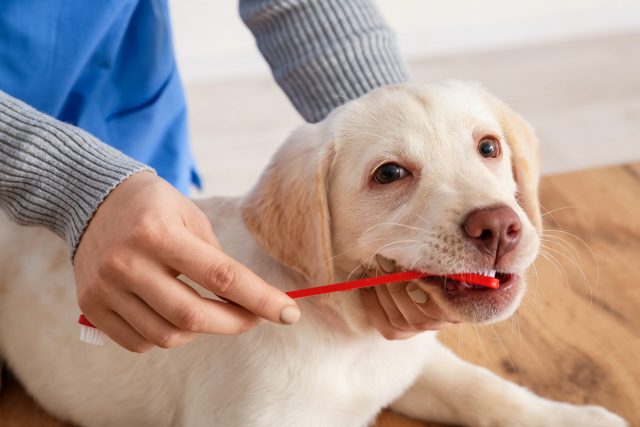
The progression of bad breath typically begins in the oral cavity. Within hours of eating, a microscopic film of glycoproteins forms on the dog’s teeth, providing an adhesive surface for aerobic bacteria. If not mechanically disrupted through brushing or dental chews, this biofilm matures into dental plaque.
Over time, the microenvironment becomes anaerobic, allowing gram-negative anaerobic bacteria (such as Porphyromonas, Prevotella, and Fusobacterium) to proliferate beneath the gumline. These bacteria metabolize sulfur-containing amino acids (such as cysteine and methionine) present in saliva and necrotic tissue, producing Volatile Sulfur Compounds (VSCs) like hydrogen sulfide and methyl mercaptan. This results in the classic "rotten egg" smell of periodontal disease. If left untreated, this localized infection can damage the periodontal ligament and alveolar bone, providing a direct gateway for bacteria to enter the systemic bloodstream.
Phase II: Respiratory and Lip-Fold Microenvironments
As oral hygiene deteriorates, secondary localized microenvironments can develop. In breeds with prominent facial folds or deep lip folds (such as Bulldogs, Mastiffs, and Spaniels), saliva, food particles, and skin secretions become trapped. This creates a warm, moist environment ideal for bacterial and yeast (Malassezia) overgrowth, which produces a sour, yeast-like odor that mimics halitosis.
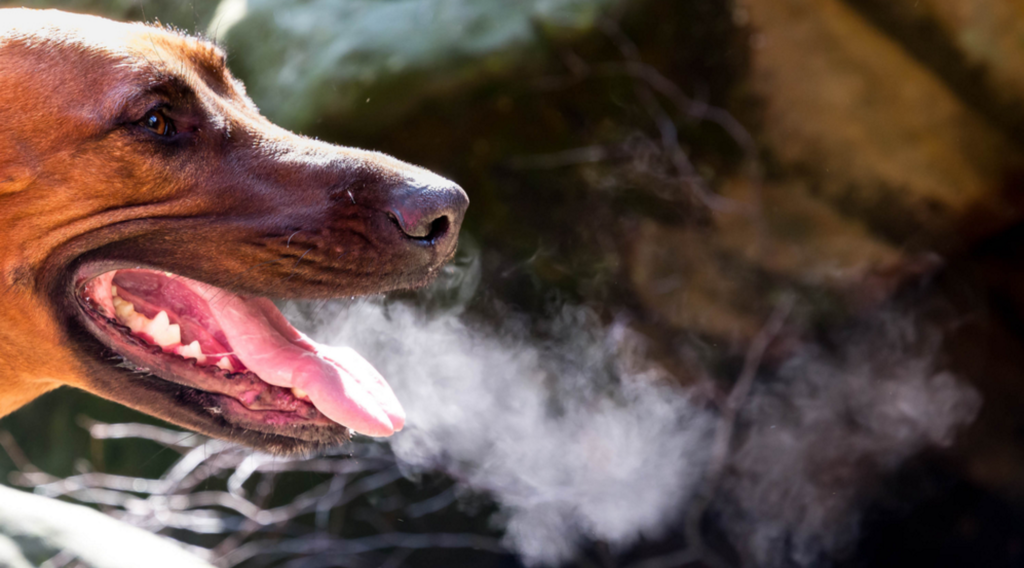
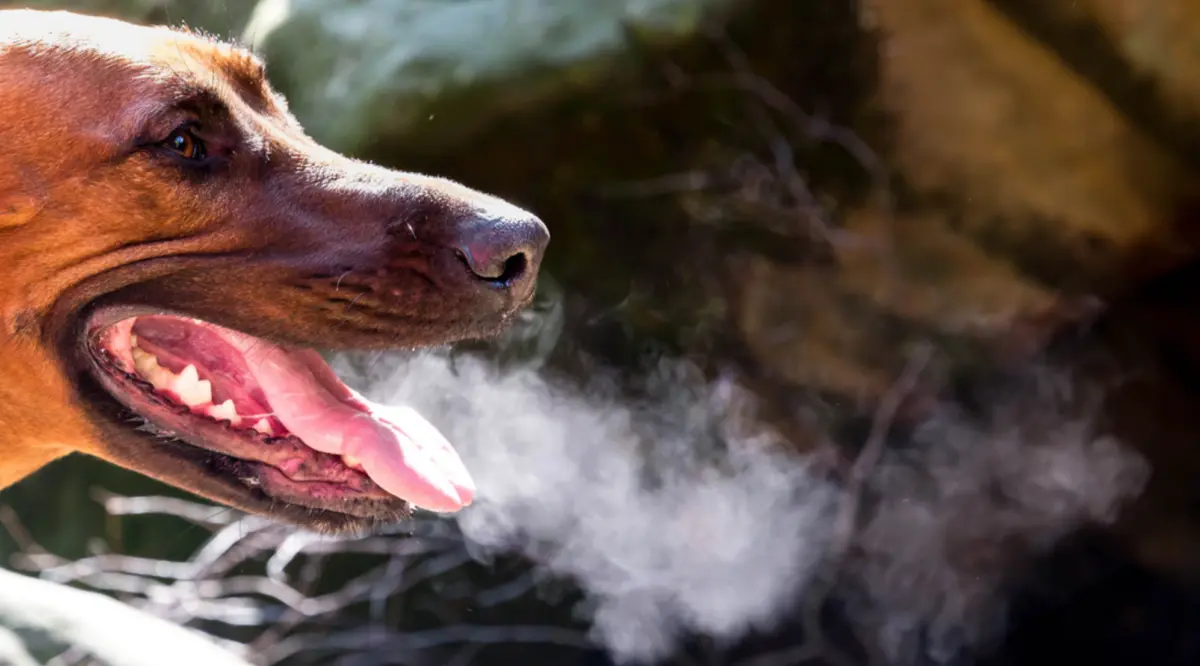
Concurrently, if bacteria from the oral cavity are inhaled, or if the dog contracts an primary upper respiratory pathogen, a respiratory infection can develop. In these cases, the accumulation of purulent mucus in the nasal passages, sinuses, and trachea introduces a heavy, metallic, and sweetish-foul odor to the breath. This is often accompanied by productive coughing, nasal discharge, and mouth breathing, which further dries the oral mucosa and exacerbates bacterial growth.
Phase III: Metabolic Ketoacidosis (The Sweet/Fruity Indicator)
When a dog’s internal pathology shifts from localized infection to systemic metabolic crisis, the character of their breath changes. This is most clearly seen in diabetic ketoacidosis (DKA), a life-threatening complication of undiagnosed or poorly managed diabetes mellitus.
[Insulin Deficiency] ──> [Cellular Starvation] ──> [Rapid Lipolysis] ──> [Ketone Body Accumulation] ──> [Sweet, Acetone Breath]Without sufficient insulin, the dog’s cells cannot absorb glucose from the bloodstream, causing cellular starvation. In response, the body rapidly breaks down stored fats for energy. This lipolysis floods the liver with free fatty acids, which are converted into ketone bodies: acetoacetate, beta-hydroxybutyrate, and acetone.
Acetone, a highly volatile ketone, is excreted directly through the lungs during respiration. This imparts a distinctive sweet, fruity, or chemical (nail polish remover-like) aroma to the dog’s breath. The presence of this sweet odor indicates a severe metabolic emergency that requires immediate veterinary intervention to correct systemic acidosis and electrolyte imbalances.
Phase IV: Hepatic Insufficiency (The "Dead Animal" Odor)
The liver is the body’s primary filtration and detoxification organ. When hepatic function declines by 70% or more due to chronic hepatitis, cirrhosis, or toxic insult, the liver can no longer process portal blood toxins.
Among these toxins are sulfur-containing compounds derived from the microbial digestion of proteins in the intestines. In a healthy dog, the liver filters out these compounds, particularly dimethyl sulfide. In a dog with hepatic insufficiency, these volatile toxins bypass hepatic filtration, enter the systemic venous circulation, and are carried to the lungs, where they are exhaled.
This produces a distinct, musty, sweetish-foul odor known in human medicine as fetor hepaticus, often described by pet owners as smelling like "a dead animal" or "musty earth." This odor is frequently accompanied by systemic signs such as icterus (yellowing of the sclera and gums), ascites (abdominal fluid buildup), and hepatic encephalopathy, which causes neurological symptoms like head pressing or disorientation.
Phase V: Renal Decompensation and Uremia (The Ammonia Signal)
The kidneys filter nitrogenous waste products, primarily urea and creatinine, from the bloodstream. When renal function is compromised—either through acute kidney injury (AKI) or progressive chronic kidney disease (CKD)—these waste products accumulate in the blood, a condition known as uremia.
As blood urea nitrogen (BUN) levels rise, excess urea diffuses into the dog’s saliva. Oral bacteria containing the urease enzyme quickly break down this salivary urea, converting it into free ammonia ($NH_3$). This chemical reaction produces a sharp, urine-like, or "fishy" odor on the breath.
Additionally, the corrosive nature of circulating uremic toxins often causes painful uremic ulcers on the tongue and buccal mucosa. This introduces a metallic, bloody smell to the breath and causes excessive drooling, oral pain, and a reluctance to eat.
Phase VI: Neoplastic Necrosis (Oral and Pulmonary Lymphoma)
In its late stages, bad breath can indicate oncological disease. Neoplasms within the oral cavity—such as malignant melanoma, squamous cell carcinoma, fibrosarcoma, or oral lymphoma—grow rapidly and often outstrip their blood supply.
This lack of blood flow causes central necrosis within the tumor tissue. As the cancerous tissue dies and rots inside the mouth, anaerobic bacteria colonize the necrotic site, producing a putrid, decaying smell. Similarly, primary or metastatic pulmonary tumors can cause localized lung tissue death and abscesses. When the dog exhales, the air passing over these necrotic pulmonary lesions carries a foul, decaying odor.
Supporting Context & Metrics: The Biochemistry of Canine Halitosis
To establish diagnostic protocols, veterinary researchers analyze the specific chemical compositions of canine breath. The table below correlates specific breath odors with their primary volatile organic compounds, physiological origins, and clinical significance.
Chemical Profile of Diagnostic Breath Odors
| Described Odor | Primary Volatile Compound(s) | Physiological Origin | Primary Clinical Suspect(s) |
|---|---|---|---|
| Rotten Eggs / Sewage | Hydrogen sulfide, Methyl mercaptan | Anaerobic bacterial degradation of oral proteins | Periodontal disease, gingivitis, deep lip-fold pyoderma |
| Sweet / Fruity / Acetone | Acetone | Accelerated lipolysis and ketone body production | Diabetic Ketoacidosis (DKA) |
| Ammonia / Urine-like | Free Ammonia ($NH_3$) | Salivary urease conversion of elevated blood urea | Chronic Kidney Disease (CKD), Acute Kidney Injury (AKI) |
| Musty / Dead Animal | Dimethyl sulfide, Methyl mercaptan | Incomplete hepatic clearance of portal blood toxins | Hepatic cirrhosis, acute liver failure, portosystemic shunts |
| Putrid / Rotting Flesh | Putrescine, Cadaverine | Anaerobic decay of neoplastic or necrotic tissue | Oral melanoma, pulmonary abscesses, oral lymphoma |
Statistical Prevalence and Risk Factors
Epidemiological data from the American Veterinary Medical Association (AVMA) indicates that periodontal disease is the most prevalent diagnostic condition in companion dogs.

- Prevalence by Age: By three years of age, approximately 80% to 85% of dogs exhibit some form of periodontal disease.
- Toy and Brachycephalic Breed Vulnerability: Toy breeds (such as Yorkshire Terriers, Chihuahuas, and Toy Poodles) and brachycephalic breeds (such as Pugs and French Bulldogs) show a four-fold increase in the rate of calculus accumulation and subsequent periodontal disease compared to large-breed dogs. This is due to dental crowding, rotated teeth, and relative micrognathia, which limit natural self-cleaning mechanisms.
- The Geriatric Threshold: In dogs aged 10 years and older, the diagnostic probability that halitosis is linked to an underlying systemic disease (such as CKD, hepatic failure, or neoplasia) increases by nearly 65%. This underscores the importance of diagnostic breath assessment during geriatric canine wellness exams.
Official Statements and Veterinary Diagnostic Protocols
Veterinary dental specialists and internal medicine experts emphasize that halitosis should never be treated as a purely cosmetic issue.
The American Veterinary Dental College (AVDC) warns against "anesthesia-free dental cleanings," a cosmetic practice often sought by pet owners concerned about anesthesia risk. In an official position statement, the AVDC notes:
"Anesthesia-free dental cleanings merely scrape visible plaque from the crown of the tooth, leaving the subgingival plaque and anaerobic bacteria untouched. This cosmetic approach provides a false sense of security while allowing active periodontal disease, bone loss, and systemic bacterial dissemination to progress unchecked beneath the gumline."
Veterinary internal medicine specialists emphasize using halitosis as a diagnostic starting point. When presented with a patient exhibiting chronic halitosis, clinicians are trained to follow a systematic diagnostic triage protocol:
[Patient with Chronic Halitosis]
               │
               ▼
   [Comprehensive Oral Exam] ──(Lesions/Calculus?)──> Yes ──> [Dental Radiographs & Treatment]
               │
               No
               ▼
    [Complete Blood Count (CBC)]
    [Serum Biochemistry Profile] ──> Check BUN/Creatinine (Kidneys), ALT/ALKP (Liver), Glucose (Diabetes)
[Urinalysis & Ketone Testing]- Comprehensive Oral Examination: Assess for periodontal pocketing, fractured teeth, oral masses, and uremic ulceration.
- Complete Blood Count (CBC) and Serum Biochemistry Profile: Evaluate renal parameters (BUN, creatinine, symmetric dimethylarginine [SDMA]), hepatic enzymes (ALT, ALKP, AST, GGT, total bilirubin), and blood glucose levels.
- Urinalysis: Check for glucosuria, ketonuria, and urine concentrating ability (specific gravity) to rule out diabetes, ketoacidosis, and early-stage renal insufficiency.
Future Outlook: Diagnostic Innovation and Microbiome Therapeutics
The future of managing canine halitosis and its associated systemic diseases lies in diagnostic technology and advanced preventative therapeutics.
Volatile Organic Compound (VOC) Breath Analysis
Borrowing technology from human oncology and metabolic medicine, veterinary researchers are developing portable, pet-side "electronic noses" (e-noses). These devices use gas chromatography-mass spectrometry (GC-MS) sensor arrays to analyze a dog’s breath in real time.
By identifying specific VOC patterns, these diagnostic tools can screen for early-stage renal decline, hepatic disease, and even specific pulmonary malignancies before clinical symptoms appear. This non-invasive screening method could soon become a routine part of annual veterinary checkups.

[Exhaled Breath Sample] ──> [E-Nose Sensor Array] ──> [Pattern Recognition Algorithm] ──> [Early Systemic Pathology Report]Probiotics and Targeted Biofilm Disruption
Rather than relying solely on mechanical brushing, next-generation preventative care focuses on modifying the oral microbiome. Veterinary scientists are identifying beneficial bacterial strains, such as Streptococcus dentisani, that can be introduced via water additives or dental chews. These probiotics actively compete with and displace the anaerobic, sulfur-producing bacteria responsible for VSCs and periodontal decay.
Additionally, researchers are investigating enzymatic formulations designed to dissolve the extracellular polymeric substance (EPS) matrix of dental plaque. By breaking down this protective biofilm, these enzymes make oral bacteria vulnerable to natural salivary defenses and mechanical cleaning. This helps prevent both local periodontal disease and the systemic inflammatory conditions associated with chronic oral infections.
By treating canine halitosis as a valuable diagnostic tool rather than an unavoidable companion animal trait, veterinary medicine and proactive pet care can work together to detect systemic diseases earlier, improve treatment outcomes, and help dogs live longer, healthier lives.