
Executive Overview
Navigating a historic, bustling European capital with a canine companion requires meticulous planning, an understanding of local transit infrastructure, and a thorough knowledge of varying carrier regulations. Dublin, a city renowned for its vibrant culture, cobblestone streets, and expansive public transportation network, presents a distinct mosaic of pet-friendliness. For residents and travelers exploring the city with a dog, the public transit ecosystem operates as a mixed bag—offering welcoming corridors for small animals while imposing stringent restrictions on larger breeds, particularly on light rail networks.
At a macro level, Dublin’s transit architecture is divided among several key operators: Dublin Bus for municipal bus routes, Transport Infrastructure Ireland (TII) via the LUAS light rail system, Iarnród Éireann (Irish Rail) managing the coastal DART and broader commuter and intercity rail networks, and Bus Éireann handling regional intercity coach travel. Each entity maintains its own distinct governance model regarding animal transport, leading to a fragmented user experience.
For owners of small dogs, traveling through Dublin is relatively seamless. Commuter trains, the DART coastal line, and intercity rail services generally accommodate lap-sized dogs free of charge, provided they remain restrained or contained. Conversely, owners of medium-to-large dogs face significant hurdles. Except for officially certified guide and assistance dogs—which enjoy unconditional access across all modes of public transport—larger canines are frequently barred from passenger compartments, subjected to driver discretion, or relegated to non-passenger luggage cars on select intercity routes.
This investigative report provides an authoritative breakdown of Dublin’s public transit pet policies. By synthesizing official guidelines, direct communications with transit operators, and practical travel strategies, this guide equips pet owners with the insights necessary to navigate Ireland’s premier transit networks successfully, ensuring compliance with local laws and the comfort of both human and animal passengers.
Detailed Chronology: Investigating Dublin’s Transit Rules
The lack of uniform, centralized pet policies across Dublin’s transit networks has long been a source of frustration for pet owners. To uncover the exact regulations governing everyday travel, an inquiry-based investigation was conducted across multiple transit operators during the summer of 2016, the findings of which remain vital for understanding the current operational landscape.
July 24, 2016: Uncovering the Dublin Bus Discretionary Policy
Dublin Bus operates an extensive fleet of single- and double-decker buses weaving through the heart of the capital and its suburban rings. Because the official corporate website remained conspicuously silent regarding a formalized pet policy, a direct inquiry was dispatched to customer relations on July 24, 2016.
The response highlighted a decentralized approach to animal transport:
"All guide dogs and assistance dogs are permitted on all of Dublin Bus services however it is up to the discretion of the driver to decide whether any other dog is allowed to board the bus."
This discretionary model places the burden of proof squarely on the passenger. Practical application suggests a tiered reality: small dogs secured within enclosed transit carriers are virtually guaranteed entry; small dogs held securely in arms while leashed enjoy a high probability of acceptance; and larger leashed dogs are subject to the immediate mood, workload, and safety assessments of the bus driver upon arrival at the curb.
August 4, 2016: Clarifying the Irish Rail and DART Framework
Operating alongside municipal buses, Iarnród Éireann manages the heavy rail network, including the vital DART (Dublin Area Rapid Transit) coastal line running from Howth and Malahide in the north down to Greystones in the south, alongside various commuter rail corridors.
While Irish Rail’s overarching website published guidelines for intercity travel, ambiguity persisted regarding whether these rules extended seamlessly to commuter and DART networks. A formal inquiry submitted to Irish Rail yielded a clarifying response on August 4, 2016:
"Small dogs can be carried free of charge in the passenger compartment of services provided they travel on the owners lap. Guide dogs and Assistance dogs are permitted to travel on all Iarnród Éireann services without restriction. Accompanied dogs, other than those described above, can only be conveyed on Intercity services in a Guards Van (non-passenger compartment) if available (e.g. Dublin/Cork and Dublin/Belfast services only). Charges will apply."
This official clarification confirmed that while lap-sized canine companions travel at no cost within passenger carriages, larger dogs are categorically excluded from passenger sections on intercity lines—relegated instead to the guards’ van on limited routes—and face total exclusion on suburban commuter and DART services.
Supporting Context & Metrics: Analyzing the Transit Operators
To better understand how these policies impact daily commutes and leisure travel, it is essential to examine each transport provider within Dublin’s ecosystem individually, evaluating their routes, vehicle designs, and operational constraints.
1. Dublin Bus: The Municipal Lifeline
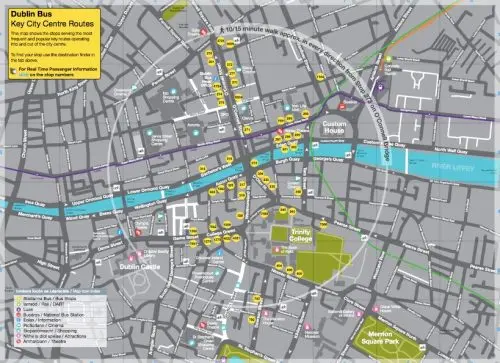
Dublin Bus serves millions of commuters annually across hundreds of routes. The fleet predominantly consists of low-floor double-decker buses designed for rapid passenger boarding and high-density urban transport.
- Pet Accessibility Score: Moderate (Conditional on Driver Discretion)
- Small Dogs (Carriers/Laps): Highly viable, though technically subject to driver approval.
- Large Dogs: Low viability. Navigating crowded aisles with a large dog on a leash presents safety and spatial challenges that drivers are unlikely to accommodate during peak hours.
- Assistance Animals: Fully permitted without restriction.
2. LUAS: The Light Rail System
Operated by Transdev on behalf of Transport Infrastructure Ireland, the LUAS comprises two primary lines: the Red Line (connecting Tallaght/Saggart to The Point) and the Green Line (connecting Broombridge to Brides Glen). Although downtown integration projects have linked portions of the network, the pet policy remains rigidly exclusionary.
The official LUAS etiquette and transport guidelines state:
"No animals are allowed on board with the exception of guide dogs."
- Pet Accessibility Score: Extremely Poor (Zero Tolerance)
- Small Dogs: Not permitted, even inside secure carriers or handbags.
- Large Dogs: Strictly prohibited.
- Assistance Animals: Fully permitted.
- Operational Impact: Travelers utilizing light rail to cross the city center must seek alternative modes of transport if accompanied by a pet.
3. DART and Commuter Rail (Irish Rail)
The Dublin Area Rapid Transit (DART) system serves as the scenic backbone of coastal commuting, while regional commuter lines branch out into Kildare, Meath, Wicklow, and Louth.
- Pet Accessibility Score: Favorable for Small Dogs; Restrictive for Large Dogs
- Small Dogs: Permitted free of charge in passenger compartments, provided they remain safely on the owner’s lap throughout the journey.
- Large Dogs: Excluded from DART and commuter services. Allowed exclusively on specific intercity routes (such as Dublin-Cork and Dublin-Belfast) within a designated guards’ van, subject to applicable freight or baggage charges.
- Assistance Animals: Fully permitted across all networks.
4. Bus Éireann: Regional Intercity Coach Services
Bus Éireann operates long-distance coaches connecting Dublin to regional towns and cities across the Republic of Ireland. Despite featuring an iconic hound logo reminiscent of international coach networks, the corporate branding does not translate to animal inclusion.
- Pet Accessibility Score: Poor
- Pet Policy: Pet dogs are strictly prohibited from boarding Bus Éireann intercity services, regardless of size or containment status.
- Assistance Animals: Fully permitted in accordance with national accessibility legislation.
Official Statements and Regulatory Landscape
The regulatory framework governing animals on Irish public transport is heavily influenced by both statutory accessibility requirements and commercial liability concerns. Under Irish and European Union law, transport operators are legally mandated to provide unrestricted access to certified guide dogs, hearing dogs, and accredited assistance dogs accompanying individuals with disabilities. These animals undergo rigorous training to ensure public safety, hygiene, and obedience in high-density environments.
For non-assistance pets, however, operators maintain broad autonomy under private transport bylaws. Iarnród Éireann, Dublin Bus, and Transport Infrastructure Ireland cite passenger safety, potential allergic reactions among fellow commuters, animal welfare concerns during sudden braking or overcrowding, and cabin cleanliness as primary justifications for restrictive pet policies.
The reliance on driver discretion—most notably observed in Dublin Bus operations—creates a localized legal vacuum. While the corporate entity outlines no explicit prohibition against small pets, individual operators possess the ultimate statutory authority to deny boarding if they determine that an animal poses a hazard or a disturbance to other fare-paying passengers. Consequently, travelers cannot rely on a codified right of passage for pet dogs on municipal buses; rather, they must depend on the goodwill and discretion of the frontline workforce.
Future Outlook: Trends in Urban Pet Travel
As Dublin continues to expand as a modern, cosmopolitan European tech and cultural hub, demographics are shifting rapidly. Urban density is increasing, pet ownership rates among young professionals and families are surging, and the concept of the "dog-friendly city" is transitioning from a niche lifestyle choice to a mainstream expectation.
In comparative European urban centers—such as Berlin, Paris, and London—public transit authorities have progressively relaxed pet regulations. In these cities, small dogs travel free in carriers, and larger dogs are permitted on transit networks provided they are leashed and muzzled, and sometimes subject to a discounted child or pet fare.
Pressure is mounting on Irish transit authorities—particularly Transport Infrastructure Ireland (LUAS) and Dublin Bus—to modernize their regulatory frameworks. Urban mobility advocates argue that modernizing pet policies would reduce vehicular traffic congestion by encouraging pet owners to utilize public transit for veterinary visits, recreational outings, and daily errands. Furthermore, standardization across municipal networks would eliminate consumer confusion and align Dublin’s transit infrastructure with progressive international standards.
Until such systemic reforms are enacted, travelers in Dublin must remain pragmatic. Those planning a journey with a canine companion should prioritize heavy rail (DART and commuter lines) with small, lap-friendly dogs, maintain flexibility when boarding municipal buses, and arrange alternative private transport—such as pet-friendly taxis or walking—when utilizing the LUAS light rail network or long-distance coaches.
For comprehensive, up-to-date guides detailing public transit pet policies across major international cities, travelers are encouraged to explore the dedicated public transit resources provided by expert travel platforms and specialized community guides.