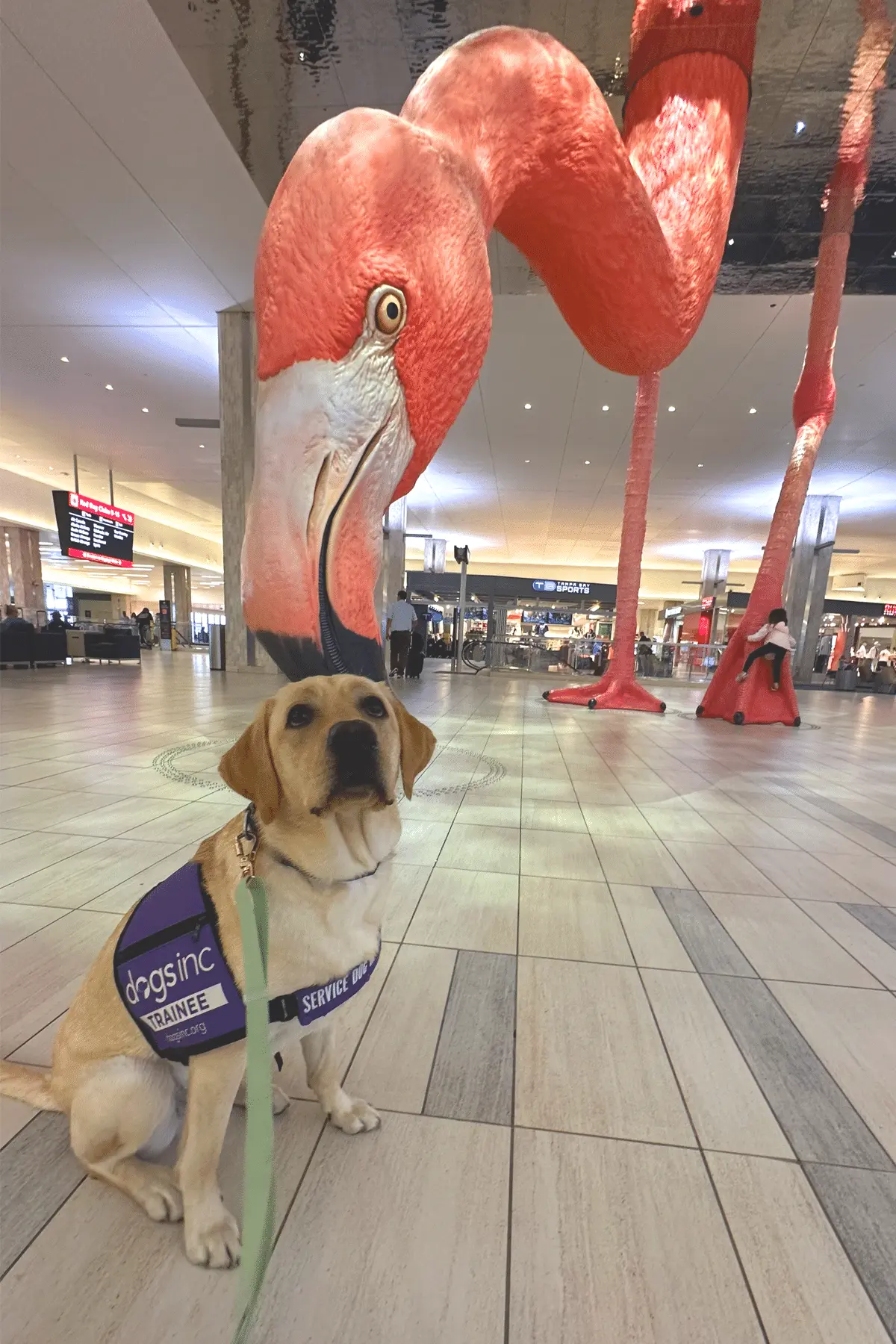
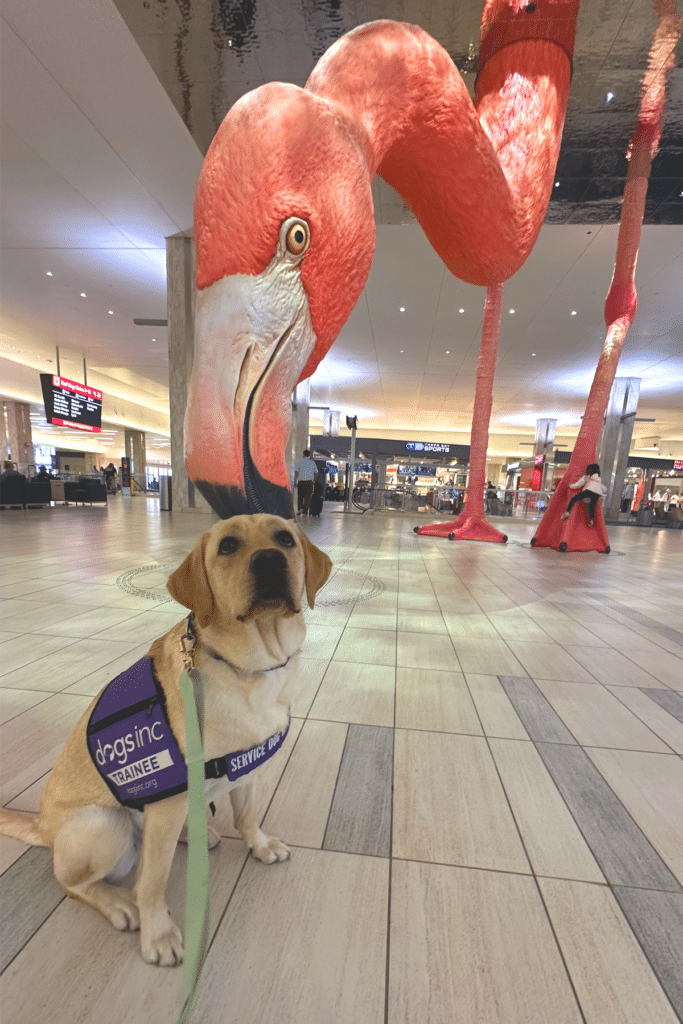
To the casual observer, a bustling airport terminal or a crowded metropolitan restaurant is a sensory gauntlet. The environment pulsates with a chaotic symphony of rolling luggage wheels, sudden public announcements, the clatter of silverware, shifting crowds, and unpredictable stimuli. For many human beings, navigating these high-density spaces can trigger profound sensory overload, anxiety, or logistical paralysis. Yet, alongside handlers who rely on them for daily independence, service dogs glide through these chaotic landscapes with unwavering composure, laser-like focus, and profound poise.
This level of calm does not occur by chance, nor is it an innate temperament found in every canine. The effortless public presence of a working service dog is the culmination of years of deliberate, highly sophisticated education. Known as public access training, this specialized discipline bridges the gap between basic obedience and the complex realities of modern public life. It prepares dogs to accompany handlers with disabilities into spaces governed by the Americans with Disabilities Act (ADA)—ranging from commercial aircraft and healthcare facilities to grocery stores and bustling civic centers—without displaying fear, aggression, or distraction.
This comprehensive report explores the anatomy of service dog public access training. It examines the pedagogical milestones, psychological thresholds, and real-world simulation environments required to transform a promising puppy into a reliable working partner. Furthermore, it highlights the critical distinctions between task training, public access, and emotional support animals, while shedding light on the dedicated network of puppy raisers and professional instructors who make these life-changing partnerships possible.
Detailed Chronology: The Lifecycle of a Service Dog’s Public Access Preparation
The journey of a service dog is a carefully sequenced continuum that begins in early puppyhood and extends through advanced adult evaluation. Understanding this trajectory reveals the immense investment required to produce a fully certified working canine.
Phase 1: Infancy and Early Socialization (Months 0–6)
Long before a future service dog is introduced to a crowded terminal, its education begins in the domestic sphere. During the first few months of life—often spent with specialized breeder-caretakers and early-stage volunteer puppy raisers—the primary objective is neuro-developmental resilience. Common breeds utilized for this work, particularly Labrador Retrievers and Golden Retrievers, are chosen for their stable temperaments, high trainability, and eagerness to please.
During this window, puppies are exposed to a controlled matrix of sights, sounds, surfaces, and human interactions. They encounter clattering metal pans, slippery tile floors, flashing lights, and different human gaits and physical statures. Rather than overwhelming the puppy, instructors and raisers use positive reinforcement to pair these novel stimuli with rewarding outcomes, cultivating curiosity instead of defensive reactivity.
Phase 2: Foundational Obedience and Controlled Environments (Months 6–12)
As the dog matures physically and cognitively, foundational obedience transitions into structured public environments. Puppies in training begin visiting pet-friendly stores, quiet office buildings, and suburban shopping centers.
During this phase, handlers and instructors focus on:
Loose-leash walking: Ensuring the dog remains in a consistent heel position regardless of surrounding movement.
Environmental neutrality: Teaching the dog to ignore dropped objects, shopping carts, and minor acoustic surprises.
Basic impulse control: Practicing extended stays and sits in areas with moderate foot traffic.
Phase 3: Advanced Public Access Integration (Months 12–24)
Once basic competencies are mastered, candidates enter high-intensity public access training. This is where the curriculum intersects with the complex legal and logistical realities of the ADA. Dogs are systematically introduced to high-stakes environments:
Airports: Navigating security lines, metal detectors, moving walkways, boarding bridges, and crowded cabins.
Restaurants: Settling quietly in confined spaces under tables for extended durations while ignoring discarded food, spilled drinks, and the close proximity of waitstaff.
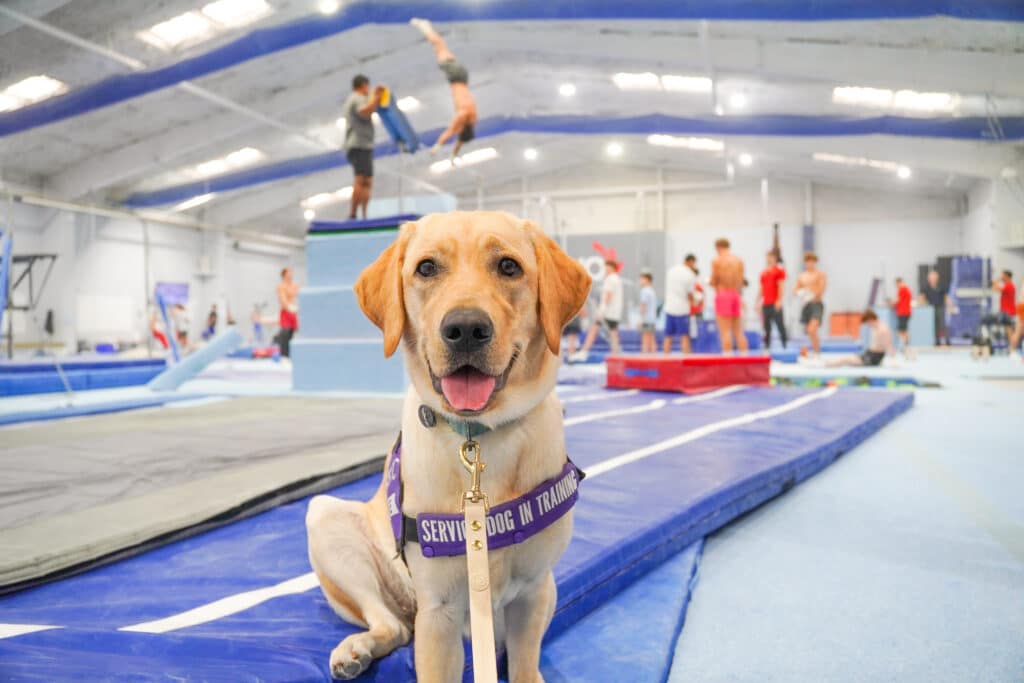
Crowded Public Spaces: Maintaining composure amid dense pedestrian traffic, children running, skateboards, and unexpected structural noises.
Phase 4: Final Evaluation and Working Placement
Before graduation, every candidate undergoes rigorous, multi-environment evaluations administered by master instructors. Dogs must prove that their public behavior is unimpeachable, consistent, and reliable under pressure. Once passed, they are matched with a specific handler whose lifestyle, physical needs, and daily routines align with the dog’s skill set.
Supporting Context & Metrics: The Science of Distraction and Legal Distinction
To fully appreciate the rigor of public access training, one must understand the legal frameworks that govern working animals and the psychological principles that drive canine learning.
Legal Definitions: Task Training vs. Public Access vs. Emotional Support
Public confusion often surrounds the legal status of working animals. Under the ADA, a service animal is strictly defined as a dog that has been individually trained to do work or perform tasks for the benefit of an individual with a disability, including a physical, sensory, intellectual, or mental disability.
Category
Legal Public Access Rights (ADA)
Mandatory Task Training Required?
Primary Purpose
Service Dog
Protected nationwide access to public accommodations
Yes (Specific tasks directly related to the disability)
Mitigating specific functional limitations
Psychiatric Service Dog
Protected nationwide access to public accommodations
Yes (e.g., interrupting panic attacks, deep pressure therapy)
Limited or none (historically housing-only under FHA)
No
Providing therapeutic comfort through mere presence
Crucially, a dog’s mere presence does not qualify it as a service animal. Public access training ensures that a service dog is not only helpful in private but impeccably behaved in public spaces where pets are legally prohibited.
The Mechanics of Distraction Training
Distraction training is an exercise in systematic desensitization and counter-conditioning. Instructors utilize a progressive overload model:
Low-Distraction Baseline: Teaching a behavior in a sterile, quiet training room.
Moderate Distraction: Introducing a single controlled distraction, such as a rolling ball or another dog across the room.
High Distraction: Moving to a busy sidewalk, an active transit hub, or a bustling shopping center.
By rewarding the dog for choosing engagement with the handler over environmental stimuli, trainers build robust impulse control. If a child drops an ice cream cone next to a service dog in training, the desired response is total indifference to the food and absolute attention directed toward the handler’s cues.
Official Perspectives and Expert Insights
Industry professionals emphasize that public access training is as much about psychological resilience as it is about physical obedience.
"Confidence is not something you can demand from a dog; it is something you systematically build," explains a lead training coordinator at a national service dog organization. "When a dog enters an airport terminal for the first time, the sensory input is staggering. Our job is to act as a secure base for that dog, showing them that every novel sound, strange floor surface, and passing crowd is safe and manageable."
Experts also stress the vital role of the "settle" command in high-density environments. For individuals requiring mobility assistance, medical alert, or psychiatric support (such as handlers managing Post-Traumatic Stress Disorder), a service dog must be capable of remaining completely inert and unobtrusive for hours at a time. Whether resting beneath a restaurant table during a three-course business meeting or waiting quietly in a crowded medical waiting room, the dog must maintain operational readiness without becoming a safety hazard or an obstruction.
Furthermore, veteran trainers highlight the indispensable contributions of volunteer puppy raisers.
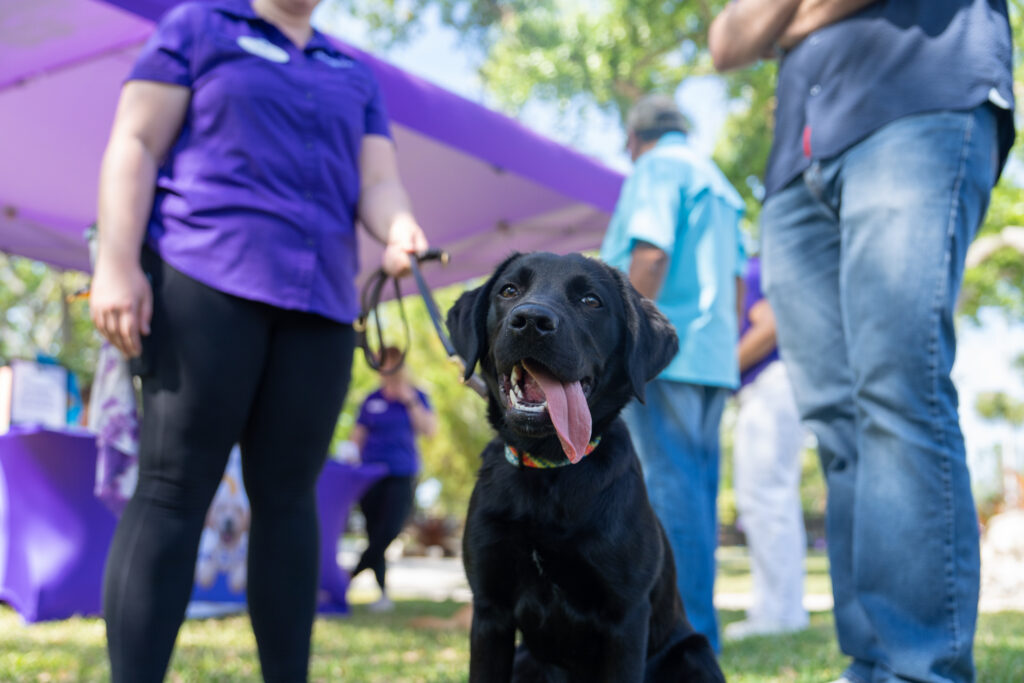
"Puppy raisers are the architects of our dogs’ early confidence," notes an institutional training director. "They take these young animals everywhere—into grocery stores, office buildings, and public parks—laying the groundwork that makes advanced public access training possible. Without their dedication, transforming an energetic puppy into a life-changing working partner would be impossible."
Future Outlook: The Evolution of Public Access Standards
As the landscape of public accessibility evolves, service dog organizations continue to refine their training methodologies to meet modern challenges. Several emerging trends are shaping the future of public access preparation:
Advanced Acoustic Desensitization: With urban environments becoming increasingly complex and multimodal transit hubs growing in density, training programs are utilizing advanced digital soundscapes to expose puppies to industrial noises, drone activity, and high-frequency urban sounds earlier in development.
Standardized Evaluation Metrics: Industry leaders are moving toward universally accepted benchmark testing to combat fraudulent service animals and ensure that every graduate dog meets the highest standards of public safety and behavioral reliability.
Handler-Dog Integration Protocols: Recognizing that a well-trained dog can still struggle if paired with an inexperienced handler, modern training frameworks are expanding post-graduation public access coaching to ensure seamless teamwork in real-world conditions.
Conclusion
The poise displayed by a service dog navigating a crowded airport terminal or a tightly packed restaurant is not a stroke of genetic luck. It is the result of a meticulously engineered educational framework rooted in positive reinforcement, gradual environmental exposure, rigorous distraction training, and unwavering human dedication.
From the early socialization provided by volunteer puppy raisers to the advanced real-world evaluations conducted by professional instructors, every phase of public access training serves a singular purpose: to forge a resilient, highly reliable canine partner. Through this rigorous preparation, service dogs do more than simply accompany individuals with disabilities—they unlock a world of boundless independence, safety, and dignity.