
Executive Overview
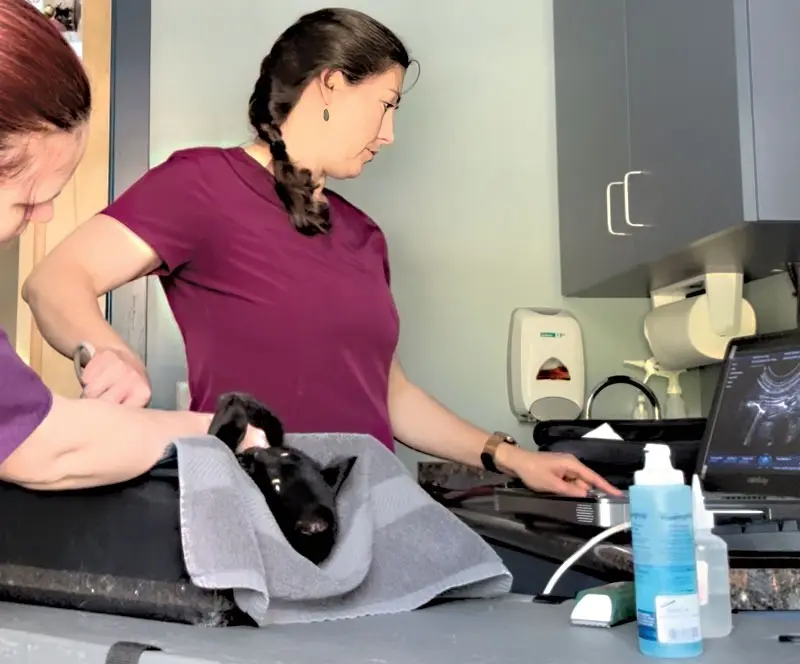
For general practitioners (GPs) navigating the high-stress environment of modern animal healthcare, the chasm between ideal diagnostic pathways and real-world client limitations can feel insurmountable. Whether strategizing the emergency transport of a critical patient suffering from acute respiratory distress to an intensive care unit over an hour away, or mapping out a long-term management plan for a complex, newly diagnosed diabetic patient, access to veterinary specialists often serves as an essential clinical lifeline.
Historically, this specialist support has been delivered via informal phone consultations, rushed hallway chats at veterinary conferences, or physical patient referrals. However, this fragmented approach is frequently unavailable, geographically impractical, or economically unfeasible. Left to operate in isolation, general practitioners find themselves in an uncomfortable position: forced to bridge the gap between "gold standard" specialty medicine and the harsh economic and logistical realities faced by pet owners.
Enter structured veterinary teleconsultation—an emerging model that is fundamentally transforming the delivery of veterinary medicine. By connecting primary care veterinarians directly with board-certified specialists through formal, medical-record-driven channels, teleconsultation brings virtual specialty hospitals straight to the exam rooms of rural and urban clinics alike. Authored by Kate Boatright, VMD, and Kristin Welch, DVM, DACVECC, founder of DVM STAT Consulting, this paradigm shift is expanding the "spectrum of care," equipping general practitioners with the institutional confidence, diagnostic depth, and tailored treatment frameworks needed to optimize patient outcomes without requiring clients to cross geographic or financial boundaries.
Detailed Chronology: The Evolution of Collaborative Veterinary Care
To understand the rise of formal teleconsultation, it is necessary to examine how the relationship between general practitioners and veterinary specialists has evolved over recent decades.
The Traditional Era: The Referral Paradigm
For generations, the standard of care was binary. A primary care veterinarian would evaluate a patient, run baseline diagnostics, and—if the case exceeded the clinic’s equipment or the practitioner’s comfort level—recommend a specialty referral. In this model, the case was either managed entirely in-house using empirical therapies or handed off completely to a board-certified referral center. While this system produced exceptional clinical outcomes for clients with the financial means and geographic proximity to access multi-specialty hospitals, it alienated a vast demographic of pet owners.
The Rise of "Spectrum of Care" and Informal Networks
As economic pressures mounted and the demographics of pet ownership shifted, veterinarians began recognizing that the rigid "gold standard or nothing" approach was failing patients. This realization birthed the modern concepts of the "spectrum of care" and collaborative care. Veterinarians started working alongside clients to navigate financial ceilings, scheduling constraints, and transportation barriers.
Simultaneously, clinicians turned to informal peer-to-peer networks. They texted specialist friends, posted complex case histories on the Veterinary Information Network (VIN), or called local colleagues for ad-hoc advice. While these informal habits reflected a healthy medical instinct to seek second opinions, they suffered from significant flaws: compressed case histories, a lack of comprehensive diagnostic reviews (such as missing subtle CBC trends or early azotemia), and an absence of formal, medico-legal documentation.
The Advent of Structured Teleconsultation (2019–Present)
Recognizing the systemic inefficiencies of both rigid physical referrals and informal, unvetted text messages, forward-thinking clinicians began pioneering structured virtual care models. In 2019, Dr. Kristin Welch launched a pilot teleconsultation service designed to give primary care veterinarians direct, asynchronous, and synchronous access to board-certified specialists.
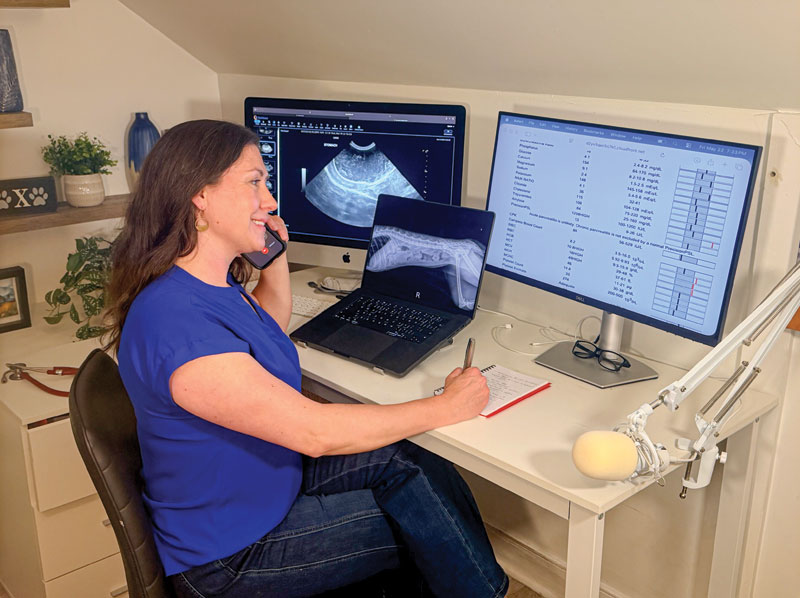
What began as a localized initiative has since evolved into a robust virtual specialty ecosystem. Platforms like DVM STAT Consulting have scaled to incorporate dozens of board-certified specialists spanning nearly a dozen distinct disciplines, offering 24/7 support to clinics across North America. This evolution has shifted teleconsultation from a casual favor among colleagues into a standardized, evidence-based pillar of modern veterinary practice.
Supporting Context & Metrics: The Barriers Driving the Shift
The explosive growth of veterinary teleconsultation is not occurring in a vacuum; it is a direct response to compounding economic, geographic, and psychological pressures facing both pet owners and veterinary professionals.
The Financial Chasm
Economics represent the single greatest barrier to traditional specialty care. According to comprehensive industry data from a 2024 survey cited by veterinary analysts:
- 80% of pet owners expressed acute concern regarding the escalating costs of emergency and specialty veterinary care.
- For the majority of these respondents, financial anxiety directly equaled anxiety over their pet’s clinical outcome.
- Strikingly, 50% of pet owners reported that an unexpected medical bill of $1,000 or less would induce severe financial stress.
When clients decline formal referral due to these economic realities, general practitioners are left flying blind. They must construct individualized care plans based on limited diagnostics, past personal experiences, and sparse literature. While a growing body of evidence supports spectrum-of-care options for high-incidence conditions like canine parvoviral enteritis and pyometra, vast clinical territories remain devoid of validated alternative treatment protocols.
Psychological Distress Among Clinicians
This clinical compromise takes a heavy emotional toll on the veterinary team. A recent industry survey evaluating the implementation of the spectrum of care revealed profound psychological friction among practitioners:
- 33% of surveyed veterinarians agreed that providing treatment below "gold standard care" caused them at least "somewhat distressing" emotional burdens.
- When asked why they hesitate to offer multiple tiered treatment options, the leading answers were telling: 39% stated, "I’m aiming for the best possible outcome," while 24% noted, "I’m trying to follow recommendations from my education/continuing education."
These statistics underscore a lingering cultural dogma within veterinary medicine: many practitioners have been conditioned to equate optimal outcomes exclusively with intensive, textbook specialty interventions, leaving them deeply uncomfortable when forced to modify protocols for budgetary reasons.
Geographic and Logistical Bottlenecks
Beyond cost, logistics present formidable walls. Rural practices often find themselves hours away from the nearest multi-specialty emergency facility. Furthermore, even in urban centers, specialty hospitals frequently experience backlogs. Patients requiring urgent diagnostics prior to an anesthetic procedure cannot afford weeks-long delays waiting for an open appointment slot at a referral center. Teleconsultation neutralizes these geographic and temporal barriers, bringing the specialist’s expertise directly into the primary care facility.
Official Statements & Regulatory Landscape
As virtual care models expand, regulatory clarity becomes paramount. A common point of confusion among practitioners involves distinguishing between telemedicine and teleconsultation.
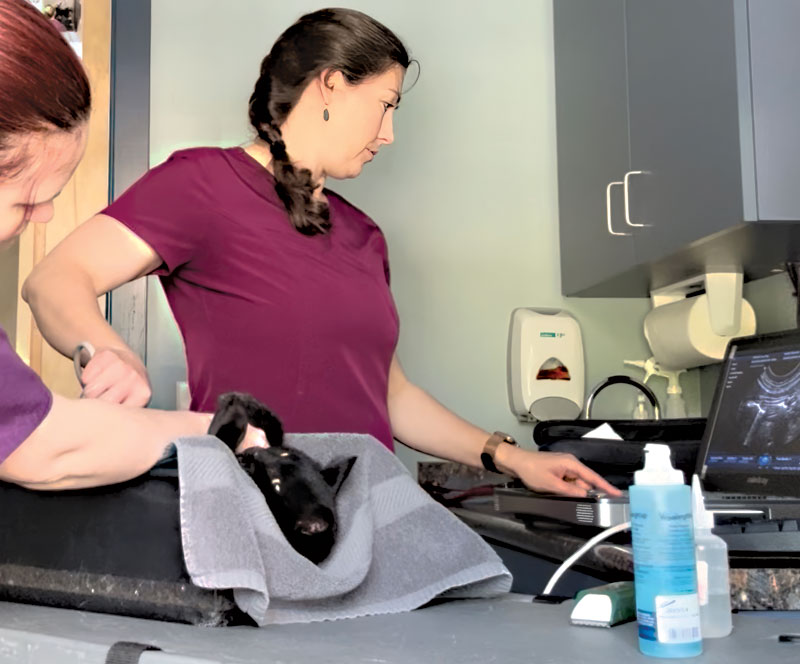
Telemedicine vs. Teleconsultation: Understanding the Distinction
- Telemedicine involves a veterinarian providing clinical guidance directly to a pet owner. This model is strictly governed by the Veterinary-Client-Patient Relationship (VCPR). According to the American Veterinary Medical Association (AVMA) Model Veterinary Practice Act and federal guidelines established by the U.S. Food and Drug Administration (FDA), a valid VCPR cannot be established solely via digital interaction; it requires a timely physical examination of the patient by the managing clinician.
- Teleconsultation, conversely, is strictly a veterinarian-to-veterinarian interaction. Major governing bodies, including the AVMA and the American Animal Hospital Association (AAHA), broadly support this collaborative model.
Jurisdictional Permissibility and Liability
In the vast majority of jurisdictions, it is entirely legal for a board-certified specialist to provide consultative guidance to a general practitioner—regardless of whether the specialist holds a license in the GP’s home state—provided that the managing general practitioner maintains a valid, active VCPR with the client and patient.
The division of responsibility is clear:
- The General Practitioner retains ultimate clinical authority. They interpret the specialist’s recommendations, contextualize them within the patient’s specific presentation, communicate options to the client, and make the final medical decisions. The GP is the clinician of record.
- The Specialist acts as an expert consultant, reviewing comprehensive medical records, diagnostic images, and laboratory data to generate structured, written recommendations.
However, legal experts emphasize a crucial caveat regarding professional liability: any veterinarian offering consultative guidance—whether formal platform specialists or a local colleague answering an informal text message—must ensure their professional liability insurance explicitly extends to remote consultative work. Specialists are advised to verify their coverage parameters before issuing binding clinical advice.
Future Outlook: The Virtual Specialty Hospital of Tomorrow
The integration of structured teleconsultation into everyday primary care represents a permanent evolution in veterinary medicine. No longer must general practitioners choose between isolated clinical guesswork and unattainable specialty referrals.
By leveraging asynchronous and synchronous digital platforms, primary care clinics are effectively transforming into hybrid hubs of advanced care. Early-career veterinarians, who frequently report lower comfort levels when managing complex cases with limited diagnostics, gain a built-in mentorship network of board-certified intensivists, cardiologists, dermatologists, and radiologists.
Furthermore, the output of structured teleconsultations—comprehensive, written diagnostic and therapeutic reports integrated directly into the patient’s electronic medical record—ensures institutional continuity, elevates the standard of record-keeping, and builds unshakeable trust with clients.
As financial pressures persist and pet healthcare expectations continue to rise, teleconsultation bridges the gap between what is clinically ideal and what is practically possible. It empowers general practitioners to practice with enhanced confidence, honors the financial realities of pet owners, and, above all, ensures that thousands of animals receive sophisticated, expert-backed care that otherwise would have been completely out of reach.