
Executive Overview
For decades, the prevailing narrative surrounding wildlife rescue and rehabilitation has followed a reassuring script: an animal is saved from the clutches of illegal traffickers, nursed back to health, and triumphantly returned to its natural habitat. To the public and conservation donors alike, this moment of release represents the ultimate conservation victory—a tangible restoration of balance to a depleted ecosystem.
However, a groundbreaking scientific study published in the journal Global Ecology and Conservation challenges this comforting assumption. The research reveals that returning rescued wildlife to the wild does not always end in success. In fact, under certain conditions, release programs transform the natural world into a fatal arena—what researchers starkly describe as a "death trap."
The study, spearheaded by renowned primatologist Professor Anna Nekaris OBE of Anglia Ruskin University, alongside collaborators from the conservation group Plumploris e.V. and the University of Western Australia, shines an uncomfortable light on the fate of Bengal slow lorises (Nycticebus bengalensis) released in northeastern Bangladesh. By tracking these primates post-release, the research team uncovered a grim reality: without rigorous ecological planning, careful site selection, and an understanding of species-specific behavior, well-intentioned reintroductions can do far more harm than good.
This investigative feature examines the methodology and findings of the study, explores the biology and vulnerabilities of the Bengal slow loris, details the systemic flaws in current wildlife release protocols, and outlines the urgent call from scientists to fundamentally rethink how humanity approaches the rehabilitation and reintroduction of rescued fauna.
Detailed Chronology: Tracking the Fate of Released Bengal Slow Lorises
To understand what happens to animals after the cameras stop rolling and the release crates are opened, researchers initiated a targeted tracking project in a national park located in northeastern Bangladesh. This specific protected area had frequently been utilized for previous wildlife releases by authorities and conservation organizations seeking a safe haven for confiscated animals.
The Release and Immediate Aftermath
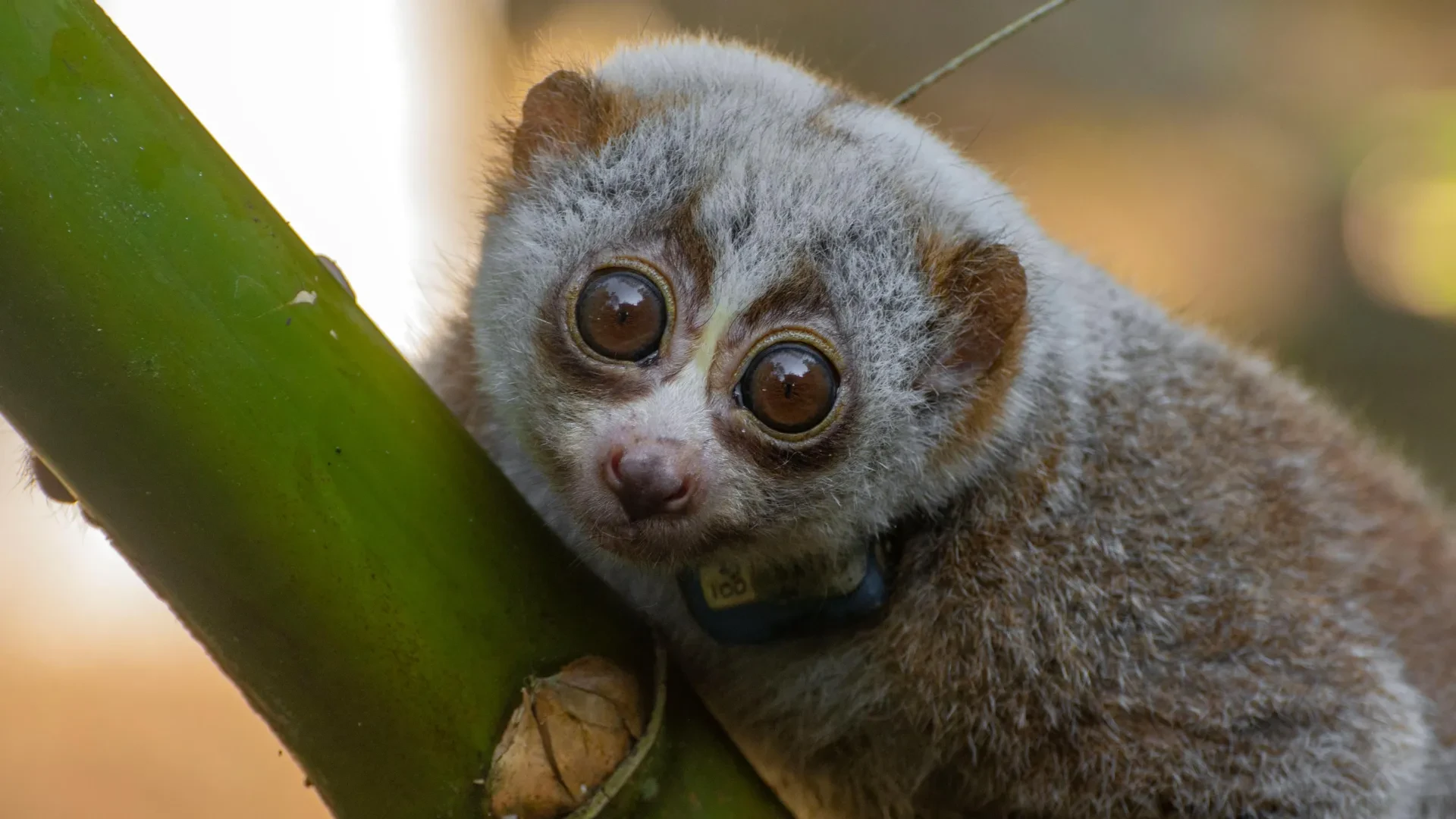
The study focused on nine Bengal slow lorises that had been prepared for reintroduction. To monitor their movements, survival rates, and behaviors, scientists fitted each animal with a specialized radio collar prior to release. What followed was a sobering lesson in the complexities of animal behavior and territorial dynamics.
The results of the post-release monitoring were stark and immediate:
- Initial Mortality: Out of the nine animals tracked, only two survived over the duration of the monitoring period. Three individuals perished within a mere 10 days of being released into the national park.
- Mid-Term Attrition: Within six months of release, an additional four animals had died, bringing the total mortality rate to an alarming 77.7%.
- Physical Evidence: Researchers successfully recovered four of the seven bodies for examination. Every single recovered carcass bore unmistakable physical evidence of violent trauma—specifically, severe bite wounds inflicted by other slow lorises.
Behavioral Anomalies and Survival Factors
The data collected by the radio collars and field observations revealed distinct behavioral differences between the animals that perished and the two survivors.
Firstly, the research revealed a direct correlation between the length of time an animal spent in captivity and its post-release survival chances. Animals that had endured longer periods in captivity tended to survive for fewer days in the wild. Captivity alters an animal’s physical conditioning, physiological stress responses, and behavioral development, leaving them ill-equipped to navigate the harsh realities of natural ecosystems.
Secondly, the released lorises exhibited hyper-active and hyper-vigilant states. They moved around significantly more and appeared far more alert than wild Bengal slow lorises normally do, likely driven by stress, disorientation, and the unfamiliarity of their surroundings.
Conversely, the two individuals that managed to survive displayed a different strategy: they traveled across substantially larger geographical areas than those that died. This pattern suggested that survival was contingent upon an animal’s ability to disperse far beyond the initial release zone—effectively avoiding confrontations with established, resident populations by finding unclaimed or marginal territory.
Supporting Context & Metrics: The Plight of Slow Lorises and Systematic Flaws
To fully grasp the tragedy unfolding in the forests of Bangladesh, it is necessary to examine the broader ecological and socioeconomic context surrounding the slow loris trade and the mechanics of modern wildlife rescue operations.
The Illegal Pet Trade and Vulnerability
Slow lorises are among the most charismatic yet misunderstood mammals on Earth. Characterized by their large, expressive eyes, rounded heads, and gentle-looking faces, these nocturnal primates possess features that trigger human nurturing instincts. Tragically, these very traits have made them prime targets for the illegal wildlife pet trade.
Across Southeast Asia and the Indian subcontinent, slow lorises are hunted, captured, and trafficked in vast numbers. They are sold locally as exotic pets or smuggled internationally. To make them easier to handle, traders often cruelly clip or yank out their teeth with pliers without anesthesia—a practice that frequently leads to severe infections or death.
All slow loris species are currently listed by the International Union for Conservation of Nature (IUCN) as Critically Endangered, Endangered, or Vulnerable. Because they are heavily protected and frequently intercepted by law enforcement agencies, thousands of individuals end up in rescue centers. This constant influx drives the demand for release programs, as conservationists and government agencies face mounting pressure to empty overcrowded facilities and return animals to the wild.
The Unique Danger of Territoriality and Venom
Unlike many other mammals that can be released into a habitat with relative ease, slow lorises possess unique biological characteristics that make reintroduction uniquely hazardous, particularly when done haphazardly.
- Strict Territoriality: Slow lorises are fiercely territorial creatures. When an unfamiliar loris is dropped into a forest, it is viewed by resident animals as an aggressive intruder threatening their food sources, sleeping sites, and mating territories.
- Primate Venom: Remarkably, slow lorises are the world’s only venomous primates. They possess a brachial gland on their inner arm, the secretion of which mixes with their saliva to produce a potent toxin delivered through specialized, comb-like lower teeth (the toothcomb). This venom can cause severe necrotic wounds, pain, and even death in other animals, including conspecifics.
When rescued lorises were introduced into a national park that was already at or near ecological carrying capacity, they inadvertently stumbled into the established territories of resident populations. The resulting violent territorial defense mechanisms turned the forest into a lethal battleground, resulting in the brutal bite wounds documented on the recovered carcasses.
The "Dumping Ground" Phenomenon
The study also exposed a systemic flaw in how many regional rescue and release initiatives operate. While high-profile, charismatic megafauna—such as tigers, elephants, or large bears—frequently benefit from extensive funding, post-release radio-tracking, and veterinary oversight, smaller and less conspicuous species are often neglected.
Many smaller species are not closely monitored after the cage doors open, meaning the true outcomes of their releases frequently remain entirely unknown. Conservationists refer to this as the "out of sight, out of mind" problem.
Furthermore, as lead author Hassan Al-Razi noted, rescue and release has become an increasingly common practice in regions like Bangladesh. However, logistical convenience has routinely replaced ecological science in decision-making. Forest-dwelling species are often released into the nearest accessible forest simply because it is convenient for transport and management teams, rather than because the site has been scientifically evaluated for suitability. Consequently, certain protected forests have effectively been transformed into "dumping grounds" for rescued animals, where saturated local populations and scarce resources guarantee high mortality rates.
Official Statements: Perspectives from the Front Lines
The implications of this study extend far beyond a single national park in Bangladesh, serving as a wakeup call for the global conservation community. The lead researchers have articulated clear, uncompromising warnings regarding the current state of wildlife reintroductions.
Senior author Professor Anna Nekaris OBE, Professor of Ecology, Conservation and Environment at Anglia Ruskin University and head of the Little Fireface Project, emphasized the danger of bowing to public pressure at the expense of scientific reality:
"It’s assumed that returning confiscated or rescued animals to the wild is always a positive conservation story. Our research shows that for highly territorial species like slow lorises, releasing them into areas that are already densely populated can be a death trap.
Many rescued endangered species are often released because the public expects it, but for animals such as the Bengal slow loris, this is not always the best course of action. Without fully understanding the animal’s behavior, its time spent in captivity, and the density of resident populations at the release site, reintroductions may do more harm than good."
Echoing these concerns, lead author Hassan Al-Razi, team leader of Plumploris e.V. Bangladesh, highlighted the operational shortcomings that plague regional conservation efforts:
"Rescue and release have become an increasingly common practice in Bangladesh. Many wild animals, including slow lorises, are rescued and subsequently released back into the wild.
However, in many cases, these releases are conducted inappropriately. For forest-dwelling species, release sites are often selected based on logistical convenience rather than ecological suitability. As a result, certain forests have effectively become dumping grounds for rescued animals and are no longer appropriate release sites.
Although our research has focused on the Bengal slow loris and demonstrated the consequences of such practices, we believe similar patterns likely affect many other species."
Future Outlook: Reforming Wildlife Rescue and Reintroduction Protocols
The findings of Professor Nekaris, Al-Razi, and their colleagues do not suggest that wildlife rescue is inherently futile. Rather, they serve as a powerful indictment of unplanned and unmonitored reintroductions. If conservationists are to prevent well-meaning rescue programs from becoming engines of mortality, a fundamental paradigm shift is required across the board.
1. Rigorous Habitat Assessments and Density Studies
Before any animal is approved for release, comprehensive ecological surveys must be conducted at the proposed release site. Conservation organizations must determine the carrying capacity of the habitat, map the territories of existing resident populations, and ensure that the area is not already saturated. Releasing territorial animals into high-density zones must be strictly avoided.
2. Tailored Rehabilitation Protocols
Time spent in captivity erodes wild instincts, alters physical fitness, and induces psychological stress. Rehabilitation facilities must move away from generic holding practices and implement species-specific protocols designed to prepare animals for the specific challenges they will face in the wild. This includes foraging training, predator avoidance conditioning, and minimizing human habituation.
3. Long-Term Post-Release Monitoring
Releasing an animal without tracking its fate is no longer ethically or scientifically defensible. Funding structures for rescue centers must incorporate mandatory allocations for post-release monitoring equipment—such as radio telemetry, GPS collars, or camera traps—and sustained field observations. If an animal is struggling to adapt or facing immediate mortal peril from territorial residents, intervention protocols must be in place.
4. Shifting Public Expectations and Education
Much of the pressure to execute rapid, ill-advised releases stems from public demand for immediate, feel-good narratives. Conservation organizations, governments, and media outlets must work together to educate the public about the complex realities of wildlife conservation. Stakeholders must understand that a lifetime of high-quality sanctuary care may sometimes be a far more humane and scientifically sound outcome for a permanently damaged or un-releasable wild animal than a doomed return to a hostile forest.
Conclusion
The study on Bengal slow lorises serves as a sobering reminder that nature is governed by ruthless ecological laws, not human sentimentality. When we open a transport crate in the forest, we are not simply returning an animal to its home; we are introducing a new competitor into a delicate, pre-existing social order. By acknowledging the hidden perils of ill-planned releases and embracing rigorous, science-led protocols, the global conservation community can ensure that rescued wildlife are given a genuine second chance at life—rather than walking blindly into a death trap.