
Executive Overview
In a landmark move signaling a structural shift in how Britain’s retail sector approaches the intersection of agriculture, human health, and commercial strategy, supermarket giant Tesco has committed £20 million as the anchor investor in Bramble Fund I. Established by Leon co-founder and former government food tsar Henry Dimbleby, the investment vehicle is targeting an aggregate capital raise of £100 million. The fund aims to deploy tickets ranging from £1 million to £5 million into high-growth, early-stage enterprises capable of fundamentally altering the UK food system by making products healthier, more sustainable, and ultimately more accessible.
While the financial injection is substantial, industry analysts argue that Tesco’s involvement carries weight far beyond the size of its initial cheque. For decades, the global food industry has operated on a high-volume, low-margin model that prioritized pure caloric output and commodity trading efficiency over systemic outcomes like nutritional density and environmental circularity. However, the arrival of Britain’s largest grocery retailer—commanding a dominant share of the domestic market—suggests that this narrow philosophy is rapidly making way for a holistic value framework.
Crucially, Tesco is not merely acting as a passive limited partner. Through the newly minted Tesco-Bramble Innovation Partnership, the supermarket will establish a joint innovation board designed to grant promising portfolio companies direct access to its sprawling supply chain. For early-stage agritech and food-tech startups, this route to commercial scale represents a lifeline far more valuable than venture capital alone, transforming theoretical lab breakthroughs into products destined for the weekly shopping trolley of millions.
Detailed Chronology: The Evolution of the Bramble Fund and Retail Strategy
The genesis of Bramble Fund I and its high-profile alliance with Tesco reflects a broader, accelerating convergence between agricultural production, industrial food processing, and preventive healthcare.
- The Vision Takes Shape: Henry Dimbleby, renowned for co-founding the naturally fast-food chain Leon and authoring the influential National Food Strategy, set out to design an investment mechanism that could bridge the chasm between raw agricultural innovation and consumer-facing retail. Recognizing that traditional venture capital often shies away from the complex, capital-intensive pathways of the food sector, Dimbleby structured Bramble to focus intensely on health, nutrition, and sustainable production cycles.
- Securing the Anchor: The turning point for the fund arrived with Tesco’s commitment of £20 million. By securing Britain’s largest supermarket as its anchor investor, Bramble instantly gained institutional credibility, setting the stage for its wider £100 million fundraising target.
- Initial Deployments: The fund’s thesis is already materializing in the real world. Bramble’s inaugural investment targeted KluraLabs, a British technology company specializing in advanced packaging solutions designed to drastically extend the shelf life of highly perishable goods, including berries, grapes, and baked goods. By reducing waste at both the retail and consumer levels, KluraLabs embodies the fund’s dual mandate of environmental circularity and economic efficiency.
- The Integration Framework: Moving beyond capital allocation, Tesco and Bramble formalized the Tesco-Bramble Innovation Partnership. This framework bridges the gap between early-stage innovation and retail integration, allowing portfolio companies to pilot their technologies within Tesco’s distribution networks.
Supporting Context & Metrics: The Paradigm Shift in Food Economics
The convergence of food and healthcare is rapidly dismantling traditional industry boundaries. For years, agricultural technology focused almost exclusively on yield optimization—developing synthetic fertilizers, heavy machinery, and chemical pest controls designed to maximize the volume of raw commodities extracted from the earth. Today, however, investors and entrepreneurs are looking far beyond the farm gate.
Beyond the Farm Gate: The AgriHealth Movement
Antony Yousefian, general partner at London-based venture firm The First Thirty and co-chair of the Investor Coalition on Food Policy, has been a vocal champion of what he terms "AgriHealth." Speaking to industry analysts, Yousefian noted that Tesco’s move underscores a profound realization among major retailers: healthier and more sustainable food ranges are no longer merely a regulatory checkbox or corporate social responsibility (CSR) exercise, but a robust commercial opportunity.
"It is pleasing to see," Yousefian remarked, drawing parallels to recent structural shifts across the high street. "Tesco also recently stripped out many ultra-processed ingredients from its ranges. This follows M&S, which now has an entire nutrient density range and products with fewer ingredients… As a group of investors, we have been emphasising to the industry that healthy food sales represent a commercial opportunity."
This philosophy aligns directly with the activities of the Investor Coalition on Food Policy, which supports the work of the Food Foundation. By advocating for mandatory corporate health reporting, these coalitions aim to give investors transparent metrics to assess portfolio risks associated with poor diet and shifting consumer behavior.
Tesco’s Internal Baseline
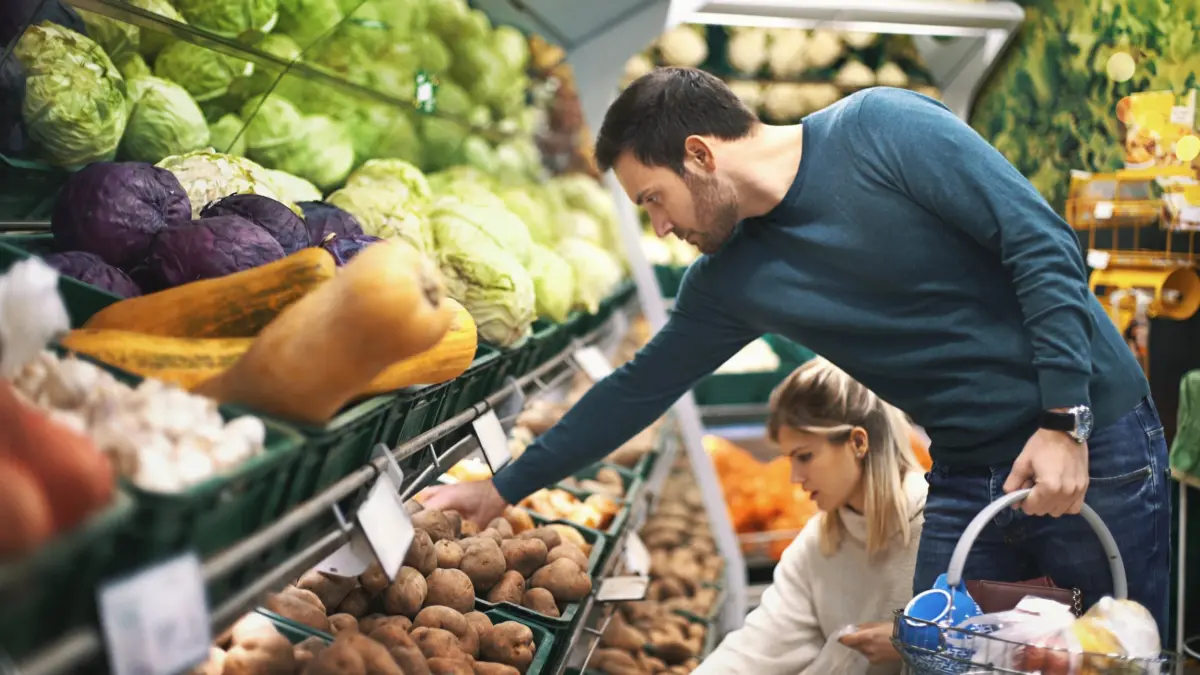
For Tesco, the Bramble partnership is not an isolated detour into venture capital, but a logical extension of its existing corporate strategy. The retailer reports that 65% of its UK and Irish food sales are now classified as healthy, driven by a deliberate effort to reshape consumer baskets. Furthermore, Tesco’s volume of fresh fruit and vegetable sales has climbed by 10% since 2022, demonstrating that incremental, strategic range adjustments can move the needle on public health indices without sacrificing commercial viability.
The Pipeline: From Soil Health to Gut Health
The scope of the Bramble Fund’s mandate is intentionally broad, traversing the entire length of the biological value chain. Pipeline evaluations and portfolio strategies include:
- Biological Crop Inputs: Exploring biological alternatives to fossil fuel-derived synthetic fertilizers, mitigating carbon footprints at the primary production level while improving soil microbiome health.
- Post-Harvest Preservation: Technologies like KluraLabs’ packaging that preserve nutritional integrity and prevent spoilage along long supply chains.
- Nutritional Density & Gut Health: Innovations aimed at enhancing the functional health properties of everyday foods, leveraging insights from probiotics and microbiome science to benefit human metabolic health.
Official Statements and Industry Perspectives
The announcement of the Tesco-Bramble alliance has drawn commentary from key stakeholders across the British food system, reflecting the high stakes involved in transforming national dietary habits.
Henry Dimbleby emphasized that consumer demand for better options is already present, but system bottlenecks have historically prevented those options from scaling affordably:
"Consumers are crying out for healthy, sustainable meals that taste good and don’t end up costing them more. Tesco’s scale provides Bramble-backed businesses with a potentially powerful path from innovation to the weekly shop."
Echoing this sentiment, Tesco Chief Executive Ken Murphy highlighted the day-to-day realities of modern grocery retail and the unique responsibility incumbent upon market leaders:
"We see first-hand the challenges involved in ensuring everyone has access to affordable, healthy and sustainable food. By partnering with Henry and the Bramble team, we can help the most promising food innovations move from idea to impact, delivering real benefits for customers, suppliers and the wider food system."
Meanwhile, financial stakeholders view the partnership as validation of a shifting risk profile. Investors are increasingly evaluating food companies not just on quarterly balance sheets, but on their exposure to future regulatory crackdowns on ultra-processed foods (UPFs), high-fat, salt, and sugar (HFSS) products, and carbon-intensive supply chains.
Future Outlook: The Economic Hurdles Ahead
Despite the optimism surrounding the Bramble Fund and the broader AgriHealth movement, significant structural and economic hurdles remain before sustainable, healthy eating can achieve true mass-market dominance.
The Consumer Health Paradox and GLP-1 Disruption
An intriguing macroeconomic indicator of changing consumer priorities is the extraordinary rise of GLP-1 and other weight-loss and obesity medications. The global market for these pharmaceuticals reached an estimated $66 billion in sales in 2025 and is projected to surge to $92 billion in 2026. This boom demonstrates conclusively that modern consumers are willing to allocate substantial financial resources toward achieving better health outcomes.
However, a yawning chasm exists between paying for a clinically prescribed, patent-protected pharmaceutical intervention and paying an unverified market premium for everyday food items marketed as "healthier" or "sustainable."
The Affordability Crisis and The Broken Plate
In the United Kingdom, the primary barrier to dietary reform is not a lack of consumer desire, but stark economic inequality. According to the Food Foundation’s sobering 2026 Broken Plate report, the price disparity between healthy foods and less healthy alternatives has widened to its most extreme level in over a decade. On a calorie-for-calorie basis, nutrient-dense, healthy foods now cost nearly twice as much as energy-dense, highly processed counterparts.
The report lays bare the mathematical impossibility facing low-income households: for a family with children residing in the lowest-income fifth of the population, an estimated 85% of disposable income (after accounting for housing costs) would need to be dedicated entirely to food purchases simply to maintain a diet that aligns with government health recommendations.
Compounding this affordability squeeze are stubborn inflationary pressures. The Food and Drink Federation (FDF) has projected that UK food and non-alcoholic drink inflation will accelerate in the near term, forecasting an inflation rate of 3.9% by December 2026, rising further to 5.5% in 2027.
Conclusion: The Ultimate Test
Tesco’s £20 million anchor investment in the Bramble Fund represents a watershed moment for the UK food system. By fusing venture capital with the unprecedented distribution power of Britain’s largest retailer, the partnership creates a viable pipeline for disruptive innovations in health, agriculture, and sustainability.
Yet, the ultimate test lies beyond the boardroom and the venture portfolio. Even as major retailers prove increasingly willing to put capital behind the thesis that environmental and human health can drive commercial returns, they face the formidable challenge of breaking through the cost-of-living squeeze. For the AgriHealth revolution to succeed, the innovations nurtured by the Bramble Fund must not only be healthier and more sustainable—they must ultimately prove that eating well is an accessible reality for every household, rather than a luxury reserved for the few.