
Executive Overview
Every spring, a primordial rhythm echoes across the wide, braided channels of Nebraska’s Platte River. As the seasons pivot from winter’s chill to the tentative warmth of March, the Central Flyway transforms into a bustling aerial highway. Half a million Sandhill Cranes—representing roughly 80 percent of the world’s population—descend upon this critical staging ground, staging one of the most magnificent wildlife migrations on planet Earth. For weeks, the riverbanks reverberate with their prehistoric bugling calls, a sound that has marked the turning of the year for millennia.
Yet, while the avian spectacle captures the global imagination, drawing nature enthusiasts, photographers, and ornithologists from every corner of the globe to the National Audubon Society’s Iain Nicolson Rowe Sanctuary, a less-celebrated phenomenon unfolds concurrently behind the scenes. The staggering logistical feat of hosting thousands of visitors and safeguarding this ecological treasure is not powered by nature alone. It requires an extraordinary human infrastructure: a dedicated, diverse, and deeply passionate flock of volunteers.
Rowe Sanctuary’s Crane Season—spanning primarily from late February through early April—is a high-stakes, fast-paced operational window. The public typically witnesses only the polished end product: guided blind tours in the pre-dawn darkness, expertly managed visitor centers, and seamless educational programs. However, the sanctuary’s operational reality is that the event demands an immense commitment of time, labor, and specialized skills that far exceeds the capacity of the permanent staff.
From meticulous pre-season facility preparations months in advance to the daily management of nearly 30 distinct volunteer shifts once the migration peaks, this community-powered engine is the lifeblood of Rowe Sanctuary. This comprehensive report explores the anatomy of Crane Season volunteering, examining the rigorous preparation required, the rich tapestry of daily roles, the profound personal and communal rewards experienced by participants, and the strategic outlook for prospective volunteers looking to join the flock for the upcoming 2027 season.
Detailed Chronology: The Year-Round Lifecycle of Crane Season
The casual observer might assume that Crane Season is a transient six-week event that materializes in March and vanishes by April. In reality, preparing for, executing, and wrapping up the migration season is a twelve-month administrative and operational cycle. Understanding the chronology of a volunteer’s journey reveals the immense depth of dedication required to keep Rowe Sanctuary running smoothly.
Phase 1: The Off-Season and Early Planning (May – September)
Even as the last Sandhill Cranes depart for their Arctic and sub-Arctic breeding grounds, staff and core organizers at Rowe Sanctuary begin debriefing the preceding season. Equipment is inventoried, feedback from visitors and volunteers is analyzed, and infrastructural needs are identified. During this quiet summer and early autumn window, long-term planning takes root. Sanctuary managers assess trail conditions, evaluate the wear-and-tear on viewing blinds, and begin outlining educational curricula for the next year’s field trips and workshops. While volunteer recruitment is not yet in full swing, foundational maintenance tasks are mapped out to ensure the sanctuary grounds remain resilient against Nebraska’s unpredictable weather extremes.
Phase 2: The Critical Autumn Window and Housing Coordination (October – November)
For prospective volunteers who require on-site lodging, the autumn months represent a critical window of action. Because Crane Season housing at Rowe Sanctuary is strictly limited and in exceptionally high demand, interested individuals must initiate contact between October and early November. This early outreach allows the sanctuary’s volunteer coordinator to manage housing logistics, pair compatible roommates—many of whom are returning veterans affectionately known as "craniacs"—and establish initial availability timelines. Missing this autumn window can significantly reduce a volunteer’s ability to secure accommodations for extended stays during the peak March rush.
Phase 3: Application Deadlines and Onboarding (December – January)
As winter settles over the Platte River valley, administrative preparations accelerate. For the upcoming Crane Season 2027, the sanctuary has established a strict application deadline of December 15, 2026.
Once an application is submitted, candidates undergo a standard background check to ensure the safety and security of visitors, staff, and fellow volunteers. Following clearance, the sanctuary’s volunteer coordinator, Katie Moore, initiates personal onboarding communications. These touchpoints typically involve a detailed phone consultation to discuss the applicant’s unique skill sets, professional backgrounds, personal interests, and specific project preferences.
During this onboarding phase, volunteers are introduced to Volgistics, the sanctuary’s digital management portal. Volgistics serves as the centralized hub where all Crane Season shifts are posted, allowing volunteers to self-schedule, track their hours, and coordinate their availability well in advance of the first guest arrivals.
Phase 4: Pre-Season Preparation and Infrastructure Hardening (January – February)
Long before the first human guests step onto the sanctuary grounds to catch a glimpse of a roosting crane, an army of volunteers descends upon Rowe to prepare the physical plant. This pre-season mobilization is intensive and physically demanding. Volunteers spend weeks executing vital preparation tasks:
- Educational Programming: Refining interpretive materials, assembling visitor packets, and preparing instructional displays for the discovery stations.
- Facility Maintenance: Deep-cleaning the Rowe Sanctuary visitor center, organizing inventory in the gift shop, and repairing wear-and-tear across the campus.
- Blind Maintenance: Inspecting, repairing, and weatherproofing the iconic riverfront viewing blinds where guests sit in hushed anticipation.
- Specialized Lighting Installation: Installing specialized, bird-approved red lights along the sanctuary’s trail systems and inside the viewing blinds. These red-spectrum lights ensure that human movement and navigation do not disturb the sensitive nocturnal behaviors of the roosting cranes.
Phase 5: The Peak Operational Window (Late February – Early April)
When the migration reaches its crescendo, the sanctuary shifts into high gear. Every single day during this peak window requires roughly 30 distinct volunteer jobs to be filled reliably. From dawn until dusk—and often through the dark hours of early morning blind tours—volunteers are the primary point of contact for the public. They manage admissions, guide anxious photographers, deliver impromptu natural history talks, and keep the behind-the-scenes machinery oiled and operational.
Supporting Context & Metrics: The Scale of Impact and Daily Operations
To truly comprehend the magnitude of Crane Season, one must examine the metrics that define operations at Rowe Sanctuary. The sheer concentration of wildlife is matched only by the concentration of human activity required to manage the influx of eco-tourists.
The Ecological Significance of the Platte River
The Central Platte River Valley is an irreplaceable ecological nexus. Without the expansive, shallow river channels and the surrounding wet meadows of Nebraska, the North American migration of Sandhill Cranes—and the critically endangered Whooping Cranes that occasionally accompany them—would collapse. The birds rely on the wide, unobstructed river bed at night to roost safely away from terrestrial predators. By day, they forage in surrounding cornfields and grasslands, building up the fat reserves necessary for their long-haul flights northward.
Managing human interaction with this fragile ecosystem requires a delicate balance. Too much disturbance can force cranes to abandon optimal roosting sites, expending vital energy reserves. This is precisely why the role of the Rowe Sanctuary volunteer is so critical. Volunteers are not merely customer service representatives; they are frontline environmental stewards trained to enforce ethical wildlife viewing practices, ensuring that visitors respect the birds’ spatial boundaries.
The Daily Shift Ecosystem: 30 Roles to Fill
Operating a facility that hosts thousands of visitors over a six-week span requires an intricate division of labor. On any given day during Crane Season, approximately 30 distinct volunteer assignments must be staffed. These roles can be broadly categorized into four primary operational domains:
- Guest Services and Retail: Operating the sanctuary gift shop, greeting visitors upon arrival, providing orientation materials, and answering initial inquiries about daily schedules and weather conditions.
- Interpretation and Education: Staffing discovery stations, delivering structured talks on crane biology and river ecology, and assisting sanctuary educators with school field trips and specialized workshops.
- Logistics and Guiding: Assisting naturalists with crowd control, helping guide visitors safely along trails to and from the viewing blinds in low-light conditions, and ensuring adherence to safety protocols.
- Behind-the-Scenes Operations: Managing administrative tasks, assisting with data entry, maintaining facility cleanliness, restocking materials, and providing critical logistical support to full-time staff.
+-----------------------------------------------------------------+
|                 CRANE SEASON DAILY OPERATIONS                   |
|                   (~30 Volunteer Roles/Day)                     |
+---------------------------------+-------------------------------+
                                  |
        +-------------------------+-------------------------+
        |                         |                         |
        v                         v                         v
+---------------+         +---------------+         +---------------+
|    GUEST      |         | INTERPRETATION|         | LOGISTICS &   |
| SERVICES      |         | & EDUCATION   |         | GUIDING       |
| - Gift Shop   |         | - Talks       |         | - Trail Guides|
| - Welcoming   |         | - Discovery   |         | - Blind Escorts|
| - Orientation |         |   Stations    |         | - Crowd Mgmt  |
+---------------+         +---------------+         +---------------+
                                  |
                                  v
                          +---------------+
                          | BEHIND-THE-   |
                          | SCENES        |
                          | - Admin Support|
                          | - Maintenance |
                          | - Restocking  |
                          +---------------+
The Social Fabric: Community, Camaraderie, and "Craniacs"
While the work is demanding, the cultural environment cultivated among Rowe Sanctuary volunteers is uniquely vibrant. Far from being a rigid, purely transactional workplace, the volunteer corps functions as a tight-knit community bound by a shared passion for wildlife and conservation.
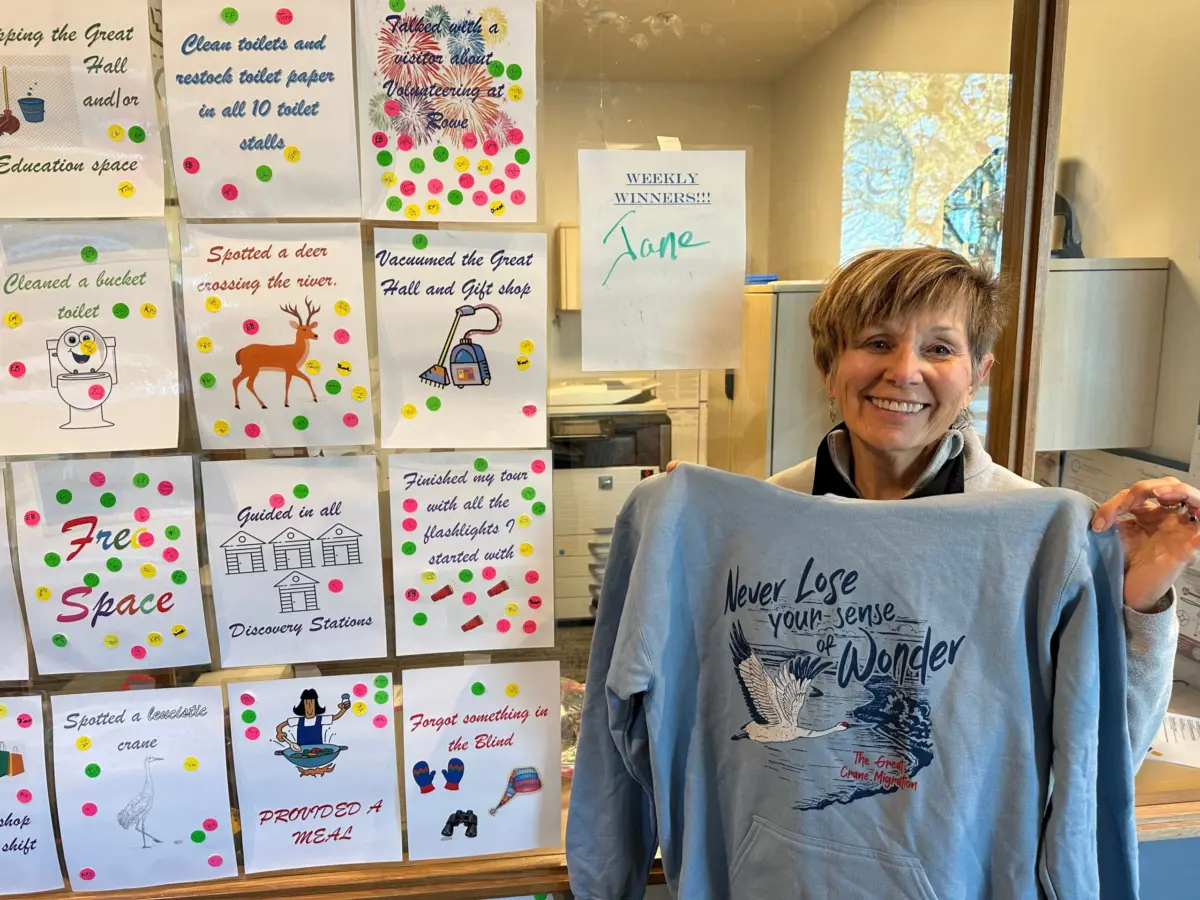
To sustain morale during the intense operational tempo, sanctuary organizers incorporate community-building activities throughout the season. These include popular traditions like Volunteer Bingo complete with prizes, shared communal meals that break down professional hierarchies, and informal evening gatherings where stories from the blinds are swapped over coffee or dinner.
A significant percentage of the volunteer base consists of returning veterans—affectionately dubbed "craniacs"—who travel from distant states year after year. Many of these repeat volunteers choose to bunk together in the sanctuary’s designated volunteer housing units. This arrangement fosters a dynamic residential community where new arrivals blend seamlessly with seasoned veterans, injecting fresh energy and diverse life perspectives into the group each week.
Official Statements & Personal Perspectives
The true impact of the Rowe Sanctuary volunteer program is best understood through the lived experiences of those who wear the badge. The intersection of awe-inspiring natural beauty and meaningful public service creates transformative experiences for participants.
Reflections from the Front Lines: April M.’s Journey
The transition from passive consumer of nature to active participant is a common narrative among Rowe volunteers. April M., a dedicated volunteer who transitioned from guest to steward, articulates the profound personal reward of the experience:
"After two years of coming to Rowe Sanctuary as a guest, it was incredibly rewarding to return as a volunteer! Between seeing the cranes every day, to making a lasting impact on a guest’s vacation, or a bucket list adventure, I was proud to lend a hand where I could and enjoyed spending time with the staff and volunteers."
April’s testimony highlights a core psychological benefit identified by conservation psychologists: the shift from eco-tourism to eco- stewardship deepens an individual’s connection to the landscape. Rather than merely witnessing a spectacle, the volunteer becomes an integral part of making that spectacle accessible and safe for others, many of whom are fulfilling lifelong travel dreams.
Staff Guidance and Operational Philosophy
Sanctuary leadership emphasizes that the volunteer program is designed to be mutually beneficial. While Rowe Sanctuary depends heavily on the labor of its volunteers to survive the grueling migration season, the administration is equally committed to ensuring that every participant gains deep personal enrichment, professional skill development, and lasting social connections.
Volunteer Coordinator Katie Moore oversees the integration of each new cohort, ensuring that applicants are matched with roles that align with their personal strengths and passions. The governing philosophy of the onboarding process is rooted in support and mentorship. By utilizing digital platforms like Volgistics, the sanctuary strives to eliminate administrative friction, empowering volunteers to take ownership of their schedules while maintaining transparent communication channels with full-time staff.
The ultimate objective, as articulated by sanctuary administrators, is simple: ensure that every volunteer leaves Rowe Sanctuary not only with a profound appreciation for the Sandhill Cranes that drew them to Nebraska in the first place, but also with cherished memories, enduring friendships, and compelling stories to share back home.
Future Outlook: Preparing for Crane Season 2027 and Beyond
As Rowe Sanctuary looks toward the future, the ecological pressures facing the Platte River valley continue to evolve, making public education and habitat protection more critical than ever. Climate variability, shifting agricultural practices, and regional water management challenges underscore the importance of robust public engagement. In this context, the volunteer corps acts as Rowe Sanctuary’s most effective ambassadorial network, translating complex conservation science into accessible, moving experiences for thousands of annual visitors.
Strategic Planning for Prospective Volunteers
For individuals inspired to become part of this living conservation legacy, proactive planning is essential. The pathway to participating in Crane Season 2027 requires adherence to a clear timeline of administrative milestones:
- Housing Inquiries (October – Early November): Volunteers requiring on-site lodging during Crane Season 2027 must reach out immediately during the autumn window. Because housing capacity is strictly limited, early coordination is mandatory to secure shared accommodations.
- Application Submission Deadline (December 15, 2026): All formal applications for the 2027 season must be submitted by this cutoff date to allow sufficient time for administrative processing and vetting.
- Background Checks and Onboarding (Late December – January): Following application submission, candidates will clear a standard background check and participate in a diagnostic phone consultation with Volunteer Coordinator Katie Moore. This conversation will explore individual interests, match skills to specific operational needs, and introduce participants to the Volgistics scheduling software.
- Pre-Season Training and Arrival (January – February 2027): Accepted volunteers will participate in remote or on-site training sessions, helping prepare facilities, maintain viewing blinds, and install specialized bird-safe lighting ahead of the first March arrivals.
Conclusion: Joining the Flock
The annual migration of the Sandhill Cranes along the Platte River is an irreplaceable natural heritage. It is a spectacle defined by ancient instincts, fragile ecosystems, and breathtaking natural beauty. Yet, the longevity and accessibility of this experience depend entirely on human dedication.
By joining the volunteer team at Rowe Sanctuary, individuals step out of the audience and into the narrative of conservation. Whether greeting visitors in the gift shop, guiding photographers through the pre-dawn mist to a riverblind, or sharing a late-night laugh with fellow craniacs in the volunteer housing, participants discover a rare sense of purpose. Crane Season is a massive undertaking, but for those willing to lend their time and talents, it offers an unforgettable journey into the heart of the American wilderness—one that leaves an indelible mark on the sanctuary, the visitors, and the volunteers themselves.