
Executive Overview
Every spring, the central Platte River Valley in Nebraska transforms into the staging ground for one of the most magnificent and ancient wildlife spectacles on the planet. From across North America and the globe, hundreds of thousands of Sandhill Cranes—along with millions of migratory waterfowl—descend upon the shallow, braided channels of the Platte. This breathtaking biological phenomenon draws thousands of ecotourists, ornithologists, nature photographers, and conservation enthusiasts to the National Audubon Society’s Rowe Sanctuary.
However, orchestrating this world-class wildlife viewing experience is a massive logistical undertaking. While the millions of migrating Sandhill Cranes are undoubtedly the headline act, the behind-the-scenes reality is that the entire operation runs on the dedication, passion, and tireless labor of an extraordinary community: the Rowe Sanctuary volunteers.
Far more than a simple greeting committee, this "flock" of dedicated individuals acts as the beating heart of Crane Season, which officially spans from March through early April. Yet, the preparation begins months, and sometimes a full year, in advance. Volunteers handle everything from specialized facility maintenance and the installation of bird-safe red lighting to educational programming, visitor orientation, gift shop operations, and guided river-blind tours.
This comprehensive report examines the multifaceted operations at Rowe Sanctuary, exploring the rigorous behind-the-scenes preparations, the diverse daily roles required to manage thousands of visitors, the vibrant community culture shared by returning and new volunteers alike, and the critical pathways for prospective participants aiming to join the upcoming 2027 season. Through official insights, participant testimonies, and detailed operational metrics, this article underscores the vital intersection of grassroots volunteerism and world-class wildlife conservation.
Detailed Chronology: The Lifecycle of Crane Season Preparation
The casual visitor arriving at Rowe Sanctuary in mid-March witnesses a smoothly operating ecosystem of hospitality, education, and wildlife viewing. Buses arrive on schedule, expert guides lead hushed groups down carefully lit trails to riverfront blinds, and warm educational exhibits welcome families out of the spring chill. But this seamless execution is the result of a meticulously managed, year-round operational timeline.
Phase 1: The Off-Season and Early Planning (May – September)
Long before the first frost hits the Nebraska plains, the leadership team at Rowe Sanctuary—led by volunteer coordinators and sanctuary directors—begins evaluating the successes and challenges of the previous season. Equipment is inventoried, trails are assessed for environmental wear and tear, and infrastructural upgrades are planned. During these quiet summer and early autumn months, recruitment strategies are formulated, and digital onboarding platforms like Volgistics are updated to streamline the upcoming application influx.
Phase 2: The Critical Fall Window (October – November)
For prospective volunteers hoping to immerse themselves fully in the experience, autumn is the most crucial period. Because Rowe Sanctuary provides limited seasonal housing for its volunteer corps, lodging requests must be submitted during October and early November. This ensures that individuals traveling from out-of-state or international locations can secure shared housing accommodations on-site, fostering a communal "basecamp" atmosphere that defines the volunteer culture.
Simultaneously, the Sanctuary begins accepting applications for the upcoming year, initiating background checks and scheduling preliminary onboarding interviews.
Phase 3: Winter Maintenance and Pre-Season Mobilization (December – February)
The hard deadline for Crane Season applications falls on December 15 of the preceding year (for example, applications for Crane Season 2027 must be finalized by December 15, 2026). Once the roster is established, winter transforms into a period of intensive physical labor and professional training.
Volunteers and staff brave freezing temperatures to:
- Clean and Repair Blinds: The viewing blinds strategically positioned along the Platte River must be thoroughly cleared of winter debris, inspected for structural integrity, and winterized against unpredictable Great Plains weather.
- Install Bird-Approved Red Lighting: To protect the resting cranes from unnecessary disturbance while allowing human visitors to navigate trails safely in the dark hours of dawn and dusk, specialized low-impact red lighting systems are installed along pathways and within blinds.
- Complete Educational Workshops: Volunteers undergo rigorous training regarding Sandhill Crane ecology, local river conservation issues, safety protocols, and public speaking techniques to ensure accurate and engaging interpretation for visitors.
Phase 4: Peak Operation (March – Early April)
When March arrives, the sanctuary shifts into high gear. With approximately 30 distinct volunteer positions to fill every single day, the facility operates at a breathless pace. From pre-dawn river walks in sub-freezing temperatures to afternoon educational seminars and retail management, the volunteer corps maintains an unbroken chain of hospitality until the final flocks of cranes depart northward for their Arctic and sub-Arctic breeding grounds in April.
Supporting Context & Metrics: The Scale of Operations
To truly appreciate the magnitude of Rowe Sanctuary’s volunteer program, one must examine the operational metrics that define Crane Season. The sanctuary manages an intensive daily roster of responsibilities that requires absolute precision, reliability, and adaptability.
Daily Volunteer Distribution
During peak migration weeks, managing visitor traffic safely and sustainably requires filling roughly 30 unique roles daily. These positions are divided into several critical operational pillars:
- Field Guide and Interpretation Assistants: Professionals and enthusiastic amateurs who accompany groups to and from discovery stations and riverfront viewing blinds, answering complex questions about avian biology, wetland ecology, and river conservation.
- Education and Outreach Facilitators: Individuals who lead school field trips, hands-on workshops, and indoor multi-media presentations for families and tour groups.
- Guest Services and Retail Operations: Staffing the sanctuary gift shop, greeting international and domestic travelers, processing admissions, and providing orientation maps and safety briefings.
- Behind-the-Scenes Logistics: A dedicated squad managing facility upkeep, hospitality coordination, equipment maintenance, and evening debriefs.
The Demographic Mosaic of the "Flock"
Rowe Sanctuary’s volunteer pool is as diverse as the visitors it serves. The program attracts a fascinating mix of demographics:
- Retirees and "Craniacs": Seasoned nature lovers, many of whom return year after year, forming deep interpersonal bonds and choosing to room together in volunteer housing. Their institutional knowledge is invaluable for mentoring newcomers.
- Gap-Year Students and Young Professionals: Individuals pursuing degrees in environmental science, wildlife biology, or education who seek hands-on experience in nonprofit sanctuary management.
- Bucket-List Adventurers: Everyday citizens from across the United States and foreign countries who take extended vacations specifically to dedicate their time to wildlife conservation.
Official Statements & Participant Testimonies
The success of Rowe Sanctuary’s volunteer model is best understood through the voices of those who experience it firsthand—both the leadership coordinating the efforts and the individuals on the ground.
The Volunteer Experience: A Personal Account
April M., a dedicated volunteer who transitioned from being a passive ecotourist to an active participant, encapsulates the transformative nature of the program:
"After two years of coming to Rowe Sanctuary as a guest, it was incredibly rewarding to return as a volunteer! Between seeing the cranes every day, to making a lasting impact on a guest’s vacation, or a bucket-list adventure, I was proud to lend a hand where I could and enjoyed spending time with the staff and volunteers."
Her testimony highlights a core psychological benefit recognized by environmental psychologists: the profound sense of agency and fulfillment derived from contributing directly to a conservation mission rather than merely observing it.
Administrative Oversight and Onboarding
Behind every successful shift is the meticulous coordination of sanctuary staff. Katie Moore, Volunteer Coordinator at Rowe Sanctuary, manages the intricate pipeline that turns applicants into active conservation partners.
According to official sanctuary guidelines, the onboarding process is structured to ensure a seamless fit between volunteer aspirations and institutional needs:
- Application & Vetting: Prospective volunteers submit an initial application followed by a standard background check to ensure safety and reliability in group-handling environments.
- Consultative Interview: Volunteer Coordinator Katie Moore conducts personalized phone interviews with applicants. These sessions are designed to explore individual interests, evaluate specific project alignments, and introduce candidates to Volgistics—the digital platform utilized by the sanctuary to post positions, manage schedules, and coordinate daily Crane Season shifts.
- Continuous Support: Throughout their tenure, volunteers are provided with continuous mentorship, ensuring they leave the sanctuary not only with great stories and new friends, but also with a significantly deepened appreciation for the avian species that catalyzed their journey.
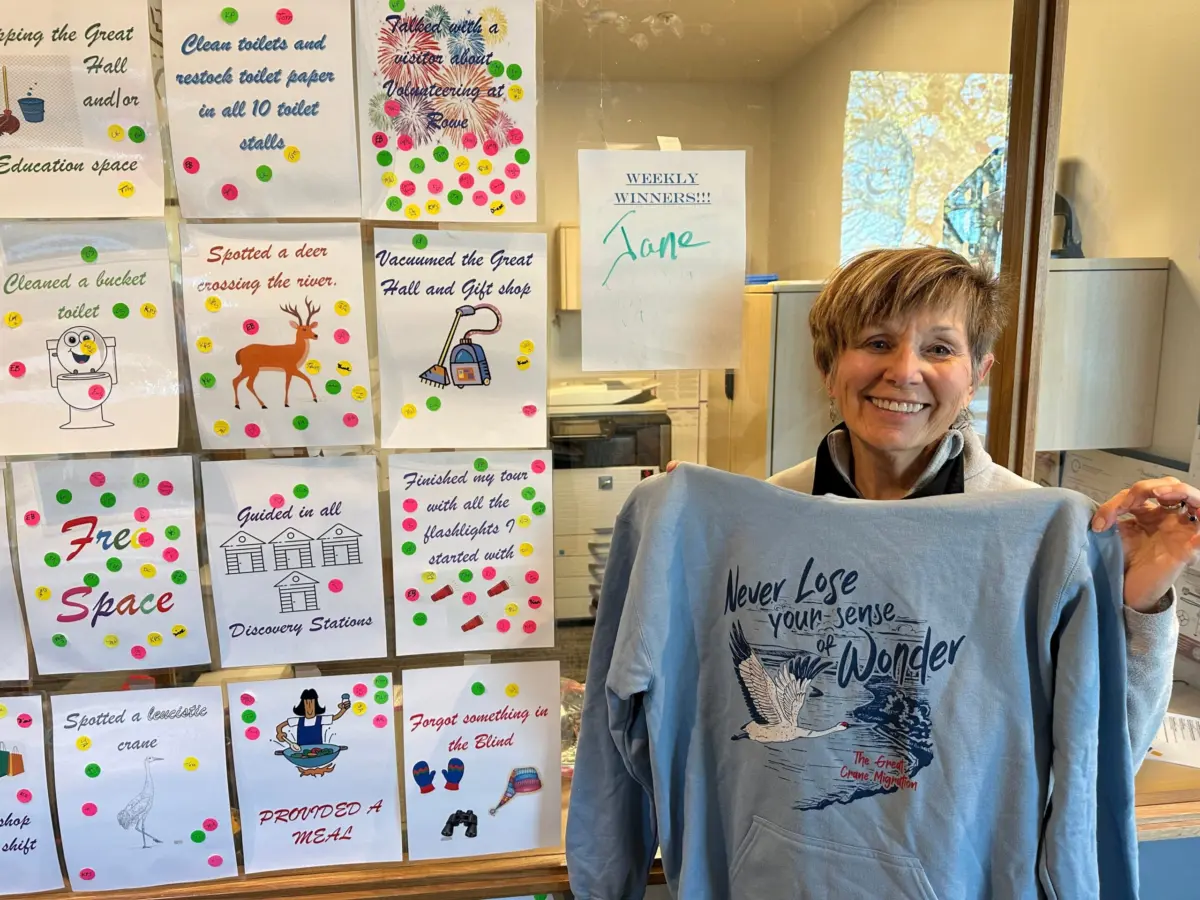
Beyond the hard work, Rowe Sanctuary places a high premium on community wellness and camaraderie. Throughout Crane Season, volunteers participate in morale-boosting activities, including Volunteer Bingo (complete with prizes), shared community meals, and social evenings designed to forge lasting friendships among individuals hailing from vastly different corners of the globe.
Future Outlook: Joining the Ranks for Crane Season 2027
As global interest in ecotourism and wildlife conservation continues to surge, the demand for immersive nature experiences at sanctuaries like Rowe continues to climb. Maintaining the delicate balance between high-volume public engagement and the ecological protection of the Platte River’s fragile riparian habitat requires a steady influx of passionate, committed individuals.
For those inspired to become part of this living conservation legacy, Rowe Sanctuary has outlined clear pathways and strict administrative deadlines for future cycles:
Actionable Deadlines and Requirements for Crane Season 2027
- Housing Requests (October – Early November 2026): Volunteers requiring on-site lodging must submit their housing inquiries during this critical autumn window. Because seasonal housing is strictly limited, early outreach is mandatory to secure shared accommodations.
- Application Deadline (December 15, 2026): All formal applications for Crane Season 2027 must be submitted and processed by this date to allow sufficient time for background checks, interviews, and scheduling via Volgistics.
- Onboarding and Training (January – February 2027): Accepted applicants will complete digital training modules, participate in coordinator check-ins, and prepare for the physical and educational demands of the spring migration.
A Legacy Carved Along the Platte
The Sandhill Cranes have followed their ancient migratory blueprint to the Platte River Valley for millennia, guided by instinct and the unchanging pull of the seasons. Yet, their modern survival relies increasingly on human stewardship—on protected wetlands, sound conservation policies, and the selfless dedication of people willing to wake up before dawn in the freezing Nebraska cold.
To volunteer at Rowe Sanctuary during Crane Season is to step inside a living conservation story. It is an invitation to swap the comforts of routine for the thunderous, life-affirming roar of half a million cranes taking flight at first light. For those ready to answer the call, the flock is waiting.