
Executive Overview
Long before the advent of agriculture, the establishment of permanent settlements, or the written word, humanity forged its most enduring alliance. While popular mythology often casts the domestication of the dog as a straightforward process of human subjugation—ancient people capturing wild wolves and bending them to their will—modern archaeology, genetics, and anthropology paint a vastly more complex, collaborative picture.
In his groundbreaking new book, First Dogs: Hunter-Gatherers and Their Canine Companions from Prehistory to the Present (Routledge), archaeologist Professor Peter Mitchell challenges traditional narratives. He posits that the transition from gray wolf (Canis lupus) to domestic dog (Canis lupus familiaris) was a protracted, deeply reciprocal partnership. Rather than an abrupt event orchestrated by human masters, early humans and proto-dogs entered into a dynamic co-evolutionary dance. As hunter-gatherer societies traversed the globe, their canine companions changed alongside them, developing a staggering degree of physical and behavioral diversity.
Today, that diversity spans from the pocket-sized Chihuahua to the towering Great Dane—a morphological range matched by almost no other terrestrial mammal. Yet, this incredible adaptability is not merely a modern product of Victorian kennel clubs and selective breeding. It is the result of millennia of localized adaptation, where dogs evolved to meet the distinct environmental, dietary, and cultural demands of human communities from the frozen expanses of the Arctic to the humid rainforests of the tropics.
This deep history reveals that the influence ran in both directions. Dogs altered human survival strategies, opened new ecological niches, and even influenced human genetics. As scientific techniques from stable isotope analysis to ancient DNA sequencing open new windows into the past, researchers are uncovering how dogs became the ultimate partners in human history.
Detailed Chronology: The 15,000-Year Evolutionary Journey
The story of the dog is etched into the archaeological record across continents, preserved in ancient graves, cave art, and the cellular memory of modern genomes. To understand how the wolf transformed into the companion curled up on the modern sofa, researchers trace a chronology spanning tens of thousands of years.
The Pre-Domestication Threshold (30,000 to 15,000 Years Ago)
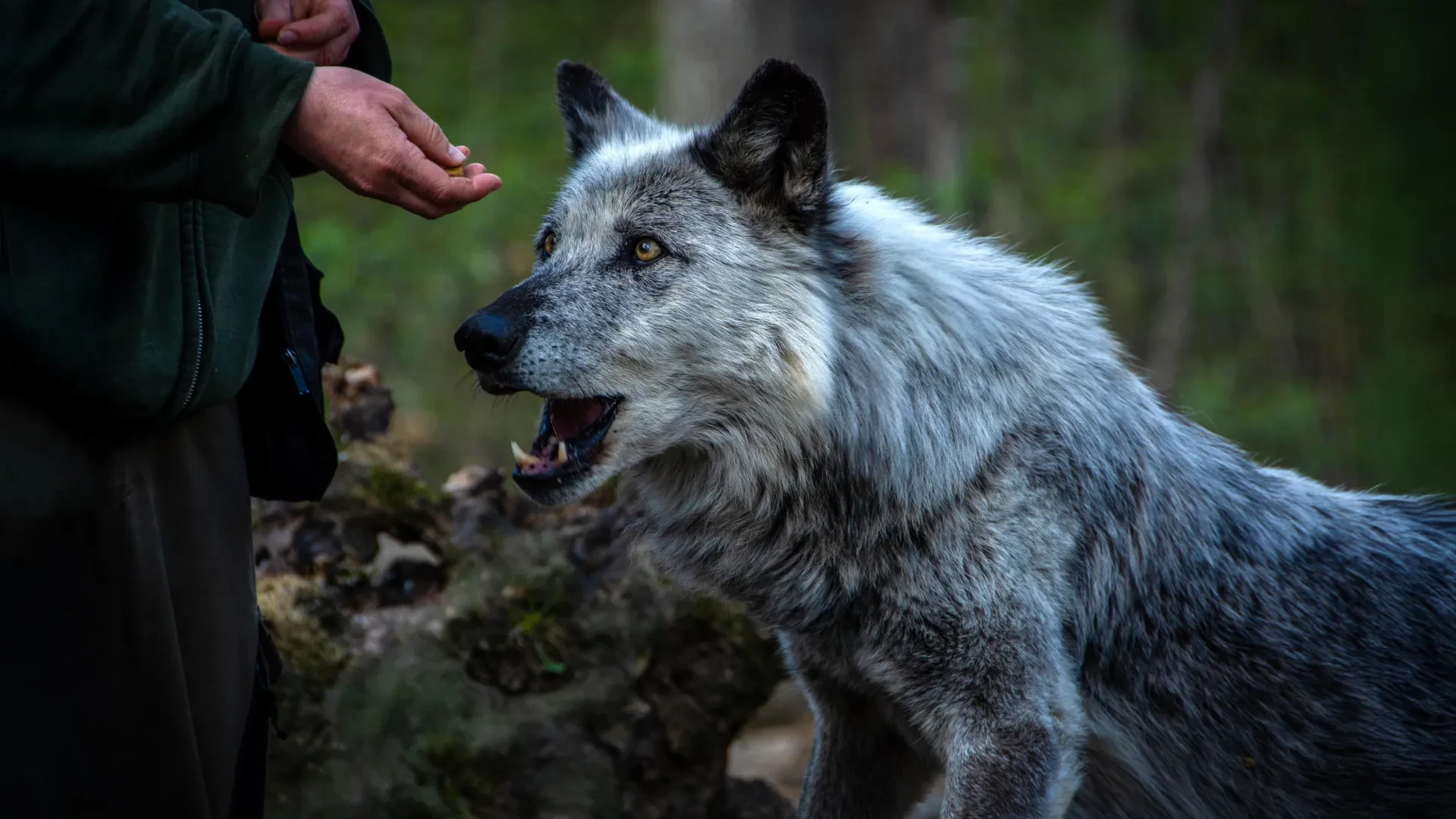
Long before the first definitive domestic dog appeared in the archaeological record, a loose ecological relationship existed between mobile human hunter-gatherers and adaptable canids. Attracted to human camps by the promise of calorie-rich refuse, bold wolves began bridging the behavioral gap between wild predators and camp followers. Over generations, natural selection favored animals with reduced flight distances, diminished fear responses, and heightened social tolerance toward humans. This early phase was characterized not by captivity, but by commensalism—a relationship where one species benefits without significantly harming or benefiting the other, though the foundation for mutualism was rapidly taking shape.
The Earliest Burials and the Emergence of Canis familiaris (14,000 to 12,000 Years Ago)
The definitive shift from wolf to dog is marked by the archaeological appearance of intentional burials. Archaeologists have discovered canine remains interred alongside humans in graves dating back approximately 14,000 years. These sites provide profound evidence that dogs had transcended the status of mere tools or scavengers; they were recognized as sentient companions holding social and perhaps spiritual value. During this era, early morphological changes began to manifest: snout lengths shortened, tooth crowding increased, and overall body sizes began to shrink as dogs adapted more fully to a human-mediated diet.
Global Expansion and Regional Specialization (10,000 to 3,000 Years Ago)
As human populations expanded globally following the retreat of the Pleistocene ice sheets, dogs accompanied them into nearly every ecological niche. This expansion was not a uniform migration of a single dog type, but a process of localized evolutionary divergence.
- In the Arctic, dogs developed heavy coats, compact frames, and skeletal structures built to withstand the immense mechanical stress of pulling sleds across frozen tundra.
- In the tropics of South America and Southeast Asia, dogs adapted into agile, lean hunters capable of navigating dense, humid vegetation.
- On the Tibetan Plateau, canine populations faced the extreme physiological challenge of hypoxia (low oxygen), eventually developing genetic mutations strikingly similar to those found in native human populations, enabling them to thrive at high altitudes.
The Colonial Disruption and Genetic Legacy (Recent Centuries)
The centuries of European colonial expansion brought profound disruption to the global canine landscape. As European explorers and settlers traversed the globe, imported European breeds frequently displaced indigenous dog lineages through interbreeding and disease. However, the genetic footprints of these ancient, regionally adapted dogs are not entirely lost. Modern genetic research continues to uncover fragments of ancient lineages hiding within contemporary regional breeds and village dogs, preserving a fragile thread connecting today’s animals to the Ice Age companions of our ancestors.
Supporting Context & Metrics: Environmental Pressures and Adaptations
The morphological and genetic diversity of the domestic dog is a textbook example of adaptive radiation driven by anthropogenic (human-caused) pressures. However, human culture and climate were not the only variables steering canine evolution. A constellation of biological, geographical, and pathological factors shaped where and how dogs could thrive.
Morphological Divergence: Climate and Function
The physical architecture of the dog is deeply tied to its historical environment, following well-established ecological rules such as Bergmann’s and Allen’s rules, which dictate that animals in colder climates tend to be larger, more compact, and equipped with shorter extremities to conserve heat, while those in warmer climates are leaner and rangier to facilitate heat dissipation.
| Region / Environment | Typical Canine Morphology | Primary Historical Function |
|---|---|---|
| Arctic & Sub-Arctic | Compact, heavy double coats, robust limb bones, strengthened vertebrae | Sled pulling, heavy transport, guarding against predators |
| Tropical Rainforests | Lean, small-bodied, highly agile, short coats | Tracking and flushing game through dense vegetation |
| High-Altitude Plateaus | Specialized genetic adaptations for low-oxygen environments | Herding, guarding livestock, general companionship |
| Temperate / Coastal | Variable size; specialized regional traits (e.g., woolly coats) | Hunting, textile production (dog hair blankets), ceremonial roles |
The Invisible Barrier: Disease as an Evolutionary Constraint
While environmental harshness and food availability tested canine resilience, vector-borne diseases played an equally decisive role in dictating the global distribution of dogs.
Researchers investigating the spread of domestic canids into tropical and subtropical zones have increasingly focused on the pathological obstacles posed by regional diseases. In sub-Saharan Africa, pathogens such as trypanosomiasis (transmitted by tsetse flies) and ehrlichiosis posed severe biological hurdles for canine populations originating from temperate or Arctic northern environments. These disease landscapes help explain why dogs reached certain tropical and southern latitudes relatively late in prehistory, or why their populations remained localized compared to their ubiquitous presence in temperate zones. Disease acted as a natural filter, limiting where canine populations could establish permanent footholds without continuous gene flow or acquired immunity.
Cultural Selection: Beyond Utility
Utility alone cannot account for the vast spectrum of canine forms. Cultural values, spiritual beliefs, and aesthetic preferences frequently overrode pure functional efficiency. On the Northwest Coast of North America, for instance, Indigenous communities maintained specialized populations of small, woolly-coated dogs. These animals were not utilized for hunting or hauling; rather, they were sheared like sheep, and their hair was harvested to weave intricate ceremonial blankets. Similarly, the inclusion of dogs in religious rituals, mythologies, and burial practices across diverse ancient cultures often favored traits that held symbolic weight, directly influencing canine behavior and appearance.
Official Statements & Expert Insights
At the heart of this evolving field of study is a fundamental reassessment of how the human-canine bond was forged. Scholars across archaeology, genetics, and anthropology are dismantling the outdated notion of human dominion in favor of a narrative centered on reciprocity.
Professor Peter Mitchell, archaeologist and author of First Dogs: Hunter-Gatherers and Their Canine Companions from Prehistory to the Present, emphasizes the deep reciprocity of the relationship:
"The connections between dogs on the one paw and people dependent on wild plant and animal resources on the other are ancient, diverse, and profound."
Refuting the idea that domestication was a single, sudden event orchestrated by humans taking control of passive wolf populations, Mitchell characterizes the transition as an ongoing, highly collaborative evolution:
"The process whereby grey wolves became dogs is ongoing, not one marked by a single threshold event. It was likely both long and drawn out.
The relationship thus constructed has been a joint effort, if one where, especially in the West and over recent centuries, humans have increasingly come to dominate in determining its shape and direction.
Nevertheless, the way dogs and humans relate—and have related—to each other has value precisely because of their mutual, complex entwinement with each other."
This perspective is echoed by geneticists studying high-altitude adaptations on the Tibetan Plateau. Commenting on the genetic parallels between high-altitude dogs and human populations, researchers note that while the precise timeline of canine arrival in these oxygen-depleted regions remains debated, the physiological hurdles were absolute:
"We do not know when dogs first joined them, and the genetic variants needed to thrive there may have been quickly acquired, but until that was achieved, hypoxia presumably acted as a constraint on canine presence."
These insights collectively underscore that the dog is not merely a reflection of human desires, but an active participant in human history—an organism whose biological plasticity enabled it to co-create the human niche.
Future Outlook: What Lies Ahead for Canine Evolutionary Science?
As scientific methodologies continue to advance, the study of canine evolution is entering a golden age. The integration of cutting-edge technologies promises to resolve long-standing mysteries regarding the exact geography, timing, and genetic mechanisms of dog domestication.
1. Ancient DNA and Genomic Mapping
The rapid expansion of ancient DNA (aDNA) extraction techniques allows researchers to sequence genomes from archaeological canine remains dating back thousands of years. By comparing these ancient genomes to those of modern village dogs and purebred lines, geneticists can map the waves of migration, replacement, and interbreeding that characterized the colonial era and prehistory. This will help identify lost lineages and pinpoint the exact genetic mutations responsible for traits such as high-altitude hypoxia tolerance, disease resistance, and metabolic shifts.
2. Stable Isotope Analysis and Dietary Reconstruction
Future archaeological investigations will increasingly rely on stable isotope analysis of bone collagen and tooth enamel. This technique provides a window into the long-term diets of ancient dogs, shedding light on whether individual animals subsisted on marine resources, agricultural crops, or wild game alongside their human companions. When paired with human isotopic data, these studies reveal the micro-dynamics of household life in prehistoric communities.
3. Re-evaluating the Human-Animal Bond in the Anthropocene
Beyond academic inquiry, understanding the deep evolutionary history of dogs carries profound implications for modern animal welfare, conservation, and veterinary science. As climate change alters habitats worldwide and human pressures infringe upon remaining wild spaces, examining how dogs and their ancestors successfully navigated shifting environments offers valuable lessons in biological resilience.
Ultimately, the enduring legacy of the wolf-turned-dog is a testament to the power of inter-species cooperation. As Professor Mitchell notes, the bond is fundamentally rooted in a "complex entwinement" that continues to evolve. In an era where human dominance over the natural world is increasingly absolute, looking back at the collaborative origins of our oldest friend serves as a powerful reminder that our greatest achievements have never been solitary endeavors.