Long before a puppy takes its first clumsy step on a leash, learns the fundamental command to sit, or assumes the monumental responsibility of guiding a visually impaired individual through a complex world, an intricate, high-stakes developmental symphony is already underway behind the scenes. At organizations like Dogs Inc, the journey of cultivating a future guide or service dog does not begin when formal training commences in earnest. Instead, it starts on day one of the puppy’s life, anchored in a profound understanding of canine neurobiology, developmental windows, and purposeful early intervention.
In the fast-paced modern world, the public often visualizes service dog training as an exercise in obedience—teaching a dog to heel, retrieve dropped items, or halt at a street curb. However, elite working dog organizations recognize that a service dog’s ultimate success, emotional resilience, and adaptability are deeply rooted in the earliest chapters of its existence. From the fragile, blind, and deaf neonatal stage through the explosive learning phases of puppyhood and adolescence, every biological milestone and environmental interaction builds the neurological architecture required for a lifetime of service.
Central to this foundational philosophy is a specialized, science-backed practice known as Early Neurological Stimulation (ENS). While ENS represents just one piece of a vast, meticulously designed developmental puzzle, it exemplifies the rigorous, thoughtful methodology applied across the entire lifespan of a working dog. This article explores the biological realities of the neonatal stage, the mechanics and benefits of ENS, the vital distinctions between early stimulation and socialization, and the progressive framework that transforms a helpless newborn into a confident, life-changing canine partner.
Detailed Chronology: From Neonatal Vulnerability to Adolescent Independence
The life of a future service dog unfolds through distinct, scientifically recognized developmental stages. Each phase presents unique biological transformations, behavioral milestones, and neurological opportunities that require specialized care and handling.
The neonatal period is characterized by absolute dependency. Newborn puppies cannot see or hear, their eyes and ear canals remain tightly sealed, and they are entirely incapable of regulating their own body temperature. Their existence revolves around two primary activities: nursing and sleeping. They rely entirely on their mother and littermates for warmth, nutrition, and comfort.
Despite their seemingly fragile and inactive state, the neonatal brain and nervous system are developing at an explosive rate. This biological vulnerability makes the first two weeks a critical window for foundational neurological priming. It is during this precise window that organizations like Dogs Inc introduce Early Neurological Stimulation protocols, capitalizing on the nervous system’s extreme plasticity before sensory organs fully function.
2. The Transitional Stage (2 to 4 Weeks)
As puppies cross the threshold from the neonatal to the transitional stage, a dramatic sensory awakening occurs. Around two weeks of age, their eyes and ears begin to open, abruptly expanding their perceptual horizon. By four weeks of age, puppies achieve significant motor milestones: they begin to stand, walk with unsteady coordination, and emit their first tentative barks.
Simultaneously, their primary deciduous teeth begin to erupt, signaling a nutritional transition away from exclusive nursing toward soft gruels and, eventually, solid foods. This stage marks the beginning of active environmental exploration, interaction with littermates, and the genesis of canine social communication.
3. The Socialization Period (3 to 12 Weeks)
Often considered the most crucial behavioral window in a dog’s life, the socialization period overlaps with the late transitional phase and extends through the third month. During this period, a puppy’s brain is uniquely wired to absorb and categorize novel stimuli without the immediate fear responses characteristic of older dogs.
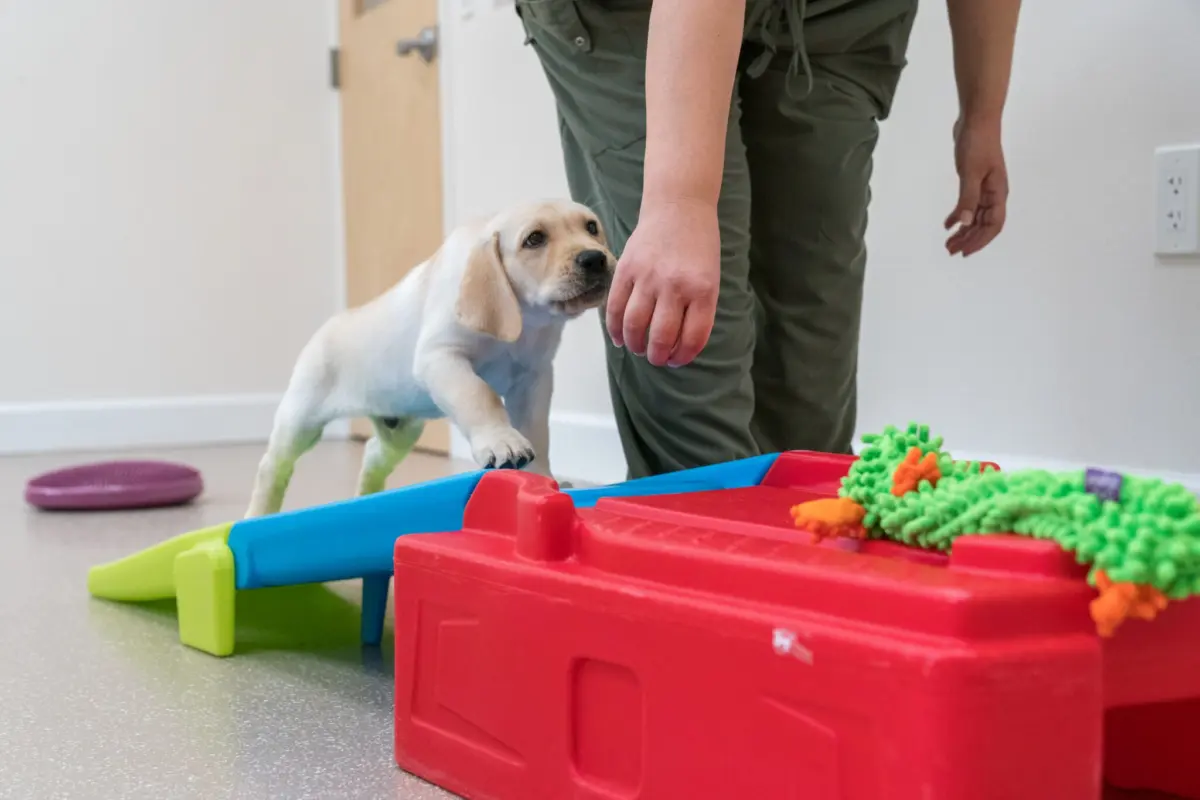
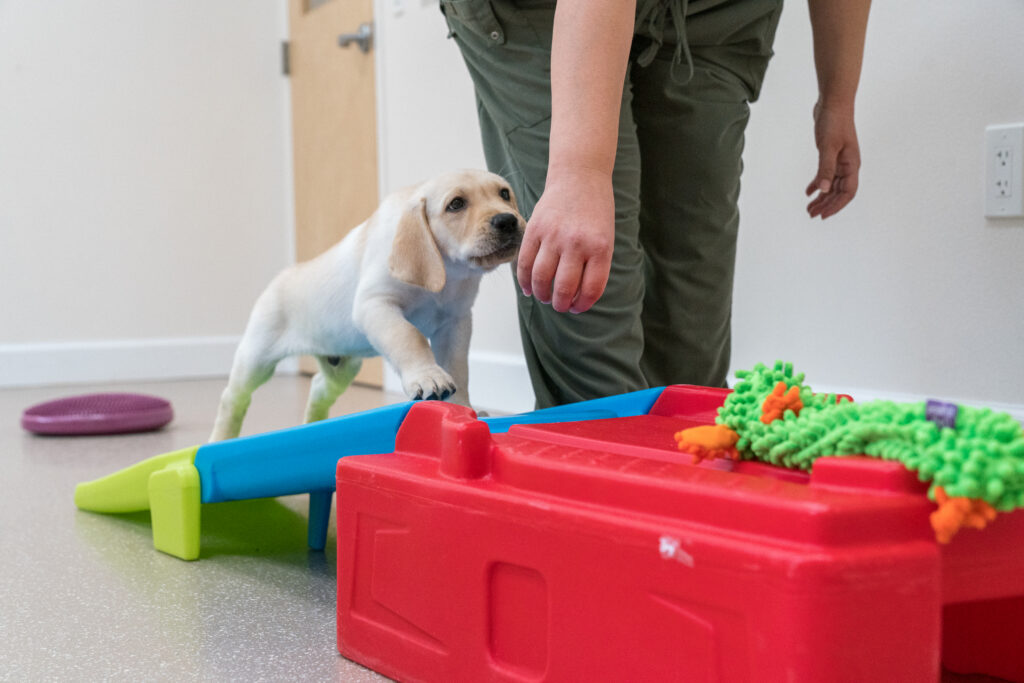
Between 3 and 12 weeks of age, young puppies must be thoughtfully and safely exposed to a wide array of sights, sounds, surfaces, people, and other animals. By 8 weeks, many puppies transition to their puppy-raising homes, where these experiences accelerate. By the 12-week mark, structured exposure to various environments, human demographics, and physical textures helps build robust emotional resilience, prevents future anxiety and aggression, and lays the groundwork for a friendly, well-adjusted adult dog.
4. The Adolescent Stage (6 Months and Beyond)
As puppies mature into adolescence—frequently kicking off around the 6-month mark—they begin testing boundaries with the enthusiasm of human teenagers. Most dogs reach reproductive maturity between 6 and 12 months. In female dogs, this includes the onset of the first estrus cycle and broader hormonal fluctuations; in males, it brings hormone-driven behavioral shifts.
Concurrently, young dogs navigate an average of four distinct "fear periods" throughout their development, during which unfamiliar or startling stimuli can temporarily provoke heightened wariness. Continued positive reinforcement, structured boundary-setting, and gentle environmental challenges during adolescence are vital to ensuring these dogs maintain their composure and focus.
Supporting Context & Metrics: The Science of Early Neurological Stimulation
To understand why organizations invest so much effort into the first fortnight of a puppy’s life, one must examine the mechanics of Early Neurological Stimulation. Originally developed for military canine programs, ENS is founded on the premise that brief, mild physical stressors applied during a specific developmental window can profoundly benefit physiological and neurological performance.
How ENS Works in Practice
ENS exercises are designed to be brief, gentle, and strictly controlled. They are performed daily during the neonatal stage—specifically from days three through sixteen, the period when the neurological system is undergoing rapid structural development.
The protocol consists of a series of five distinct, brief physical manipulations:
Tactile Stimulation: Holding the puppy gently in one hand and tickling the pad of one foot using a Q-tip for 3 to 5 seconds.
Head Up: Holding the puppy perpendicular to the ground, with its head pointing up, for 3 to 5 seconds.
Head Down: Holding the puppy perpendicular to the ground, with its head pointing down toward the floor, for 3 to 5 seconds.
Supine Position: Holding the puppy flat on its back, resting in the palm of the handler’s hand, for 3 to 5 seconds.
Thermal Stimulation: Placing the puppy feet-down on a damp towel that has been chilled in a refrigerator for 3 to 5 seconds.
Each exercise lasts only a few seconds per puppy, ensuring that stress levels remain extremely low while still stimulating neurological pathways.
The Hypothesized Benefits
Decades of anecdotal observation and veterinary research suggest that this mild sensory stimulation triggers biological responses that benefit the maturing organism. Potential benefits attributed to proper ENS protocols include:
Improved Cardiovascular Performance: Enhanced heart rate efficiency and vascular tone.
Stronger Stress Tolerance: Greater emotional resilience when encountering novel environmental pressures later in life.
Enhanced Immune System Function: Measurable improvements in disease resistance and overall hardiness.
Greater Adrenal Capacity: A more balanced hormonal response to challenging situations.
However, experts emphasize that ENS is not a magic wand. A puppy’s ultimate temperament and working capability are governed by a complex interplay of genetics, general health, early socialization, environmental enrichment, and lifelong training. ENS is simply the opening chapter in a comprehensive developmental textbook.
Official Statements and Institutional Philosophy
The philosophy at Dogs Inc reflects an unwavering commitment to quality, welfare, and scientific rigor. Representatives and canine development specialists at the organization frequently underscore that preparing a dog for a life of service requires looking past immediate obedience and focusing on long-term emotional stability.
"A guide dog or service dog cannot simply be manufactured through brute-force obedience training once they reach maturity," notes a senior canine development coordinator at Dogs Inc. "True working capability is built layer by layer, beginning in the whelping box. Every tactile experience, every carefully managed environmental transition, and every structured socialization opportunity compounds over time. Our goal is not to create a dog that never feels stress, but rather a dog that possesses the neurological fortitude and emotional resilience to process stress, adapt, and remain a calm, focused partner for someone whose independence relies on them."
This institutional perspective highlights a critical distinction often misunderstood by the public: the separation between Early Neurological Stimulation and the socialization period. While ENS focuses on the neurological and physiological systems of the neonate, socialization targets the psychological and behavioral development of the mobile puppy.
"People often confuse ENS with socialization," explains an animal behavior specialist affiliated with working dog breeding programs. "They are entirely different tools applied at different epochs of life. ENS uses mild physical stimuli to wake up neural pathways in a blind and deaf newborn. Socialization, on the other hand, is about building positive associations with the living world once the puppy’s eyes and ears are open. You cannot socialize a two-day-old puppy, just as you cannot rely on ENS to teach a three-month-old puppy how to navigate a crowded crosswalk. Both are indispensable, but they must occur in their proper sequence."
Future Outlook: Lifelong Learning and the Evolution of Service Dogs
As the science of canine behavior continues to advance, organizations like Dogs Inc remain at the forefront of integrating evidence-based practices into their breeding and raising programs. The future of service dog development points toward an even more granular, individualized approach to puppy rearing—one that respects individual developmental pacing while maintaining rigorous standards for working performance.
Beyond Puppyhood: The Continuum of Education
Development does not halt when a puppy leaves the neonatal nursery or even when it graduates from its initial socialization period. The educational continuum extends seamlessly into subsequent life stages:
Structured Training Milestones: By three months of age, puppies engage in short, highly positive training sessions to learn basic cues and build cooperation.
Routine and Independence: Crate training is introduced to foster emotional independence and establish predictable daily rhythms.
Inter-species and Canine Exposure: Controlled, positive interactions with other dogs, household pets, and diverse human demographics ensure broad-spectrum confidence.
Formal Puppy Classes: Beginning around 16 weeks of age, structured group classes refine obedience, impulse control, and focus in distracting environments.
Preparing for the Ultimate Partnership
Ultimately, the meticulous attention lavished on a newborn puppy during its first two weeks of life culminates years later in a profound partnership. Whether guiding a blind individual through bustling city traffic, alerting a handler to a medical crisis, or providing steady emotional anchors in overwhelming public spaces, a successful service dog represents the culmination of countless deliberate choices made from day one.
By combining cutting-edge neurological protocols like ENS with compassionate socialization, expert puppy raising, and lifelong positive reinforcement, organizations like Dogs Inc ensure that their dogs are not merely trained—they are fundamentally prepared. For those who rely on these remarkable animals, that early foundation makes all the difference, transforming a tiny, vulnerable neonate into a confident, life-changing companion ready to take on the world.