
Executive Overview
The modern pet owner faces a deeply unsettling paradox: while we meticulously secure our human family members in rigorously tested, government-approved automotive safety seats, the market for canine vehicular travel has historically been a regulatory wild west. For years, conscientious pet parents have had to balance a dog’s need for physical comfort—the freedom to sprawl, shift, and rest during long hauls—against the grim reality of crash physics.
This investigative review chronicles one pet owner’s arduous, multi-year journey to solve this exact dilemma for Chloe, a 15-pound dog. The quest began with popular containment solutions like PetEgo’s Pet Tube, a product that offered initial promise before failing miserably in standardized crash testing. It navigated through the cramped, albeit highly rated, alternatives highlighted by the Center for Pet Safety (CPS), ultimately culminating in a month-long real-world trial of the AirPupSaver.
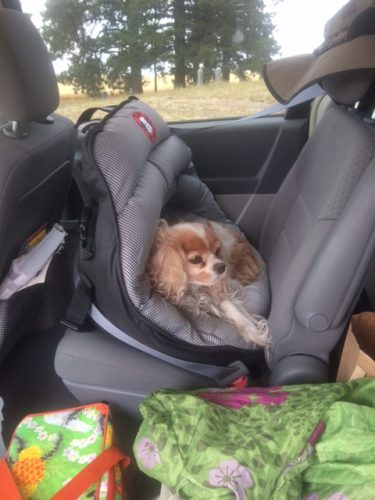
The findings offer a nuanced perspective. While top-performing carriers identified by safety authorities—such as the PetEgo Jet Set Forma Frame and the Sleepypod Mobile Pet Bed—excel in structural integrity, they frequently fall short on spatial accommodations for dogs scaling the upper limits of the "small dog" classification. Conversely, the AirPupSaver presents an innovative, inflatable design concept modeled after a baseball mitt. It cradles the pet and provides expansive ventilation, yet it introduces distinct operational challenges, including complex installation requirements, limited driver visibility, and a permanent, immobile footprint within the vehicle cabin.
This report synthesizes real-world testing, safety metrics, installation architecture, and equipment caveats to provide an authoritative guide for pet owners navigating the complex landscape of canine automotive protection.
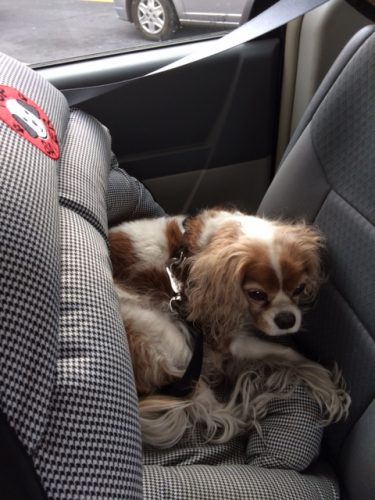
Detailed Chronology: From False Hope to the AirPupSaver Trial
The Pet Tube Disillusionment
The search for an ideal car bed began with a singular objective: finding a sanctuary large enough for Chloe to sprawl out comfortably while maintaining uncompromised crash safety. Several years ago, this pursuit led to the adoption of PetEgo’s Pet Tube. Initially celebrated as an elegant solution—offering a collapsible, tunnel-like environment that spanned the back seat—the illusion of security was shattered upon reviewing empirical crash-test data. Subjected to simulated collision forces, the Pet Tube failed catastrophically. The realization that a favored product offered negligible protection during a vehicular impact is a heartbreakingly familiar narrative for safety-conscious pet owners.
Evaluating Center for Pet Safety Benchmarks
Following the Pet Tube failure, the search returned to the drawing board, guided by empirical data rather than marketing claims. Attention turned to the Center for Pet Safety (CPS), an independent research and consumer advocacy organization dedicated to pet safety testing. The 2015 CPS Carrier Study highlighted two standout performers:
- PetEgo Jet Set Forma Frame Carrier (equipped with ISOFIX-Latch Connection)
- Sleepypod Mobile Pet Bed (paired with the PPRS Handilock)
Despite their stellar crash-test ratings, a fundamental operational hurdle emerged: these carriers are remarkably small.
- The PetEgo Jet Set: While a handsome, well-constructed piece of equipment, it suffers from a sparse distribution of mesh panels, limiting both ventilation and outward visibility. Furthermore, its largest iteration measures 22 inches long, 10 inches wide, and 13 inches high—dimensions the manufacturer claims can accommodate a 22-pound dog. In practice, this specification is overly optimistic. Measuring narrower than a large SturdiBag, it feels claustrophobic for any animal exceeding 15 pounds, particularly on extended road trips.
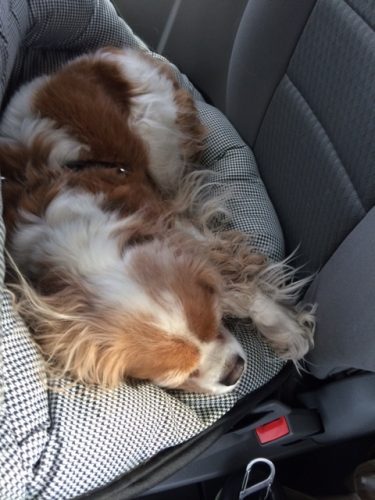
- The Sleepypod Mobile Pet Bed: Universally praised as a magnificent, highly ventilated product, the Sleepypod line commands immense respect. However, even its largest offering—the "Sleepypod Medium"—presents restrictive spatial constraints. With an external diameter of 17 inches and a height of 13 inches, the usable interior space is reduced by 1 to 2 inches due to thick padding and structural walls. While an absolute triumph for dogs weighing 10 pounds or less, it proves too snug for a 15-pound dog seeking a sprawling sleeping posture.
Pivoting to the AirPupSaver
Prompted by community recommendations from experienced pet travelers, the search shifted toward an alternative unrepresented in the 2015 CPS lineup: the AirPupSaver. Having undergone independent crash testing (with validation footage publicly accessible), this product approaches canine containment through a radical design philosophy.
Available in two distinct size brackets—one engineered for dogs up to 25 pounds, and another for dogs up to 45 pounds—both models were acquired for comparative analysis. The smaller model was initially evaluated for portability, with the theoretical hope of packing it inside standard luggage, though this proved impractical. After a month of rigorous daily errand runs and an exhaustive long-distance road trip, the AirPupSaver emerged as a viable, comfortable, and credibly safe contender.
Supporting Context & Metrics: Physics, Ergonomics, and Design
The "Baseball Mitt" Architecture
The structural mechanics of the AirPupSaver mimic a puffy baseball mitt. The canine occupant rests securely within the "palm" of the mitt, anchored via a heavy-duty harness and tether system. In the event of a frontal collision or sudden deceleration, the elevated, padded "fingers" of the mitt act as a dynamic catchment barrier, absorbing and deflecting forward momentum to prevent the pet from being hurled into the vehicle interior or windshield.
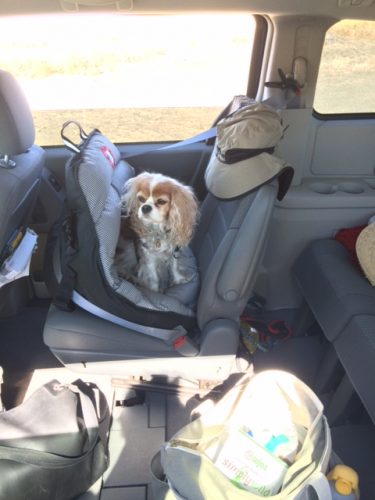
Beyond baseline padding, the upper finger sections incorporate two to three pneumatic air chambers (varying by model). Utilizing an included air pump, these chambers are inflated to create a high-density, cushion-barrier buffer.
Comparative Size & Spatial Utilization Metrics
| Product Name | Dimensions (L x W x H) / Shape | Manufacturer Weight Limit | Real-World Usable Limit for Sprawling | Ventilation & Visibility Rating |
|---|---|---|---|---|
| PetEgo Pet Tube | Long tunnel configuration | Varies | Generous length, but failed crash tests | Moderate (mesh ends, solid body) |
| PetEgo Jet Set Forma Frame (Large) | 22" x 10" x 13" | Up to 22 lbs | Max ~15 lbs (too narrow in body) | Poor (limited mesh panels) |
| Sleepypod Medium | 17" round x 13" tall | Up to 15 lbs | Max ~10 lbs (restrictive interior) | Excellent (fully breathable dome) |
| AirPupSaver 25 | Custom molded shell + air chambers | Up to 25 lbs | Ideal for 10–15 lb dogs | Excellent (open-air design) |
| AirPupSaver 45 | Oversized custom molded shell | Up to 45 lbs | Excess space for small dogs; ideal for medium breeds | Excellent (open-air design) |
Real-World Observations: Model 25 vs. Model 45
Extended testing with a 15-pound dog revealed distinct operational realities between the two AirPupSaver sizes:
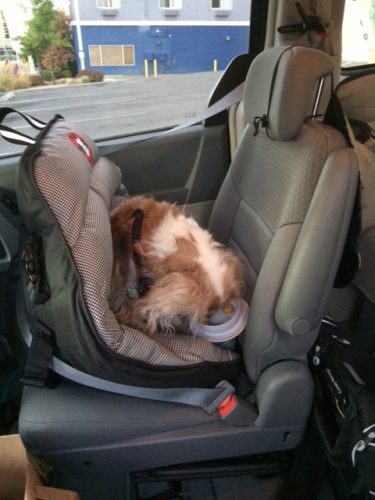
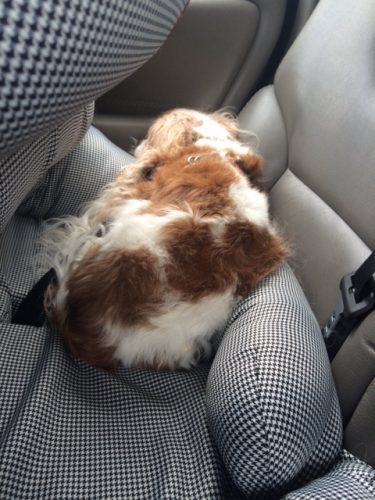
- AirPupSaver 25: This unit struck the optimal balance. It provided sufficient room for repositioning without consuming excessive cabin real estate. Chloe naturally gravitated toward curling up rather than sprawling, rendering the massive footprint of the larger model unnecessary. Furthermore, the Model 25 lacks top tether straps, simplifying the installation workflow.
- AirPupSaver 45: While offering an expansive interior surface area, testing demonstrated that a 15-pound dog does not utilize the extra volume. Additionally, the larger model demands significantly more vehicle space, increases installation friction, and introduces two additional overhead tether straps that complicate the cabin environment.
Installation Mechanics and Operational Insights
Installing the AirPupSaver is a non-trivial engineering task. While the manufacturer provides printed documentation and digital video guides, bridging the gap between theory and practical execution in a vehicle cabin requires patience and forewarned insight.
Step-by-Step Installation Realities
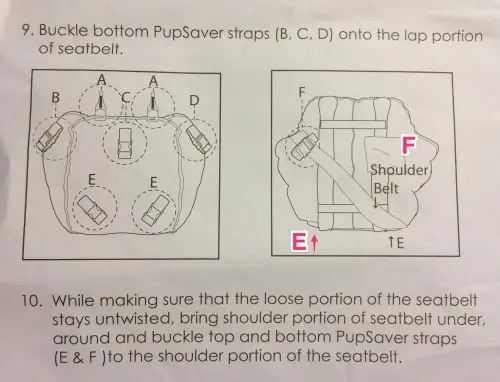
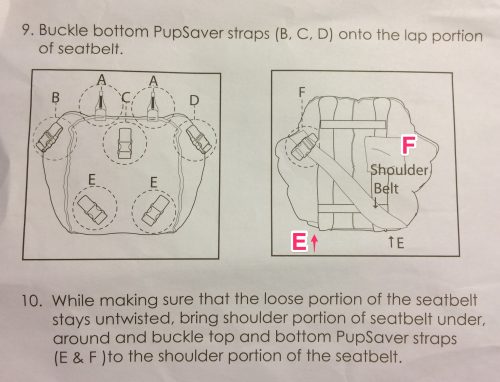
- Lower Anchor and Latch Integration: The unit secures via dual hooks (designated as clips "A" in manufacturer diagrams) that latch directly onto the vehicle seat’s lower anchor bars.
- Seat Belt Routing: The vehicle’s shoulder and lap belt system plays a vital structural role. The belt threads through designated plastic clips located on the outer shoulders of the bed before locking into the standard vehicle buckle. A heavy-duty seat belt clamp (included in the kit) is mandatory to clamp the belt against the vehicle wall, granting the precise amount of slack required by the safety system while preventing the belt from pulling the top of the bed downward onto the pet.
- Top Tethers (Model 45 Only): The larger AirPupSaver 45 requires two additional overhead straps stretching from the bed’s upper handle, over the back of the seat, and anchoring to the top tether hardware located on the rear of the vehicle seatback.
- Pneumatic Maintenance: The air chambers require regular monitoring. If air pressure drops, the protective "fingers" fold downward like a soft taco—a scenario that can cause behavioral distress for the animal. Keeping the air pump permanently stored in the glove compartment is strongly advised.
Ergonomic Drawbacks and Cabin Friction
- Immobility: Unlike the Pet Tube or standard soft carriers that can be easily unhooked from a headrest and tossed into the cargo area or collapsed flat for travel, the AirPupSaver is a permanent installation fixture. Moving it between vehicles or removing it on a whim is labor-intensive, making it incompatible with front passenger seats if human occupants frequently rotate positions.
- Loading Logistics: Securing a dog into the internal harness while leaning over from the driver’s side exposes the user to awkward physical positioning, particularly in tight urban parking environments. A reliable workaround involves entering the rear cabin directly from the opposite side of the vehicle to complete the harnessing process.
- Driver Visibility: The raised air-cushioned fingers of the mitt obscure the driver’s direct line of sight to the pet unless the animal actively peeks around the lateral perimeter.
- Harness Sizing Caveats: The safety harness included with early AirPupSaver kits runs exceptionally large. A 15-pound dog required an extra-small (XS) variant adjusted to its absolute maximum constriction limit. Furthermore, buyers must verify whether a harness is included in their specific retail package, as promotional inclusions vary. Crucially, users must never substitute a standard walking collar or a front-clip chest harness; a heavy-duty, rear-clip crash-tested harness (such as the Solvit safety harness) is non-negotiable for safety.
Future Outlook: The Evolution of Canine Travel Safety
The trajectory of pet travel products points toward a necessary tightening of industry standards. As independent testing organizations like the Center for Pet Safety continue to expose vulnerabilities in commercial pet products, consumer demand is shifting away from aesthetic convenience toward verifiable crash-test performance.
In the coming years, the pet products industry faces several imperative milestones:
- Standardized Regulatory Oversight: Independent safety certifications must eventually transition into universally recognized government or international safety standards (similar to FMVSS standards for human child safety seats).
- Ergonomic Innovation: Future designs must reconcile the dichotomy between high-level crash protection and spatial freedom. Manufacturers are challenged to engineer systems that offer the structural integrity of rigid containment units alongside the open ventilation and comfort of soft bedding, without imposing prohibitive installation hurdles.
- Universal Latch Integration: As automotive manufacturers update vehicle seating designs, pet safety equipment must adapt to utilize standardized ISOFIX and Latch anchors universally, minimizing the reliance on complex, multi-point seat belt clamping workarounds.
Until a unified, frictionless standard emerges, products like the AirPupSaver represent an imperfect yet vital evolutionary step. For pet owners carrying small-to-medium dogs, embracing these complex systems is a small price to pay for the ultimate peace of mind: knowing that furry companions are not merely comfortable on the road, but genuinely protected against the unforeseen.