
Executive Overview
In a decisive strategic maneuver aimed at future-proofing its food security and rural economy, Beijing has officially launched a sweeping new industrial roadmap known as the "Hundred-Thousand-Ten Thousand" (100-1,000-10,000) programme. Unveiled by Maierdan Mugaiti, Vice Minister of the Ministry of Agriculture and Rural Affairs (MARA), during a high-profile press conference hosted by the State Council Information Office, the initiative is designed to structurally overhaul China’s agricultural technology ecosystem.
The core objective of the programme is to systematically groom and scale 100 leading enterprises, 1,000 rapidly growing enterprises, and 10,000 high-potential enterprises across the agricultural sector. This ambitious framework forms a critical pillar of Beijing’s broader push for self-reliance in agricultural science and technology, aligning squarely with the strategic benchmarks of the upcoming 15th Five-Year Plan.
As global supply chains face increasing volatility and domestic pressures mount from shifting demographics and limited arable land, China is leaning heavily into technological innovation as the ultimate engine of agricultural modernization. According to MARA, the contribution rate of agricultural scientific and technological progress to overall sector growth has already surpassed 64%. By injecting artificial intelligence, advanced biomanufacturing, and next-generation research paradigms into the rural economy, Beijing aims to transition from a traditional farming powerhouse to an innovation-driven agricultural superpower.
Detailed Chronology and Policy Rollout
The announcement on September 29 marks the culmination of months of coordinated policy formulation within China’s central government agencies, signaling a shift from experimental regional tech trials to a unified national industrial policy.
- Early 2026 / Preparatory Phase: Government think tanks and MARA officials draft preliminary frameworks focusing on industrial bottlenecks, specifically identifying gaps in domestic seed security, advanced machinery, and high-tech aquaculture.
- September 29 (State Council Briefing): Vice Minister Maierdan Mugaiti formally introduces the "Hundred-Thousand-Ten Thousand" programme at a State Council Information Office press conference. He outlines the tiered enterprise cultivation targets and details the integration of AI-driven research paradigms.
- The 15th Five-Year Plan Horizon: The initiative is formally anchored within China’s broader medium-to-long-term development blueprints. It bridges national science policy with commercial execution, emphasizing self-reliance, intellectual property protection, and commercial viability.
- Ongoing Implementation (Late 2026 and Beyond): Central authorities begin rolling out targeted financial instruments, tax incentives, and incubator networks designed to support the selected 100 leading, 1,000 rapid-growth, and 10,000 high-potential firms. Institutional alignments are forged between national laboratories, elite universities, and private-sector agribusinesses.
Supporting Context, Metrics, and Strategic Pillars
To fully grasp the magnitude of Beijing’s new agricultural blueprint, one must examine the baseline metrics and structural challenges currently defining China’s rural economy.
The Metric of Modernization: 64% and Beyond
For decades, China fed a fifth of the world’s population with less than 9% of the world’s arable land and 6% of its freshwater resources. However, rapid industrialization, urbanization, and environmental constraints have made intensive, resource-heavy farming unsustainable.
Vice Minister Mugaiti highlighted a critical milestone during his briefing: the contribution rate of agricultural science and technology progress has now exceeded 64%. This metric serves as empirical proof that technological advancements—ranging from high-yield seed varieties to precision drip irrigation—are driving the majority of agricultural output growth. Beijing’s goal is to rapidly accelerate this figure over the course of the 15th Five-Year Plan, treating science and technology not merely as a supportive tool, but as the foundational variable in modernizing agriculture and rural areas.
Recent Scientific Breakthroughs
The policy rollout is underpinned by tangible research victories. Chinese researchers have recently achieved significant breakthroughs in fundamental plant biology, most notably decoding the precise cellular mechanisms by which a single plant cell develops into a complete, viable plant. Such discoveries pave the way for revolutionary leaps in plant breeding, tissue culture, and genetic resilience against climate change-induced stresses.
Furthermore, these developments coincide with broader national strategies, such as China’s expanded "blue food" strategy—which leverages advanced offshore ranching models—and the rapid integration of artificial intelligence into smart livestock farming, particularly as the domestic pork industry enters a post-growth era characterized by efficiency and quality over sheer volume.
Official Statements and Institutional Strategy
The government’s approach to research and development (R&D) under the new framework is marked by an emphasis on structural efficiency, targeted funding, and the elimination of redundant, low-level competition.
11 Priority Research Areas
To prevent fragmented spending and maximize national output, Beijing has streamlined its research pipeline into 11 priority areas. These focal points include:
- Crop Cultivation & Molecular Breeding: Securing proprietary rights over critical germplasm and high-yield, climate-resilient crops.
- Livestock and Aquaculture Innovation: Modernizing animal husbandry through automated feeding, disease tracking, and precision nutrition.
- Agricultural Product Processing: Enhancing the value chain through advanced food preservation, packaging, and deep-processing technologies.
- Agricultural Machinery and Equipment: Upgrading domestic farm machinery to handle complex terrains and specialized crops, reducing reliance on foreign imports.
- Agricultural Biomanufacturing: Harnessing synthetic biology to produce alternative proteins, bio-fertilizers, and high-value biochemicals.
- AI-Plus Agriculture: Integrating machine learning, computer vision, and autonomous systems into daily farm management.
(Additional priority areas encompass soil health, water conservation, green pest management, digital rural infrastructure, and agricultural safety standards).
Curbing Redundancy Through "Organized Science"
Addressing institutional inefficiencies, Mugaiti stressed the need to guide national laboratories, agricultural research institutes, and elite universities toward clearly defined core responsibilities.
"While fostering appropriate competition, we must also promote division of labour and cooperation, strengthen organised scientific and technological research, and avoid low-level duplication and homogeneous development," Mugaiti stated.
By enforcing a structured division of labor, the government hopes to create an uninterrupted pipeline of innovation—metaphorically described by officials as a clean, flowing "source of fresh water" feeding continuous progress.
The Paradigm Shift: Artificial Intelligence in Labs
Artificial intelligence is expected to fundamentally transform how agricultural research is conducted. By deploying machine learning algorithms to model biological systems, simulate climate scenarios, and analyze massive genomic datasets, research timelines that once took decades can be compressed into months. MARA has pledged to heavily invest in the infrastructure required to support this digital research paradigm shift.
From Lab to Farm: Bridging the Commercialization Chasm
A historically persistent challenge in agricultural science—not just in China, but globally—has been the "valley of death" between laboratory discoveries and commercial field implementation. Innovations developed in pristine academic settings often fail to scale in rugged, unpredictable rural environments.
MARA’s new programme places immense emphasis on crossing this chasm.
Integrating Science and Industry
To ensure that research serves actual market needs, the "Hundred-Thousand-Ten Thousand" initiative mandates closer collaboration between academic scientists and commercial enterprises. By nurturing 100 leading agricultural tech conglomerates, Beijing is creating institutional champions capable of absorbing high-risk research, scaling it industrially, and marketing it directly to cooperatives and individual farmers.
"Agricultural scientific and technological achievements must ultimately be put to use in the fields," Mugaiti emphasized. "We will promote the integration of science and industry and keep the channels for transforming scientific and technological achievements open."
Accelerating Real-World Applications
The strategy outlines three immediate focal points for commercial translation:
- Advanced Machinery Deployment: Moving high-tech, automated, and intelligent farming equipment out of showrooms and onto small- and medium-sized farms.
- Biomanufacturing Upgrades: Commercializing bio-based inputs to reduce chemical fertilizer dependency and lower agricultural carbon emissions.
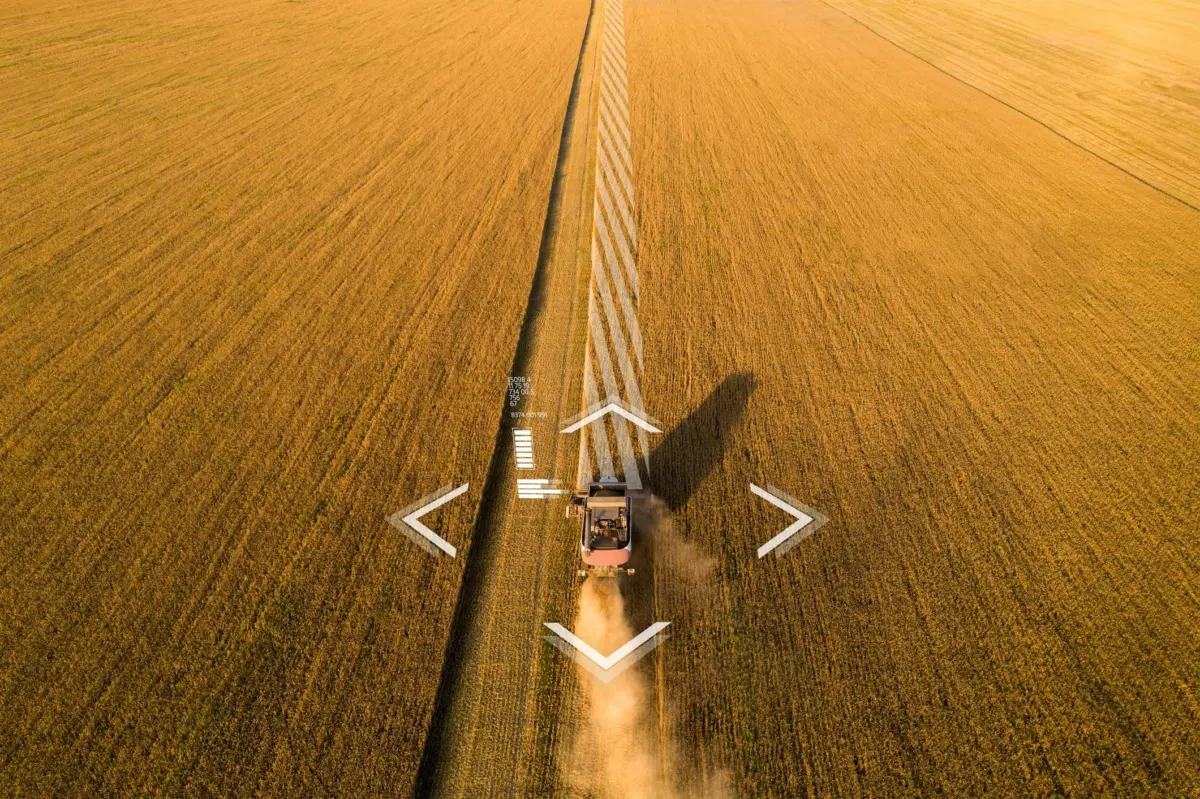
- AI-Driven Scenarios: Scaling smart-farming applications—such as drone spraying, IoT soil sensors, and automated livestock monitoring—so they become accessible everyday tools for modern farmers.
Future Outlook
As China steps deeper into the 15th Five-Year Plan era, the success of the "Hundred-Thousand-Ten Thousand" programme will serve as a critical litmus test for the nation’s broader economic transition. By systematically scaling agricultural technology enterprises from high-potential startups to global market leaders, Beijing is engineering a self-sustaining ecosystem designed to withstand external geopolitical pressures and domestic resource constraints.
The convergence of artificial intelligence, synthetic biology, and institutional streamlining promises to redefine what is possible in Chinese agriculture. If MARA successfully executes this vision, the dividends will extend far beyond domestic food security. By transforming cutting-edge laboratory science into practical, field-ready productivity, China is positioning itself to export both advanced agricultural technologies and sustainable farming models to the developing world, setting a new global benchmark for agricultural modernization in the 21st century.