
Executive Overview
Long before a puppy learns to sit politely, walk calmly on a leash, or guide a visually impaired individual through a bustling city intersection, an intricate, hidden world of biological growth is already well underway. During the fragile opening weeks of life, a puppy’s body and brain undergo monumental transformations. Though newborns enter the world with their eyes and ears sealed shut, completely reliant on their mother and littermates, their central nervous systems are actively hard at work. Every micro-experience during this phase helps lay the permanent neurological groundwork for how the animal will learn, regulate emotions, and interact with human society later in life.
At organizations like Dogs Inc, the preparation of future guide dogs and service dogs begins long before formal obedience training starts. It starts on day one through science-backed protocols such as Early Neurological Stimulation (ENS). While ENS is only one small piece of a much larger, highly sophisticated developmental puzzle, it exemplifies a deeply thoughtful approach to animal husbandry. By introducing mild, highly controlled physiological challenges during a specific neonatal window, breeding and training programs can help optimize a puppy’s stress response, cardiovascular performance, and resilience.
This article explores the intricate science of early puppy development, detailing how specialized interventions like ENS bridge the gap between genetics and advanced service work, and examining the multi-stage journey that transforms a newborn puppy into a life-changing companion.
Detailed Chronology: From the Neonatal Stage to Adolescent Adulthood
Understanding how a service dog is shaped requires looking closely at the chronological milestones of early canine development. Each stage presents unique opportunities—and distinct vulnerabilities—that demand specialized care, handling, and environmental enrichment.

1. The Neonatal Stage (Birth to 2 Weeks)
During the first two weeks of life, puppies exist in a sensory-limited state. They cannot see or hear, their body temperature regulation is primitive, and they spend the vast majority of their time alternating between nursing and deep sleep. Despite their outward vulnerability, the brain and nervous systems are developing at an explosive rate.
This is the exact window where Early Neurological Stimulation (ENS) takes place. Developed originally as part of the "Biosensor" program and later popularized across working dog sectors, ENS exposes neonates to a series of five mild tactile and postural stresses for just a few seconds each day. Because these exercises are brief and strictly regulated, they do not overwhelm the puppy; instead, they act as a gentle biological wake-up call, stimulating the neurological system and encouraging cardiovascular improvements.
2. The Transitional Stage (2 to 4 Weeks)
As puppies cross the two-week threshold, a dramatic transformation occurs. Their eyes and ears open, allowing them to process light, shadow, and sound for the first time. By four weeks of age, puppies begin to find their footing, attempting tentative steps, exploring their immediate surroundings, and even issuing their first playful barks.
Simultaneously, their deciduous baby teeth begin to erupt, signaling a gradual, natural shift away from exclusive nursing toward soft gruels and eventually solid foods. Social interactions expand exponentially during this phase as puppies begin actively engaging with their mother and littermates, learning critical early lessons in bite inhibition, canine body language, and social hierarchy.

3. The Socialization Period (3 to 12 Weeks)
Often considered the most critical psychological window in a dog’s life, the socialization period overlaps with the tail end of the transitional stage and extends through the third month. This is when a puppy’s brain is uniquely wired to accept new people, animals, sounds, surfaces, and environments as normal and non-threatening.
- 3 to 8 Weeks: Puppies begin building profound positive associations with novel stimuli. Exposure to varied textures underfoot, gentle handling by different humans, and diverse acoustic environments helps build baseline resilience.
- 8 to 12 Weeks: By this stage, many puppies transition to volunteer puppy raisers. They must be exposed to an array of everyday items—vacuum cleaners, bicycles, elevators, and traffic—to inoculate them against future anxieties.
Behavioral scientists emphasize that puppies typically navigate an average of four distinct "fear periods" as they grow, during which frightening experiences can leave a permanent psychological imprint. Therefore, socialization must always be paired with positive reinforcement, ensuring that novel encounters remain safe, controlled, and confidence-building.
4. The Juvenile and Adolescent Stage (6 Months to 12 Months)
As dogs mature past puppyhood, they enter adolescence—a phase that human parents and dog handlers alike recognize instantly. Beginning around six months of age, adolescent dogs frequently test boundaries, much like human teenagers experiencing hormonal shifts.
- Reproductive Maturity: Most dogs reach sexual maturity between six and 12 months. In females, this involves the onset of the first heat cycle; in males, rising testosterone can trigger novel hormone-driven behaviors, such as increased marking or posturing.
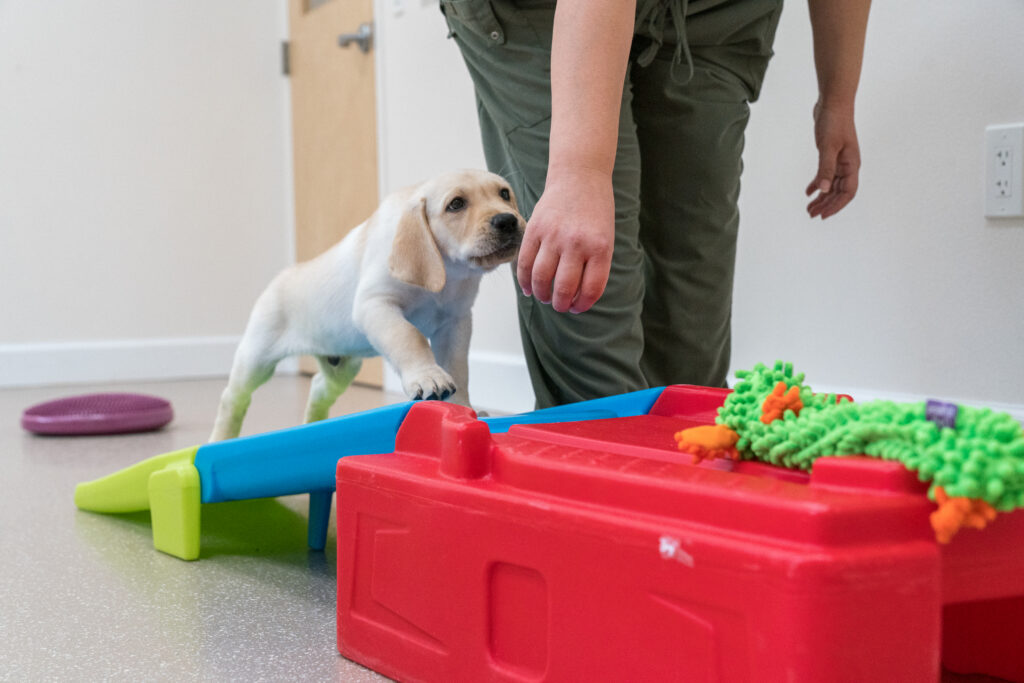
- Continued Education: Formal training deepens during this period. Short, engaging learning sessions introduce foundational cues, leash manners, and public access protocols. Crate training reinforces independence and structured daily routines, while structured exposure to other animals ensures lifelong behavioral stability.
Supporting Context & Metrics: The Science of ENS and Environmental Enrichment
To truly appreciate the value of Early Neurological Stimulation, one must examine the physiological mechanics behind the protocol. ENS is not a training regimen; it does not teach a puppy obedience commands or trick behaviors. Rather, it is a targeted physical manipulation designed to stimulate the neurological system by introducing minor stressors while the puppy’s endocrine system is still forming.

The Five Core ENS Exercises
Administered once daily between the third and sixteenth day of life, the ENS protocol involves five distinct, gentle movements, each lasting approximately three to five seconds:
- Tactile Stimulation: The handler uses a cotton-tip applicator to tickle the puppy gently between the toes on any one foot.
- Head Up: The puppy is held vertically, with both hands supporting the body, so that the head points directly upward.
- Head Down: The puppy is held firmly with its head pointed downward toward the ground.
- Supine Position: The puppy is placed flat on its back, resting comfortably in the palm of the handler’s hand.
- Thermal Stimulation: A damp towel, chilled in a refrigerator for a short period, is placed beneath the puppy, allowing it to experience a mild, safe drop in temperature.
Documented Physiological Benefits
Decades of anecdotal observation and working dog data indicate that puppies subjected to structured ENS and early environmental enrichment exhibit several distinct advantages over non-stimulated peers:
- Improved Cardiovascular Performance: Enhanced heart rates and stronger cardiovascular functioning.
- Stronger Stress Tolerance: Greater adaptability and resilience when confronted with novel, unexpected stressors in adulthood.
- Enhanced Adrenal Function: Improved hormonal regulation, allowing the body to react to stress efficiently and recover more rapidly.
- Greater Disease Resistance: Anecdotal indicators suggest optimized immune system responsiveness, though genetics and maternal antibodies remain the primary drivers of health.
However, experts caution that ENS is merely the foundation of a pyramid. A dog’s ultimate temperament and success as a working partner are determined by a complex interplay of genetics, health status, daily socialization, physical environment, and ongoing positive reinforcement training.
Official Statements & Industry Perspectives
The philosophy of early intervention is championed by leading assistance dog organizations worldwide. Canine development experts emphasize that breeding and raising a service dog is an exercise in intentionality.

"We cannot expect a dog to walk into a crowded transit hub, maintain absolute composure amidst chaotic stimuli, and reliably mitigate a handler’s disability without laying deep, deliberate physiological groundwork from day one," notes a senior canine development coordinator at Dogs Inc. "Every touch, every gentle sound exposure, and every structured milestone during those first weeks contributes to the emotional resilience required of a life-changing partner."
Animal behaviorists consistently underscore that early experiences dictate future behavioral trajectories. Negative, traumatic, or intensely frightening experiences during critical developmental windows can result in lifelong reactivity, fear-based aggression, or generalized anxiety. Conversely, safe, controlled challenges—such as those delivered via ENS and structured puppy raising—cultivate curiosity, adaptability, and unwavering confidence.
Future Outlook: Raising the Standard for Guide and Service Dogs
The demand for expertly trained guide dogs and service dogs continues to outpace supply. As human society grows increasingly complex, urbanized, and fast-paced, the expectations placed upon working dogs have never been higher. They must navigate unpredictable environments, ignore intense distractions, and remain steadfastly focused on the human partners who depend on their vision, mobility, and medical alertness.
To meet this standard, organizations like Dogs Inc are continually refining their breeding, neonatal care, and puppy-raising protocols. The future of service dog development lies in the harmonious integration of hard science—such as genetic profiling and standardized ENS protocols—with compassionate, community-based puppy raising.
By investing immense care into every stage of a puppy’s journey, from the silent, rapid transformations of the neonatal nursery to the bustling public training sessions of adolescence, working dog organizations are proving that excellence is not left to chance. It is carefully, scientifically, and lovingly built from day one, ensuring that the dogs of tomorrow are fully prepared to change lives today.