
Date: October 12, 2026
Author: Global Animal Welfare & Advocacy Desk
Executive Overview
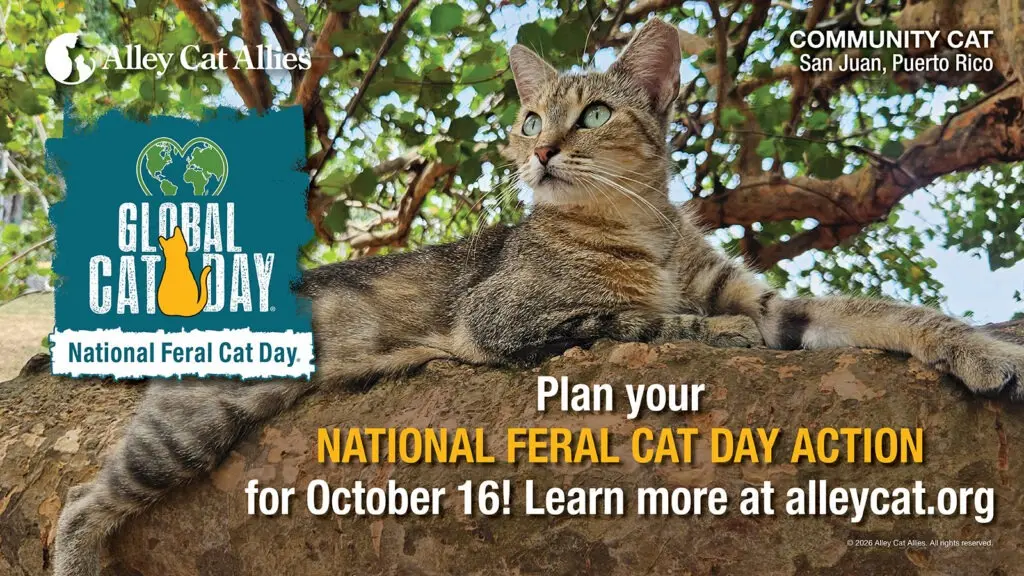
As animal welfare advocates, caregivers, and communities around the globe prepare for the upcoming observance of Global Cat Day and National Feral Cat Day on Friday, October 16, 2026, the underlying philosophy remains both simple and profound: Cats Are Community. This guiding principle asserts that feline residents—whether they lounge on historic coastal walkways or navigate the arid urban landscapes of the American Southwest—are integral members of our shared neighborhoods. Consequently, they deserve the full protection of progressive laws, humane management policies, and community-backed resources.
This year’s observance arrives on the heels of monumental milestones for the global cat advocacy movement. Most notably, animal welfare organizations are celebrating a definitive legal and advocacy triumph in San Juan, Puerto Rico, where a hard-fought federal lawsuit successfully halted a U.S. National Park Service eradication plan that threatened the lives of the iconic Paseo del Morro cats. Simultaneously, municipalities such as Tempe, Arizona, are demonstrating how progressive, government-funded Trap-Neuter-Return (TNR) initiatives can create harmonious environments where both human residents and vulnerable outdoor cats thrive despite extreme climatic challenges.
As communities prepare to mobilize on October 16, this report examines the state of community cat advocacy in 2026, chronicling the pivotal legal battles that saved Puerto Rico’s feline heritage, analyzing the operational success of humane urban wildlife management in the desert, and outlining actionable steps for global participation.

Detailed Chronology: Landmark Victories and Ongoing Advocacy
The Defense of the Paseo del Morro Cats (Puerto Rico)
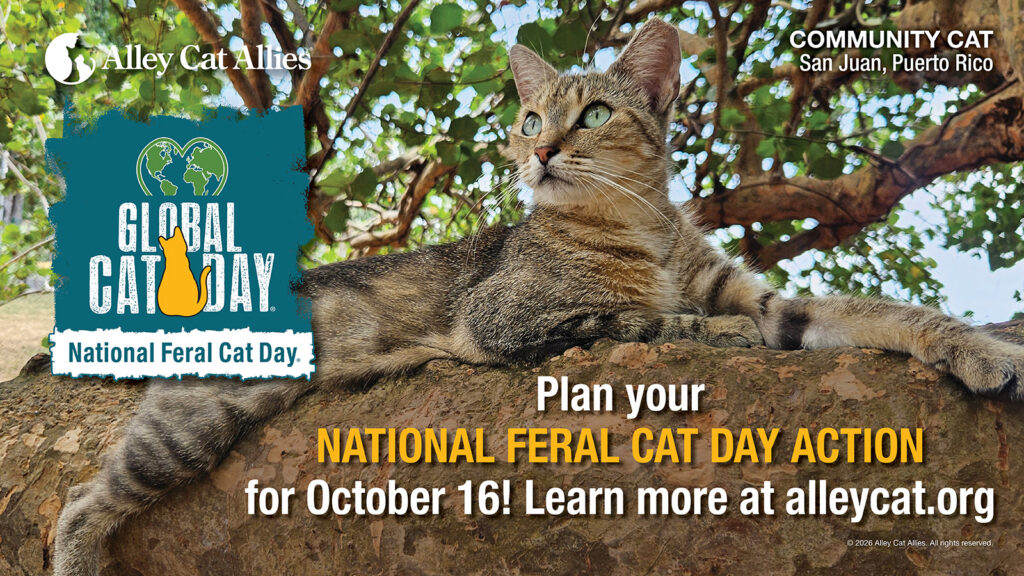
The rich cultural heritage of Puerto Rico has long been intertwined with its feline population. For centuries, free-roaming cats have been woven into the fabric of island life, supported by generations of dedicated residents who have voluntarily provided food, shelter, and medical care. Among the most famous feline populations on the island are the community cats inhabiting the picturesque Paseo del Morro, a historic waterfront walkway leading to the historic El Morro fortress in San Juan.
However, this delicate coexistence faced an existential threat in late 2023. The U.S. National Park Service (NPS)—citing management and environmental policies—announced a sweeping plan aimed at removing the feline population. Alarmingly, the scheme explicitly permitted lethal removal methods, placing a deadly target on the backs of beloved, healthy community cats such as Llorin and Bella.
Recognizing the gravity of the situation, advocacy groups, spearheaded by Alley Cat Allies, mobilized an intensive, multifaceted rescue campaign. The defense strategy spanned several fronts:
- Historic Federal Litigation: Animal advocates initiated a federal lawsuit challenging the legality of the NPS’s proposed eradication plan, arguing that the scheme violated federal environmental and administrative procedures while ignoring humane alternatives.
- Public Advocacy and Grassroots Mobilization: The lawsuit was backed by a massive public awareness campaign, mobilizing Puerto Rican citizens and international animal lovers to flood regulatory agencies with expressions of outrage and demands for a humane resolution.
- Direct Care and Medical Intervention: On-the-ground volunteers intensified daily feeding, veterinary checks, and TNR efforts to demonstrate that a managed colony posed no threat to the ecosystem.
Through unwavering legal pressure and public advocacy, the campaign achieved total victory. Today, the cats of Paseo del Morro are secure. Protected from the threat of eradication, cats like Llorin and Bella continue to roam their historic home, serving as a testament to what collaborative legal action and community resistance can achieve.
Desert Resilience: Tempe, Arizona’s Model TNR Program
While coastal Puerto Rico celebrated a legal victory against lethal removal, the desert city of Tempe, Arizona, offered a different blueprint for success: proactive municipal integration of humane cat policies.
In the scorching urban heat of the Sonoran Desert, temperatures frequently soar well past 100 degrees Fahrenheit for much of the year. For outdoor animals, survival requires adaptation and human partnership. During peak daylight hours, tabby cats like Guy can be found ducking out of sight, seeking refuge from the relentless sun beneath desert cacti and low-lying bushes. As dusk approaches and temperatures drop, these resilient animals emerge to hunt, explore, and interact with their territories.
Crucially, Guy and thousands of other community cats in Tempe do not have to face these harsh environmental conditions alone. The city government has formally embraced a progressive, government-funded Trap-Neuter-Return (TNR) program that forms the cornerstone of its animal services strategy. Operating in close partnership with local rescue organizations, veterinary professionals, and dedicated community caregivers, the Tempe program ensures that outdoor cats are safely trapped, sterilized, vaccinated, and returned to their outdoor homes.
This institutional backing has transformed Tempe into a national standard-bearer for municipal cat welfare, proving that arid environments can successfully sustain healthy outdoor cat populations when local governments and grassroots advocates work in tandem.

Supporting Context & Metrics
To fully understand the significance of Global Cat Day 2026, one must examine the broader socio-legal landscape surrounding free-roaming and community cats.
- The Shift from Eradication to Management: Historically, municipal animal control agencies relied heavily on "catch-and-kill" policies, which proved both economically unsustainable and biologically ineffective due to the "vacuum effect"—wherein new cats quickly migrate in to fill vacant territories.
- The Rise of TNR: Over the past two decades, the implementation of Trap-Neuter-Return programs has expanded exponentially. According to animal welfare metrics, municipalities that replace lethal control with TNR experience a rapid stabilization and eventual decline in community cat populations, alongside a drastic reduction in shelter intake and euthanasia rates.
- Economic Efficiency: Government-funded TNR programs consistently demonstrate lower per-animal costs compared to traditional animal control models, freeing up municipal resources for public education, adoption services, and targeted veterinary care.
- Public Sentiment: Sociological surveys indicate a growing cultural shift: an overwhelming majority of urban and suburban residents view outdoor cats as legitimate members of the local ecosystem rather than nuisances, heavily favoring humane protection over lethal eradication.
Official Statements and Expert Perspectives
The overarching theme of the 2026 Global Cat Day campaign—Cats Are Community—has been echoed by leading animal welfare advocates, legal experts, and community leaders who emphasize the ethical imperative of humane stewardship.
"The victories we celebrate this year—from the historic federal defense of the Paseo del Morro cats in Puerto Rico to the institutionalization of TNR in cities like Tempe, Arizona—prove that when communities stand up for cats, systemic change is possible," noted a representative from Alley Cat Allies. "Cats are not intruders in our neighborhoods; they are woven into our cultural heritage and our daily lives. They deserve laws, resources, and protections that reflect their status as cherished community members."
Legal scholars involved in the Puerto Rican litigation noted that the defense of the Paseo del Morro cats establishes a crucial legal precedent regarding federal agency accountability. By successfully challenging arbitrary removal orders, the lawsuit signals that federal lands are not exempt from public scrutiny and the growing ethical consensus against lethal wildlife and feral animal eradication.

Furthermore, municipal officials in Tempe have emphasized that their investment in TNR is rooted in fiscal responsibility and public health. City planners and animal control directors point out that sterilization programs successfully curb nuisance behaviors—such as mating noise and territorial spraying—while naturally controlling rodent populations, creating a net benefit for the entire urban ecosystem.
Future Outlook: The Road Ahead for Global Cat Advocacy
As Global Cat Day and National Feral Cat Day 2026 officially commence on October 16, the animal welfare community is looking forward to translating current victories into broader, systemic reforms. The roadmap for the future centers on several strategic priorities:
- Legislative Expansion: Advocates are actively lobbying state legislatures and local city councils across the United States—particularly in regions lagging behind, such as parts of Arizona and the broader Southwest—to codify TNR into official municipal code, ensuring long-term funding and legal protection for caregivers.
- Federal Policy Reform: Building upon the legal success in San Juan, advocacy coalitions are drafting policy recommendations for federal land-management agencies (including the National Park Service and the Bureau of Land Management) to replace outdated eradication protocols with science-based, humane management frameworks.
- Public Education and Engagement: Amplifying grassroots participation remains vital. Campaigns are targeted at educating the public on how to construct winter and summer shelters, access low-cost spay/neuter clinics, and peacefully coexist with local wildlife and outdoor felines.
- Global Solidarity: Expanding the Cats Are Community message beyond North America, fostering international networks of caregivers, and supporting grassroots sterilization initiatives in developing nations and island territories.
How to Take Action for Global Cat Day 2026
The success of the global cat advocacy movement relies entirely on the dedication of individual citizens. Supporters are encouraged to participate in the October 16 mobilization through several key avenues:
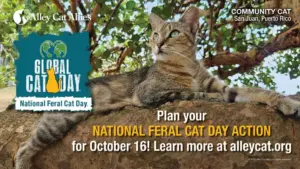
- Take a National Feral Cat Day Action: Engage in local advocacy by contacting elected officials, volunteering with a local TNR group, or establishing a feeding station. Share your actions on social media using the hashtags #GlobalCatDay and #NationalFeralCatDay.
- Support Humane Organizations: Financial contributions to organizations like Alley Cat Allies directly fund emergency litigation, on-the-ground veterinary care, and global advocacy campaigns.
- Wear Your Compassion: Purchase official Global Cat Day apparel and merchandise to raise public awareness and spark important community conversations about animal protection.
As we mark this year’s celebrations, the message from Paseo del Morro to Tempe is unmistakable: through persistence, legal advocacy, and compassionate community care, a more humane world for cats is not only possible—it is already taking shape.