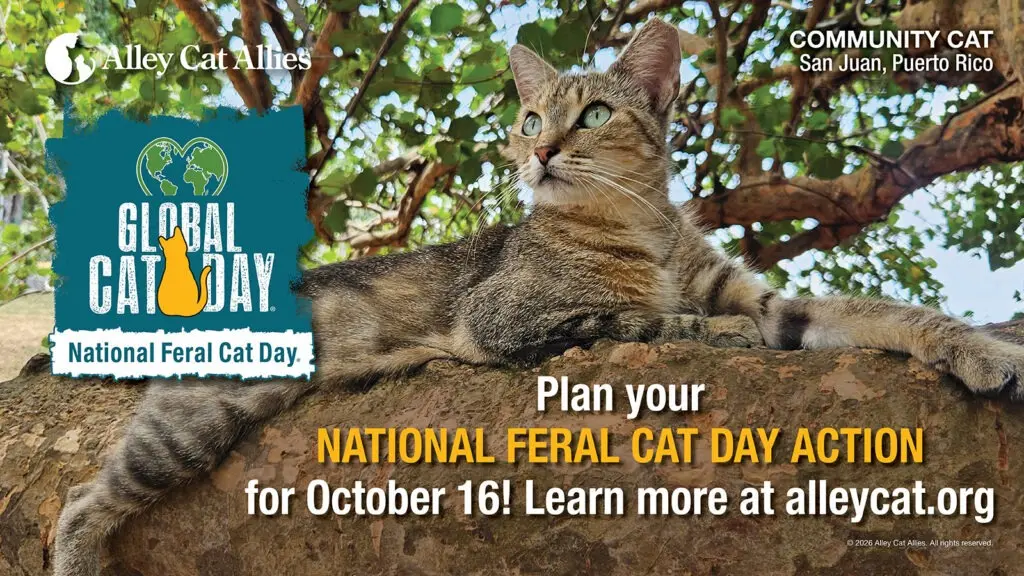

Published: October 12, 2026
Author: Environmental & Animal Welfare Desk
Executive Overview
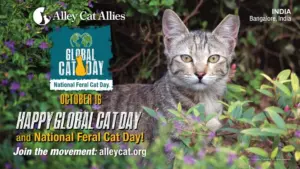
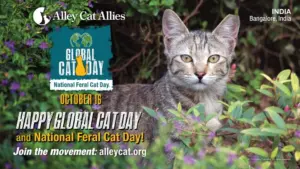
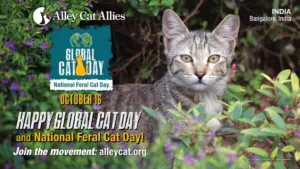
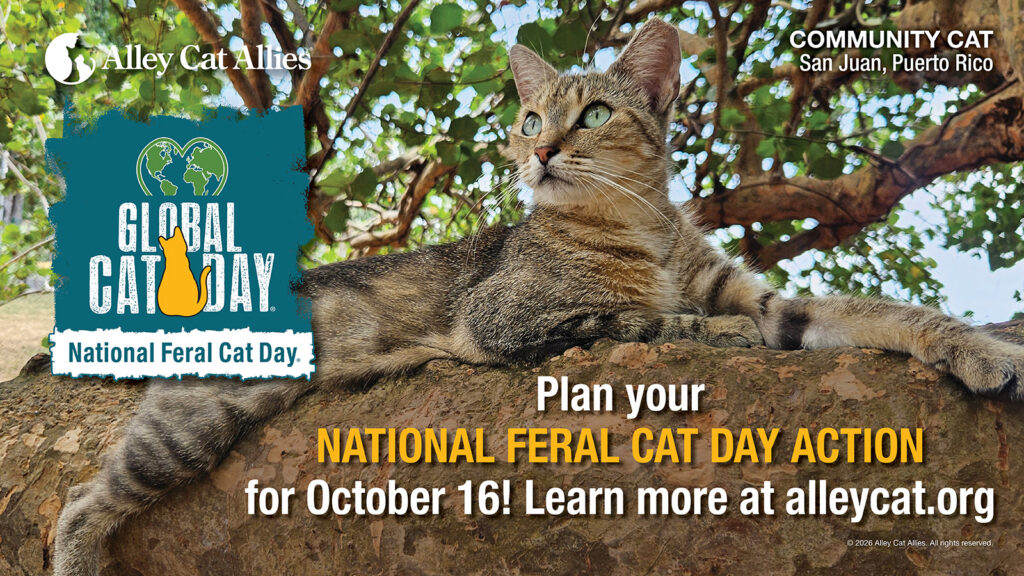
As the global animal welfare community prepares to observe Global Cat Day and National Feral Cat Day this Friday, October 16, 2026, the core philosophy underpinning the movement remains clear, resonant, and urgent: Cats Are Community. Across the globe, municipalities, grassroots advocates, and international organizations are converging around a singular standard—that all communities must enact laws, dedicate resources, and establish frameworks that formally recognize and protect cats as valued members of the social fabric.
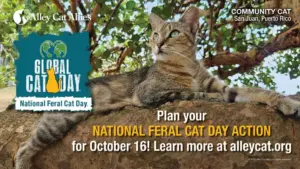
This year’s observance arrives on the heels of monumental legislative and advocacy milestones. Chief among them is a historic legal and community victory in San Juan, Puerto Rico, where a coalition led by Alley Cat Allies successfully thwarted a U.S. National Park Service plan that threatened the lives of the iconic community cats of Paseo del Morro. Simultaneously, cities like Tempe, Arizona, are proving that humane, government-funded programs such as Trap-Neuter-Return (TNR) can successfully harmonize human infrastructure with feline welfare, even under extreme environmental conditions.
This report provides a comprehensive examination of these developments, detailing the chronology of the Puerto Rican legal battle, evaluating the municipal framework in Tempe, analyzing the broader metrics of community cat advocacy, and outlining actionable steps for global participation ahead of October 16.
Detailed Chronology: The Battle to Save the Paseo del Morro Cats
The triumph of the Paseo del Morro cats stands as a watershed moment in modern animal law and conservation advocacy. The narrative of these cats is deeply intertwined with Puerto Rico’s colonial history, maritime heritage, and cultural identity. For centuries, free-roaming cats have inhabited the coastal fortifications of San Juan, becoming as much a part of the landscape as the historic stone ramparts themselves. Generations of local residents have lovingly tended to these feline populations, providing daily sustenance, basic medical care, and monitoring.

The Threat Emerges (Late 2023)
The crisis began in late 2023 when the U.S. National Park Service (NPS)—which manages federal lands surrounding the historic El Morro fort and the adjacent Paseo del Morro pedestrian walkway—moved forward with a contentious management proposal. Citing environmental impact concerns, the federal agency drafted a framework that opened the door to lethal removal and eradication of the resident cat colonies.
For local caregivers and animal rights organizations, the plan was an unacceptable assault on both animal life and local heritage. The prospect of lethal removal meant that beloved, recognizable cats like Llorin and Bella faced an imminent death sentence.
Legal Mobilization and Advocacy (2024–2025)
Recognizing the gravity of the federal overreach, Alley Cat Allies intervened directly. Rather than relying solely on public demonstrations, the organization launched a multi-pronged defense strategy featuring a historic federal lawsuit against the National Park Service.
- The Legal Challenge: The lawsuit contested the validity of the NPS’s environmental assessments and argued that the agency failed to consider humane, non-lethal alternatives rooted in science, such as Trap-Neuter-Return (TNR).
- Direct Care and Public Pressure: Concurrently, local volunteers and coalition members scaled up on-the-ground support, ensuring the cats continued to receive veterinary checks, feeding, and protection while the legal battle wound through the federal court system.
Resolution and Victory (2026)
Through relentless legal pressure, expert testimony, and overwhelming public mobilization, the federal narrative shifted. The National Park Service’s lethal eradication scheme was halted. Today, the cats of Paseo del Morro are secure. Llorin, Bella, and their feline companions live out their days along the historic sea wall, protected from state-sanctioned harm—a testament to what organized, legally backed advocacy can achieve.
Desert Adaptation and Municipal Policy: The Tempe, Arizona Blueprint
While coastal Puerto Rico celebrated a victory against eradication, the arid expanses of Tempe, Arizona, offer a different kind of lesson: how forward-thinking municipal policy can protect community cats in some of the most punishing climates on Earth.
Surviving the Sonoran Desert
In the heart of the Sonoran Desert, summer temperatures soar well past 100 degrees Fahrenheit for months on end. For an outsider, the survival of unowned cats in such extreme heat might seem improbable. Yet, observation reveals a masterclass in behavioral adaptation.
Consider Guy, a resilient tabby cat documented by animal advocates in Tempe. During peak daylight hours, Guy ducks out of view behind desert cacti, finding refuge in the deep shade of native shrubbery and man-made structures. As the sun sets and temperatures moderate, he and fellow community cats emerge to hunt, patrol, and socialize.
Institutional Support: Government-Backed TNR
Nature alone does not guarantee survival; municipal backing is essential. Tempe’s animal services infrastructure centers heavily on a government-funded Trap-Neuter-Return (TNR) program. Operating in close partnership with local rescue organizations, veterinary professionals, and dedicated community caregivers, the city’s program serves thousands of community cats annually.
The mechanics of Tempe’s approach are straightforward yet transformative:
- Trapping: Feral and community cats are humanely trapped by trained volunteers and staff.
- Sterilization: Cats are spayed or neutered to curb population growth and eliminate nuisance behaviors associated with mating (such as yowling and spraying).
- Vaccination: Each cat receives rabies vaccinations and standard preventative medical treatments.
- Ear-Tipping: A universal sign of a sterilized community cat—a small tip removed from the left ear—is administered while the cat is under anesthesia.
- Return: Cats are returned to their outdoor homes, where they live out their natural lives as healthy members of the ecosystem.
Alley Cat Allies continues to partner with local stakeholders in Tempe, using its success as a policy model to advocate for expanded, government-supported TNR frameworks across the entire state of Arizona and beyond.

Supporting Context & Metrics: The Global Cat Day Movement
As Global Cat Day and National Feral Cat Day approach on October 16, 2026, it is vital to evaluate the broader metrics defining the movement. The annual observance—spearheaded by Alley Cat Allies—has grown from a localized day of awareness into an international campaign mobilizing millions of participants across dozens of countries.
Statistical Overview of Community Cat Management
- Public Perception Shifts: Polling data indicates that over 80% of the public now views community cats as part of the local environment, preferring humane, non-lethal management over catch-and-kill policies.
- Municipal Adoption: More than 650 municipalities across the United States alone have formally codified TNR or shelter-neuter-return (SNR) protocols into their official animal control ordinances, moving away from archaic impoundment and euthanasia models.
- Economic Efficiency: Studies show that established TNR programs reduce municipal animal control expenditures by up to 30% over a five-year period, as fewer resources are wasted on endless cycles of intake and euthanasia.
Official Statements and Perspectives
The Voice of the Advocates
Leadership across the animal protection sector has emphasized that the events in Puerto Rico and Tempe represent a paradigm shift in how society views outdoor felines.
"The victories we celebrate this Global Cat Day—from the historic legal preservation of the Paseo del Morro cats to the progressive municipal frameworks in Tempe—prove that compassion paired with legal resolve works," noted a spokesperson for Alley Cat Allies. "Cats are community members. They belong in our neighborhoods, our history, and our future. Our mandate this October 16 is to ensure that every local government recognizes this fundamental truth."
Legal and Environmental Insights
Legal analysts reviewing the Puerto Rico settlement emphasize that the case establishes a vital precedent regarding federal land management and wildlife agencies. By successfully challenging arbitrary lethal removal plans, the lawsuit reinforces the legal viability of defending non-human community stakeholders under federal environmental and administrative statutes.
Future Outlook: The Road Ahead for Feline Welfare
Looking past the October 16, 2026 celebrations, the animal welfare community faces significant challenges and opportunities. While victories in San Juan and Tempe highlight progress, millions of community cats worldwide remain vulnerable to regressive policies, climate stressors, and municipal neglect.

Strategic Objectives for 2027 and Beyond
- Legislative Modernization: Pushing for state and federal statutes that explicitly protect TNR programs from bureaucratic interference or archaic wildlife code misinterpretations.
- Climate Resilience Planning: Developing specialized infrastructure guidelines (such as shaded feeding stations and hydration points) to protect community cats from intensifying climate change impacts, particularly in desert and tropical regions.
- Global Expansion: Broadening outreach programs in developing nations where unmanaged feline populations face severe public health misperceptions, advocating instead for veterinary access and community education.
How You Can Take Action for Global Cat Day 2026
You do not have to wait until Friday, October 16, to make a difference. The global community is invited to engage in immediate, impactful actions:
- Take a National Feral Cat Day Action: Visit the official Global Cat Day Action Hub to discover grassroots advocacy ideas. Share your participation on social media using the hashtags #GlobalCatDay and #NationalFeralCatDay.
- Support the Mission Financially: Contributions to organizations like Alley Cat Allies directly fund legal defenses for cats like those in Puerto Rico and operational grants for TNR programs in cities like Tempe. Donations can be made securely via the Alley Cat Allies Donation Portal.
- Wear Your Compassion: Visit the Alley Cat Allies Shop to purchase official Global Cat Day merchandise, apparel, and awareness gear, wearing your commitment to cats on your sleeve all year round.