
ALCOVA, WYO. — In a landmark development for American ecological stewardship, the National Audubon Society officially announced today that Pathfinder Ensign Ranches has achieved the prestigious Audubon Bird-Friendly Land Certification. This milestone, secured through the rigorous Audubon Conservation Ranching (ACR) program, formally recognizes working lands managed proactively for avian biodiversity, ecological resilience, and sustainable livestock production.
Historically known simply as the Pathfinder Ranch, this sprawling central Wyoming property has entered a new chapter under the stewardship of Ensign Ranches. The new owners have doubled down on the property’s legacy of conservation, aligning commercial beef and bison production with cutting-edge environmental science. By earning this certification, Pathfinder Ensign Ranches joins an elite, rapidly expanding vanguard of producers nationwide who are proving that commercial agriculture and environmental preservation are not mutually exclusive, but rather mutually dependent.
The addition of this iconic Wyoming landscape expands Audubon’s conservation footprint to more than 1.4 million acres across the Cowboy State—the largest state-level acreage of any region where the program operates. Nationally, the ACR initiative encompasses nearly 4.7 million acres across more than 160 farms and ranches.
For the vast ecosystems of the American West, this certification represents a critical line of defense. Grassland birds have suffered the steepest population declines of any terrestrial biome in North America since 1970, driven primarily by habitat fragmentation, woody plant encroachment, and intensive agricultural practices. Because the vast majority of these crucial habitats exist on privately owned working lands, forging collaborative, science-based partnerships with ranchers like those at Pathfinder Ensign Ranches is no longer merely an option for conservationists—it is an absolute ecological necessity.
Detailed Chronology
To understand the magnitude of Pathfinder Ensign Ranches’ recent certification, one must examine the property’s rich history, its evolution through private stewardship, and the precise steps that led to its integration into the Audubon Conservation Ranching network.
A Legacy on the Frontier
Situated in the heart of central Wyoming, the Pathfinder property is steeped in the lore of the American frontier. Historically, it served as a vital crossroads for westward expansion, with portions of the Oregon, Mormon, California, and Pony Express Trails traversing its sweeping terrain. Comprising a collection of historic ranches, the property encompasses a diverse mosaic of native grasslands, rugged sagebrush steppe, and critical water resources, most notably the Pathfinder Reservoir.
The Foundation of Permanent Protection
Long before its recent certification, the ranch was recognized as an irreplaceable ecological asset. Recognizing development pressures across the West, previous owners placed nearly 18,000 acres of the ranch under a permanent conservation easement held by the Wyoming Stock Growers Land Trust. This legal instrument guaranteed that the core working lands would remain shielded from commercial subdivision and industrial fragmentation in perpetuity.
Furthermore, the property achieved renown as the nation’s first and most expansive Greater Sage-Grouse conservation bank. This innovative market-based mechanism preserved massive tracts of contiguous, high-quality habitat for the beleaguered bird, establishing a national blueprint for proactive, private-lands conservation.
The Transition to Ensign Ranches and Audubon Certification
When Ensign Ranches assumed ownership of the property, the leadership team sought a framework that would validate and build upon these historic conservation achievements. They turned to the National Audubon Society’s Conservation Ranching program.
Achieving certification was by no means a rubber-stamp process. Pathfinder Ensign Ranches underwent a rigorous evaluation assessing environmental sustainability, soil health indicators, animal welfare practices, and specific habitat management strategies. Having met these uncompromising scientific thresholds, the ranch is now authorized to utilize the coveted Audubon Bird-Friendly Land Certification seal on its agricultural products, assuring consumers that their purchasing power directly supports regenerative rangeland management.
Supporting Context & Metrics
The gravity of Pathfinder Ensign Ranches’ certification is best understood through the lens of macro-level environmental data, regional ecology, and the specific mechanics of regenerative rangeland management.
The Grassland Crisis
According to comprehensive ecological assessments, including the State of the Birds reports, North American grassland biomes are in an existential crisis. Since 1970, terrestrial bird populations overall have faced severe headwinds, but grassland species have experienced precipitous, unmitigated declines. The drivers are systemic: conversion of native sod to row-crop agriculture, the aggressive spread of woody species like juniper into historic prairies, and the degradation of soil integrity.
Because over 80 percent of grassland bird habitat in the United States is privately owned, the future of these avian populations rests almost entirely in the hands of private landowners. Traditional conservation models—relying solely on publicly owned national parks and wildlife refuges—are structurally insufficient to protect migratory birds that rely on vast, interconnected working landscapes.
Wyoming’s Conservation Footprint
Wyoming occupies a unique and outsized role in national conservation efforts. With 13 certified ranches spanning more than 1.4 million acres, Wyoming commands the largest conservation footprint of any state participating in the Audubon Conservation Ranching program. The state’s vast expanses of sagebrush steppe and native shortgrass prairie serve as crucial breeding, nesting, and foraging grounds for dozens of specialized avian species.
The Science of Habitat Heterogeneity
The ecological engine driving Audubon’s certification at Pathfinder Ensign Ranches is the deliberate creation of habitat heterogeneity—the promotion of structural diversity in plant communities across a landscape. Different bird species have radically divergent structural requirements for survival.
To achieve this, the ranch utilizes sophisticated rotational and regenerative grazing methodologies:
- High-Intensity, Short-Duration Grazing: Certain pastures are subjected to targeted, intense grazing pressures for short windows. This removes accumulated vegetation and litter, creating short-stature grasslands and patches of bare ground favored by ground-nesting specialists such as the Mountain Plover and the Horned Lark.
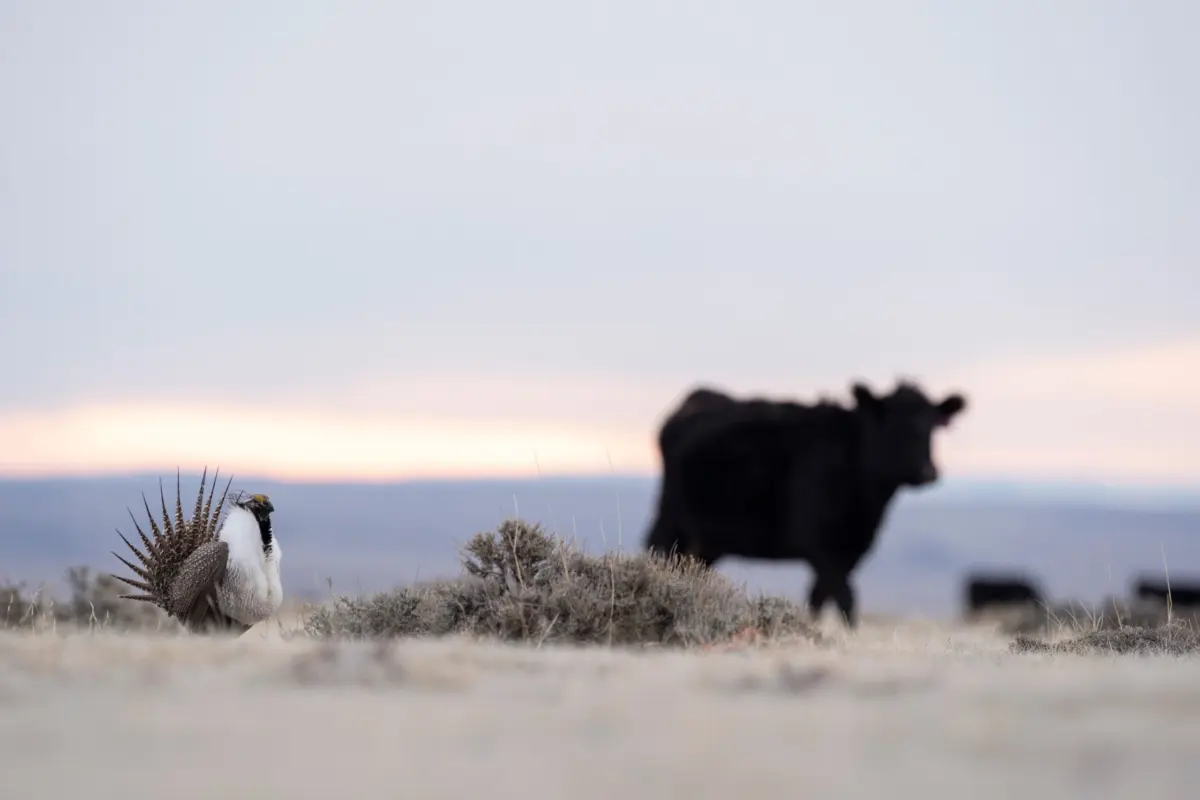
- Extended Rest Periods: Conversely, adjacent pastures are granted prolonged periods of complete rest from livestock grazing. This allows native grasses, forbs, and shrubs to mature fully, resulting in a taller, structurally complex plant architecture essential for species like the Sage Thrasher, Brewer’s Sparrow, and the iconic Greater Sage-Grouse.
This dynamic management approach not only caters to the micro-habitat needs of diverse wildlife but also stimulates root depth, enhances soil organic matter, improves water infiltration, and builds long-term drought resilience across the entire 1.4-million-acre network.
Official Statements
Leaders from both the conservation community and corporate ownership emphasized the collaborative, forward-thinking nature of this certification during the October 19, 2026, announcement.
Cidney Handy, Range Ecologist for the Audubon Conservation Ranching program in Wyoming, underscored the unique ecological positioning of the property:
"With its expansive sagebrush country, native grasslands, and healthy riparian corridors, Pathfinder Ensign Ranches provides exceptional habitat for a wide range of bird species. The ranch sits in a key ecological transition zone, and the way it’s managed is incredibly beneficial for not only our grassland birds but other wildlife as well."
Chris Robinson, CEO of Ensign Ranches, articulated the operational philosophy driving the business forward:
"Regenerative management and targeted habitat restoration are built into our ranching strategy. Audubon’s certification helps assure and monitor the value of bird-friendly management. What’s good for birds is also beneficial for rangelands and the viability of our business. We want to support precious species in Wyoming, like the Greater Sage-Grouse, that rely on our land for breeding and foraging."
Future Outlook
As Pathfinder Ensign Ranches steps into this new era of certified bird-friendly stewardship, its impact extends far beyond avian conservation, touching a broad spectrum of Western wildlife management and sustainable agricultural economics.
Multi-Species Wildlife Restoration
While birds serve as the primary indicator species for the Audubon certification, the ecological benefits of the ranch’s management practices cascade across the entire ecosystem. Pathfinder Ensign Ranches already supports vital, thriving populations of big game, including elk, mule deer, and pronghorn.
Looking forward, the ranch is engaged in ambitious collaborative projects with the Wyoming Game and Fish Department. Most notably, efforts are underway to reintroduce native bighorn sheep into the rugged Sweetwater Rocks formation—historic range where native bighorn populations have been absent for well over a century. The return of these majestic mammals is a testament to the high ecological caliber and improving health of the ranch’s high-desert ecosystems.
Scaling Market-Driven Conservation
The ultimate success of the Audubon Conservation Ranching model relies on consumer awareness and market demand. By securing the Bird-Friendly Land Certification seal, Pathfinder Ensign Ranches positions its beef and bison products to capture value-added markets. When conscious consumers purchase certified meats, they actively participate in a conservation feedback loop: market revenues reward ranchers for practicing exemplary land stewardship, thereby keeping working landscapes intact and preventing them from being carved up into exurban ranchettes.
A Blueprint for the American West
As environmental pressures—ranging from persistent megadroughts to invasive weed invasions—threaten the integrity of Western rangelands, the Pathfinder Ensign Ranches model offers a beacon of hope. By combining rigorous scientific oversight, adaptive regenerative grazing, permanent conservation easements, and multi-agency wildlife partnerships, the ranch proves that economic productivity and ecological preservation can coexist in harmony.
Under the stewardship of Ensign Ranches, the historic Pathfinder property is not merely preserving the ghost of the American frontier; it is actively engineering a sustainable, resilient, and bird-friendly future for the next century and beyond.