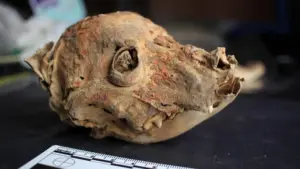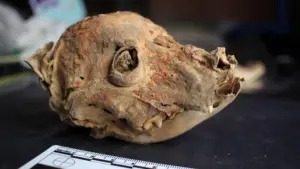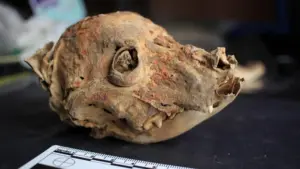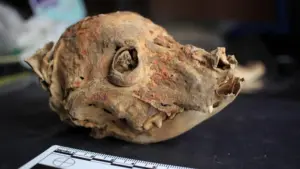

Archaeological excavations at the ancient Andean ceremonial and administrative complex of Castillo de Huarmey in Peru have yielded extraordinary physical evidence of Peruvian hairless dogs dating back more than 1,200 years. Long predating the rise of the Inca Empire, this discovery provides a compelling window into the complex, multifaceted relationships between humans and animals in pre-Columbian societies. Published in the Journal of Anthropological Archaeology, the study marks the first definitive identification of the distinct, slender, and largely furless breed at a northern coastal site belonging to the Wari Empire, which flourished between 600 and 1050 CE.
The findings encompass naturally mummified remains, unique skeletal anomalies, and chemical signatures extracted via advanced isotopic analysis. These lines of evidence illuminate not only the geographic origin and dietary habits of these ancient canines, but also their varied roles within a stratified society—ranging from deliberate, sacred interments alongside elite craftspeople and tomb guardians to utilitarian existence among general refuse. By connecting the genetic mutation responsible for canine hairlessness to a corresponding reduction in teeth, researchers were able to unlock the true identity of these prehistoric animals, challenging long-held assumptions regarding the uniformity of ancient animal husbandry and human-animal bonds in the pre-Hispanic Andes.
Detailed Chronology
The discovery of the hairless dog remains at Castillo de Huarmey represents the culmination of years of meticulous archaeological fieldwork, modern forensic analysis, and historical investigation in one of South America’s most arid environments.
Pre-Inca Horizons: The Rise of the Wari Empire (600–1050 CE)
Occupying a 110-acre expanse approximately 190 miles north of modern-day Lima, Castillo de Huarmey served as a major political, administrative, and religious hub for the Wari Empire. Flourishing centuries before the consolidation of the Inca Empire, the Wari centralized authority across diverse ecological zones along the Andean coast and highlands. During this era, domestic animals—particularly South American camelids such as llamas and alpacas—played critical roles in trade, ritual sacrifice, and subsistence. While canine representations frequently decorated coastal pottery, concrete physical evidence of specific breeds within Wari urban centers remained elusive until recent analyses.
Modern Disturbances and the Preservation Paradox (1970–2015)
The integrity of the Castillo de Huarmey archaeological site has faced significant challenges in modern times. A catastrophic earthquake in 1970 severely damaged portions of the complex, causing structural collapses that exposed subterranean burial chambers containing valuable ceramics and textiles. This exposure subsequently drew illicit looting, which heavily disturbed the upper archaeological layers and intermixed centuries of material culture.
However, the hyper-arid climate of the Peruvian Pacific desert acted as a powerful preservative agent. While upper strata experienced disturbance, deeper, untouched strata preserved organic materials—including hair, skin, textiles, and unblemished animal mummies—that would typically disintegrate in temperate climates. Between 2010 and 2025, systematic excavations by an international team of researchers systematically sifted through these layered deposits, recovering hundreds of faunal specimens alongside elite human burials.
Breakthrough Identification and Isotopic Revelations (Recent Years)
During excavations in the northern sector of the main ceremonial area, researchers recovered three distinct sets of dog remains that defied standard classifications. Initially suspected to be recent intrusions or the byproduct of modern looting, closer examination revealed anatomical markers inconsistent with typical European or mixed-breed colonial dogs.
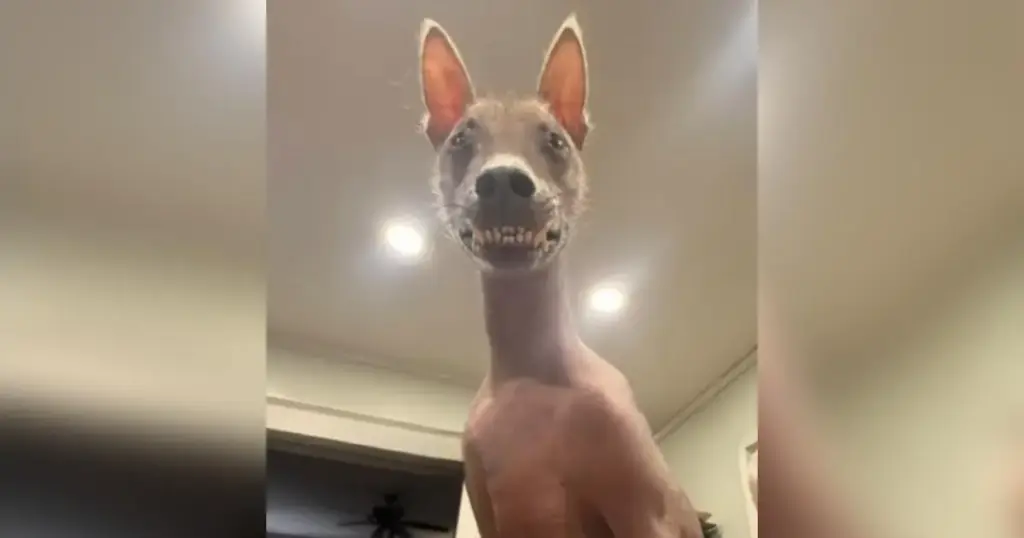
Dr. Weronika Tomczyk, a research associate at Dartmouth College and lead author of the study, identified that the skulls lacked specific teeth—specifically the first premolars and occasionally the last molars—which had never erupted during the animals’ lifespans. Cross-referencing veterinary literature revealed a direct genetic correlation: the identical genetic mutation responsible for canine hairlessness also triggers oligodontia (reduced tooth count). This realization confirmed that the remains belonged to the ancient Peruvian hairless dog, a lineage immortalized in pre-Columbian coastal art and recognized today by the American Kennel Club as the Peruvian Inca Orchid.
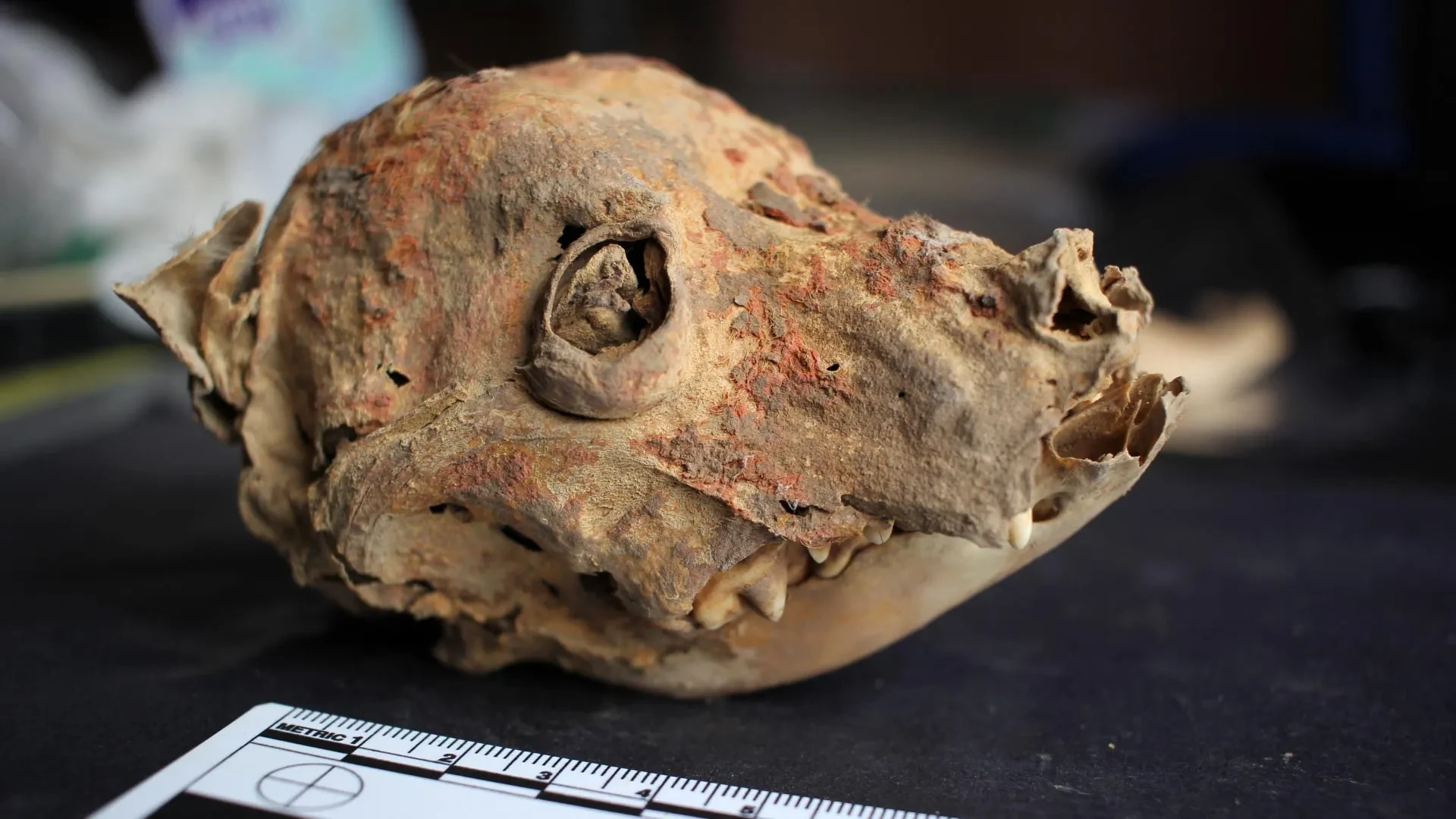
Subsequent radiocarbon dating placed the complete mummified male dog at a minimum of 1,200 years old, cementing it as the oldest radiocarbon-dated canine specimen recovered from the site. Concurrently, isotopic analyses of carbon, nitrogen, oxygen, and strontium isotopes in the animals’ teeth and bones provided a detailed chronicle of their puppyhood and adult diets, mirroring the maize-heavy consumption patterns of their human caretakers.
Supporting Context & Metrics
To fully understand the significance of the Castillo de Huarmey discoveries, researchers utilized a combination of zooarchaeological metrics, geochemical assays, and historical precedent.
Osteological and Genetic Metrics
- Total Faunal Recovery: Excavations yielded 341 individual dog bone specimens, representing a minimum number of 19 distinct dogs, alongside a fully intact, naturally mummified male canine.
- Dental Anomalies: The absence of first premolars across multiple specimens served as the primary diagnostic indicator linking the skeletal remains directly to the genetic markers of hairlessness.
- Radiocarbon Chronology: The mummified male specimen established a baseline antiquity of over 1,200 years, aligning the canine presence directly with the height of Wari imperial administration (600–1050 CE).
Geographic and Environmental Context
Castillo de Huarmey’s location within the hyper-arid coastal desert created a natural desiccation chamber. This exceptional environment prevented the degradation of delicate biological tissues, allowing researchers to study:
- Soft Tissues: Preserved hairless skin patches and intact external ears on mummified crania.
- Pigmentation Traces: The application of cinnabar—a toxic mercuric sulfide pigment traditionally reserved for high-status human funerary rites—directly onto a dog’s skull, indicating ritualized post-mortem treatment.
- Isotopic Signatures: Strontium isotope ratios, which vary depending on underlying local geology, allowed scientists to trace whether the animals were raised locally at Castillo de Huarmey or imported from distant ecological zones, such as the Andean highlands or other coastal valleys.
Stratified Social Roles
The archaeological contexts in which the dog remains were discovered reveal a stark dichotomy in how these animals were perceived and treated within Wari society:
- Elite Interments: A puppy aged 6 to 8 weeks was discovered resting alongside an elite craftsperson designated the "Master Basketmaker." Another puppy was interred with a male individual (identified as XY) interpreted as a sacrificial tomb guardian. An adult dog skeleton was likewise recovered directly within the palace complex.
- Utilitarian Disposal: Conversely, the majority of the canine bones were unearthed in mixed layers alongside discarded domestic waste, lacking formal burial architecture.
- Dietary Parallels: Isotopic data demonstrated that while adult dogs consumed varied diets, young hairless puppies exhibited isotopic values closely tracking those of human children. This suggests that young hairless dogs may have been selectively fed or provided specialized care—potentially pointing toward early, organized breeding programs designed to protect the fragile, hairless puppies during their vulnerable developmental stages.
Official Statements
The implications of the Castillo de Huarmey study have drawn commentary from leading researchers involved in the international collaborative project, emphasizing the dual nature of human-animal interactions in antiquity.
Highlighting the complex psychological and social dimensions of past societies, lead author Weronika Tomczyk noted:
"Our findings indicate that humans and dogs coexisted at this Wari site, but reconstructing their bond is challenging, as past emotions are difficult to capture through archaeological methods. The goal of our study was to not only present data on Castillo de Huarmey’s dog burials, but also emphasize that people in the past had often contradictory relationships with the animals, just as they do today: a pet for one group of people could at the same time be considered a pest by their closest neighbors."
Explaining the breakthrough diagnostic method used to identify the breed, Tomczyk elaborated on the genetic link between skin and bone:
"What I noticed is that some of the dog skeletons were missing teeth, and not that they lost them during their lifespan; some teeth, especially first premolars and sometimes last molars, had just never erupted. And then I found in the literature that the same gene which is responsible for hairlessness in dogs is responsible for a reduced number of teeth, indicating that these were Peruvian hairless dogs."
Addressing the dietary patterns and the possibility of intentional animal husbandry, Tomczyk added:
"We do not know if the dogs were intentionally fed maize, or if perhaps they were just eating leftovers or trash. Yet, the distinct dietary patterns of hairless puppies provide insights into what may have been organized breeding."
Summarizing the ultimate takeaway regarding social standing versus affection, Tomczyk concluded:
"While we will never know if any of the three dogs were pets or how people treatments them, it is evident they received different treatment than other dogs."
The collaborative research team supporting the findings includes prominent archaeologists and scientists from the University of Warsaw—specifically Miłosz Giersz, Wiesław Więckowski, and Roberto Pimentel Nita—alongside Claire Ebert from the University of Pittsburgh. Their joint efforts bridge zooarchaeology, paleogenomics, and stable isotope chemistry to reconstruct the intricate fabric of Andean prehistory.
Future Outlook
The identification of Peruvian hairless dogs at Castillo de Huarmey opens new avenues for archaeological inquiry across South America. As researchers continue to analyze the extensive material recovered from the site, several key trajectories for future investigation emerge:
- Expanded Ancient DNA (aDNA) Analysis: While morphological and isotopic data have established a strong baseline, ongoing efforts to extract mitochondrial and nuclear DNA from the mummified remains will help map the precise genetic lineage of these ancient canines, tracing their evolutionary divergence and ancestral ties to modern populations like the Peruvian Inca Orchid.
- Broader Comparative Studies: Archaeologists plan to apply similar zooarchaeological and isotopic screening methodologies to faunal assemblages at other contemporary Wari and pre-Wari sites along the Andean coast. This comparative approach will determine whether specialized breeding and selective dietary provisioning of hairless dogs were localized practices unique to Castillo de Huarmey or widespread cultural norms throughout the empire.
- Refining Imperial Trade Networks: By expanding strontium and oxygen isotope mapping across a wider geographic net of animal and human remains, scientists aim to reconstruct ancient exchange networks, clarifying whether elite goods, craftspeople, and domesticated companion animals moved fluidly between the coastal deserts and the high Andean cordillera.
Ultimately, the preservation of these 1,200-year-old animal remains provides a poignant reminder that human culture is deeply intertwined with the animal kingdom. By looking beyond monumental stone architecture and gold artifacts, modern science continues to unearth the intimate, everyday histories of the people—and the dogs—who shaped the ancient Andes.