
Executive Overview
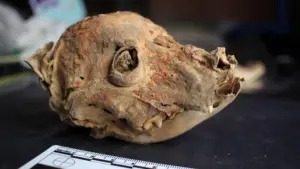
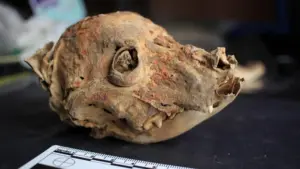
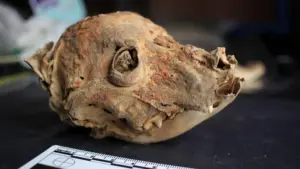
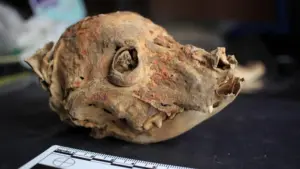
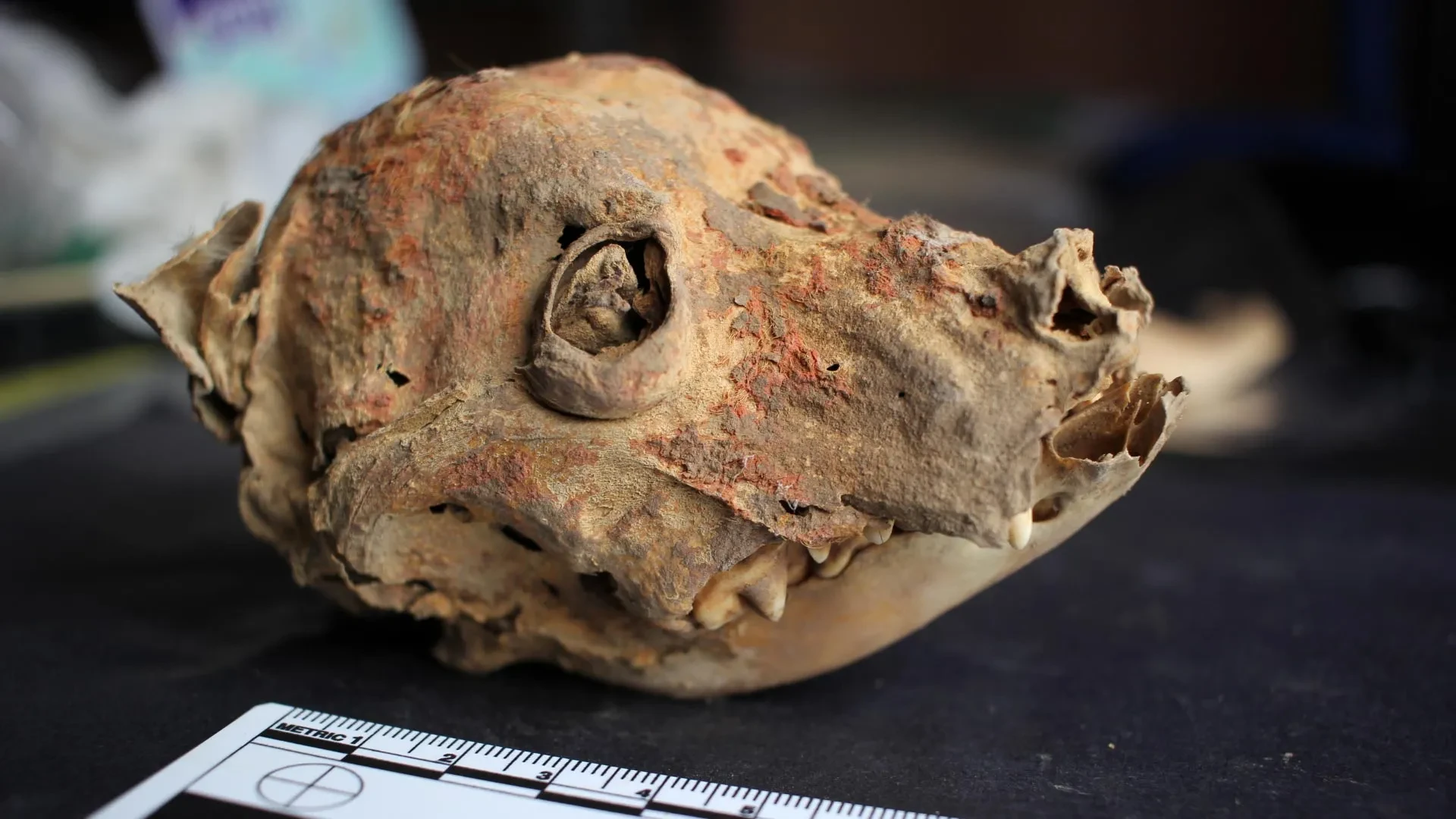
Deep in the hyper-arid sands of Peru’s Pacific coast, an extraordinary archaeological revelation is rewriting our understanding of pre-Columbian human-animal relationships. Researchers working at Castillo de Huarmey—a sprawling, 110-acre administrative and ceremonial complex established by the ancient Wari Empire—have uncovered definitive physical evidence of Peruvian hairless dogs dating back more than 1,200 years. Long predating the rise of the Inca Empire, these remarkable canines left behind not only naturally mummified remains and skeletal fragments, but also critical clues regarding their diets, genetics, and distinct social standing within an advanced Andean civilization.
The discovery, detailed in a landmark study published in the Journal of Anthropological Archaeology, marks the first time that physical remains of the iconic Peruvian hairless breed have been formally identified at a Wari site. Led by an international team of researchers—including first author Weronika Tomczyk of Dartmouth College, alongside colleagues from the University of Warsaw and the University of Pittsburgh—the investigation bridges the gap between historical iconography and biological reality. For generations, these slender, furless dogs with pointed ears have been immortalized in the ceramic art of ancient Andean coastal societies. Today, their descendants are celebrated as a national symbol of Peru and recognized by modern kennel clubs as the Peruvian Inca Orchid.
However, this new archaeological evidence moves beyond artistic representation. Through a combination of osteological analysis, radiocarbon dating, and sophisticated chemical isotope tracking, scientists have unlocked a 1,200-year-old window into how these animals lived, what they ate, and how intimately their lives were intertwined with the human architects of the Wari Empire. Far from being mere scavengers, these hairless canines occupied a unique, highly variable niche in ancient society—one that reflected deep complexities, careful management, and a nuanced spectrum of human-animal bonds that mirrors our own modern relationships with domestic animals.
Detailed Chronology
To fully grasp the significance of the Castillo de Huarmey dog mummies, researchers must view the site within its broader historical and chronological framework. Located approximately 190 miles north of Lima, Castillo de Huarmey served as a vital provincial administrative, military, and religious hub for the Wari Empire, which dominated the central Andes centuries before the Inca unified the region. The site was actively occupied between 600 and 1050 CE, a period characterized by sophisticated urban planning, extensive trade networks, and complex sociopolitical stratification.
Over the past several decades, Castillo de Huarmey has consistently yielded groundbreaking archaeological treasures that have helped historians decode the inner workings of the Wari state:
- Pre-2012 Excavations and Site Disturbance: While the deep archaeological layers of the complex remained remarkably well-preserved due to the hyper-arid desert climate, the site suffered significant structural and anthropogenic damage over time. A catastrophic earthquake in 1970 caused portions of the ceremonial complex to collapse, exposing ancient burial chambers. This exposure unfortunately attracted looters, who thoroughly disturbed upper archaeological strata and scattered numerous animal remains, creating a complex puzzle for modern excavators.
- The 2012 Elite Wari Tomb Discovery: In a milestone moment for Andean archaeology, researchers uncovered the first completely undisturbed elite Wari tomb at Castillo de Huarmey. Contained within this subterranean vault were the lavishly adorned remains of 58 high-status noblewomen, six human sacrificial victims, and approximately 1,300 precious artifacts fashioned from gold, silver, bronze, wood, and textiles. This discovery underscored the immense wealth centralized at the site.
- The 2022 Craftspeople Burials: Expanding upon the 2012 findings, archaeologists identified nearby burials dedicated to elite craftspeople. These individuals were interred alongside specialized tools made of precious metals, shedding light on the highly skilled artisan class that fueled the Wari economy.
- The 2010–2025 Dog and Camelid Excavations: Across more than a decade of systematic excavation in the northern section of the main ceremonial area, researchers recovered an extensive collection of faunal remains. This included hundreds of South American camelid bones (llamas and alpacas)—some linked to ritual feasting or funerary offerings, others discarded as refuse—alongside 341 individual dog bone specimens representing at least 19 distinct canines, culminating in the discovery of complete mummified remains.
- Radiocarbon Dating Milestones: Recent radiocarbon analyses performed on the newly discovered dog mummies have established that the complete male dog specimen is at least 1,200 years old. This confirms that it is the oldest radiocarbon-dated animal specimen recovered from Castillo de Huarmey to date, providing an invaluable chronological anchor for future excavations at the complex.
Supporting Context & Metrics
The recovery of ancient animal remains requires rigorous scientific methodologies to extract historical truth from fragile organic materials. At Castillo de Huarmey, the exceptional preservation provided by the desert environment—where hair, skin, leather, and bone can endure for millennia without decaying—allowed researchers to apply state-of-the-art zooarchaeological and chemical techniques.
Osteological Analysis and the Genetic Link
The initial identification of the dogs hinged on a fascinating biological anomaly. While sorting through the recovered cranial remains, researchers noticed an unusual dental pattern: several skulls were missing their first premolars and, in some cases, their last molars. Crucially, these teeth had never erupted during the animals’ lifespans rather than being lost to disease, trauma, or old age.
Lead researcher Weronika Tomczyk cross-referenced this dental reduction with genetic literature concerning modern canine breeds. Science has established that the genetic mutation responsible for hairlessness in dogs is pleiotropic, meaning it simultaneously governs the reduction of dentition. This direct biological correlation confirmed that the skulls, mummified skin, and skeletal remains belonged specifically to Peruvian hairless dogs, separating them definitively from other canine populations present in the ancient Andes.
Isotopic Analysis: Reconstructing Ancient Diets
To understand the daily lives and provenance of the Castillo de Huarmey dogs, the research team deployed isotopic analysis. By examining chemical signatures preserved within the animals’ bones and teeth, scientists can reconstruct diet and environmental exposure across different life stages:
- Tooth Enamel vs. Bone Collagen: Because dog teeth erupt rapidly during puppyhood, isotopic signatures locked within tooth enamel reflect the animal’s early life diet and geographic origin. Conversely, bone collagen turns over more slowly, providing a snapshot of the animal’s diet during the final year of its life.
- Elemental Tracers: The team analyzed isotopes of carbon, nitrogen, oxygen, and strontium. Strontium isotopes are particularly valuable because their geological ratios vary by region, allowing scientists to track whether an animal was locally raised or brought to Castillo de Huarmey from a distant territory.
- Dietary Overlaps with Humans: The isotopic data revealed that the dogs consumed significant amounts of maize (corn), the staple agricultural crop of the pre-Hispanic Andes. This mirrors the human diet of the region. Interestingly, isotopic signatures among hairless puppies closely mirrored those of human children during early development, suggesting that these young dogs may have been deliberately fed or raised under closely managed, household conditions before transitioning to a more varied diet in adulthood.
Quantitative Breakdown of the Findings
- Total Excavated Dog Specimens: 341 individual bone specimens recovered.
- Minimum Number of Individual Dogs: At least 19 distinct canines identified across the site.
- Age Range of Remains: Ranging from neonates and puppies (such as a 6-to-8-week-old puppy found with an elite craftsperson) to mature adults.
- Site Dimensions: 110 acres of administrative, residential, and ceremonial architecture.
- Temporal Range: Occupation spanning from 600 to 1050 CE.
Official Statements
The implications of the Castillo de Huarmey discoveries extend far beyond biological classification, offering profound philosophical insights into how ancient populations perceived and interacted with the non-human world.
Weronika Tomczyk, a research associate in Dartmouth’s Department of Anthropology and postdoctoral fellow in its Ecology, Evolution, Environment and Society Program, emphasizes the complex social dynamics revealed by the faunal assemblage:
"Our findings indicate that humans and dogs coexisted at this Wari site, but reconstructing their bond is challenging, as past emotions are difficult to capture through archaeological methods. The goal of our study was to not only present data on Castillo de Huarmey’s dog burials, but also emphasize that people in the past had often contradictory relationships with the animals, just as they do today: a pet for one group of people could at the same time be considered a pest by their closest neighbors."
Elaborating on the dental anomalies that unlocked the identity of the breed, Tomczyk notes:
"What I noticed is that some of the dog skeletons were missing teeth, and not that they lost them during their lifespan; some teeth, especially first premolars and sometimes last molars, had just never erupted. And then I found in the literature that the same gene which is responsible for hairlessness in dogs is responsible for a reduced number of teeth, indicating that these were Peruvian hairless dogs."
Addressing the dietary revelations provided by chemical isotope tracking, Tomczyk points out the intriguing parallels between canine and human nourishment:
"We do not know if the dogs were intentionally fed maize or if perhaps, they were just eating leftovers or trash. Yet, the distinct dietary patterns of hairless puppies provide insights into what may have been organized breeding."
Summarizing the elusive nature of ancient human-animal relationships, Tomczyk concludes:
"While we will never know if any of the three dogs were pets or how people treated them, it is evident they received different treatment than other dogs."
These sentiments are reinforced by the study’s multidisciplinary co-author team—which includes Miłosz Giersz, Wiesław Więckowski, and Roberto Pimentel Nita of the University of Warsaw, alongside Claire Ebert of the University of Pittsburgh—who maintain that the integration of zooarchaeological science with elite funerary contexts is vital for mapping the social stratification of the Wari Empire.
Future Outlook
The identification of 1,200-year-old Peruvian hairless dogs at Castillo de Huarmey opens exciting new avenues for Andean archaeology and evolutionary biology. As researchers continue to analyze the vast repositories of faunal and material culture recovered from the site, several key areas of inquiry will shape future scientific expeditions:
- Expanded Ancient DNA (aDNA) Profiling: While morphological and isotopic analyses have provided a solid foundation, future studies aim to extract mitochondrial and nuclear DNA from the mummified remains. Successful aDNA sequencing could map the genetic lineage of modern Peruvian Inca Orchids directly to their pre-Inca ancestors, tracing centuries of continuity or genetic bottlenecking.
- Broader Comparative Studies across Wari Territories: Researchers plan to examine faunal collections from other contemporary Wari administrative centers across Peru. Determining whether hairless dogs were exclusive status symbols restricted to major regional capitals like Castillo de Huarmey or widely distributed throughout the empire will clarify their economic and symbolic value.
- Refined Chronological Modeling: With the complete mummified male dog now serving as the oldest radiocarbon-dated biological specimen at Huarmey, scientists will integrate these dates into high-resolution Bayesian models of the site’s construction phases, helping to pinpoint the exact timing of elite burial practices and structural expansions.
- Deeper Ecological Reconstructions: Ongoing isotopic and micro-botanical testing of soil samples surrounding the dog burials will provide a clearer picture of the local micro-environment, illuminating how the Wari managed water, agriculture, and domestic livestock in a fragile desert ecosystem.
Ultimately, the ghostly remnants of these hairless canines—stilled by the desert sands over a millennium ago—serve as a poignant reminder that human civilization has long shared its domestic sphere with animals in complex, deeply personal ways. By combining cutting-edge scientific technology with meticulous field archaeology, researchers are ensuring that the voices of these ancient animals, and the people who lived alongside them, are finally heard across the span of twelve centuries.