Air travel with household pets has long been a source of anxiety for animal lovers, particularly those whose companions exceed the standard diminutive thresholds enforced by commercial airlines. While traveling with a toy breed under ten pounds is relatively straightforward, owners of medium-sized dogs—those tipping the scales past sixteen pounds or standing taller than twelve inches at the shoulder—frequently encounter a logistical labyrinth.
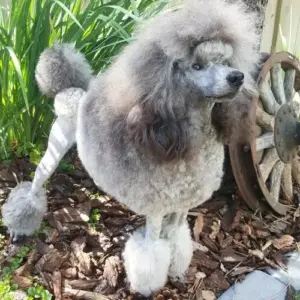
Enter the narrative of Amy and her 17-pound, 16.5-inch-tall Miniature Poodle, Calvin. Proving that meticulous planning, clever equipment modifications, and a failsafe backup strategy can overcome restrictive cabin constraints, Amy successfully navigated a multi-leg cross-country journey from Providence, Rhode Island, to Las Vegas, Nevada, and back. Utilizing a thoughtfully altered extra-large (XL) SturdiBag pet carrier, this traveling duo bypassed major transit hurdles on both Delta Air Lines and Southwest Airlines.
This comprehensive report examines the mechanics of their journey, detailing the specific carrier modifications required to fit an oversized dog beneath standard aircraft seating, airline reservation protocols, airport layover logistics, and expert insights for pet owners seeking to replicate this seamless travel experience.
Detailed Chronology: From Providence to the Southwest and Back
Leg 1: Providence, Rhode Island, to Atlanta, Georgia (Delta Air Lines, MD-88)
The journey commenced at Rhode Island T. F. Green International Airport, where Calvin and Amy boarded a Delta Air Lines flight bound for Hartsfield-Jackson Atlanta International Airport. Reservations had been secured via Delta’s telephone booking service. Remarkably, the process was devoid of the rigorous interrogation that many pet owners have reported experiencing.
When Amy proactively informed the reservation agent that she would be traveling with a large "small dog" and a flexible soft-sided carrier, the representative offered reassuring advice: as long as the carrier possessed enough flexibility ("smooshability") to compress beneath the seat in front of her, it would be permitted.
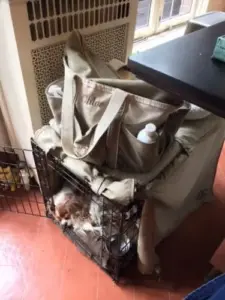
The first flight was operated on a Delta MD-88 aircraft. Because Amy had secured a middle seat, maneuvering the rigid yet flexible dimensions of the XL SturdiBag presented a minor physical challenge. Squeezing the carrier past the spatial constraints of the seatback in front and the passenger seats on either side required patience. However, once securely positioned in the footwell between the seats, the carrier remained stable and comfortable for the duration of the flight.
Layover 1: Atlanta International Airport
During the layover in Atlanta, Amy capitalized on the opportunity to exit the secure terminal area to provide Calvin with a necessary restroom break. While a formalized, dedicated indoor pet relief area was not immediately apparent, the dynamic environment of the airport grounds accommodated their needs. Calvin utilized decorative landscaping features to relieve himself—a minor logistical hiccup that underscores the persistent challenge of locating proper airport animal relief stations during tight connections.
Leg 2: Atlanta, Georgia, to Las Vegas, Nevada (Delta Air Lines, Boeing 737-700)
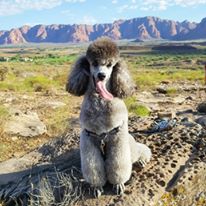
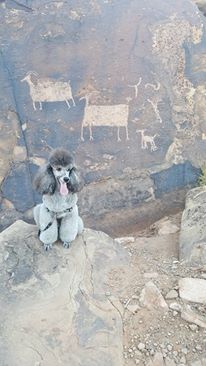
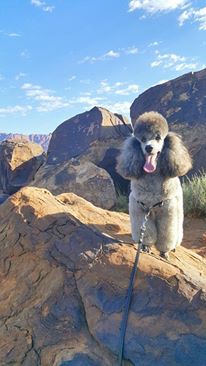
The second leg of the outbound journey, utilizing a Boeing 737-700 aircraft operated by Delta, proceeded without incident. Calvin remained calm within his modified carrier, adapting smoothly to the altitude and cabin environment. Upon arrival in Las Vegas, the pair transitioned seamlessly to their vacation, spending several days exploring the rugged, picturesque landscapes of southwestern Utah, including the breathtaking vistas near Snow Canyon State Park.
The Return Journey: Las Vegas, Nevada, to Chicago, Illinois, to Providence (Southwest Airlines, Boeing 737-700 Series)
The return trip introduced an unexpected variable when computer system failures at Delta resulted in significant flight delays. Unwilling to risk prolonged stress for Calvin, Amy made the executive decision to purchase a new homeward-bound ticket on Southwest Airlines.
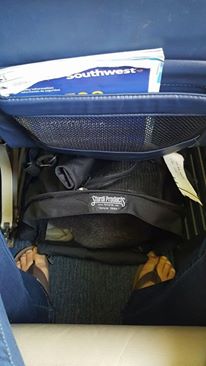
Checking in with Southwest proved uneventful, though a vigilant gate agent stopped the pair during boarding to verify that a proper pet-fee ticket had been registered for the carrier. Southwest’s open-seating policy led to another middle-seat configuration for the first leg home on a Boeing 737-700. Despite the middle-seat location, the XL SturdiBag conformed easily to the floor space, offering Calvin ample room to adjust his position.
The second leg of the Southwest journey routed through Chicago Midway International Airport. Here, Amy encountered an airport pet relief area characterized by a concrete, fenced-in outdoor enclosure that lacked aesthetic appeal for animals. Fortunately, surrounding zones rich in grass and trees allowed Calvin to relieve himself comfortably. Following a rapid and efficient re-screening through airport security, the pair boarded their final Southwest flight back to Providence, concluding the trip without further complication.
Supporting Context & Metrics: Carrier Modifications and Specifications
The success of Amy and Calvin’s journey hinged on a brilliant piece of engineering improvisation regarding the pet carrier. Standard airline guidelines generally mandate that soft-sided carriers for in-cabin pets not exceed dimensions that comfortably slide beneath an aircraft seat—typically capping height at around eight to ten inches, though actual under-seat clearances vary by aircraft type and seat class.
The SturdiBag Extra Large (XL) normally measures approximately 20 inches in length, which can push the boundaries of under-seat spatial limits, particularly on regional jets or standard narrow-body aircraft configured with entertainment boxes or structural braces beneath seats.
Amy’s Engineering Breakthrough: The Modular Swap
To mitigate the risk of rejection at the gate or spatial incompatibility onboard, Amy engineered a clever modification:
The Backup Carrier: She packed a standard Large (L) SturdiBag completely flattened inside her primary luggage as a contingency plan.
The Floorboard Swap: Before departure, she removed the rigid bottom insert board and the soft interior floor pad from the XL SturdiBag, replacing them with the smaller, shorter floor components salvaged from the Large SturdiBag.
The Spatial Impact: By substituting the floorboard and pad, the internal geometry of the XL bag was subtly altered, effectively shortening its structural footprint from its native 20 inches down to approximately 18 inches in length.
This modification provided a two-fold tactical advantage:
It reduced the overall resistance and rigidity of the carrier, granting it enhanced flexibility ("smooshability") to clear tight seat junctures.
It established a completely interchangeable backup system. If airport personnel had flagged the XL bag as overly voluminous, Amy could have transferred Calvin into the packed Large SturdiBag on the spot, utilizing the exact same floor insert.
Canine Biometrics vs. Carrier Guidelines
Pet carrier manufacturers typically rely on a strict formula combining weight and shoulder height. A standard Large SturdiBag is optimized for pets standing roughly 12 inches tall at the shoulder. Calvin, standing at an impressive 16 to 16.5 inches and weighing 17 pounds, technically exceeded these recommendations by a significant margin.
However, Amy accurately assessed her dog’s anatomical proportions. Much of Calvin’s height was concentrated in his legs rather than his torso, and like many flexible breeds, he naturally curled into a tight, compact bundle when resting. This assessment highlights a vital rule for pet air travel: raw biometrics (weight and height) provide a baseline, but an owner’s intimate knowledge of their animal’s resting posture and flexibility is often the deciding factor in operational success.
Official Statements and Industry Insights
Reflecting on the logistics of the trip, experienced pet travel advocates and community leaders have emphasized the value of peer-to-peer reporting. Documenting successful flights with oversized pets provides invaluable empirical evidence for owners who are frequently met with ambiguous airline policies.
Carrier Visibility and Gate Protocol
One of the most striking takeaways from Amy’s testimony is the apparent nonchalance of flight crews regarding carrier dimensions. Despite utilizing an extra-large bag for a medium-sized Poodle, Amy reported:
"I was never questioned about the bag, and quite honestly I don’t think most of the airline crew even noticed I had a pet bag with me."
This observation aligns with broader travel trends: flight attendants are primarily focused on safety compliance, emergency egress pathways, and cabin service routines. As long as a pet carrier remains fully zipped, quiet, and completely enclosed within the designated footwell without obstructing the aisle, it rarely attracts negative scrutiny.
Airline Consistency: Delta vs. Southwest
The comparative experience between Delta Air Lines and Southwest Airlines sheds light on how different carriers process pet reservations:
Delta Air Lines: While Delta possesses strict enforcement guidelines regarding carrier dimensions on paper, the telephone reservation encounter demonstrated pragmatic flexibility. The agent focused on functional utility ("as long as it smooshes") rather than strictly cross-referencing millimeter measurements.
Southwest Airlines: Known for its open-seating model and streamlined boarding process, Southwest agents demonstrated standard vigilance by verifying that a proper pet-fee tag was affixed to the carrier, without engaging in invasive questioning regarding the physical dimensions of the animal inside.
Future Outlook: Best Practices for Flying with Medium-Sized Pets
As commercial aviation continues to evolve, airline pet policies remain a patchwork of proprietary corporate rules. For owners inspired by Calvin and Amy’s cross-country success, industry experts recommend adopting the following strategic protocols:
1. Master the Art of the "Plan B"
Never rely on a single point of failure when flying with an animal that tests the limits of carrier size. Packing a smaller, collapsible backup carrier (such as Amy’s strategy of carrying a Large SturdiBag inside primary luggage) ensures that travelers can pivot instantly if faced with a strict gate agent.
2. Prioritize Canine Conditioning
Calvin’s exemplary behavior onboard was not accidental. Amy ensured he received an extensive, tiring walk the morning of the flight and strategically withheld heavy pre-flight meals to minimize digestive distress or anxiety while airborne. Offering minor, approved treats during flight helped maintain a positive association with the carrier.
3. Research Airport Infrastructure in Advance
As noted during stops in Atlanta and Chicago Midway, airport pet relief infrastructure is unevenly distributed. Travelers should utilize resources like dedicated airport maps and community travel logs to locate both outdoor green spaces and modern indoor pet relief stations before arriving at their terminals.
4. Build a Visual Portfolio for Gate Agents
Documenting pet carriers in active use aboard specific aircraft cabins—such as the photographic evidence of Calvin comfortably situated inside a Boeing 737-700—serves as a powerful advocacy tool. Pet owners facing skepticism from airline personnel can reference real-world precedents to demonstrate that well-managed, flexible carriers fit safely within modern cabin architectures.
By combining thorough preparation, clever equipment customization, and a calm demeanor, traveling with an oversized canine companion is no longer an insurmountable challenge—it is an achievable adventure waiting to unfold.