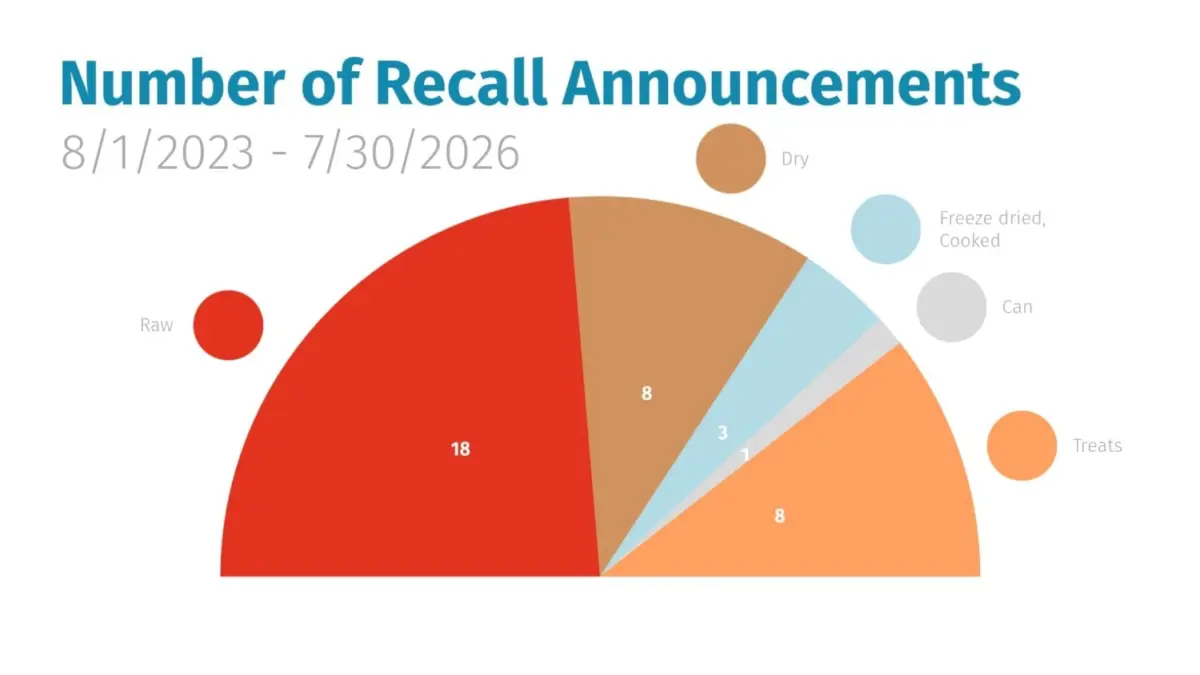
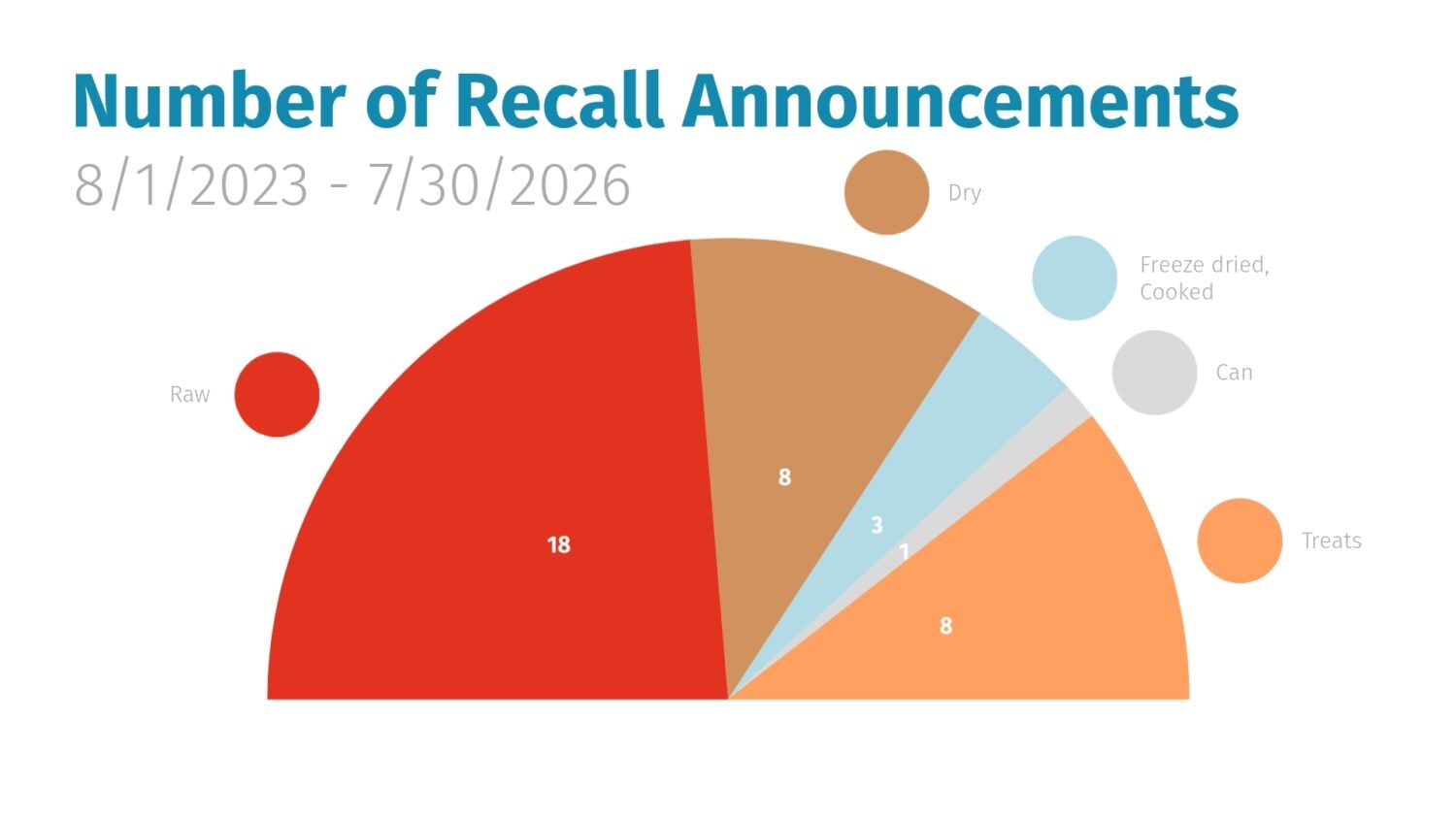
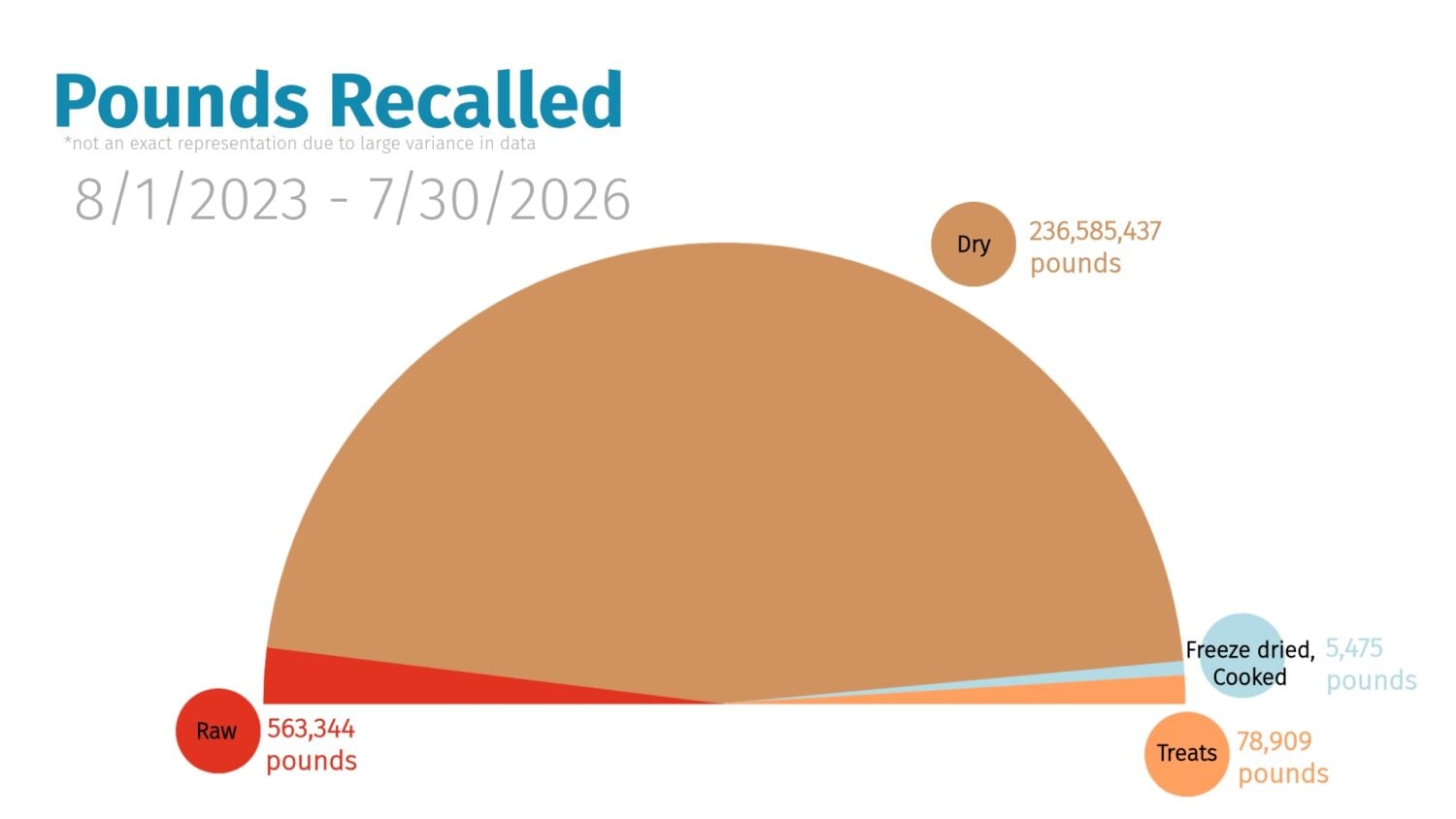
Between August 1, 2023, and July 30, 2026, the United States pet food industry experienced a series of safety disruptions that resulted in 38 distinct pet food recall events, encompassing more than 237 million pounds of commercial pet food and treats. While public attention often zeroes in on raw pet food or niche market segments during public health warnings, a comprehensive analysis of federal regulatory records reveals a drastically different reality: dry pet food (kibble) accounted for an overwhelming 99.7% of all recalled product volume over this three-year span.
Driven predominantly by systemic bacterial contamination—specifically Salmonella and Listeria monocytogenes—these safety breaches emphasize vulnerabilities within centralized, high-volume manufacturing facilities. A single massive recall event can pull tens of millions of bags off retail shelves, exposing the disproportionate impact that co-packing facilities and major dry-kibble producers have on national supply chains.
This investigative report synthesizes data from Food and Drug Administration (FDA) Enforcement Reports, CDC joint outbreak investigations, and consumer advocacy tracking by organizations such as the Association for Truth in Pet Food. It provides a detailed breakdown of recall triggers, product category distributions, regulatory reporting limitations, and critical guidance for companion animal owners navigating an increasingly complex safety landscape.
Detailed Chronology: Key Inflection Points in Recent Recalls
Tracking pet food safety over a multi-year period demonstrates how localized sanitation failures inside commercial processing plants can escalate into nationwide consumer advisories. Below is a timeline highlighting critical recall events, regulatory interventions, and systemic outbreaks between late 2023 and 2026.
       PET FOOD RECALL TIMELINE & MAJOR EVENTS (2023–2026)
       ====================================================

  Oct 30, 2023   Mid America Pet Food issues initial voluntary recall
                 for 3 lots of Victor Beef Meal & Rice Dog Food (Salmonella).
       │
  Nov 09, 2023   FDA/CDC expand Mid America recall to ALL facility-manufactured
                 brands with Best-By dates prior to 10/31/2024.
                 [Total Impact: 9.5M+ bags / ~190M lbs]
       │
  Mid–2024       Surge in targeted recalls for pathogenic contamination in raw
                 and fresh-frozen diets, totaling ~470,000 lbs.
       │
  Late 2024      Emergence of Avian Influenza (H5N1) risk management alerts
                 in poultry-based raw feeds (~5,244 lbs affected).
       │
  Early 2025     Multiple enforcement alerts issued for mislabeling and
                 undeclared ingredients (~177,122 lbs combined).
       │
  Mid–2026       Pedigree canned wet dog food recalled for foreign material
                 contamination (metal fragments); FDA reports reveal
                 persistent data reporting gaps.
The Mid America Pet Food Crisis (Fall 2023)
The single largest driver of pet food recall volume in recent history began on October 30, 2023, when Mid America Pet Food issued a voluntary recall for three specific lots of its Victor Beef Meal and Rice Dog Food due to potential Salmonella contamination identified through state-administered random product sampling.
The situation escalated dramatically on November 9, 2023, when the FDA and the Centers for Disease Control and Prevention (CDC) released a joint advisory. The recall was expanded to encompass all brand lines manufactured at Mid America’s Mount Pleasant, Texas facility featuring "Best By" dates prior to October 31, 2024. Affected brands included Victor, Wayne Feeds, Eagle Mountain, and Select Member’s Mark formulas.
Subsequent details published in the official FDA Enforcement Report revealed the staggering scale of the event:
Total Affected Volume:9,508,943 individual bags of pet food.
Total Estimated Weight: Approximately 190 million pounds.
Public Health Impact: Multiple human illnesses were epidemiologically linked to the strain of Salmonella isolated from the dog food, emphasizing the zoonotic hazards posed to pet owners handling contaminated kibble in domestic environments.
Emerging Pathogens, Foreign Objects, and Avian Flu (2024–2026)
Following the 2023 kibble crisis, regulatory monitoring recorded several distinct clusters of recalls across various categories:
Avian Influenza Vectors (2024–2025): The spread of Highly Pathogenic Avian Influenza (HPAI H5N1) into poultry supply chains triggered specialized recalls targeting unpasteurized poultry-based pet feeds, resulting in 5,244 pounds removed from distribution.
Micronutrient Imbalances: Formulation errors leading to toxic excesses or hazardous deficiencies of key vitamins and minerals (such as Vitamin D hypervitaminosis or Thiamine deficiency) accounted for 4,712 pounds of pet food recalls across various specialty kibble and wet food lines.
Physical Contaminants (2026): Mars Petcare initiated a recall for select lots of Pedigree Choice Cuts in Gravy canned wet dog food due to potential contamination with loose metal fragments. This incident underscored significant ongoing challenges in regulatory record-keeping: the corresponding FDA Enforcement Report lacked critical details regarding total weight or unit counts recalled, highlighting a recurring gap in public reporting.
Supporting Context & Metrics: Volume vs. Announcement Frequency
To accurately evaluate risk within the pet food industry, consumers and veterinary professionals must distinguish between recall frequency (the sheer number of press releases issued) and recalled volume (the total tonnage of contaminated product introduced to the market).
The Kibble Paradox: Tonnage vs. Public Perception
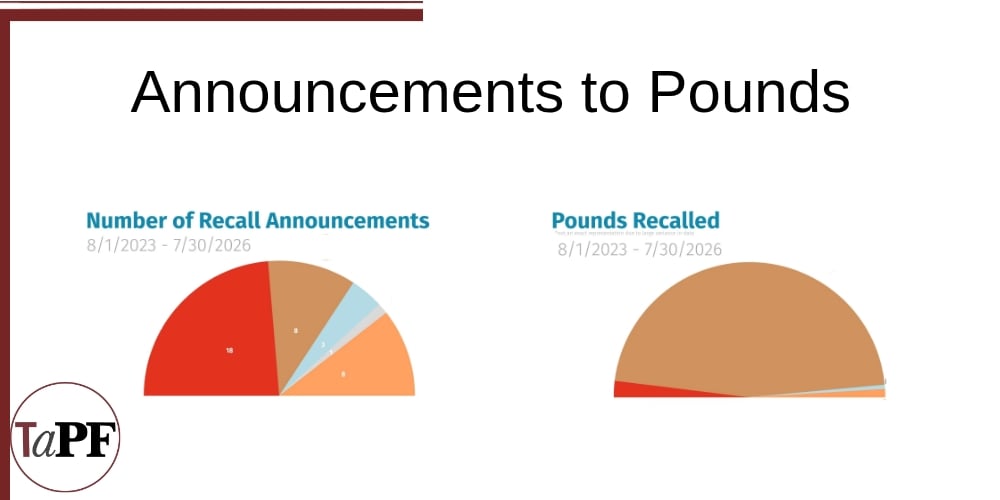
When analyzing public recall notices by frequency, product types appear relatively dispersed across raw diets, treats, canned foods, and dry kibble. However, when evaluating the absolute mass of food recalled over the three-year period, dry pet food overwhelmingly dominates the data.
Pet Food Format
Percentage of Total Recalled Tonnage (2023–2026)
Primary Safety Hazards Identified
Dry Pet Food (Kibble)
99.700%
Salmonella, cross-contamination in batching silos
Raw Pet Food
0.200%
Salmonella, Listeria monocytogenes, H5N1
Pet Treats
0.030%
Pathogenic bacteria, mold, physical contaminants
Freeze-Dried / Gently Cooked
0.002%
Moisture control failures, bacterial pathogens
Note: Data derived from FDA Enforcement Reports (8/1/2023 – 7/30/2026). Chart percentages reflect slight graphical adjustments to represent ultra-low volume categories alongside high-tonnage kibble.
This extreme variance stems from the structural economics of modern commercial pet food manufacturing:
Co-Packing Dynamics: Mega-facilities manufacture extruded dry kibble on continuous processing lines operating at multi-ton hourly capacities. A single sanitation breach, raw ingredient failure, or environmental pathogen harbourage inside a high-volume processing plant can taint hundreds of millions of pounds of finished product before detection occurs.
Batch Size Disparities: Raw, gently cooked, and freeze-dried pet food producers typically operate in smaller, batch-controlled environments. Consequently, a comprehensive recall of an entire raw food production run often amounts to only a few thousand pounds, whereas a comprehensive kibble recall routinely reaches tens of millions of pounds.
          RECALLED WEIGHT DISTRIBUTION BY CATEGORY (2023–2026)
          =====================================================

  Dry Kibble [99.7%]   ##################################################
  Raw Food   [0.2%]    #
  Treats     [0.03%]   .
  Cooked/FD  [0.002%]  .
Analysis of Primary Recall Triggers
Pathogen contamination remains the overwhelming leader among all vectors of pet food safety failures, as detailed in federal enforcement datasets:
Pathogenic Contamination (>237 Million Pounds): Bacterial contamination—primarily Salmonella enterica—was responsible for nearly all recalled tonnage between August 2023 and July 2026. Salmonella poses significant public health risks not only to companion animals, which can experience severe gastrointestinal distress or act as asymptomatic carriers, but also to human family members handling the food.
Mislabeled Products (177,122 Pounds): Mislabeling risks primarily stem from undeclared allergens, incorrect species targeting, or misprinted nutrition facts panels that could lead pet owners to feed inappropriate diets to animals with specialized medical conditions.
Foreign Object Contamination (28,018+ Pounds): Mechanical failures on processing lines—resulting in plastic pieces, glass fragments, or metal shavings entering finished packages—represented a persistent physical risk factor.
Avian Flu and Nutritional Deficiencies/Toxicities: While lower in total tonnage (5,244 lbs and 4,712 lbs, respectively), these categories carry high severe-morbidity risks for individual pets consuming the compromised food.
Official Statements, Regulatory Mechanics, and Advocacy
Navigating pet food recalls requires an understanding of how federal agencies oversee commercial animal feed and how consumer oversight groups track regulatory execution.
FDA Enforcement Mechanisms and Transparency Deficits
When a pet food safety issue is identified, manufacturers typically issue a initial press alert in coordination with the FDA Center for Veterinary Medicine (CVM). However, these initial announcements often lack definitive metrics regarding total production volumes affected.
It is only when the FDA issues its formal FDA Enforcement Report that official metrics—including bag counts, distribution states, and classification severity (Class I, II, or III)—are made public.
Critical Reporting Gap: Consumer advocacy groups frequently point out that the FDA Enforcement Reporting system suffers from inconsistent record-keeping. For example, during the 2026 Pedigree canned dog food recall involving foreign metal objects, the official FDA Enforcement Report failed to disclose the total pounds or unit counts removed from commerce. This missing data hampers independent safety monitoring and conceals the true scope of manufacturing breakdowns.
Advocacy Perspective: The Role of Independent Oversight
Consumer advocates emphasize that pet owners must actively monitor federal database tools rather than relying solely on mainstream media coverage, which frequently emphasizes low-tonnage raw food alerts while underreporting massive kibble recalls.
Susan Thixton, a prominent pet food consumer advocate and founder of TruthaboutPetFood.com and the Association for Truth in Pet Food (ATPF), highlights the importance of rigorous public documentation:
"When pet parents evaluate safety risks, looking at public notices alone creates a skewed perspective. A single dry food recall can involve nearly 200 million pounds of kibble due to widespread contamination at manufacturing hubs, yet it receives brief media coverage compared to smaller niche recalls. Consumers deserve full, transparent metric disclosures on every FDA enforcement report so they can make informed dietary choices for their pets."
Organizations like the ATPF serve as consumer stakeholders at the Association of American Feed Control Officials (AAFCO) and maintain direct dialogue with FDA regulators. Their work focuses on closing labeling loopholes, standardizing pathogen testing protocols, and mandating prompt, accurate reporting of recalled weight metrics across all commercial categories.
Future Outlook and Actionable Guidance for Pet Owners
As processing facilities expand and supply chains become increasingly integrated, systemic recall threats will remain a crucial consideration for pet parents, veterinarians, and regulators alike. Addressing these vulnerabilities requires both structural industry changes and proactive consumer habits.
Structural Industry Outlook
Enhanced Facility Sanitation Protocols: In response to extensive contamination events like the Mid America Pet Food recall, regulatory inspectors are increasing scrutiny of dry-extrusion facilities, focusing on post-lethal step recontamination points, air handling system hygiene, and ingredient storage silos.
Whole-Genome Sequencing (WGS): Federal agencies are expanding their use of WGS technology during routine inspections. This enables regulators to rapidly match environmental bacterial isolates found in manufacturing plants with clinical illness cases reported by veterinary clinics and human healthcare facilities nationwide.
Supply Chain Traceability Rules: Heightened demands for ingredient origin disclosures are forcing major co-packers to adopt real-time inventory tracking systems to prevent cross-contamination across multiple client brands operating under one roof.
Actionable Guidance for Pet Owners
To protect companion animals from prospective recall risks, pet owners should implement the following food management practices:
                  PET FOOD SAFETY BEST PRACTICES
                  ==============================

  [1] SAFE STORAGE       Keep original packaging with Lot Codes & Best-By dates.
  [2] SAFE HANDLING      Wash hands & bowls thoroughly after feeding.
  [3] REGULAR CHECKS     Monitor FDA Enforcement Reports & safety alerts weekly.
  [4] PROMPT REPORTING   Report sudden pet illness to vet & FDA Safety Portal.
Retain Original Packaging: Never discard original pet food bags or cans when transferring food into secondary storage bins. The Lot Code, Batch Number, and Best-By Date printed on the original package are essential for identifying recalled products and filing official reports if an adverse health event occurs.
Practice Safe Hygiene: Treat dry kibble, raw diets, and pet treats with equal care. Wash hands with warm soap and water for 20 seconds after handling pet food, sanitize feeding bowls daily, and keep feeding areas clean to limit human and animal exposure to potential foodborne pathogens.
Report Suspected Cases Promptly: If a pet exhibits sudden gastrointestinal distress, lethargy, or neurological symptoms following the introduction of a new batch of food, consult a veterinarian immediately. Adverse events can be submitted directly to state feed officials and through the FDA Safety Reporting Portal.
Through heightened vigilance, transparent reporting standards, and stringent regulatory oversight, the pet food industry can move toward mitigating contamination risks—ensuring safer nutrition for millions of companion animals nationwide.