Following an emotionally draining and intense week marked by the frontlines of animal rescue and advocacy, pausing to recalibrate is not merely a luxury; it is a vital act of psychological preservation. This report explores the juxtaposition of seasonal renewal and profound systemic reform within animal welfare. At the center of this narrative is a historic milestone in the Midwestern United States: the closure and subsequent triage of Ridglan Farms, a notorious commercial beagle-breeding facility in Wisconsin that has long supplied dogs to research laboratories.
Following a landmark settlement—where the facility surrendered its license to avoid animal abuse convictions—local humane organizations launched a massive logistical undertaking to rescue and rehabilitate roughly 500 laboratory-bred beagles. Alongside this harrowing rescue effort, the natural world offers a counter-narrative of resilience and unyielding beauty. Through the lens of spring wildflowers, returning migratory birds, and the quiet, miraculous milestones of traumatized dogs taking their first steps on real grass, this piece examines the universal mechanics of recovery. Trauma healing, whether in humans or canines, shares fundamental neurological and psychological principles. As highlighted by animal behaviorist and author Dr. Patricia McConnell, recovery requires patience, safety, and an environment that nurtures the gradual return of autonomy.
Detailed Chronology: The Ridglan Beagles and the Road to Triage
The unfolding crisis at Ridglan Farms represents a watershed moment for animal rights and regulatory accountability in the United States. For decades, facilities supplying animals to biomedical and product-testing laboratories operated largely behind a shroud of administrative obscurity. However, sustained pressure from animal welfare advocates, legal investigators, and concerned citizens ultimately brought structural deficiencies and allegations of neglect to light.
The Turning Point
Rather than facing criminal charges for alleged animal abuse that could have drawn protracted legal battles and intense public scrutiny, Ridglan Farms reached a decisive agreement. The facility agreed to surrender its commercial breeding license, effectively ending its pipeline of supplying beagles for laboratory experimentation in exchange for sidestepping formal criminal convictions.
While the closure was celebrated as a major victory for animal advocacy, it immediately triggered a massive, high-stakes operational challenge: what to do with the approximately 500 dogs currently residing in the facility.
The Dane County Humane Society Triage Operation
Stepping into the breach, the Dane County Humane Society (DCHS) assumed the monumental task of receiving, evaluating, and triaging the influx of hundreds of beagles. Transitioning dogs from life inside sterile, restrictive, wire laboratory cages to an intermediate shelter environment—and eventually to permanent, loving homes—demands an extraordinary expenditure of resources, veterinary care, and behavioral intervention.
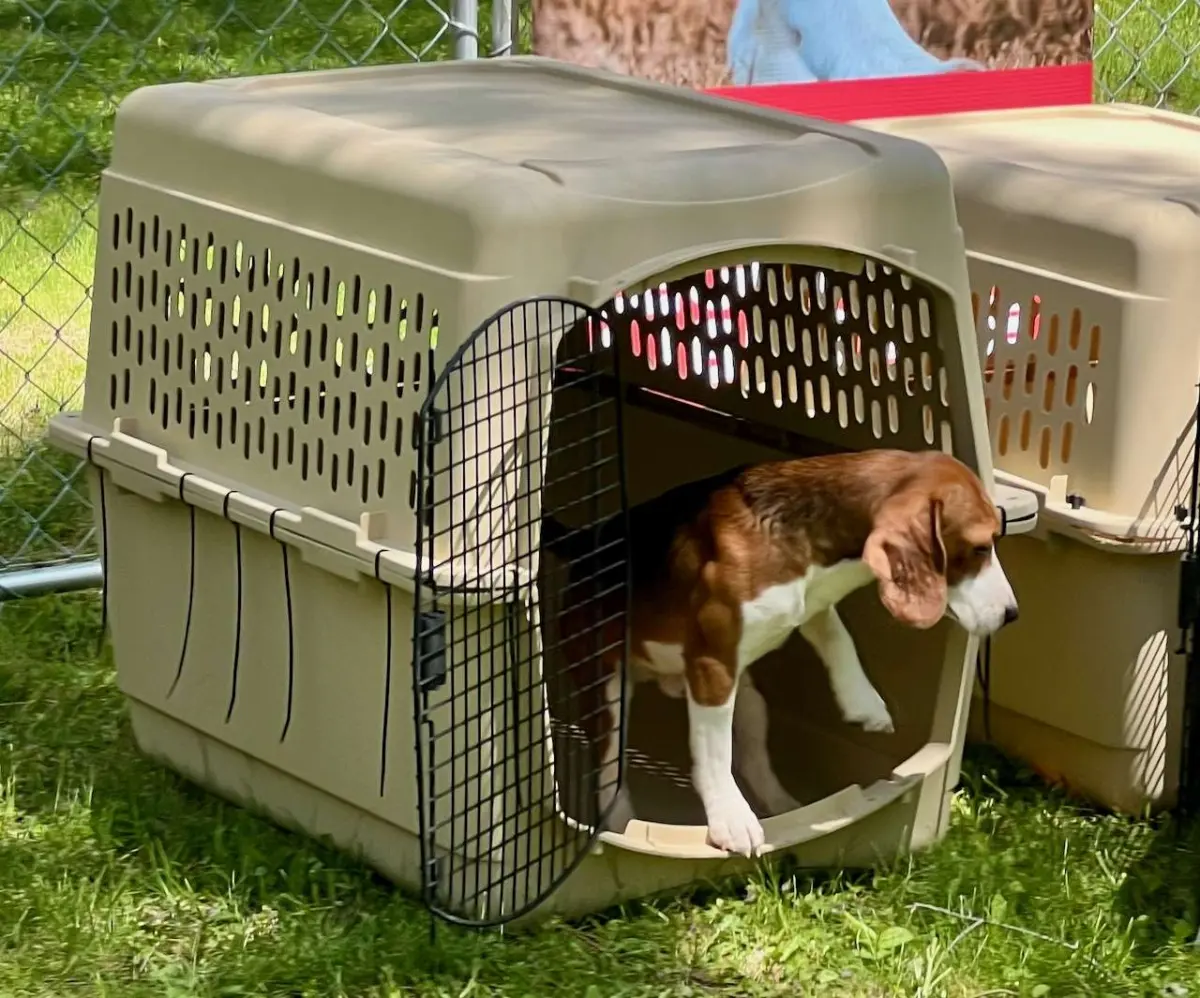
Animal behaviorists and shelter staff documented heart-wrenching scenes during the initial days of the intake process. For dogs that had spent their entire lives confined to wire flooring, simple environmental stimuli that healthy pets take for granted were terrifying unknowns. Shelter workers reported observing dogs paralyzed by indecision at the doors of their crates. One particularly poignant case involved a young beagle who spent upwards of 30 to 45 minutes simply contemplating the threshold of the outdoors. Lifting a single paw, pulling it back, and repeating the micro-movement over and over, the dog was actively processing a sensory world he had never known. When he finally ventured out onto the grass, his motor coordination was temporarily stymied as he struggled to control his hind legs—a physiological manifestation of muscle atrophy and neurological disorientation stemming from long-term confinement.
Despite the hurdles, these dogs are beginning their long journey toward rehabilitation. The initial phase of triage focuses heavily on building trust, mitigating hyper-vigilance, and introducing foundational environmental enrichment.
Supporting Context & Metrics: Parallels in Trauma and Recovery
The mechanics of healing from severe trauma do not operate differently across species. Neurological research increasingly demonstrates that the mammalian brain—whether canine or human—processes chronic stress, confinement, and fear through remarkably similar hormonal and neurochemical pathways.
The Science of Trauma: Dogs and Humans
In her acclaimed memoir, The Education of Will, Dr. McConnell explores the profound parallels between her own struggles with trauma and the rehabilitation of dogs facing severe fear and behavioral challenges. This shared vulnerability forms the thematic core of an upcoming documentary focusing on the Ridglan beagles. Captured by cinematographer Andria Chamberlin, the documentary explores how recovery from trauma relies on identical foundational principles for both species:
The Removal of the Stressor: True healing cannot begin while the individual remains in the environment that caused the trauma. For the Ridglan beagles, this meant physical extraction from wire crates.
Agency and Choice: Traumatized individuals have had control stripped away. Allowing a dog (or a person) to dictate the pace of their exposure to new stimuli—such as taking 45 minutes to step onto the grass—restores a vital sense of autonomy.
Patience and Co-Regulation: A calm, stable companion provides the neurochemical grounding necessary for the nervous system to shift out of perpetual "fight-or-flight" mode.
Botanical and Avian Resilience
While animal rescue operations highlight the depths of institutional cruelty, the natural ecosystem outside the shelter doors provides an antidote of pure, unadulterated joy. Springtime in the Upper Midwest bursts forth with ecological precision:
Wild Columbine (Aquilegia): A native woodland flower featuring striking red and yellow blossoms that dance gracefully in early-season winds.
Prairie Smoke (Geum triflorum): A delicate native prairie perennial whose distinctive feathery seed heads resemble wisps of smoke, signaling the transition from late spring to summer.
Native Honeysuckle: Botanically engineered with long, tubular blossoms explicitly matched to the anatomical adaptations of migratory pollinators, opening in synchrony with the arrival of female hummingbirds.
Migratory Orioles: The return of Baltimore and orchard orioles injects vibrant bursts of orange and black into the landscape, accompanied by complex, musical calls that serve as a visceral reminder of the seasonal wheel of life.
Official Statements and Regulatory Perspectives
The closure of Ridglan Farms and the subsequent surrender of its commercial breeding license have drawn commentary from veterinary associations, animal protection groups, and regulatory bodies.
According to statements highlighted by the American Veterinary Medical Association (AVMA) and regional animal protection networks, the agreement marks a critical shift in how state and federal agencies scrutinize commercial breeding facilities. While animal rights advocates historically pushed for full criminal accountability and trials to establish legal precedents regarding laboratory animal welfare, the settlement represents a pragmatic compromise: an immediate cessation of breeding operations and the immediate release of the remaining animals into protective custody.
Leadership at the Dane County Humane Society emphasized the unprecedented nature of the operation, noting that the intake of 500 dogs simultaneously strains regional shelter infrastructure. Executive leadership issued urgent calls for foster volunteers, specialized behavioral fosters, and financial contributions to offset the extensive medical rehabilitation required for the dogs.
"The level of stunned confusion visible in these dogs’ eyes during the initial intake days is a stark visual testament to what systemic isolation does to a sentient creature," noted one shelter intake coordinator. "Yet, witnessing that very same dog take its first tentative step onto green grass reminds us why this work is essential. Healing is slow, but it is entirely possible."
Future Outlook and Ongoing Initiatives
As the dust settles on the immediate rescue phase of the Ridglan beagles, the broader landscape of animal welfare, behavior science, and public education continues to evolve. Several key developments and topics are slated for future exploration:
Canine Behavioral Science: Upcoming discussions will delve into neurological conditions in domestic dogs, including clinical perspectives on canine ADHD, exploring how modern veterinary medicine diagnoses and treats executive function disorders in pets.
Long-Term Rehabilitation Tracking: Follow-up reports will monitor the progress of the Ridglan beagles as they transition from temporary foster homes into permanent adoptive families, complete with video documentation of their ongoing physical and psychological rehabilitation.
Advocacy and Educational Outreach: Continued literary and documentary promotions will seek to bridge the gap between academic animal behavior and public awareness, emphasizing the ethical treatment of animals in scientific research and commercial breeding.
Ultimately, whether observing the delicate dance of a columbine flower in the wind, listening to the melodic song of an orchard oriole, or watching a rescued beagle conquer its fear of the grass blade, the core message remains unchanged. In the face of systemic challenges and emotional exhaustion, maintaining an anchor to joy—even if found in a single petal or a tentative paw step—is the ultimate prerequisite for sustained resilience.