
Executive Overview
For centuries, the question of whether humans are naturally inclined toward monogamy has sparked intense debate among anthropologists, evolutionary biologists, and sociologists. Traditional inquiries into human mating strategies have relied heavily on the fragile fragments of fossil evidence, the nuances of modern and historical ethnographic fieldwork, and contemporary cultural observations. However, a groundbreaking study conducted by researchers at the University of Cambridge has upended conventional methodologies. By shifting the lens from behavioral speculation to genetic architecture, scientists have unveiled a novel metric for measuring exclusivity in reproduction across the animal kingdom.
Published in the esteemed journal Proceedings of the Royal Society: Biological Sciences, the study was spearheaded by Dr. Mark Dyble of Cambridge’s Department of Archaeology. Dr. Dyble developed an innovative computational model that analyzes a deceptively simple biological variable: the ratio of full siblings to half-siblings within a population. This ratio serves as an empirical proxy for long-term mating exclusivity.
The findings place human beings into an elite "premier league" of reproductive monogamy. With an overall full-sibling rate of 66%, our species ranks seventh out of eleven major mammal groupings analyzed in the study. Surprisingly, this places humans far closer to socially monogamous animals like meerkats (60%) and beavers (73%) than to our closest living evolutionary relatives, such as chimpanzees (4%) and gorillas (6%).
This comprehensive report examines the methodology behind Dr. Dyble’s computational model, explores how human mating systems diverge from standard mammalian blueprints, contextualizes the genetic data spanning thousands of years of human history, and evaluates the profound implications this research holds for our understanding of human social evolution.
Detailed Chronology: Bridging Millennia of Human Mating History
To understand how Dr. Dyble arrived at these conclusions, it is essential to retrace the scientific journey of studying human and animal reproductive patterns. Historically, the methodologies applied to humans and non-human animals diverged sharply. While animal behaviorists spent decades conducting long-term field observations and deploying genetic paternity tests on wild populations, human evolutionary scientists were restricted to piecing together material culture, skeletal remains, and modern socio-cultural surveys.
The Traditional Divide in Anthropological Research
For generations, anthropological frameworks assumed that human mating systems were exceptionally plastic. Fieldwork across various indigenous and industrial societies demonstrated a dizzying array of marital structures. Landmark anthropological surveys revealed that approximately 85% of pre-industrial human societies permitted polygynous marriage—where a single male could take multiple wives simultaneously. These observations fueled arguments that humans are not inherently monogamous in the strict biological sense, but rather culturally conditioned to form long-term pair bonds.
However, these qualitative studies struggled to quantify actual reproductive outcomes across deep evolutionary time. Cultural marriage norms do not always align with biological paternity. Infidelity, divorce, remarriage, and serial monogamy mean that legal or social definitions of marriage frequently obscure who is actually reproducing with whom.
The Shift Toward Genetic Paternity and Sibling Ratios
To bypass the limitations of cultural self-reporting and historical bias, Dr. Dyble turned to a universal genetic footprint: the proportion of shared DNA among offspring.
The chronological progression of this research began with the accumulation of vast genetic datasets over the past two decades. Archaeologists and geneticists successfully extracted DNA from ancient human settlements, ranging from Neolithic communities in Anatolia to Bronze Age burial grounds across Europe. Simultaneously, anthropologists gathered extensive genealogies and genetic samples from 94 distinct contemporary human populations worldwide. These ranged from the nomadic Hadza hunter-gatherers of Tanzania to the rice-farming Toraja people of Indonesia.
By examining the genetic relatedness of individuals within these ancient and modern groups, Dr. Dyble could calculate the exact ratio of full siblings (individuals sharing both biological parents) to half-siblings (individuals sharing only one parent). In populations characterized by high levels of monogamous pair-bonding, parents repeatedly reproduce with one another, driving up the proportion of full siblings. Conversely, in promiscuous or highly polygamous societies, mating partners rotate frequently, resulting in an abundance of half-siblings.
Using a specially designed computational model, Dr. Dyble bridged the gap between modern genetic studies and historical reproductive strategies. This allowed researchers to map human sibling ratios onto a comparative scale alongside ten other major mammal groups, creating a unified chronological and biological timeline of mammalian mating behavior.
Supporting Context & Metrics: Decoding the "Premier League" of Monogamy
The core revelation of the Cambridge study is that human reproductive output leans heavily toward exclusivity. When the computational model processed the genetic data from thousands of years of human civilization, the resulting full-sibling rate settled at an impressive 66%.
The Quantitative Scale of Mammalian Reproduction
To contextualize this 66% figure, it must be measured against the broader spectrum of mammalian reproductive strategies. The animal kingdom exhibits staggering diversity in how species pass on their genes, ranging from absolute lifelong fidelity to chaotic, multi-partner systems.
- The Absolute Monogamist: At the very top of the ranking sits the California deermouse (Peromyscus californicus). These small rodents mate for life, displaying a 100% full-sibling rate where every offspring within a family unit shares both mother and father.
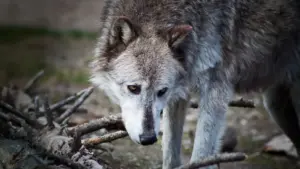
- The Cooperative Canids: African wild dogs rank second overall with a remarkable 85% monogamy rating, closely followed by Ethiopian wolves at 76.5%. Grey wolves and red foxes also occupy the upper tier, hovering around 46% and 45% respectively, heavily driven by cooperative pack-rearing and social monogamy.
- The Rodents and Marsupials: Beavers outpace humans slightly with a 73% full-sibling rate, while meerkats record a solid 60%. At the opposite end of the spectrum, Scotland’s Soay sheep plunge to a near-zero 0.6% full-sibling rate due to highly promiscuous mating seasons where ewes mate with multiple rams.
- Our Primate Relatives: The primate data presents the most striking contrast to human behavior. While the moustached tamarin—a small Amazonian monkey that typically bears twins or triplets—reaches a high 78% full-sibling rate, and the white-handed gibbon sits at 63.5%, all other primates plummet. Mountain gorillas record a paltry 6% full-sibling rate, while chimpanzees and dolphins tie at a mere 4%. Macaque species register even lower, with Rhesus macaques bottoming out at 1%.
The Human Outlier Status
Placing humans at 66% reveals an evolutionary paradox. Our closest living evolutionary cousins—chimpanzees and bonobos—are famously promiscuous, operating under complex multi-male, multi-female fission-fusion social structures. Gorillas are predominantly polygynous, with dominant silverbacks maintaining harems.
For humans to exhibit a full-sibling rate of 66% means our lineage underwent a radical, highly unusual evolutionary transition away from group-living promiscuity toward sustained, exclusive pair-bonding.
Official Statements and Expert Analysis
The implications of Dr. Dyble’s research challenge long-held assumptions within anthropology and evolutionary biology regarding the flexibility of human social structures.
Discussing the significance of the findings, Dr. Mark Dyble emphasized the stark divide between human reproductive output and that of the wider animal kingdom:
"There is a premier league of monogamy, in which humans sit comfortably, while the vast majority of other mammals take a far more promiscuous approach to mating," Dr. Dyble stated. "The finding that human rates of full siblings overlap with the range seen in socially monogamous mammals lends further weight to the view that monogamy is the dominant mating pattern for our species."
Addressing the vast cultural diversity observed across human history, Dr. Dyble noted that even the most extreme departures from modern western marital norms still result in high genetic exclusivity compared to non-monogamous animals:
"There is a huge amount of cross-cultural diversity in human mating and marriage practices, but even the extremes of the spectrum still sit above what we see in most non-monogamous species."
Furthermore, Dr. Dyble highlighted the crucial distinction between sexual behavior and reproductive outcomes—a nuance that separates humans from almost every other creature on Earth:
"This study measures reproductive monogamy rather than sexual behavior. In most mammals, mating and reproduction are tightly linked. In humans, birth control methods and cultural practices break that link."
"Humans have a range of partnerships that create conditions for a mix of full and half-siblings with strong parental investment, from serial monogamy to stable polygamy."
Other evolutionary biologists not directly involved in the study have praised the sibling-ratio model as an ingenious bridge across the methodological divide that has long separated paleolithic anthropology from modern population genetics. By anchoring human behavior to hard genetic metrics, the study provides a robust framework that bypasses the subjective interpretations often plaguing ethnographic surveys.
Future Outlook: Implications for Anthropological and Genetic Research
The publication of Dr. Dyble’s computational model in the Proceedings of the Royal Society: Biological Sciences opens up expansive new avenues for scientific inquiry. As genetic sequencing techniques become faster, cheaper, and more precise, researchers will be able to extract DNA from even older archaeological sites, potentially mapping shifts in human sibling ratios across deep prehistoric epochs, such as the Upper Paleolithic and the Agricultural Revolution.
Unraveling the Drivers of Cooperative Societies
One of the most profound questions moving forward is why humans transitioned toward monogamy. Many evolutionary theorists have argued that stable pair-bonding was the foundational catalyst for human cooperation. Monogamy reduces male-male competition over mates, lowers internal social friction, encourages higher paternal investment in offspring, and facilitates the accumulation and transmission of resources and knowledge across generations.
By applying Dr. Dyble’s sibling-ratio model to ancient populations experiencing the transition from hunter-gatherer nomadic lifestyles to settled agricultural communities, researchers can now test whether the rise of agriculture and private property correlated with shifts in reproductive exclusivity.
Redefining Animal and Human Comparisons
Additionally, the study provides conservation biologists with a new tool to assess the reproductive health and social stability of endangered animal populations. In species where direct observation is difficult or dangerous, analyzing the ratio of full siblings to half-siblings from non-invasive genetic samples (such as hair or scat) can instantly reveal whether a population is maintaining healthy pair bonds or suffering from demographic fragmentation.
Ultimately, the research bridges a profound conceptual gap. It demonstrates that beneath the immense cultural, religious, and geographical diversity of human societies lies an ancient, deeply embedded biological preference for long-term partnership—placing us firmly in the company of beavers, meerkats, and gibbons as architects of the socially monogamous world.