Air travel with household pets frequently presents a logistical labyrinth, particularly for owners of tall or long-limbed breeds. Traditional in-cabin pet carriers are strictly regulated by commercial airlines regarding height, width, and overall structural rigidity. These constraints often create an insurmountable challenge for dogs that exceed standard miniature dimensions.
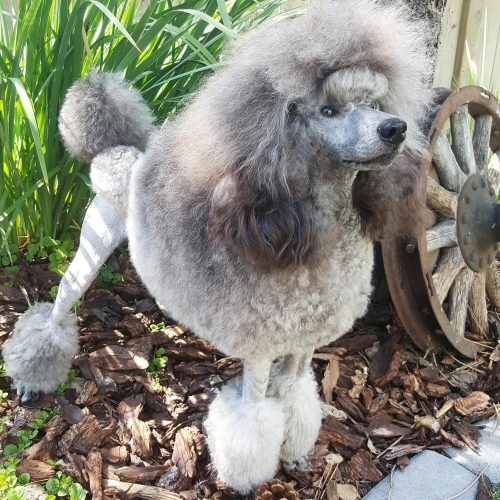
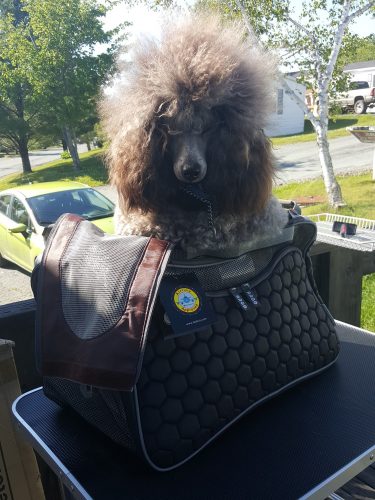
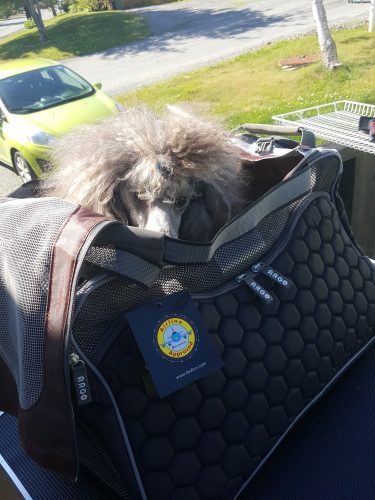
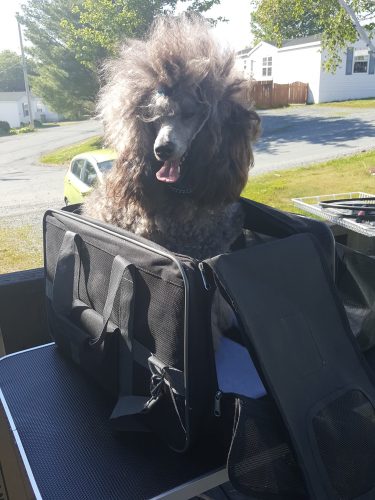
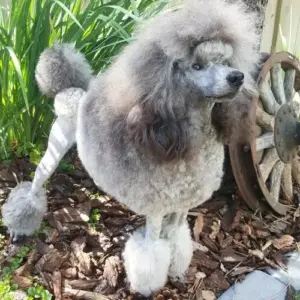
This dilemma was recently navigated by pet owner and professional dog groomer Keri, alongside her tall miniature poodle, Flint. Confronted with strict dimension policies on Air Canada and common skepticism regarding in-cabin travel for lanky dogs, Keri engineered an innovative, hands-on solution. Rather than accepting the limitations of conventional soft-sided carriers, she selected the large Pettom Expandable Foldable Travel Carrier and executed a bold structural modification. By using bolt cutters to precisely alter the internal wire frame, she transformed a rigid, rectangular kennel into a flexible, adaptable travel module.
This comprehensive report details Keri and Flint’s multi-leg journey across a variety of aircraft types, including the Embraer 175, Embraer 190, Airbus A320-200, and Bombardier Q400. It offers an in-depth examination of pre-flight desensitization protocols, mechanical carrier modifications, in-flight management strategies, and the logistical realities of navigating modern commercial aviation with a large canine companion.
Detailed Chronology
Phase One: The Carrier Selection Process
Preparing for a complex series of flights scheduled for earlier this year, Keri faced a strict one-month timeline to secure a compliant, comfortable, and secure in-cabin carrier for Flint. Skeptics within her circle warned that Flint’s substantial height and voluminous coat would render in-cabin transport impossible. However, drawing on anecdotal successes from owners of similarly proportioned poodles, she decided to proceed.
Her initial research involved physical inspections of popular market options. She examined the large Sherpa carrier (measuring 19 inches long, 11.75 inches wide, and 11.5 inches high) and the large Bergan carrier (19 inches long, 10 inches wide, and 13 inches high). Ultimately, she dismissed both models as structurally inadequate for Flint’s frame.
Seeking more spacious alternatives, Keri ordered two heavy-duty contenders online:
The premium Argo by Teafco Petagon Carrier (measuring 21 inches long, 12 inches wide, and 13 inches high)
The budget-friendly Pettom Expandable Foldable Carrier (measuring 19 inches long, 12 inches wide, and 12 inches high, with an expandable side compartment)
In a user-centric approach, Keri allowed Flint to test both options. While the Teafco Argo Petagon was praised as exceptionally well-crafted—featuring privacy-enhancing reflective tape, multiple storage pockets, superior straps, and robust materials—Flint immediately rejected it. His full-coated poodle frame caught on the zippers during entry, and the internal cooling tray insert sacrificed critical vertical clearance.
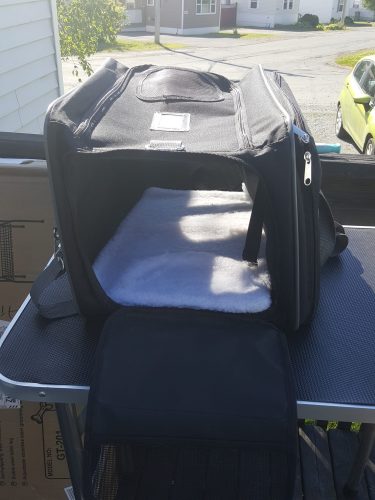
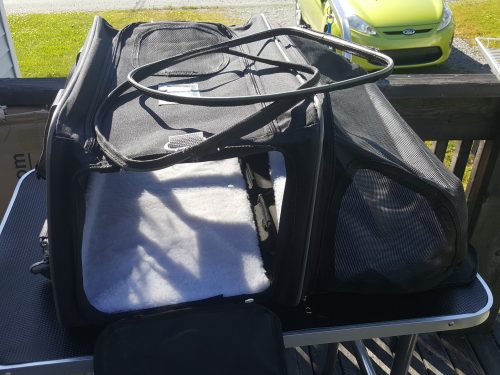
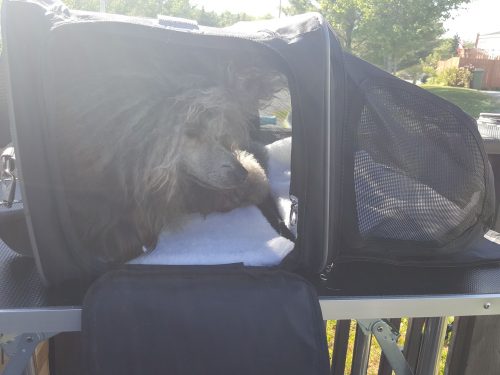
Conversely, the large Pettom Expandable Foldable Travel Carrier emerged as the clear winner. Featuring dual zippered end-panels, the Pettom allowed Flint to walk inside independently. Its standout feature was an expandable mesh side compartment (often referred to as a "pup tent"). When deployed, this compartment nearly doubled the internal width to 22.5 inches, giving Flint ample room to stretch his long poodle legs. Although the Pettom utilized cheaper materials and featured sparse exterior pockets compared to the Argo, its expandable layout and accessible entry points made it the definitive choice.
Phase Two: Engineering the Modification
Despite its structural advantages, the stock Pettom carrier presented a major operational risk: rigid end-panels and a fixed 12-inch height profile. Commercial airline seats feature under-seat storage areas encumbered by metal bars, structural supports, and shifting clearances. A rigid box measuring 12 inches high runs a high risk of failing gate inspections or wedging forcefully against aircraft mechanisms.
To solve this, Keri devised a radical modification inspired by theoretical carrier flexibility.
Removing Internal Supports: She immediately removed the zippered-in support rods from the expandable side section to prevent Flint from accidentally trapping a foot while shifting positions.
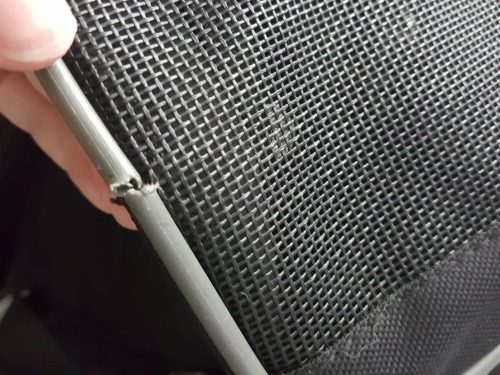
Altering the Frame: Recognizing that the stock frame lacked sufficient flexibility, Keri took a pair of heavy-duty bolt cutters and carefully severed the four wire frame supports encircling the kennel. She exercised extreme caution to preserve the surrounding mesh fabric and structural seams.
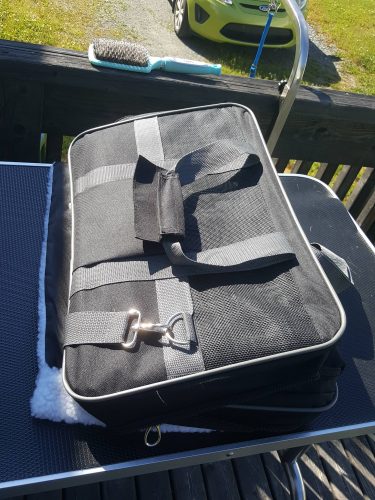
Optimizing Clearance: She cut the wires down to a 9-inch profile. This modification allowed the upper perimeter of the carrier to slope inward and collapse gently when empty, while remaining adaptable to the dog’s movements in flight.
Safety Adjustments:Operational Warning: While this modification successfully eliminated clearance issues, exposed metal cut points initially posed a hazard. Future modifiers are strongly advised to file, sand, or tape cut wire ends to prevent injury to handlers and pets alike.
Phase Three: Behavioral Desensitization and Veterinary Clearance
Recognizing that a modified carrier is useless if the animal experiences acute anxiety during transit, Keri instituted a rigorous three-week pre-flight training regimen.
Week One: The carrier was left open in the living environment with positive reinforcement (treats and high-value rewards) to encourage voluntary entry. Flint learned to scoot inside independently, mastering the spatial constraints even before experiencing the zipped enclosure.
Week Two: Short, incremental sessions were introduced with the main zippers closed, keeping the enclosed intervals brief and rewarding calm behavior.
Week Three: Transitioning to realistic durations, Keri placed Flint inside the carrier during his afternoon naps (typically lasting one hour). The carrier was positioned consistently at her feet, paired with continuous positive reinforcement.
By the conclusion of this protocol, simple tactile cues—such as a light tap on the exterior fabric or guiding his head downward with a gentle palm press—prompted Flint to curl up and rest peacefully. Furthermore, because Flint frequently accompanied Keri to her workplace as a professional dog groomer, he was already accustomed to enclosed crate environments for extended periods.
To preempt regulatory challenges at the airport, Keri brought the modified carrier to her veterinarian during a routine wellness check. She secured formal veterinary documentation explicitly approving the carrier’s dimensions and suitability for Flint’s specific stature.
Supporting Context & Metrics
Flight Itinerary Overview
Keri and Flint’s itinerary involved four distinct Air Canada flights across a regional and narrow-body fleet:
Leg
Aircraft Type
Seat Configuration
Flight Duration
Carrier Deployment Status
Leg 1
Embraer 175
Economy (Window, No Seatmate)
~2 Hours
Fully expanded into adjacent foot space post-takeoff.
Leg 2
Airbus A320-200
Preferred Seating (Window)
~5 Hours
Tucked under seat; expandable "pup tent" half-deployed.
Leg 3
Embraer 190
Economy (Horizontal Loading)
~4 Hours
Rotated horizontally; mesh tent deployed over foot space.
Leg 4
Bombardier Q400
Economy (Window, With Seatmate)
~2 Hours
Kept fully closed due to severe space constraints.
Aircraft Cabin Dimensions & Spatial Analysis
Embraer 175: Featuring a seat pitch of 32 to 34 inches and an 18-inch seat width in a 2-by-2 configuration, this aircraft provided favorable conditions. With no adjacent passenger, Keri extracted the carrier from beneath the seat following takeoff and deployed the expandable mesh side panel directly into the leg space between the seats.
Airbus A320-200: Operating a longer, nearly five-hour route, Keri upgraded to an Air Canada "Preferred Seating" window seat (offering a 35-inch seat pitch and 17.8-inch width) to guarantee maximum under-seat clearance. The carrier was pushed fully rearward and tilted slightly to accommodate the aircraft’s under-seat structural constraints, with the mesh expansion partially deployed.
Embraer 190: On this four-hour flight, Keri rotated Flint’s carrier into a horizontal orientation. Because the neighboring passenger graciously permitted the carrier to encroach slightly into their under-seat boundary (absent of restrictive under-seat entertainment boxes), Keri unzipped the mesh compartment post-takeoff to let Flint occupy her foot space.
Bombardier Q400: Operating a regional turboprop configuration with a tight 31-inch pitch and 17-inch width, the Q400 presented the most restrictive environment of the trip. Sharing the row with a seatmate, Keri was forced to keep the modified Pettom carrier fully zipped and tucked beneath the seat without any lateral expansion.
Official Statements & Expert Commentary
The insights gathered from Keri’s journey offer valuable lessons for pet travel authorities and frequent flyers. Industry analysts note that commercial airline pet policies are uniformly rigid regarding maximum bag dimensions, yet remarkably vague regarding how soft-sided carriers may behave under compression.
"The glory of the bag is the way it nearly doubles in size when the pup tent folded into one of its sides is deployed," notes aviation pet travel commentator and reviewer Dog Jaunt. "While my initial modifications to similar expanding models were far too timid to allow the structure to flex around under-seat obstructions, Keri’s bold approach proved that structural modification, when executed with precision, can bridge the gap between manufacturer specifications and real-world aircraft limitations."
Keri’s operational takeaway underscores the value of proactive modification: "Overall, cutting the supports on the bag proved to be a HUGE benefit. I had no issues sliding it under any of the seats with this alteration, but I do think it would have been an issue if I had left it as it was."
Future Outlook
As commercial airlines tighten carry-on restrictions and enforce strict adherence to under-seat dimensions, the challenge of transporting medium-sized or long-legged dogs cabin-side remains pressing. Keri’s successful deployment of a heavily modified, budget-friendly expandable carrier establishes a compelling precedent for DIY pet gear optimization.
Future trends in pet travel equipment point toward the development of dynamic, modular soft-sided kennels featuring semi-rigid, memory-composite frames rather than static steel wire. Until manufacturers widely adopt collapsible skeleton systems natively engineered to compress under airline seats, resourceful modifications—such as Keri’s bolt-cutter adaptation of the Pettom carrier—will likely serve as a blueprint for owners of larger pets.
Ultimately, meticulous behavioral conditioning, rigorous pre-flight veterinary documentation, and creative gear adaptation remain the foundational pillars for safe, stress-free journeys across the skies.