
Executive Overview
As Women’s History Month draws to a close, a critical re-examination of scientific history reveals a profound transformation in how humanity understands the social structures of the natural world. For generations, the dominant paradigm of behavioral science was deeply anchored in the Victorian lens of "nature, red in tooth and claw"—a perspective that over-indexed on raw competition, rigid dominance hierarchies, and aggressive posturing. This paradigm was not merely a passive observation of wildlife; it was a reflection of the male-centric society that produced it, where researchers, institutions, and cultural norms prioritized drama and conflict over cooperation.
However, a quiet revolution initiated in the mid-20th century—largely spearheaded by visionary women field researchers—fundamentally upended these assumptions. While cultural milestones were moving at a glacial pace (such as women legally unable to hold independent bank accounts or credit cards without a husband’s co-sign), female scientists stepped outside traditional academic laboratories and into the rugged environments of Africa, Asia, and beyond.
By shifting the focal lens from male-dominated aggression to comprehensive community dynamics, researchers like Jane Goodall, Dian Fossey, Birutė Galdikas, Jeanne Altmann, and Shirley Strum proved that cooperation, reciprocity, and complex social networks are the true bedrock of mammalian survival. This paradigm shift has not only revolutionized primatology and anthropology; it has trickled down into everyday animal stewardship, profoundly reshaping modern canine behavior modification, farm animal management, and the holistic training methodologies used today.
Detailed Chronology: The Evolution of Behavioral Science
To understand the magnitude of the shift in behavioral science, one must trace the timeline from lab-bound assumptions to immersive, long-term field observations.
1. The Mid-20th Century: The Rise of the Field Pioneers
During the 1960s and 1970s, legendary anthropologist Louis Leakey recognized that unlocking the evolutionary secrets of human behavior required studying our closest living relatives in their natural habitats. Rather than relying on captive specimens or brief, anecdotal snapshots, Leakey recruited three pioneering women—later famously dubbed the "Trimates":

- Jane Goodall, who began her groundbreaking study of chimpanzees at Gombe Stream in Tanzania (1960).
- Dian Fossey, who immersed herself in the misty mountain ranges of Rwanda to study endangered mountain gorillas (1967).
- Birutė Galdikas, who undertook the monumental task of documenting elusive orangutans in the rainforests of Borneo (1971).
Leakey famously believed that women would possess the immense patience, empathy, and detail-oriented mindset required for painstaking, long-term observation. His intuition proved correct. However, while the Trimates captured global imaginations—culminating in cultural touchstones like Goodall’s seminal 1971 book, In the Shadow of Man—another quieter, equally revolutionary methodological shift was underway in the study of a less charismatic, yet deeply complex primate: the baboon.
2. The 1970s: Jeanne Altmann and the Death of "Ad Lib" Sampling
Until the mid-1970s, field behavioral research suffered from a major methodological flaw known as ad libitum sampling. Researchers would wander through the field, recording "what happened" whenever something dramatic caught their eye. Because human observers are naturally drawn to conflict, and because the vast majority of early field researchers were male, this methodology resulted in an overwhelmingly biased literature base. Science was saturated with breathless accounts of male-male aggression, territorial disputes, and rigid alpha-male dominance hierarchies because, quite simply, "that’s where the action was."
In 1974, Dr. Jeanne Altmann published a foundational paper in Behaviour that fundamentally changed the trajectory of behavioral ecology. Altmann introduced focal sampling, a rigorous observational technique where a researcher selects a single individual and records every single behavior exhibited over a strict, predetermined time interval.
The implementation of focal sampling leveled the analytical playing field. Once researchers were forced to watch an individual continuously—regardless of whether they were fighting or simply resting, foraging, or grooming—male dominance hierarchies instantly lost their exaggerated monopoly on scientific interest. Maternal care, inter-sexual cooperation, and nuanced social reciprocity emerged as equally vital, if not dominant, components of mammalian social structure. Altmann’s work established the bedrock for modern observational studies, laying the groundwork for how researchers quantify phenotype development, stress, and maternal investment across generations.
3. Shirley Strum and the Deconstruction of Baboon Patriarchy
Building upon this methodological awakening, Dr. Shirley Strum began her long-term study of olive baboons in Kenya in 1972. At the time, baboons were widely cited as the ultimate textbook example of a brutal, male-centric dominance hierarchy.

Strum’s immersive, decades-long fieldwork shattered this myth. She discovered that baboon survival was governed not by brute force, but by complex networks of social intelligence, friendship, and negotiation. Both male and female baboons deployed sophisticated social strategies to navigate their world.
Among her most fascinating and whimsical discoveries was the strategic use of infants by male olive baboons. Recognizing that baboon society maintains a strict cultural taboo against harming the young, clever males would occasionally recruit infants, placing them on their bellies to act as "living shields" during tense social standoffs. Furthermore, Strum documented deep, non-reproductive friendships between male and female baboons, where males acted as reliable babysitters and protectors against unwanted suitors, in exchange for grooming and social integration.
Through the rigorous lenses of Altmann and Strum, science realized that baboon societies—often overlooked by the general public in favor of more glamorous apes—exhibited social complexities that closely mirror human political and cooperative structures.
Supporting Context & Metrics: Societal Parallels and Scientific Paradigm Shifts
The revolution in behavioral science did not happen in a vacuum. The systemic dismissal of female contributions in the field mirrored the broader socio-cultural restrictions placed on women during the mid-20th century.
- Financial and Legal Disenfranchisement: During the very years that Jane Goodall, Jeanne Altmann, and Shirley Strum were redefining our understanding of mammalian behavior, women in Western societies faced staggering institutional hurdles. In the United States, it was entirely legal for banks to deny a woman a credit card or a checking account without a husband or father’s co-signature well into the 1970s (with the passage of the Equal Credit Opportunity Act in 1974). For instance, renowned author and animal behaviorist Dr. Patricia McConnell recalls that upon marrying Doug McConnell in 1968, she could not open a bank account under her own name; her legal financial identity was legally mandated as "Mrs. Douglas McConnell."
- The Paradigm Shift Metrics: The shift from a purely competitive framework to a cooperative one can be measured in publication trends and shifts in evolutionary biology. Throughout the late 20th century, citations regarding "kin selection," "reciprocal altruism," and "maternal investment" surged exponentially. According to the International Encyclopedia of Primatology, Altmann’s focal sampling framework "profoundly changed the prevailing view of females more generally, and of mammalian females more specifically," giving rise to modern behavioral endocrinology and developmental epigenetics.
Official Statements and Expert Perspectives
The philosophical implications of moving away from "nature, red in tooth and claw" extend far beyond academic journals. Animal behaviorists, trainers, and scientists increasingly advocate for a more empathetic, balanced view of the natural world—one that recognizes the evolutionary necessity of peace and cooperation.

"We are all indebted to Dr. Altmann for creating a sea change in our understanding of animal behavior, from ‘nature, red in tooth and claw,’ to one that understands the importance, and commonality, of cooperation and reciprocity that are so common in nature."
— Dr. Patricia McConnell, Applied Animal Behaviorist and Author
This sentiment resonates profoundly within the realm of modern animal training. For decades, dog training was heavily influenced by the same flawed, hyper-hierarchical assumptions that dominated early primatology. Trainers frequently viewed domestic dogs through a lens of perpetual dominance struggles, advising owners to act as harsh "alpha leaders" who must forcefully subdue their pets to maintain control.
Modern applied animal behavior—heavily informed by the foundational work of female scientists who demonstrated the power of social reciprocity, communication, and emotional well-being—has largely discarded dominance-based coercion in favor of positive reinforcement, mutual trust, and clear communication. As animal science embraces "nature, light blue in heart and soul," the relationship between humans and their companion animals has evolved from an adversarial contest of wills into a true partnership.
Future Outlook: From Primates to Pastures and Living Rooms
As we look toward the future of animal science and practical husbandry, the ripple effects of the 1970s behavioral revolution continue to manifest in unexpected ways—from the rolling hills of family farms to the living rooms of suburban dog owners.
The Farm and the Flock
Consider the humble domestic sheep—an animal frequently stereotyped as lacking individuality or complex social awareness. Anyone managing a working farm post-shearing season witnesses firsthand the intricate social negotiations documented by behavioral scientists. Because sheep identify one another primarily by scent—much of which resides in their wool—shearing temporarily erases their visual and olfactory identity markers.

Following a shearing, farms routinely witness a hilarious yet poignant annual "smackdown" as ewes re-negotiate their social standing. Long-standing friendships and rivalries—such as the perennial leadership challenges between ewes like Snow White and Beyoncé—demonstrate that farm animals possess rich, individualized social lives, complete with non-kin alliances, protective behaviors, and emotional bonds.
Companion Animals and Literature
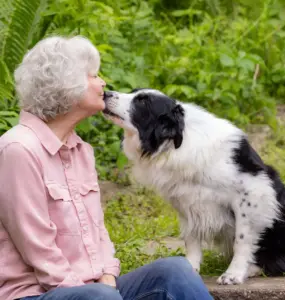
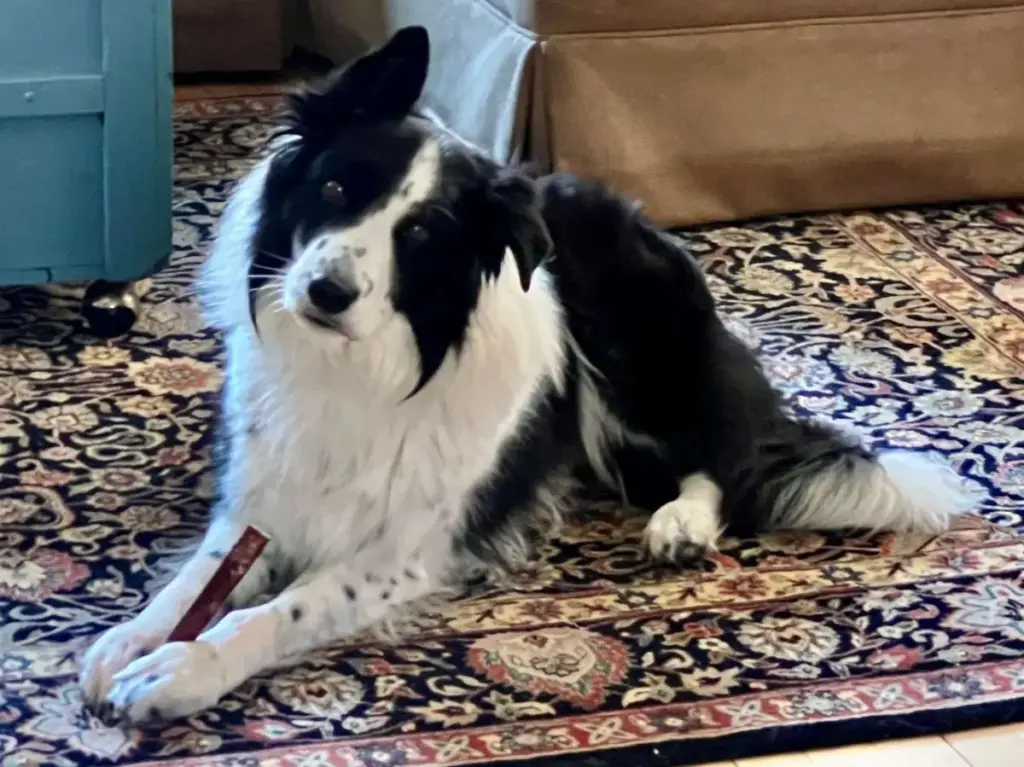
This holistic appreciation for animal cognition also informs how we interpret the emotional lives of our canine companions. Whether watching a senior dog like Maggie soak up the spring sunshine after a long winter, or analyzing the complex social structures within a multi-dog household, modern pet owners are increasingly attuned to the emotional nuances of animals.
This cultural shift is equally reflected in contemporary literature and media. Works that celebrate the deep, nuanced bonds between humans and working dogs—such as Dr. McConnell’s acclaimed novel Away To Me—enjoy widespread critical acclaim (boasting stellar ratings on Amazon) precisely because modern audiences hunger for narratives rooted in empathy, communication, and mutual respect rather than domination and control.
Conclusion
Ultimately, the journey from the rigid, male-centric paradigms of mid-century science to our modern, cooperative understanding of animal behavior is a testament to the perseverance of visionary women. By changing how we look at animals—shifting from the casual drama of ad-libitum observation to the disciplined, patient focus of focal sampling—they did not just rewrite the textbooks on baboons and chimpanzees. They transformed how we view the natural world, how we manage our farms, how we train our dogs, and, ideally, how we relate to one another.