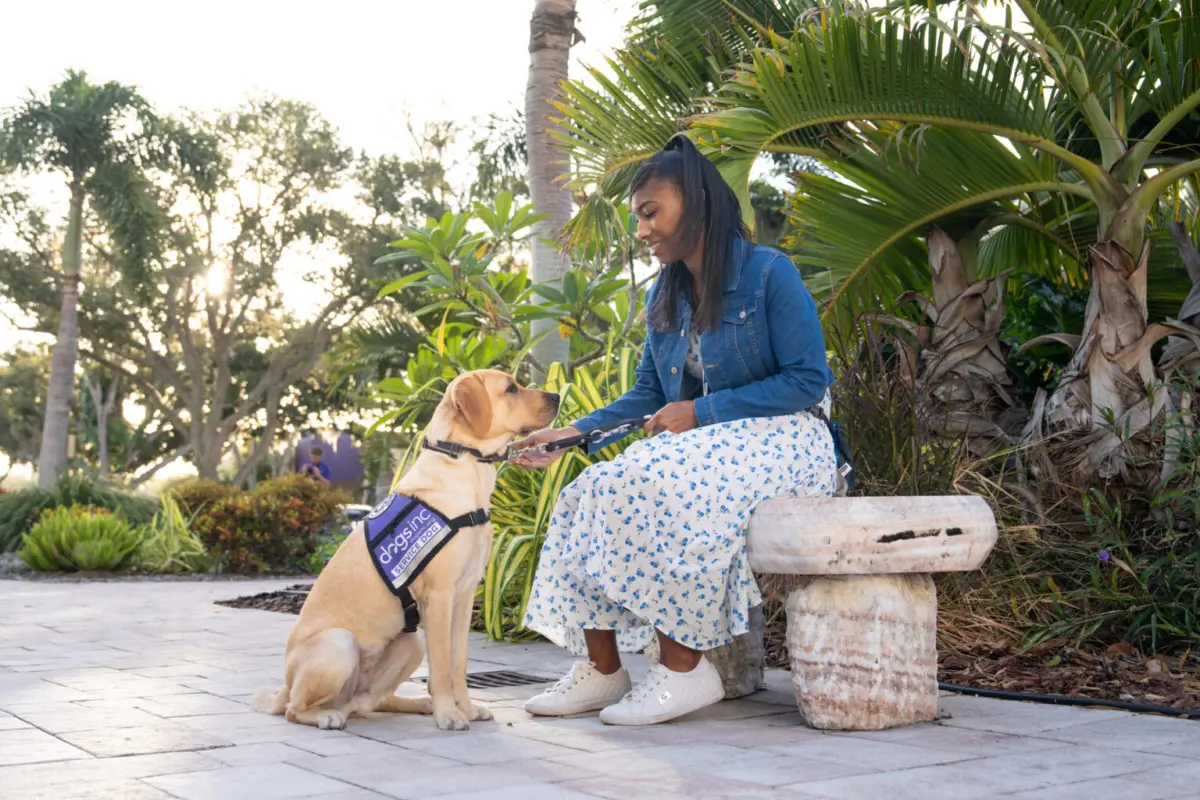
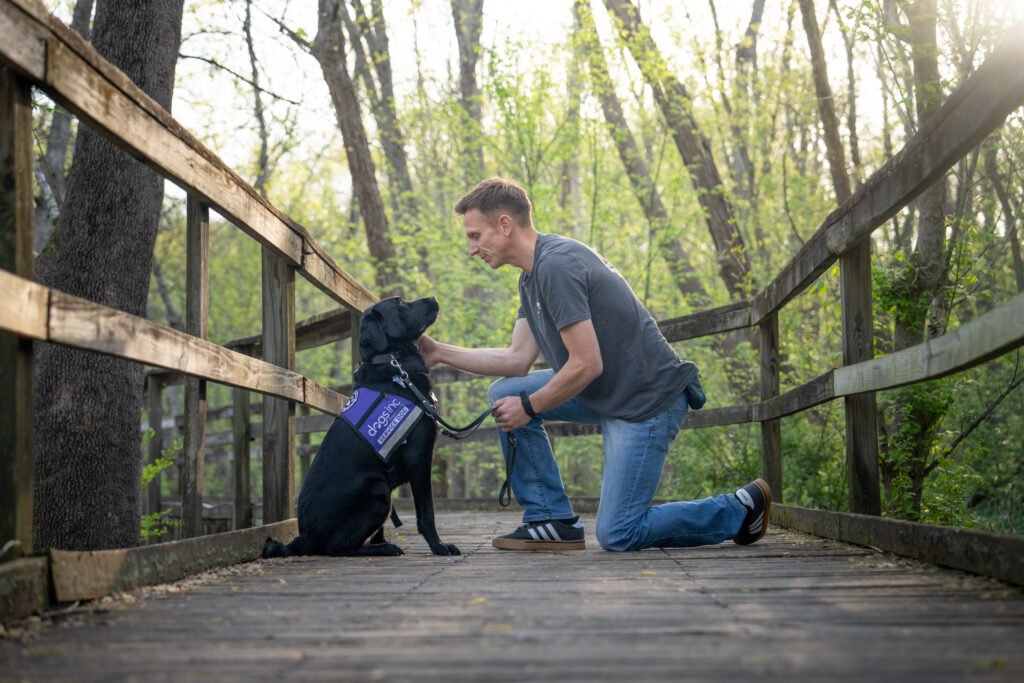
When the general public visualizes a working service dog, the mind immediately gravitates toward high-stakes, cinematic moments of intervention. We picture an intuitive canine detecting a precipitous, dangerous drop in blood sugar well before medical technology can register the shift; a disciplined guide dog expertly navigating a visually impaired handler through a chaotic, high-traffic metropolitan intersection; or a battle-hardened veteran’s service animal physically interrupting a somatic panic attack before it spirals into a debilitating flashback.
These highly specialized, life-altering tasks are nothing short of extraordinary. However, behind every flawlessly executed medical alert, deep-pressure therapy session, and public navigation milestone lies an underlying psychological and behavioral baseline that is far less dramatic, yet infinitely more vital: absolute calmness.
Without deep-seated emotional regulation and composure, even the most genetically gifted and technically intelligent service dog will ultimately falter when confronted with the unpredictable, high-stress realities of the modern public sphere. While advanced technical task training often captures the spotlight, it is the invisible architecture of calm behavior that permits service dogs to execute their duties safely, reliably, and consistently day after day. A calm dog possesses the cognitive bandwidth to think clearly in overstimulating environments, selectively ignore complex sensory distractions, and remain tethered to the handler who depends on them for autonomy.
This comprehensive report explores the science, training methodologies, and operational necessity of cultivating calmness in service dogs—demonstrating why tranquility is not merely a pleasant trait, but the fundamental prerequisite that makes every other specialized skill possible.
Detailed Chronology: The Lifecycle of a Calm Service Dog
The journey of a service dog from an exuberant, curious puppy to a rock-solid, emotionally regulated working partner does not happen by accident. It is a meticulously structured, multi-phase developmental timeline that spans years, prioritizing mental maturity and stress recovery above all else.
Phase 1: The Puppyhood Foundation (Weeks 8 to 16)
Calmness is explicitly cultivated long before advanced task training begins. During the critical socialization window, professional breeding organizations and volunteer puppy raisers introduce future service candidates to a carefully curated array of sights, sounds, textures, and novel environments.
The "Four on the Floor" Protocol: Raisers consistently reinforce polite greetings, teaching puppies that calm, quiet behavior yields rewards, while jumping or frantic whining results in social withdrawal.
Micro-Exposures: Puppies are exposed to umbrellas opening, sirens wailing in the distance, and slick flooring surfaces in short, controlled increments. The goal is never to overwhelm the animal, but to teach the developing brain how to process novelty without triggering a surge of stress hormones.
Phase 2: Adolescent Exposure and Controlled Desensitization (Months 6 to 18)
As dogs transition into adolescence—a phase marked by hormonal shifts and natural boundary-testing—trainers ramp up environmental challenges.
Systematic Distraction Training: Dogs are taken to the peripheries of grocery stores, transit hubs, and busy parks. Instructors monitor the dog’s physiological recovery time: how quickly does the dog’s heart rate settle after a sudden loud noise? How easily can they redirect their attention back to the handler after spotting a rolling skateboard or a spilled food item?
Neutrality Building: This period focuses heavily on teaching the dog that they do not need to interact with the world around them. Strangers, passing dogs, and environmental shifts are acknowledged and then safely dismissed from the dog’s focus.
Phase 3: Advanced Public Access and Task Integration (Months 18 to 24+)
In the final stretch of professional preparation, the dog synthesizes emotional regulation with complex task work. Whether training as a guide for the blind, a mobility assistance animal, or a psychiatric service dog for post-traumatic stress, the dog must prove it can maintain absolute composure while actively performing its job.
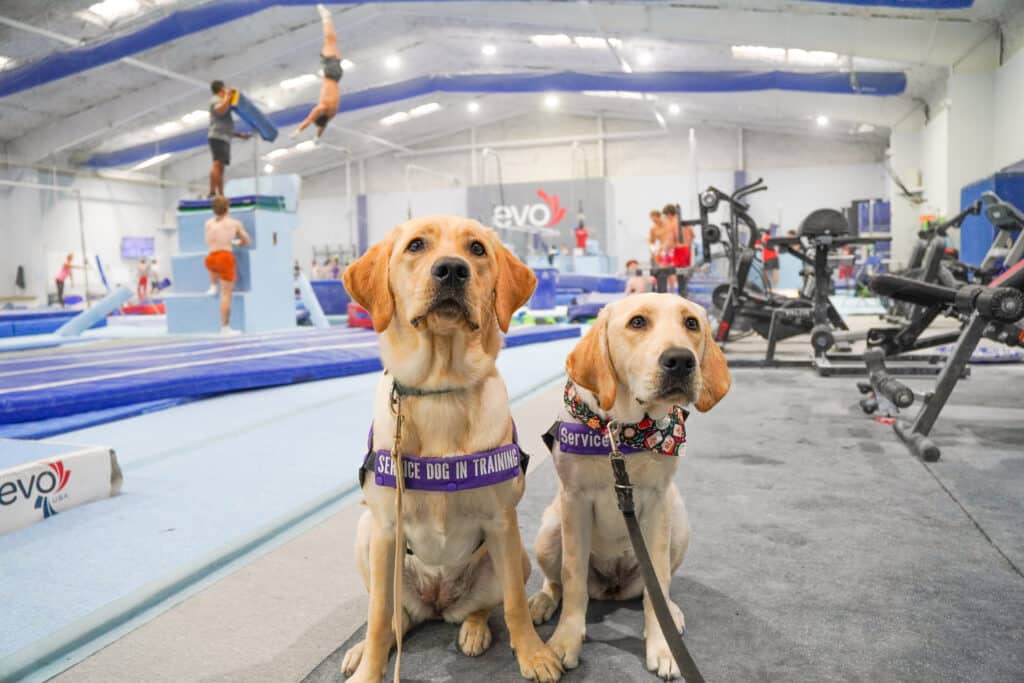
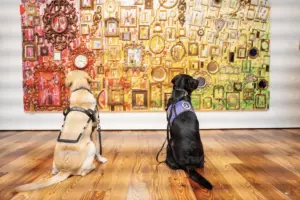
The Public Access Test (PAT): Final evaluations test the dog’s ability to heel past food on the floor, ignore dropped items, remain completely quiet under restaurant tables, and disregard friendly overtures from strangers. Only dogs that maintain a steady, regulated demeanor under severe public scrutiny graduate to official working status.
Supporting Context & Metrics: Defining "Calm" in an Operational Environment
In professional canine behavioral science, "calmness" is frequently misunderstood as a passive state of low energy, or worse, a "shut-down" psychological condition where a dog is too terrified or subdued to react. True operational calmness in a service dog is defined quite differently: it is an active state of emotional regulation and resilience.
The Neurochemistry of Composure
When humans and dogs enter high-stress environments—such as a crowded airport terminal or a chaotic emergency room—their bodies experience a sympathetic nervous system response, flooding the bloodstream with cortisol and adrenaline.
Cognitive Hindrance: Excess adrenaline impairs the prefrontal cortex, which is responsible for problem-solving, impulse control, and memory retrieval. A dog flooded with stress hormones cannot reliably remember its cues or make sound judgments.
The Regulated Brain: A professionally trained service dog demonstrates rapid parasympathetic nervous system recovery. When startled or faced with a chaotic stimulus, their heart rate spikes briefly and then normalizes within seconds. This allows them to assess the situation logically rather than reacting impulsively through fight, flight, or freeze mechanisms.
Statistical Demographics of Service Dog Selection
Industry data across major training institutions, such as Dogs Inc, reveal stringent attrition rates directly linked to temperament:
Initial Selection Rate: Only roughly 40% to 50% of dogs bred specifically for service work successfully complete the rigorous training pipeline.
Behavioral Washout Factors: Of the dogs that fail or are career-changed out of the program, over 60% are removed not due to a lack of intelligence or physical capability, but due to underlying environmental sensitivities—such as unmanageable noise reactivity, incomplete impulse control, or an inability to maintain focus amidst ambient distractions.
These metrics underscore a fundamental truth: brilliance in task execution is meaningless if the foundational temperament lacks the fortitude required to withstand the pressures of daily public life.
Official Statements and Expert Perspectives
Leading behaviorists, instructors, and medical handlers emphasize that the ultimate measure of a service dog’s worth is its steady, predictable presence in moments of crisis.
Dr. Elizabeth Vance, a noted veterinary behavioral researcher specializing in working canine psychology, notes:
"People often focus entirely on the output—the physical retrieval of an item or the alert of a medical drop. But the machinery that makes that output possible is the dog’s emotional baseline. If a dog’s cup of stress is already half-full from the ambient noise of a grocery store, they simply do not have the neural reserve left to process a subtle medical change in their handler. Calmness is the protective buffer that preserves the dog’s working capacity."
Furthermore, representatives from premier training organizations like Dogs Inc frequently underscore the philosophical shift required in modern handler education:
"Calmness is not a static trait that a dog is simply born with or without; it is an ongoing dialogue built through daily structure, positive reinforcement, and clear boundaries. We are not training robots; we are shaping a living, feeling partner who chooses tranquility over chaos because they have learned, through thousands of repetitions, that calmness is the most rewarding and secure state to be in."
Handlers themselves often speak of this dynamic in life-or-death terms. For an individual living with severe neurological or psychological disabilities, the erratic behavior of an overstimulated animal can amplify their own panic, whereas a deeply anchored, tranquil canine serves as an absolute emotional anchor.
Future Outlook: The Evolution of Calmness in Assistance Work
As society becomes increasingly fast-paced, dense, and sensory-heavy, the demands placed upon working service dogs are intensifying. The future of service dog training is shifting toward even more sophisticated methodologies for building psychological resilience and emotional durability from birth.
1. Advanced Early Neurological Stimulation (ENS) and Resilience Testing
Modern breeding programs are incorporating early developmental stressors—such as mild thermal shifts and tactile stimulation during neonate phases—to wire puppy brains for enhanced stress recovery. Combined with data-driven behavioral tracking tools during adolescence, trainers can identify subtle stress markers earlier than ever before, tailoring socialization plans to shore up specific psychological vulnerabilities.
2. Public Education and the Preservation of Neutrality
One of the most persistent threats to service dog calmness in the modern era is public interference—well-meaning strangers attempting to pet, distract, or vocalize at working dogs in public spaces. Future advocacy and educational campaigns are placing renewed emphasis on teaching the general public about the critical importance of canine neutrality. Protecting a service dog’s working space from unnecessary external stimulation ensures they can maintain the unbroken focus required to keep their handler safe.
3. Expanding Access Through Rigorous Selection
As the recognition of invisible disabilities—such as cardiac conditions, severe PTSD, and neurological disorders—grows, the demand for versatile assistance dogs will continue to surge. The organizations that succeed in meeting this demand will be those that refuse to compromise on temperament. By prioritizing emotional stability above all other traits, the service dog industry ensures that every animal deployed into the field is not just a capable worker, but a tranquil, steadfast partner capable of transforming isolation into absolute independence.
Conclusion
The most vital skills a service dog possesses are rarely the ones that draw a crowd. They are found in the quiet, uncelebrated moments: the deliberate pause before reacting to a sudden clatter in a restaurant; the steady, unshakeable stance beside a wheelchair in a bustling transit hub; the grounding, rhythmic warmth of a dog holding space during an overwhelming emotional storm.
Calmness may not possess the cinematic flash of an advanced physical retrieve or an instantaneous medical alert, but it is the invisible mortar holding the entire enterprise together. Through meticulous breeding, positive reinforcement, lifelong socialization, and an unwavering commitment to emotional regulation, service dogs are transformed from ordinary canines into extraordinary anchors of safety and trust. For the individuals whose lives and independence depend on them, that profound, unshakeable calm changes everything.