
Executive Overview
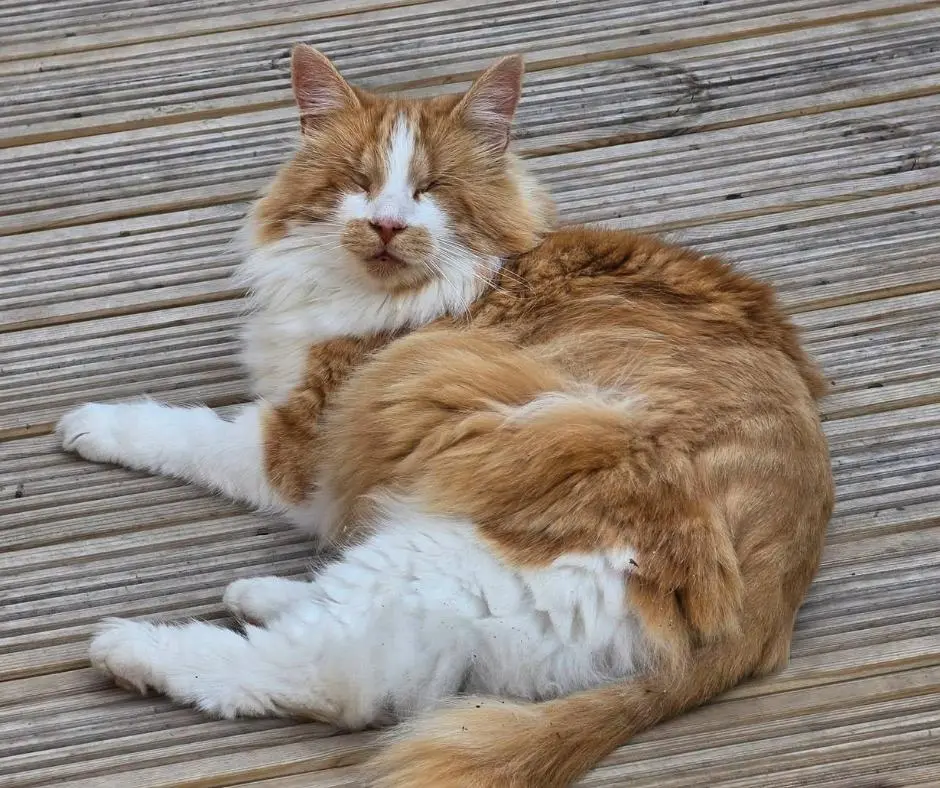
In the world of animal rescue, miracles often arrive quietly, manifested in the resilience of the creatures who have endured the harshest hardships. At the Bradford Cat Watch Rescue & Sanctuary, one such miracle took the form of an unassuming, fluffy, blind ginger cat named Carrots. Possessing what shelter workers affectionately describe as an "all-seeing heart," Carrots stepped up when a life-and-death crisis unfolded within the sanctuary’s walls.
A critically ill, severely dehydrated, and dangerously anemic kitten named Dandelion arrived at the facility clinging to life by a thread. Confronted with a rapidly deteriorating patient and limited time to act, the veterinary and care teams turned to their resident feline donor. Carrots selflessly provided 10 milliliters of his own blood, fueling a successful transfusion that altered the course of Dandelion’s existence.
This moving account extends far beyond a heartwarming narrative of inter-feline solidarity. It serves as an illuminating case study in advanced shelter medicine, highlighting the vital role that feline blood donors play in emergency veterinary care, the intricacies of cross-matching and compatibility, and the underappreciated courage of special-needs animals. What began as a desperate medical intervention soon blossomed into a viral social media phenomenon, underscored by playful demands for recognition from "King Carrots" himself—culminating in a well-deserved medal, an abundance of premium treats, and a renewed conversation regarding the lifesaving potential of feline blood donation networks worldwide.
Detailed Chronology: The Rescue and Recovery of Dandelion
The Arrival of a Critical Patient
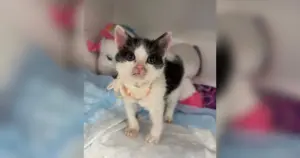
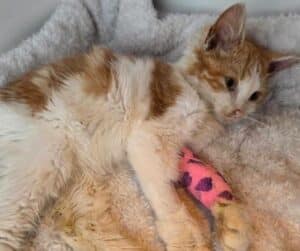
The chain of events began when the Bradford Cat Watch Rescue & Sanctuary accepted custody of Dandelion. The kitten was in an alarming state of physical decline. Presenting as severely dehydrated, cachectic, and suffering from catastrophic anemia, Dandelion’s fragile system was failing to produce or retain the healthy red blood cells necessary to sustain basic organ function.
In veterinary triage, profound anemia of this magnitude represents an immediate medical emergency. The oxygen-carrying capacity of the blood drops precipitously, placing immense strain on the heart and brain. For a small kitten, the margin for error is razor-thin. Standard supportive care—such as fluid therapy, warmth, and nutritional supplementation—was simply insufficient to reverse the crisis. The medical team determined that without an immediate blood transfusion, Dandelion would not survive the night.
The Intervention of Carrots
Faced with an urgent requirement for compatible whole blood or packed red blood cells, the sanctuary looked inward. Enter Carrots, a resident cat whose lack of physical sight has never impeded his preternatural awareness of his surroundings or his profound capacity for empathy.
Weighing the risks and benefits of the procedure, veterinary handlers prepared Carrots for the donation process. The cat calmly contributed 10 milliliters of blood—a small, carefully calculated volume safe for a donor of his size, yet remarkably potent in the context of a tiny kitten’s circulatory system. This measured quantity was rapidly and meticulously administered to Dandelion in a high-stakes transfusion designed to reboot the kitten’s oxygen-transport systems and buy precious time for his marrow to recover.
The Turning Point and Three-Week Milestones
The immediate aftermath of the transfusion was marked by cautious optimism. Within hours, subtle physiological shifts occurred. Dandelion’s respiration stabilized, his mucous membranes began regaining a healthier pink hue, and a spark of vitality returned to his previously listless frame.
Monitoring a feline transfusion patient requires rigorous hematological tracking. Over the ensuing weeks, veterinary staff kept a close eye on Dandelion’s Packed Cell Value (PCV)—the percentage of whole blood volume composed of red blood cells. At the three-week post-transfusion mark, Dandelion’s recovery achieved a critical milestone: his PCV climbed steadily to 30, positioning him firmly on the trajectory toward the normal reference range expected in healthy, thriving felines. The crisis had passed; the kitten who had stood at death’s door was now actively bounding toward a normal, healthy life.
Supporting Context & Metrics: The Science of Feline Blood Transfusions
While human blood banks and canine donor registries are widely recognized, the mechanics of feline blood donation remain a specialized and often misunderstood corner of veterinary medicine. Carrots’ heroic act brings critical attention to the biological realities, logistical hurdles, and medical criteria governing feline blood transfusions.
Understanding Feline Blood Types
Unlike humans, who possess a complex array of blood group systems (such as ABO and Rh), cats primarily operate within the AB system, which categorizes them into three distinct blood types:
- Type A: The vast majority of domestic cats (approximately 95% to 99% depending on the geographic region and breed distribution) possess Type A blood.
- Type B: Much rarer, Type B blood is found predominantly in certain purebred lines (such as British Shorthairs, Devon Rex, and Abyssinians).
- Type AB: The rarest of all feline blood types, cats with Type AB blood can safely receive red blood cells from Type A or Type B donors, making them universal recipients.
Cross-compatibility is non-negotiable. If a Type A cat receives Type B blood, a catastrophic acute hemolytic transfusion reaction occurs, resulting in the rapid destruction of the transfused red blood cells, severe shock, and frequently, death. Conversely, even a small amount of Type A blood given to a Type B cat can trigger a fatal reaction due to the naturally occurring, highly potent anti-A antibodies present in Type B felines.
Donor Criteria and Safety Protocols
Not every cat can serve as a blood donor. Veterinary clinics and specialized rescues maintain strict criteria to protect both the donor and the recipient:
- Weight and Age: Donors generally must weigh at least 9 to 10 pounds (approximately 4 to 4.5 kilograms) and be between 1 and 8 years of age.
- Health Status: Donors must be indoor-only cats, fully vaccinated, free of infectious diseases (such as Feline Leukemia Virus [FeLV] and Feline Immunodeficiency Virus [FIV]), and clear of vector-borne pathogens.
- Temperament: A calm disposition is mandatory. Because cats cannot be reasoned with in a clinical setting, donors must tolerate gentle handling, mild restraint, and minor pinpricks without extreme stress, though light sedation is occasionally utilized to ensure comfort.
In Dandelion’s case, Carrots met all physiological requirements, demonstrating that special-needs cats—including those who are blind or deaf—can make exceptional, healthy donors provided their baseline health is optimal.
Official Statements and Social Media Phenomenon
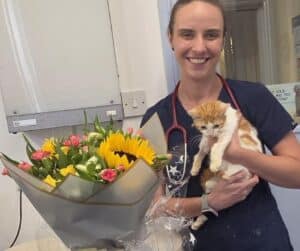
As Dandelion’s health steadily improved, the narrative transitioned from a clinical emergency to a heartwarming community celebration. Supporters of the Bradford Cat Watch Rescue & Sanctuary flooded digital platforms with well-wishes, culminating in physical gifts and floral arrangements delivered directly to the shelter for the recovering kitten.
However, this wave of adulation did not go unnoticed by the sanctuary’s resident ginger maestro. Utilizing their official social media channels, the rescue team channeled the voice of "King Carrots" to deliver a humorous, viral public address reminding the public of who truly held the keys to Dandelion’s survival.
The Voice of "King Carrots"
Through a widely shared Facebook post, the sanctuary playfully outlined Carrots’ grievances. While Dandelion was receiving bouquets and adoration, the donor cat noted with characteristic feline indignation that his contributions—specifically his 10 ml donation delivered via an "all-seeing heart"—seemed conspicuously under-celebrated in the department of fan mail and edible luxury goods.
"The kitten may have the flowers, but let us not forget whose biological machinery kept the show on the road," the satirical post seemed to convey, capturing the hearts of thousands of online followers.
A Rightful Proclamation and Reward
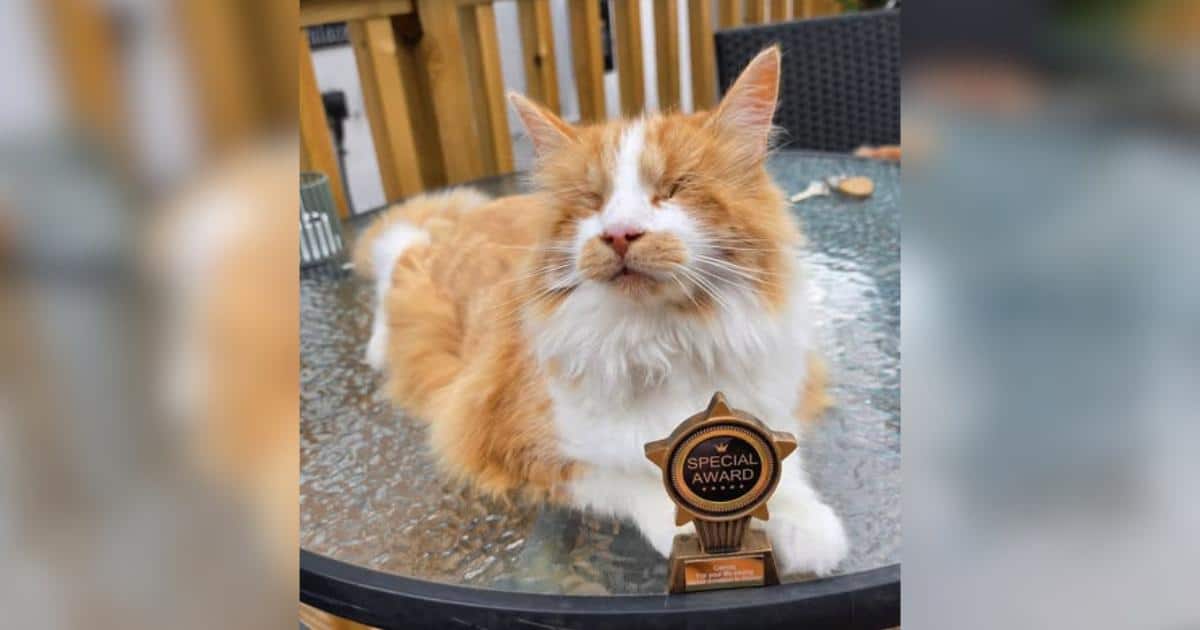
The rescue community swiftly rectified the oversight. Recognizing that even feline heroes appreciate tangible validation, the Bradford Cat Watch Rescue & Sanctuary ensured that Carrots received his due accolades:
- The Medal of Honor: A commemorative badge signifying his status as a lifesaving feline donor.
- Culinary Tributes: A generous, premium-grade bag of his favorite treats designed to appease the royal ego.
- Global Recognition: Thousands of shares, likes, and comments from animal welfare advocates worldwide, cementing Carrots’ legacy as an ambassador for special-needs rescue pets.
Future Outlook: A Legacy of Advocacy and Education
The story of Carrots and Dandelion transcends a single viral post; it serves as a powerful catalyst for broader conversations within veterinary advocacy and animal sheltering.
Expanding Feline Donor Networks
One of the most persistent challenges in emergency veterinary medicine is the scarcity of readily available feline blood products. Unlike canine blood, which can be stored for longer periods or sourced more predictably through commercial canine blood banks, feline blood has a shorter shelf life and cannot be easily stockpiled in large quantities. Consequently, veterinary hospitals frequently rely on "closed-colony" donor cats—pets owned by veterinary staff or managed directly by large rescues like the Bradford Cat Watch Rescue & Sanctuary—who are on call for emergency transfusions.
By highlighting Carrots’ contribution, the sanctuary has inadvertently educated thousands of pet owners about the realities of feline medicine. Advocacy groups hope this visibility will encourage more cat owners to inquire about local feline blood donor programs, potentially establishing regional registries that can mobilize quickly when critically ill kittens or injured cats arrive at emergency clinics.
The Extraordinary Potential of Special-Needs Pets
Furthermore, Carrots stands as a living testament to the capabilities of blind and disabled animals. Society has historically harbored biases regarding the quality of life experienced by pets with sensory deficits. Carrots dismantles these misconceptions entirely. Navigating a world of perpetual darkness with confidence, grace, and profound generosity, he proved that physical limitation does not equate to a diminished capacity for impact.
As for Dandelion, the kitten’s future—once dim and uncertain—is now wide open. Supported by the unwavering dedication of the Bradford Cat Watch Rescue & Sanctuary staff, Dandelion continues to grow in strength, curiosity, and vitality. He represents the ultimate triumph of modern veterinary intervention paired with compassionate, round-the-clock shelter care.
In the final analysis, this remarkable chapter at the Bradford Cat Watch Rescue & Sanctuary will be remembered not simply because a kitten was saved, but because of how he was saved: through the quiet, unassuming bravery of a fluffy blind ginger cat who asked for nothing more than a proper bag of treats, a shiny medal, and a gentle reminder that true heroism often resides where the world least expects to look.