
Executive Overview
In the quiet, suburban rhythms of neighborhoods across the globe, the bond between humans and animals often unfolds without fanfare. Yet, occasionally, an individual’s quiet dedication leaves an indelible mark that extends far beyond their immediate block. This is the story of John, a beloved social studies teacher, a consummate extrovert, and an unwavering protector of cats, whose profound love for animals has culminated in a transformative estate gift to Alley Cat Allies.
Through a planned gift integrated into his estate planning, John ensured that his lifelong advocacy for cats—sparked initially by a misconception about his own allergies and nurtured over decades alongside his wife, Deb—will continue on a global scale. This comprehensive report explores John’s remarkable journey from a man who believed he was allergic to felines to a self-proclaimed "permissive cat daddy." It examines the broader implications of planned giving in animal welfare, details the vital frameworks of Trap-Nev-Return (TNR) programs, and highlights how everyday animal lovers can etch their compassion into the permanent architecture of global cat advocacy.
Detailed Chronology: From Alleged Allergies to Lifelong Advocacy
The Accidental Cat Lover
For the first portion of his life, John operated under the assumption that cats were entirely incompatible with his biology. Like many who have never lived closely with felines, he believed he suffered from a standard pet allergy. However, life has a way of upending long-held assumptions, often wrapped in fur and purrs.
Approximately thirty years ago, that protective bubble of assumption burst when a stray cat appeared on John and Deb’s doorstep. Eschewing human hesitation, the feline sought out John directly, forging an immediate and undeniable bond. What followed was a complete paradigm shift for the educator. The supposed allergy vanished in the presence of genuine affection, opening John’s heart to a world of animal stewardship he never knew he wanted to enter.
The Era of "Puddy Cat"
A decade and a half ago—roughly twenty-five years from the present day—another feline wanderer entered the couple’s lives. Inspired by his deep appreciation for classic Warner Brothers animation, John christened the newcomer "Puddy Cat."
Puddy Cat proved to be more than a passing visitor; she became a permanent, foundational member of the household. For sixteen and a half years, Pud lived as a cherished family member, cementing John’s evolution from an accidental host to a devoted, unapologetic cat advocate. Deb, reflecting on their 42 years of marriage, fondly describes John as a "consummate extrovert" and a deeply "permissive cat daddy" who could never turn away an animal in need.
The Classroom and the Community
By day, John shaped young minds as a dedicated social studies teacher. Known widely for his endless barrage of "dad jokes" and an infectious enthusiasm for history and civics, he was dearly loved by his students. By afternoon and evening, that same educational zeal translated into compassionate neighborhood stewardship.
Inspired by a neighbor, John began feeding and protecting several community cats within his local area. This hands-on caretaker routine became a daily ritual—one that bridged his professional life of guiding human youth with a personal mission to protect vulnerable feline lives.
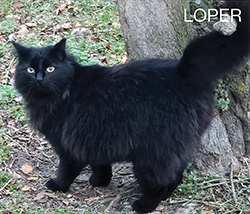
Today, John’s immediate legacy lives on through the animals he protected. He leaves behind Gray, the couple’s indoor-outdoor feline companion, alongside four distinct community cats who relied on his daily grace: Miss Kitty, Sylvestra, Mini, and Loper. Yet, by choosing to include Alley Cat Allies in his estate plans, John’s sphere of influence has expanded exponentially, ensuring that his compassionate ethos will protect countless cats and kittens worldwide for generations to come.
Supporting Context & Metrics: The Mechanics of Planned Giving and Cat Advocacy
To fully understand the weight of John’s contribution, one must examine the broader ecosystem of animal welfare, the realities facing community cats, and the financial structures that keep advocacy organizations operational.
The Power of Planned Giving in Animal Welfare
Nonprofit organizations dedicated to animal protection often rely on a dual financial engine: immediate grassroots donations and sustainable, long-term planned gifts. Planned giving—which includes bequests through wills, charitable gift annuities, and trust designations—represents the bedrock of financial security for organizations like Alley Cat Allies.
- Sustained Impact: Bequests allow donors of average means to make monumental, transformative contributions that might not be possible during their working years.
- Organizational Resilience: Estate gifts provide a financial buffer, enabling advocacy groups to launch long-term legal battles, fund extensive TNR educational campaigns, and respond rapidly to natural disasters or cruelty crises.
- Perpetual Advocacy: Through planned giving, a donor’s core values outlive them, effectively transforming a mortal life into an immortal force for good.
Community Cats and Trap-Nev-Return (TNR)
At the heart of Alley Cat Allies’ mission is the championship of Trap-Neve-Return (TNR). For decades, municipal animal control agencies relied on catch-and-kill policies to manage outdoor cat populations—a method proven to be both inhumane and fundamentally ineffective due to the "vacuum effect," where new cats simply move in to fill vacant territory.
TNR operates on entirely different, scientifically validated principles:
- Humane Trapping: Community cats are humanely trapped using specialized box traps.
- Veterinary Care: The cats are sterilized, vaccinated against rabies, and ear-tipped (a universal sign indicating a sterilized community cat) by licensed veterinarians.
- Return to Colony: The cats are returned to their outdoor homes, where they live out their natural lives without contributing to population growth.
Statistically, communities that implement robust TNR programs see a dramatic reduction in shelter intake numbers, lower municipal animal control costs, and a significant decrease in nuisance behaviors associated with unspayed populations (such as howling and spraying). Deb’s vocal support for TNR underscores a growing public consensus: humane management is the only ethical and effective path forward.
Official Statements and Personal Reflections
The human element of estate planning is rarely captured in cold financial ledgers; it is preserved in the memories, letters, and spoken words of those left behind.
In a heartfelt letter written to Alley Cat Allies, Deb reflected on their four decades together, offering an intimate glimpse into the man behind the classroom podium and the cat feeder:
"Interestingly enough, John thought for years that he was allergic to cats! Then 30 years ago, we had a stray show up and get attached to John. 25 years ago, another stray showed up. John, with his love of Warner Brothers cartoons, named her Puddy Cat… Pud lived with us for 16½ years."
Deb’s reflections paint a vivid picture of a man whose initial barrier—perceived allergy—melted away under the unassuming weight of a stray cat’s trust. Furthermore, Deb articulated her wholehearted endorsement of the systemic solutions championed by Alley Cat Allies:
"I am grateful that organizations like Alley Cat Allies exist."
This sentiment captures the duality of modern animal advocacy: while individual acts of kindness—like feeding Miss Kitty, Sylvestra, Mini, and Loper on a back porch—are deeply moving, they require institutional amplifiers like Alley Cat Allies to enact systemic change, protect policy frameworks, and educate the broader public on humane treatment.
Future Outlook: Continuing the Legacy
As the landscape of animal advocacy evolves, the need for visionary supporters becomes increasingly critical. Alley Cat Allies continues to spearhead global initiatives aimed at shifting public policy away from archaic, lethal control methods and toward progressive, humane coexistence.
John’s story serves as both a touching tribute to a life well-lived and a clarion call to animal lovers everywhere. It demonstrates that anyone—regardless of profession or background—can architect a future where cats are valued, protected, and allowed to live free from harm.
How You Can Make a Difference
Inspired by John’s enduring legacy, supporters have numerous pathways to contribute to the global mission of protecting cats and kittens:
- Immediate Contributions: Supporters can make an immediate, impactful donation by visiting alleycat.org/Donate.
- Planned Giving & Bequests: To follow in John’s footsteps and create a lasting lifesaving impact through a will, trust, or other planned gift, visit alleycat.org/PlannedGiving or scan the dedicated planned giving QR code found in official advocacy publications.
- Workplace Giving: Federal employees and military personnel can designate support through the Combined Federal Campaign using CFC #10964.
- Direct Inquiries: For tax identification purposes (EIN #52-1742079) or to discuss planned giving options in detail with a specialist, interested parties can call 866-309-6207.
John’s classroom may be quiet now, and his familiar dad jokes may only echo in the memories of his former students, but his compassion remains vibrantly alive. Through Gray, Miss Kitty, Sylvestra, Mini, Loper, and the countless unknown cats worldwide who will find safety because of his foresight, John’s story proves that love for animals, once fully realized, knows no bounds and stops at no borders.