
Executive Overview
When navigating grocery stores, airports, restaurants, and bustling metropolitan sidewalks, encountering a service dog is increasingly common. These extraordinary canines project an air of unwavering calm, focus, and gentle friendliness. It is entirely natural for an onlooker to feel a surge of warmth, a temptation to offer a quick scratch behind the ears, or an urge to whisper words of encouragement to a seemingly tireless "good boy."
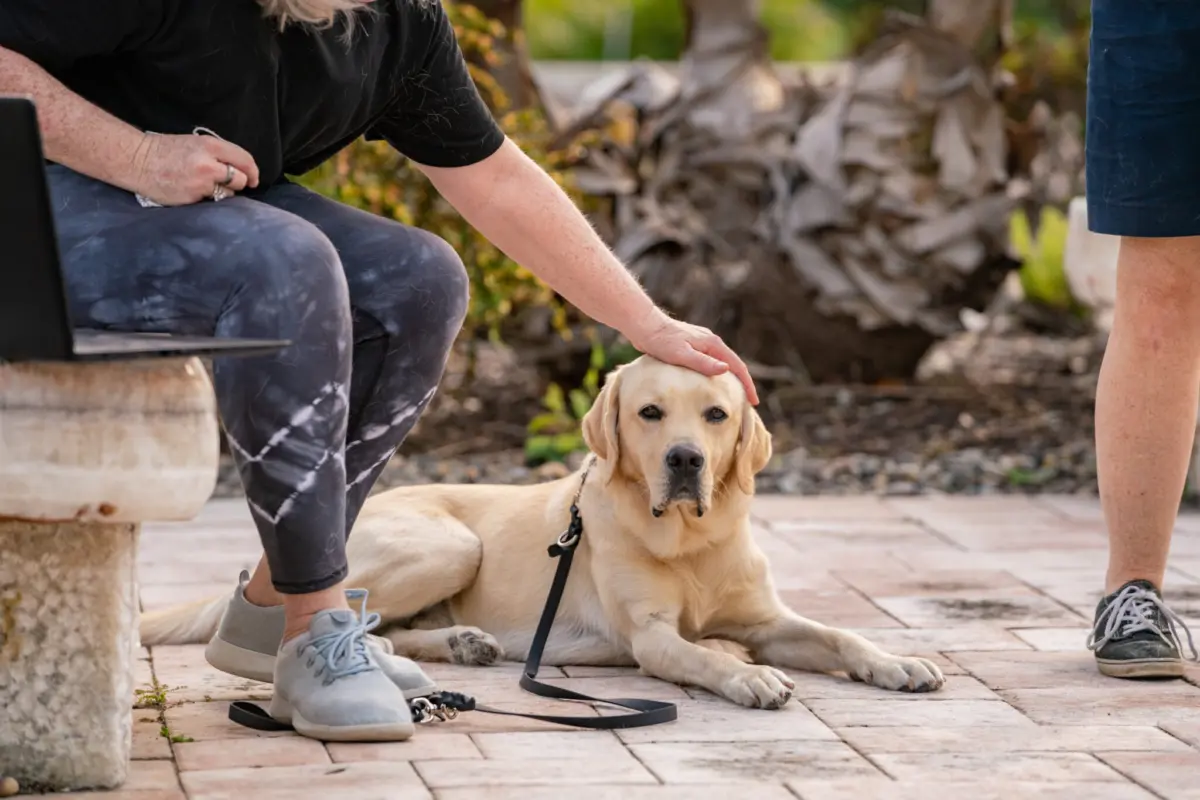
However, despite the best and kindest of intentions, the golden rule of public interaction with a working service dog is remarkably simple: do not interact at all unless explicitly invited.
Understanding proper service dog etiquette is not merely a matter of polite social convention; it is a vital practice that protects the safety, focus, and psychological well-being of both the animal and the handler who relies upon them. From federal accessibility legislation to the complex cognitive tasks these animals perform, public awareness ensures that service dogs can execute their duties without interruption. This comprehensive report explores the legal definitions of service dogs, the dangers of unintended distractions, practical guidelines for public interaction, and the broader societal impacts of respecting the working partnership.
Detailed Chronology and Legal Evolution of Service Animals
To understand why service dog etiquette is so strictly enforced today, one must examine the legal and historical framework that elevated these animals from simple working companions to recognized, protected partners under the law.
The Pre-Legislative Era
For decades, guide dogs for the blind were the most widely recognized form of assistance animals. Historically, these partnerships were informal, relying on the goodwill of individual business owners and public transit authorities to grant entry. Handlers frequently faced discrimination, exclusion, and public ignorance regarding the vital role these animals played in daily navigation.
The Landmark Americans with Disabilities Act (ADA) of 1990
A seismic shift occurred with the passage of the Americans with Disabilities Act (ADA) in 1990. Under Title III of the ADA, federal legislation established clear parameters regarding where service animals could accompany individuals with disabilities. For the first time, public accommodations—including hotels, restaurants, retail stores, and theaters—were legally mandated to welcome service dogs.
Crucially, the law drew a definitive legal boundary between pets, emotional support animals (ESAs), and fully trained service dogs. While pets and emotional support animals provide comfort, they do not possess public access rights under the ADA. A service dog, by definition, must be individually trained to do work or perform tasks for the direct benefit of an individual with a disability, including physical, sensory, psychiatric, intellectual, or other mental disabilities.
Modern Refinements and Public Awareness
In the decades following the ADA’s enactment, the scope of tasks performed by service dogs expanded dramatically. Beyond guiding the visually impaired, specialized training programs began producing mobility support dogs, medical alert dogs for conditions like diabetes and epilepsy, and psychiatric service dogs (PSDs) trained to mitigate the symptoms of post-traumatic stress disorder (PTSD).
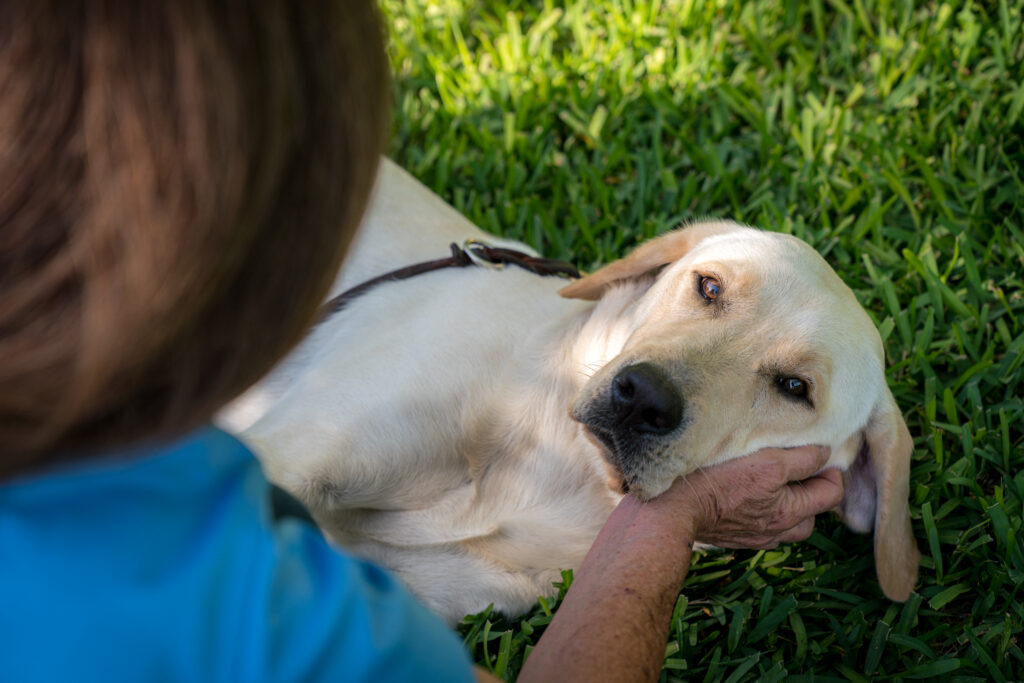
Parallel to this expansion came a growing need for public education. As service dogs became more visible in everyday life, advocacy groups, training organizations, and handlers began campaigning heavily to educate the general public on the hidden mechanics of service dog partnerships, formalizing the modern "do not distract" protocols we recognize today.
Supporting Context and Metrics: The Anatomy of a Working Partnership
What sets a service dog apart from a beloved family pet is not merely obedience; it is a lifetime of rigorous, specialized conditioning designed to maintain unwavering focus in chaotic environments.
What is a Service Dog?
Under federal guidelines, the tasks performed by a service dog must be directly related to the person’s disability. These tasks are diverse and often lifesaving:
- Guidance and Navigation: Steering individuals with visual impairments safely around environmental hazards, construction zones, and traffic.
- Mobility Support: Retrieving dropped items, pulling wheelchairs, opening and closing doors, and providing steady balance for individuals with ambulatory challenges.
- Medical Alert and Response: Detecting oncoming medical episodes—such as blood sugar fluctuations in diabetics or epileptic seizures—long before they manifest physically, allowing the handler to take medication or find a safe space.
- Psychiatric Assistance: Interrupting panic attacks, providing deep pressure therapy during flashbacks, checking dark rooms for individuals with PTSD, and creating a physical buffer in crowded spaces to manage agoraphobia.
The Invisible Nature of the Work
Many service dog tasks are subtle. An outsider might look at a Labrador Retriever lying quietly beneath a restaurant table and assume the animal is simply resting. In reality, the dog may be actively monitoring its handler’s scent for chemical changes, listening for auditory cues, or remaining on high alert to provide immediate physical support at the first sign of distress. Because the work is often invisible, the public frequently underestimates the level of concentration required by the animal.

Official Statements and Expert Perspectives
Training organizations and accessibility advocates emphasize that public interference, no matter how affectionate, can compromise the integrity of a service dog team.
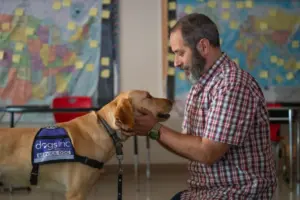
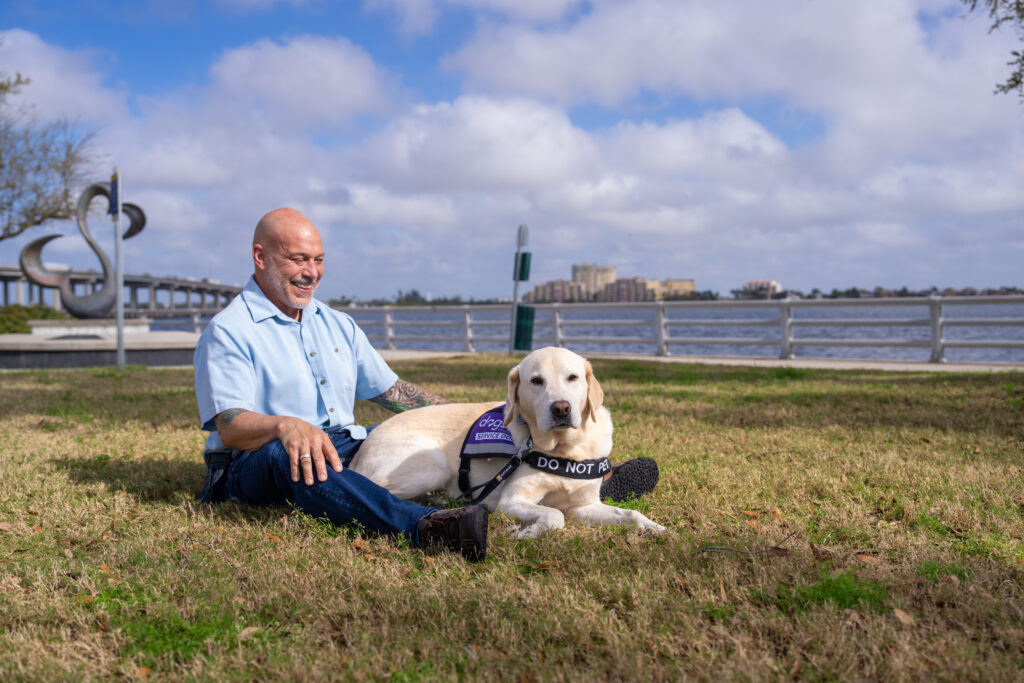
Leadership at major training institutions, such as Dogs Inc, frequently stress that public interactions must be initiated by the handler, never by the bystander. According to professional trainers, a dog undergoing distraction training spends months learning to filter out external stimuli—such as dropping food, crying children, or enthusiastic strangers. However, no animal is entirely immune to the deliberate, persistent attention of humans.
"When a well-meaning stranger calls out, whistles, or reaches down to pet a working service dog, they are actively severing the communication loop between the handler and the animal," explains a veteran service dog instructor. "Even a two-second distraction can cause a dog to miss a critical medical alert cue or fail to notice an oncoming hazard. For our handlers, that momentary lapse can have dangerous consequences."
Advocacy groups also underscore the psychological burden placed on handlers when the public fails to respect boundaries. Handlers often report feeling exhausted by constant interruptions, which can draw unwanted public attention to their private medical conditions and impede their ability to move independently through society.
Future Outlook: Fostering a Culture of Awareness and Respect
As society continues to evolve toward greater inclusivity and accessibility, the future of service dog integration relies heavily on proactive education and cultural shifts.
Educating the Next Generation
One of the most promising avenues for shifting public behavior lies in early childhood education. Children are naturally drawn to animals and often lack the social filter that restrains adults from running up to pet a dog. By teaching children proper service dog etiquette—explaining that "that dog is working right now" and encouraging them to admire the animal quietly from a distance—schools and parents are cultivating a generation of empathetic, highly aware citizens.
Responsibilities for Businesses and Public Spaces
For commercial enterprises, staff training remains a critical component of future accessibility. Employees in retail, hospitality, and healthcare must be equipped to welcome service dog teams seamlessly, treating the handler like any other customer while ensuring that other patrons do not interfere with the working animal. Businesses that foster a respectful, low-stress environment not only comply with the law but also champion true accessibility.
The Power of Asking First
Ultimately, the future of harmonious public interactions hinges on a simple, respectful paradigm shift: always ask permission first, and graciously accept the answer.

If a handler indicates that their dog is off-duty and available for interaction, a polite greeting can proceed safely. If the handler declines—as is frequently the case when dogs are actively working—bystanders must respect that boundary without taking offense.
Conclusion: A Little Respect Goes a Long Way
Can you pet a service dog? The definitive answer remains a conditional and cautious no, unless you have asked permission and received an explicit invitation to interact from the handler.
The next time you cross paths with a service dog team in a grocery store aisle, an airport terminal, or a neighborhood park, remember that you are observing a finely tuned, life-changing partnership. These remarkable animals provide independence, safety, and unwavering companionship to individuals navigating disabilities.
By giving the team ample space, avoiding unnecessary distractions, and adhering to proper service dog etiquette, we all play a part in supporting the safety and success of those who rely on these extraordinary working dogs every day.