
Executive Overview
In the world of veterinary medicine, boundaries are constantly being pushed to afford our animal companions the same advanced care once reserved exclusively for humans. This is the remarkable story of Mars, a 10-year-old orange tabby cat from Hoboken, New Jersey, whose life hung in the balance due to a rare and aggressive pituitary gland tumor. For months, Mars suffered from severe mobility issues, untamable diabetes, and neurological decline. Traditional treatments—including standard medications and radiation therapy—failed to halt the progression of the disease.
Refusing to accept a grim prognosis, Mars’s devoted human companion, Yisi, embarked on a nationwide search for a viable treatment. That relentless pursuit led them thousands of miles away from the East Coast to the Veterinary Referral Center of Central Oregon (VRCCO) in Bend, Oregon. There, a multidisciplinary team of elite veterinary neurosurgeons and critical care specialists prepared to perform a groundbreaking, high-risk operation: a transsphenoidal hypophysectomy.
Performed at only a handful of specialized veterinary medical centers across the United States, this intricate surgery involves navigating the base of the brain to excise a microscopic tumor. Thanks to months of meticulous preparation, advanced 3D imaging, and a cross-country collaborative medical effort, the procedure was an overwhelming success. Today, Mars has not only survived a medical ordeal that few animals endure, but he has also returned to New Jersey with his diabetes stabilized, his mobility restored, and—most importantly to Yisi—his signature high-fives back in action.
Detailed Chronology: From Hoboken to Bend
The Decline of a Vibrant Companion
Mars was never just an ordinary cat; he and Yisi shared an intuitive bond anchored by a repertoire of joyful routines. Among these was Mars’s ability to leap effortlessly onto elevated furniture and, most famously, offer Yisi high-fives on command. However, as Mars reached his tenth year, a subtle shift occurred. His once-fluid jumps grew hesitant, and his playful paw raises ceased entirely.
Behind these behavioral changes lay a sinister biological driver. Mars had developed diabetes mellitus that proved stubbornly resistant to conventional therapy. While a typical diabetic cat stabilizes on modest amounts of insulin, Mars required an astonishing 20 units daily without achieving glycemic control.
Comprehensive diagnostics revealed the root cause: a functional tumor on Mars’s pituitary gland was hyper-secreting excess growth hormone. This hormonal flood triggered a cascade of systemic issues, including dangerous neurological symptoms, an enlarged heart, and an inability to walk normally. Instead of walking on his paw pads, Mars was forced to walk on his hocks—the lower portions of his hind legs. Previous interventions involving pharmaceuticals and localized radiation had plateaued, leaving the tumor unchecked and Mars’s quality of life rapidly deteriorating.
The Cross-Country Odyssey
Faced with dwindling options and a declining cat, Yisi refused to give up. Her exhaustive research into specialized endocrinology and neurosurgery uncovered a ray of hope located nearly 2,800 miles away in the Pacific Northwest. The Veterinary Referral Center of Central Oregon (VRCCO) possessed the specific capabilities required to evaluate and treat complex pituitary disorders.
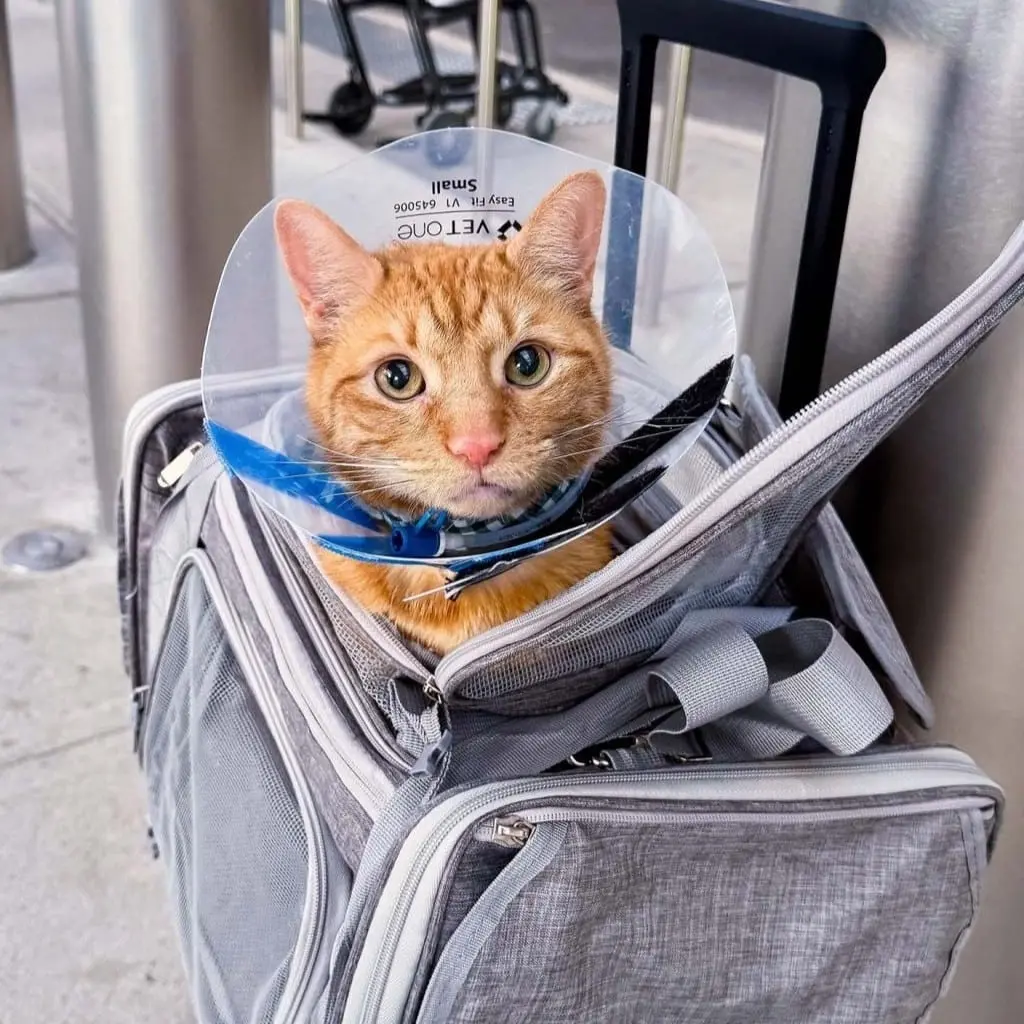
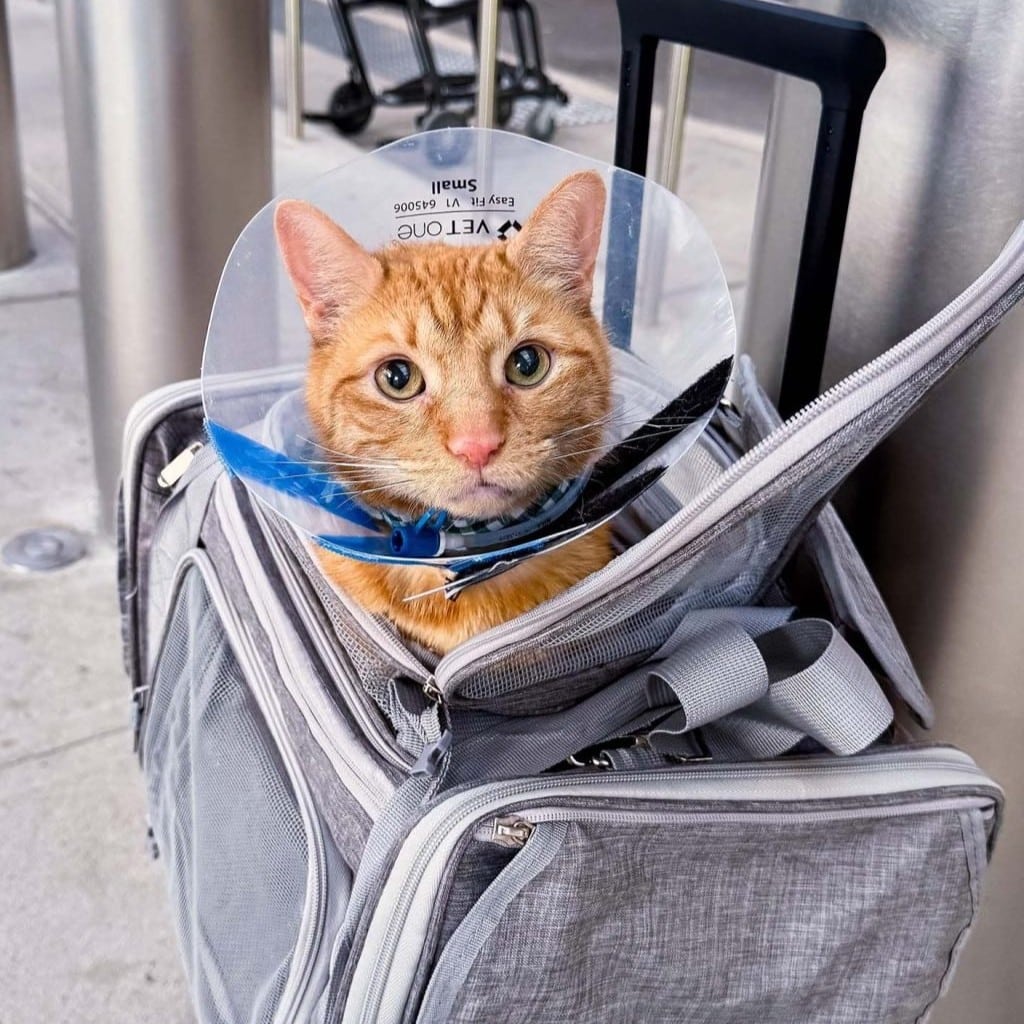
Recognizing the urgency, Yisi utilized VRCCO’s dedicated medical-travel program, which assists families journeying to Bend for specialized care by coordinating lodging, scheduling, and logistical support. Mars was packed up for a cross-country flight to Oregon, embarking on a journey that would redefine the limits of feline neurosurgery.
Months of Precision Preparation
Performing a transsphenoidal hypophysectomy—the surgical removal of the pituitary gland—is widely considered one of the most delicate procedures in veterinary medicine. Because the pituitary gland is minuscule, deeply seated at the base of the brain, and encircled by critical blood vessels and nerves, the margin for error is razor-thin.
Long before Mars and Yisi touched down in Oregon in May, Dr. Annie Chen-Allen—a seasoned veterinary neurologist with deep roots at Washington State University—led a team through two rigorous months of preparation. The surgical team left nothing to chance. They rehearsed the procedure using advanced 3D imaging technology, customized surgical templates derived from high-resolution CT scans, and specialized anatomical cadaver specimens.
To ensure absolute safety, VRCCO brought in heavy-hitting reinforcements. Dr. Tina Owen and Dr. Linda Martin, esteemed veterinary experts from Washington State University, traveled to Bend to collaborate directly with Dr. Chen-Allen, neurology intern Dr. Dani Madson, and the hospital’s dedicated critical-care division. This marked VRCCO’s inaugural performance of this exact surgical protocol, magnifying the stakes for the entire medical team.
Inside the Operating Room
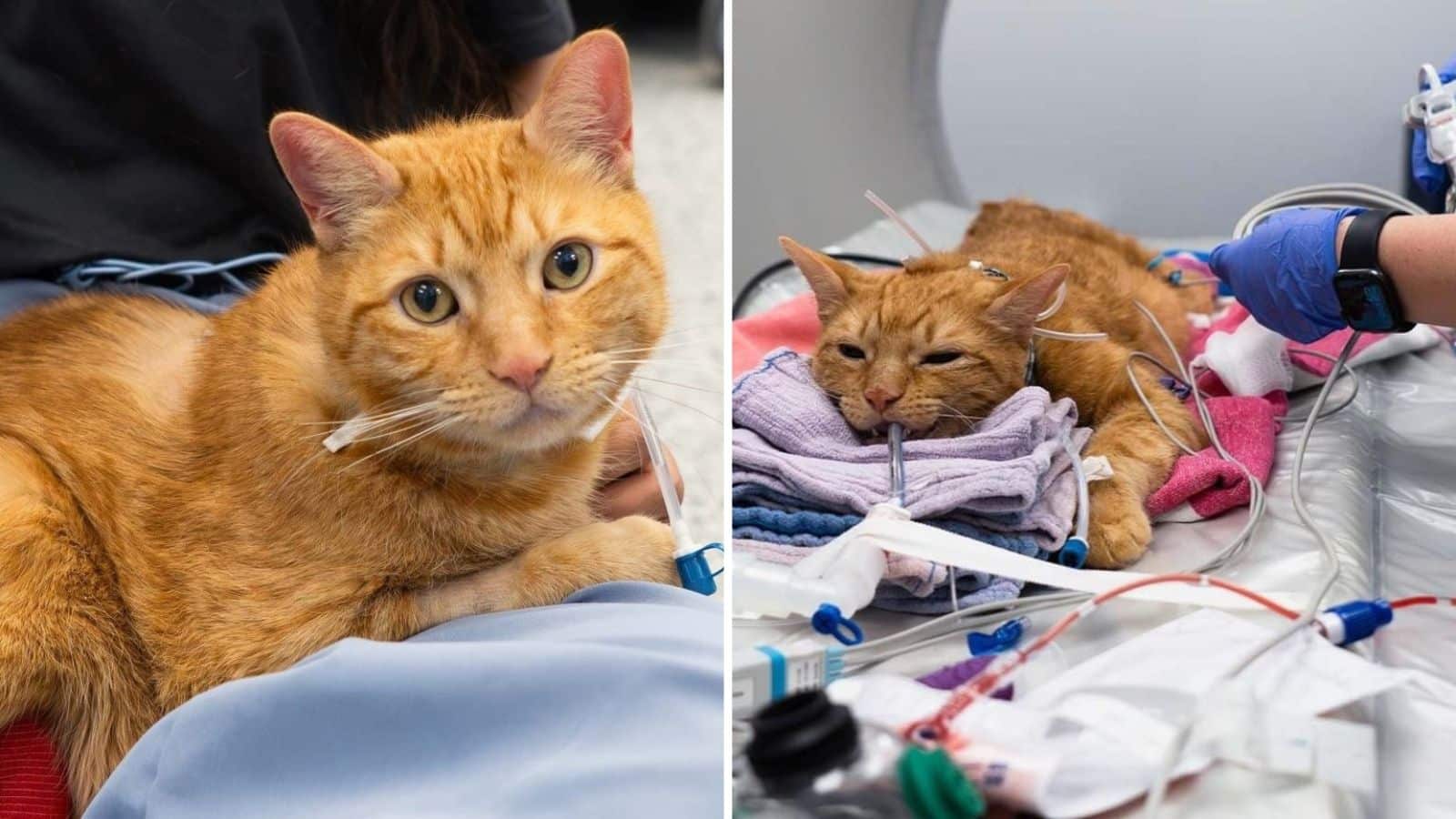
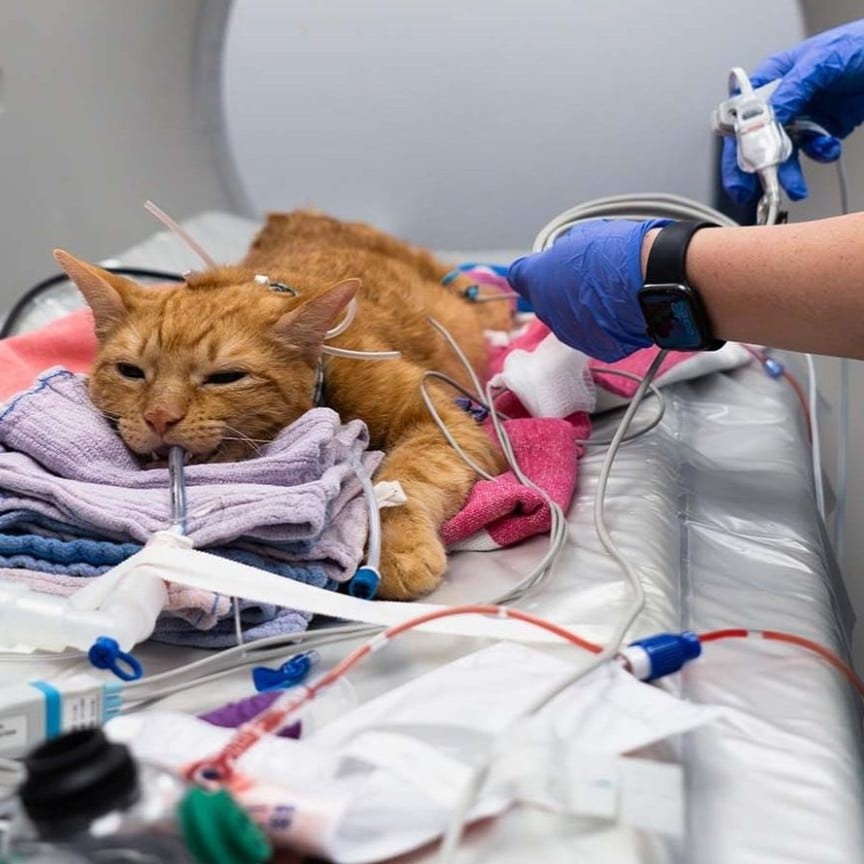
When Mars finally wheeled into surgery, the procedure demanded absolute technological and physical precision. Surgeons created a microscopic opening in the skull, utilizing specialized endoscopic cameras and magnification tools to navigate the complex anatomical pathways leading directly to the pituitary gland.
Every micro-movement was meticulously monitored. The primary objective was twofold: cleanly excise the growth hormone-secreting tumor while sparing the surrounding neural and vascular architecture. After hours of intense, high-stakes operating, the surgical team successfully excised the tumor, clearing the primary hurdle in Mars’s treatment path.
Supporting Context & Metrics: The Science of Hypophysectomies
To fully grasp the magnitude of Mars’s recovery, one must understand the unique endocrinological and surgical metrics involved in feline pituitary tumors and transsphenoidal hypophysectomies.
The Pituitary Paradox
The pituitary gland is often referred to as the "master gland" because it orchestrates numerous vital bodily functions, including metabolism, growth, stress response, and electrolyte balance. When a tumor develops on this gland, it frequently leads to acromegaly in cats—a syndrome characterized by excess growth hormone production.
- Insulin Resistance: Acromegaly profoundly disrupts insulin receptors, leading to severe, hard-to-manage diabetes. Mars’s dosage of 20 units of insulin per day is a stark clinical metric highlighting the severe metabolic chaos caused by his tumor.
- Geographic Scarcity of Care: Transsphenoidal hypophysectomies are performed in only a handful of elite veterinary institutions across the United States. The requirement for specialized stereotactic equipment, high-powered microscopy, and 24/7 intensive postoperative care places this procedure out of reach for the vast majority of veterinary clinics.
The Post-Operative Crucible
Successfully removing the tumor was only half the battle. Because the pituitary gland regulates critical hormones, its removal introduces immediate physiological vulnerabilities.
- Electrolyte Imbalances: Post-operative patients frequently experience dramatic and potentially lethal fluctuations in blood sodium levels.
- Lifelong Endocrinology Management: Feline survivors of hypophysectomies typically require lifelong hormone replacement therapy, including daily thyroid and corticosteroid supplementation.
- Intensive Care Unit (ICU) Metrics: Mars’s survival depended heavily on round-the-clock monitoring by VRCCO’s critical-care nurses and specialists, who tracked his blood chemistry, hydration, and neurological status every hour during his initial recovery window.
Official Statements and Testimonial Insights
The intersection of advanced surgical science and profound human-animal bonds often yields deeply emotional milestones. While corporate veterinary networks and hospital teams frequently focus on clinical metrics, the human element remains the true driving force behind such monumental medical undertakings.
Yisi shared her profound gratitude regarding the care, compassion, and professionalism exhibited by the staff at VRCCO throughout what she described as a deeply terrifying experience. Navigating a rare surgical intervention thousands of miles away from home naturally breeds anxiety, but the hospital’s clear communication channels and empathetic staff transformed a daunting medical journey into an empowering partnership.
"The veterinary team kept me informed at every single turn," Yisi reflected, praising their patience, meticulous organization, and gentle bedside manner toward Mars. "They helped me feel comfortable and confident, even when the stakes were at their highest."
Medical experts involved in the case underscored that Mars’s successful outcome serves as a testament to what inter-institutional collaboration can achieve. By combining the specialized neurological expertise of Dr. Chen-Allen with the visiting acumen of Dr. Owen and Dr. Martin from Washington State University, VRCCO demonstrated that regional referral centers can successfully execute world-class, ultra-specialized neurosurgeries when backed by rigorous preparation and shared knowledge.
Future Outlook: A New Standard for Feline Endocrinology?
Mars’s triumphant return to Hoboken marks a watershed moment not only for his family, but potentially for the broader landscape of veterinary neuro-oncology. As imaging technology improves and collaborative networks between veterinary universities and private referral centers strengthen, complex surgeries once deemed impossible are slowly becoming accessible realities.
Clinical Prognosis for Mars
Following his surgery, Mars’s physiological metrics stabilized rapidly. Most notably, his insulin requirements plummeted back into a healthy, normal range as the growth-hormone-secreting tumor was no longer driving his insulin resistance. Neurological deficits began to recede: the awkward hock-walking disappeared, replaced once again by confident strides.
Most importantly, the qualitative metrics of Mars’s life—his favorite rituals—returned in full force. The orange tabby was once again bounding onto elevated stools and furniture, effortlessly lifting his paw to meet Yisi’s hand for their cherished high-fives. For veterinary endocrinologists, this functional recovery confirms that surgical intervention can completely reverse systemic symptoms of acromegaly if caught and treated effectively.
Broader Implications for Veterinary Medicine
Mars’s story highlights several critical trends shaping the future of pet healthcare:
- Expansion of Advanced Surgical Access: As training programs expand and specialized equipment becomes less siloed within academic institutions, regional referral centers like VRCCO are increasingly equipped to handle complex neurosurgeries.
- The Rise of Medical Travel Programs: Just as humans travel globally for specialized medical tourism, pet owners are increasingly willing to cross state lines—supported by structured hospitality and travel coordination programs—to secure life-saving interventions for their companion animals.
- Multidisciplinary Collaboration: The seamless teamwork between VRCCO’s local specialists and visiting experts from Washington State University sets a benchmark for future collaborative procedures in veterinary medicine.
Ultimately, Mars’s journey from a failing senior cat in New Jersey to a leaping, high-fiving survivor in the Pacific Northwest stands as an inspiring testament to modern veterinary innovation. It proves that when cutting-edge medical science meets unwavering human devotion, even the most daunting medical barriers can be overcome.