
Executive Overview
In the realm of animal welfare, true impact is rarely measured solely by sweeping institutional policies or massive corporate contributions. More often, it is forged in the quiet, daily acts of compassion performed by everyday individuals who look at a vulnerable animal and decide to make a difference. The story of John, a dedicated social studies teacher, devoted husband, and fierce protector of community cats, stands as a profound testament to this truth. Through a thoughtful estate plan that includes Alley Cat Allies, John ensured that his lifelong commitment to feline welfare would transcend his lifetime, offering protection, medical care, and advocacy to cats and kittens across the globe.
John’s journey into the world of animal advocacy is as charming as it is inspiring. For years, he operated under the mistaken belief that he was allergic to felines—a misconception shattered when a resilient stray cat decided to make John her chosen human. What followed was a decades-long romance with cat rescue, community cat care, and the quiet, steady work of feeding, sheltering, and advocating for outdoor felines alongside his wife of 42 years, Deb.
This article explores the remarkable life of John, examining how a high school educator known for his endless supply of dad jokes and a vibrant, extroverted spirit became a pillar of his local cat-advocacy community. Through exclusive reflections shared by Deb, we trace John’s transformation from an accidental cat owner into a "permissive cat daddy" and a visionary philanthropist. Furthermore, this piece places John’s legacy into the broader context of modern animal advocacy, examining the critical importance of planned giving, the science and humanity of Trap-Neve-Return (TNR), and how legacy gifts ensure that organizations like Alley Cat Allies can continue their vital mission for generations to come.
Detailed Chronology: From Alleged Allergies to a Lifetime of Feline Devotion
The Misconception and the Miracle Stray
To truly understand John’s profound bond with cats, one must return to a time when he believed his body simply could not tolerate them. Like many people who experience mild environmental sensitivities or simply accept urban myths about animal dander, John assumed felines were entirely off-limits for him.
That narrative shifted dramatically three decades ago when an independent stray cat wandered onto his property, surveyed the environment, and deliberately attached herself to John. Defying his supposed allergies, the cat made it abundantly clear that she had chosen him. That single, serendipitous encounter broke down decades of conditioned assumptions and opened John’s heart to a species he would spend the rest of his life protecting.
Enter "Puddy Cat": A Cartoons-Inspired Companionship
If the first stray cracked open the door to feline appreciation, the second blew it wide open. Twenty-five years ago, another feline wanderer appeared at John and Deb’s doorstep, seeking refuge, food, and security.
With a joyful nod to his playful personality and his deep appreciation for classic Warner Brothers animation, John christened the newcomer "Puddy Cat." Far from a fleeting backyard visitor, Puddy Cat integrated seamlessly into the household, becoming a beloved family member. She lived a long, pampered, and deeply cherished life indoors with John and Deb for an incredible 16 and a half years. During this time, John transitioned entirely from a curious observer to a devoted, hands-on caregiver who understood the emotional depth, intelligence, and individuality of cats.
The Consummate Extravagant Educator and "Permissive Cat Daddy"
Outside of his home life, John was a pillar of his community as a high school social studies teacher. Described by Deb as a "consummate extrovert," John brought theatrical energy, deep intellectual curiosity, and boundless warmth into his classroom. His students loved him dearly—even if they occasionally groaned at his relentless barrage of dad jokes. John possessed a rare gift: the ability to make history and social structures feel urgent, relevant, and deeply human.
That same pedagogical patience and gentle authority translated seamlessly into his relationship with animals. At home, John earned the affectionate title of a "permissive cat daddy." While some pet owners maintain strict, inflexible boundaries, John’s approach to the cats in his life was defined by unconditional accommodation, deep respect for their agency, and a relentless desire to ensure they felt safe, fed, and warm.
Decades on the Front Lines: Caring for Community Cats
Inspired by a like-minded neighbor who modeled compassionate neighborhood wildlife stewardship, John expanded his care well beyond his own household pets. For decades, he took on the responsibility of feeding, monitoring, and protecting outdoor community cats in his neighborhood.
Rain or shine, summer heat or winter chill, John showed up for these vulnerable populations. He understood that community cats—often misunderstood and marginalized by municipal animal control systems—needed advocates who viewed them not as nuisances, but as valuable lives deserving of dignity and protection. He provided consistent meals, built or provided safe shelters, and monitored their health with a watchful, loving eye.
Continuing the Mission: The Cats Left Behind
John’s passing does not mark the end of this compassionate lineage; rather, his daily work is being honored and sustained by Deb and the safety nets he painstakingly built.
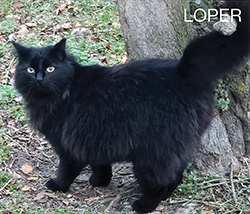
Today, John leaves behind Gray, the household’s cherished indoor-outdoor feline companion, alongside four distinct community cats who relied on John’s daily stewardship: Miss Kitty, Sylvestra, Mini, and Loper. These cats continue to receive the care, food, and vigilance that John championed throughout his life, serving as living reminders of his daily empathy. Furthermore, by formalizing his commitment to Alley Cat Allies within his estate plans, John ensured that his protective circle would expand far beyond his immediate neighborhood, stretching across the globe to protect countless other cats and kittens.
Supporting Context & Metrics: The Mechanics of Planned Giving and TNR
The Lifesaving Impact of Planned Giving
Philanthropy in animal welfare often relies on immediate, transactional donations—annual appeals, emergency medical funds, and holiday drives. While these contributions are essential to day-to-day operations, planned giving represents the bedrock of long-term organizational resilience.
Bequests and planned gifts allow individuals of ordinary means to make extraordinary, transformational contributions to causes they care about deeply. By naming an organization like Alley Cat Allies in a will or estate plan, donors leverage assets accumulated over a lifetime to fund future lifesaving initiatives, legal advocacy, educational campaigns, and large-scale rescue operations.
In John’s case, choosing planned giving reflects a sophisticated understanding of systemic animal advocacy. He recognized that while feeding local community cats solved immediate daily hunger, organizations like Alley Cat Allies tackle the root systemic challenges facing cats worldwide—from archaic municipal shelter policies to public education gaps regarding outdoor feline populations.
The Science and Humanity of Trap-Neve-Return (TNR)
At the core of modern community cat advocacy—and championed passionately by supporters like John and Deb—is the practice of Trap-Neve-Return (TNR). For decades, municipal responses to community cat populations relied heavily on catch-and-kill policies, which proved both ineffective and inhumane. When cats are removed from an area, a phenomenon known as the "vacuum effect" occurs: new cats quickly move in to take advantage of available resources (such as shelter and food), leading to a continuous cycle of overpopulation.
TNR breaks this cycle through a humane, science-based protocol:
- Trap: Community cats are humanely trapped using specialized box traps.
- Neuter/Spay: The cats are transported to licensed veterinarians where they are spayed or neutered, vaccinated against rabies, and typically eartipped (the universal sign of a sterilized and vaccinated community cat) for quick visual identification.
- Return: Once recovered from surgery, the cats are safely returned to their outdoor homes where they live out their lives naturally without adding to the population.
As Deb noted with deep gratitude, organizations like Alley Cat Allies are indispensable because they provide the research, public education, legal backing, and grassroots support necessary to implement TNR programs effectively across communities worldwide. TNR reduces shelter intake numbers, eliminates nuisance behaviors associated with unspayed cats (such as howling and spraying), and dramatically improves the health and welfare of outdoor felines.
Official Statements and Personal Reflections
The depth of John’s character is best captured through the words of the person who knew him best across 42 years of shared life, professional dedication, and animal rescue. In a heartfelt letter to Alley Cat Allies, Deb reflected on the tapestry of their marriage, John’s expansive heart, and the animals that wove their lives together.
"Interestingly enough, John thought for years that he was allergic to cats!" Deb shared, recalling the early days of their relationship before the feline invasion began. "Then 30 years ago, we had a stray show up and get attached to John. 25 years ago, another stray showed up. John, with his love of Warner Brothers cartoons, named her Puddy Cat… Pud lived with us for 16½ years."
Deb’s reflections paint a vivid portrait of a man whose initial skepticism melted entirely into profound adoration. She described him not only as a dedicated animal advocate and an adored educator who filled his social studies classroom with laughter and historical insight, but also as a "consummate extrovert" and a deeply affectionate "permissive cat daddy."
Voicing her enthusiastic endorsement of systemic animal welfare strategies, Deb emphasized the vital role that institutional advocacy plays in protecting vulnerable species:
"I am grateful that organizations like Alley Cat Allies exist," Deb stated, throwing her full support behind the lifesaving impact of Trap-Neve-Return and global feline protection initiatives.
Through her words, it is clear that John’s legacy is not merely financial; it is an emotional and philosophical inheritance passed down to everyone touched by his story.
Future Outlook: Sustaining the Movement for Generations to Come
As animal advocacy enters a new era defined by digital connectivity, grassroots mobilization, and evolving municipal legislation, the need for steadfast supporters has never been more urgent. Millions of cats and kittens worldwide still face systemic threats, ranging from shelter overcrowding and outdated animal control ordinances to environmental hazards and a lack of public understanding regarding outdoor feline care.
John’s story serves as a powerful call to action for animal lovers everywhere. It demonstrates that you do not need to be a billionaire philanthropist to leave a permanent, world-changing mark on the animal kingdom. By integrating charitable legacy planning into personal financial arrangements, individuals can ensure that their core values outlive them, continuing to feed, protect, and advocate for the voiceless long after they are gone.
Alley Cat Allies continues to spearhead this global movement, transforming public policy, providing emergency disaster relief for animals, supporting local shelters, and championing TNR as the gold standard of community cat care. However, the continuation of these vital programs depends entirely on the foresight, generosity, and compassion of people like John and Deb.
How You Can Make a Difference
If John’s journey inspires you to consider your own legacy and the kind of world you want to leave behind for animals, there are immediate ways to get involved:
- Make a Direct Gift Today: Support ongoing rescue, advocacy, and education efforts by visiting the Alley Cat Allies donation portal at alleycat.org/Donate.
- Explore Planned Giving: To maximize your long-term lifesaving impact through bequests, trusts, or other planned gifts, visit alleycat.org/PlannedGiving or scan the informational QR code provided in the organization’s community newsletters.
- Organizational Identifiers: For formal estate planning and matching gift programs, Alley Cat Allies operates under CFC #10964 and EIN #52-1742079.
- Speak with a Specialist: For personalized guidance on how to structure your planned gift, you can reach out directly to dedicated donor services by calling 866-309-6207.
Just as a stray cat once chose John, and just as John chose to spend decades feeding neighborhood cats and planning for their global protection, every individual has the power to choose compassion. By following in John’s footsteps, supporters ensure that the future for cats and kittens worldwide is brighter, safer, and filled with the same boundless love that defined John’s extraordinary life.