
August 11, 2026
Featured in the Alley Cat Action® 2026 Summer Newsletter
Executive Overview
The landscape of animal advocacy in the United States is undergoing a profound and much-needed transformation. Across diverse municipalities—from the bustling suburbs of the Midwest to the industrial valleys of Pennsylvania and the vast plains of Montana—local governments are increasingly moving away from outdated, punitive animal control measures and embracing progressive, compassionate, and scientifically proven policies for outdoor and community cats.
Recent legislative victories highlight this nationwide shift. In Lakewood, Ohio, municipal leaders have enacted a robust Trap-Nevater-Return (TNR) ordinance, building upon the remarkable success of a local pilot program. Meanwhile, in Leetsdale, Pennsylvania, proactive municipal leadership collaborated directly with animal welfare advocates to strip away a hazardous "at-large" restriction that previously jeopardized the safety of outdoor felines. Perhaps most dramatically, in Hardin, Montana, swift and decisive public mobilization halted a controversial proposal to introduce a carbon dioxide ($textCO_2$) gas chamber for local cats, proving that organized advocacy remains an indomitable force against inhumane treatment.
At the center of these monumental shifts is Alley Cat Allies, an organization that has continually provided expert guidance, legal insight, and grassroots mobilization to shape legislation that protects both cats and the communities they inhabit. This report provides an in-depth examination of these three distinct municipal battles, exploring the policy frameworks, the challenges overcome, and the broader implications for the future of feline welfare in America.
Detailed Chronology of Municipal Policy Shifts
1. Lakewood, Ohio: Institutionalizing Success Through TNR Legislation
For years, Lakewood, Ohio, operated a successful pilot Trap-Nevater-Return (TNR) program. While the pilot demonstrated the undeniable efficacy of TNR in stabilizing outdoor cat populations, reducing nuisance behaviors, and improving public health, the city’s legal framework lacked the formal infrastructure to sustain and protect these efforts permanently.
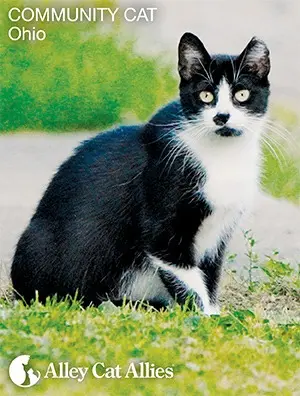
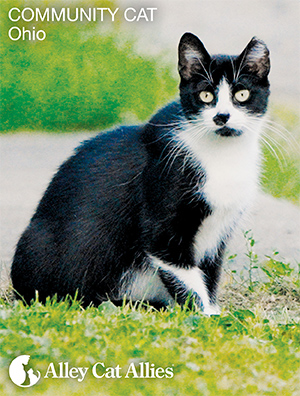
Recognizing this vulnerability, city officials and advocates sought to codify these protections into permanent law. This past spring, Lakewood achieved this milestone by officially passing a comprehensive ordinance designed to protect TNR programs, community cats, and—crucially—the compassionate individuals who care for them.
Alley Cat Allies played a pivotal consultative role in this legislative process, providing the city with specialized expertise, policy frameworks, and logistical support. The newly enacted ordinance does far more than simply permit TNR; it establishes vital legal clarity by explicitly distinguishing community cat caregivers from legal owners. Under the old paradigm, individuals who fed and monitored outdoor cats were frequently subjected to municipal liabilities, misclassified as owners under restrictive animal control codes. The new Lakewood ordinance rectifies this by defining caregivers for what they truly are: dedicated, compassionate good Samaritans whose work benefits the entire municipality.

2. Leetsdale, Pennsylvania: Eliminating the "At-Large" Trap
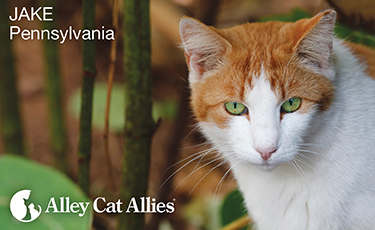
In Leetsdale, Pennsylvania, the impetus for reform came from the highest level of municipal government. Recognizing a growing disconnect between outdated local ordinances and modern animal welfare standards, the Mayor of Leetsdale reached out directly to Alley Cat Allies to seek expert guidance on how the borough should approach its outdoor cat population.
Prior to this intervention, Leetsdale’s municipal code classified cats under a broad and dangerous "at-large" definition. Under this language, any cat found roaming outdoors—regardless of whether they were feral, stray, or managed community cats—was technically in violation of the law. This left outdoor felines dangerously vulnerable to being trapped and impounded by animal control simply for existing in their natural outdoor environments. Impoundment in traditional facilities often spells a grim fate for un sociaiszed or community cats, whose behavioral traits make them poor candidates for traditional adoption.
Armed with data, legal arguments, and a clear roadmap for humane reform, Alley Cat Allies laid out the urgent necessity for code amendments. Recognizing the validity of these arguments, the Leetsdale administration took swift legislative action. By June, the borough officially amended its ordinance, carving out a vital exemption for cats from the archaic at-large provisions. This single stroke of the pen removed a profound and continuous threat hanging over Leetsdale’s outdoor cat population.
3. Hardin, Montana: Defeating the $textCO_2$ Gas Chamber Proposal
The most contentious and alarming battleground during this legislative cycle emerged in Hardin, Montana. The conflict began when animal advocates uncovered a disturbing audio recording of a Hardin City Council discussion. During the session, council members seriously evaluated a proposal to procure and operate a carbon dioxide ($textCO_2$) gas chamber specifically intended to eradicate community cats.
The reliance on $textCO_2$ gas chambers for animal population control is widely condemned by major veterinary and animal welfare organizations as inhumane, psychologically distressing for the animals, and entirely ineffective at managing long-term population dynamics. Upon uncovering the discussions, Alley Cat Allies adopted an uncompromised stance: silence was not an option.
Alley Cat Allies immediately contacted the Hardin City Council, issuing a firm demand for the immediate cessation of any plans to slaughter cats. Recognizing that institutional inertia can sometimes blind municipal bodies to the broader will of the public, the organization also launched an expansive grassroots mobilization campaign. Montana residents were called upon to raise their collective voices, flood city council communications, and make their opposition unmistakably clear.
The public response was overwhelming. Confronted with widespread public outcry, undeniable ethical arguments, and the threat of legal scrutiny regarding the legality of such cruel measures, the Hardin City Council capitulated. The council officially removed the $textCO_2$ gas scheme from consideration, preserving the lives of countless cats and affirming that Hardin residents expect humane, modern solutions to community animal management.
Supporting Context and Metrics: The Science of Community Cat Management
To fully comprehend the significance of these municipal decisions, one must examine the broader socio-ecological framework surrounding community cats—often referred to as feral or stray cats (Felis catus). For decades, municipal animal control policies across the United States defaulted to a catch-and-kill model. This strategy, predicated on the assumption that removing outdoor cats would reduce their numbers, failed consistently. Ecologists refer to this phenomenon as the "vacuum effect": when cats are removed from an area, surviving or migrating cats quickly move in to exploit available resources, resulting in a rapid rebound of the local population.
The Trap-Neuter-Return (TNR) Paradigm
Trap-Neuter-Return stands as the only proven, humane, and cost-effective method for managing community cat populations. Under a TNR protocol:
- Trapped: Cats are humanely captured using box traps.
- Neutered: Veterinarians spay or neuter the cats, preventing future litters.
- Vaccinated: Cats receive vaccinations against rabies and other diseases.
- Returned: Felines are returned to their original outdoor homes, where they live out their natural lifespans without contributing to population growth.
Statistically, municipalities that transition to TNR see a dramatic stabilization and eventual reduction in outdoor cat populations over time. Furthermore, TNR eliminates many nuisance behaviors associated with unspayed and unneutered cats, such as yowling, fighting, and territorial spraying.
The Legal Evolution
The victories in Lakewood and Leetsdale underscore a vital evolution in municipal law: the legal separation of "ownership" from "caregiving." Traditional animal control laws were drafted with indoor companion animals in mind. Applying these domestic pet laws to outdoor community cats created an administrative and ethical quagmire. By explicitly recognizing caregivers as community benefactors rather than legal owners—as Lakewood has done—municipalities remove legal roadblocks that previously discouraged citizens from engaging in life-saving TNR work. Similarly, eliminating cats from "at-large" ordinances, as Leetsdale achieved, protects community cats from arbitrary seizure and municipal overreach.
Official Statements and Perspectives
The sweeping nature of these policy changes has drawn commentary from municipal leaders, legal experts, and animal advocates alike.
"When local governments are equipped with the right information and a clear understanding of humane science, they consistently choose compassion over cruelty. The actions taken in Lakewood, Leetsdale, and Hardin prove that municipal policy can evolve to protect our most vulnerable animal populations when communities stand united." — Spokesperson, Alley Cat Allies
The willingness of municipal officials to course-correct is particularly notable. In Leetsdale, the initiative taken by the Mayor’s office demonstrates that municipal leaders are increasingly recognizing the liabilities and ethical shortcomings of traditional animal control. By reaching out to specialized advocacy organizations rather than relying on regressive knee-jerk policies, Leetsdale established a model of collaborative governance.
In Hardin, the swift retreat from the $textCO_2$ chamber proposal highlights the power of transparent governance under public scrutiny. When local councils are forced to defend cruel, archaic methodologies in the bright light of public debate, the moral and logistical indefensibility of those methods quickly becomes apparent.
Future Outlook: The Path Forward for Humane Communities
While the victories in Lakewood, Ohio, Leetsdale, Pennsylvania, and Hardin, Montana, represent monumental milestones, they also serve as stepping stones toward a broader, nationwide transformation of animal welfare policy.
1. Scaling Legislative Protections
The success of Lakewood’s TNR ordinance provides a legislative blueprint that can be replicated in municipalities across the United States. Advocacy groups are already utilizing the Lakewood framework to lobby state legislatures and city councils for standardized TNR protections and caregiver immunities. The goal is the universal codification of TNR as the standard operating procedure for outdoor cat management.
2. Eliminating Regressive Ordinances
Leetsdale’s decision to remove cats from its at-large code highlights a crucial area for nationwide legal reform. Hundreds of municipalities still maintain outdated codes that criminalize the existence of outdoor cats or penalize Good Samaritans who feed them. A systematic audit and revision of municipal codes across the country remains an urgent priority for animal welfare legal experts.
3. Vigilance Against Cruelty
The Hardin, Montana, incident serves as a stark reminder that regressive, inhumane ideas—such as gas chambers or mass culls—can still surface in local government discussions. It demonstrates that continuous public vigilance, rapid response networks, and grassroots mobilization are essential defenses against the resurgence of cruel animal control practices.
Conclusion
The events in Lakewood, Leetsdale, and Hardin encapsulate the dual nature of modern animal advocacy: proactive institution-building on one hand, and fierce defense against cruelty on the other. Through the collaborative efforts of organizations like Alley Cat Allies, dedicated community caregivers, and enlightened municipal leaders, the paradigm of animal welfare in America is shifting definitively toward compassion, science, and respect for all living things. As these policies take root, they pave the way for a future where communities and outdoor cats can coexist harmoniously and humanely.