
Executive Overview
The narrative of "Bagel," a six-month-old canine surrendered to a municipal animal shelter in California, highlights the intersection of pet ownership, shelter overcrowding, human grief, and digital rescue networks. Surrendered due to financial distress after just four months in a domestic home, Bagel exhibited severe behavioral shutdown—a common physiological and psychological response to shelter environments.
Her trajectory shifted when animal welfare advocate Rocky Kanaka intervened. By funding her medical and adoption fees and featuring her plight across digital platforms, Kanaka initiated a sequence of events that culminated in a 3,000-mile cross-country adoption. Danielle, a New York resident grieving the sudden loss of her 12-year-old dog, recognized a shared vulnerability in Bagel’s online profile.
This case study examines the operational, financial, and behavioral dynamics governing modern animal rescue operations. It details the journey from intake stress to cross-country transit and home integration, while examining the systemic issues surrounding economic surrenders and shelter trauma.
Detailed Chronology of the Rescue Operation
[Month 0-4]          [Month 6: Intake]      [Assigned Care]        [Digital Outreach]     [Transit & Adoption]
Domestic Care  --->  Economic Surrender ---> Behavioral Evaluation ---> Remote Adoption App ---> Cross-Country Flight to NY
(Private Household)  (CA Municipal Shelter)  (De-escalation Work)   (Danielle in NY)       (Successful Integration)
Phase 1: Intake and Initial Behavioral Assessment
Bagel entered the California shelter system following a voluntary relinquishment driven by acute financial hardship. Within 48 hours of intake, shelter staff recorded severe anxiety protocols:
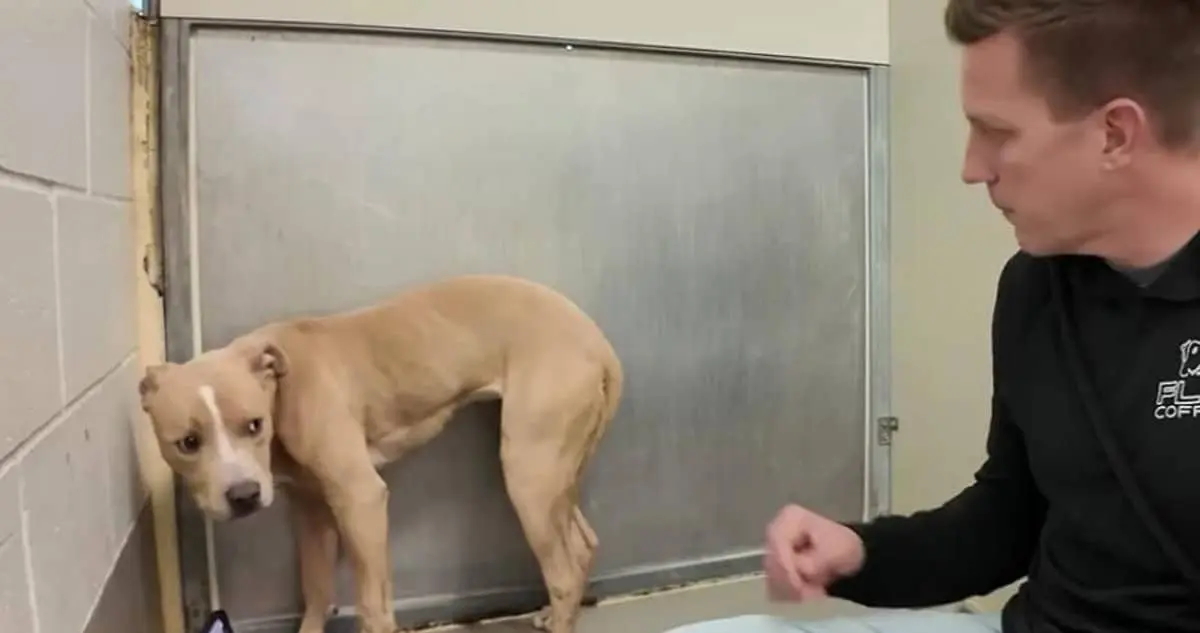
- Postural Withdrawal: The puppy retreated to the rear perimeter of the enclosure, pressing her body against the concrete wall.
- Avoidance Behaviors: She displayed extreme hesitation toward human touch and refused food offerings.
- Sensory Overload: Heightened reactivity to acoustic stimuli common in high-density kennel facilities.
Despite her acute fear response, her surrendering family provided crucial documentation detailing her baseline demeanor prior to shelter placement:
| Parameter | Observed Home Baseline | Shelter Intake Presentation |
|---|---|---|
| Socialization (Adults) | Affectionate, seeks physical contact | Fearful, avoids contact, retreats to corner |
| Socialization (Strangers/Kids) | Cautious, elevated anxiety | Severe flight response, hyper-vigilance |
| Conspecific Interaction | Positive with female canines | Untested in shelter environment |
| Basic Command Response | Responsive to verbal cue ("Sit") | Non-responsive under acute stress |
These owner-submitted records proved essential. They signaled to evaluators that Bagel’s shutdown was environmental rather than indicative of an unmanageable behavioral issue.
Phase 2: Targeted De-escalation and Financial Sponsorship
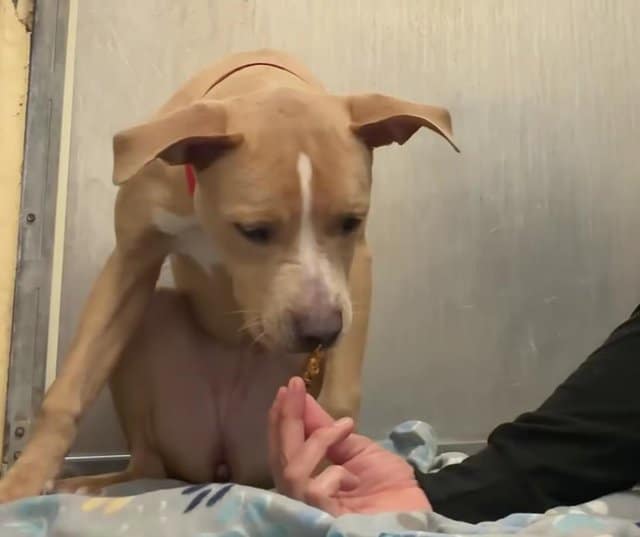
Recognizing that rapid physical contact would exacerbate the dog’s trauma, animal rescuer Rocky Kanaka initiated a low-stress interaction protocol. This strategy focused on passive engagement, scent identification, and positive reinforcement adjustments.
       [Initial Approach]
              │
              ▼
   [High-Value Large Treat] ──(Rejected)──► [Transition to Micro-Treats]
                                                    │
                                                    ▼
   [Direct Physical Approach] ──(Deterred)──► [Passive Side-Seating]
                                                    │
                                                    ▼
                                          [Verbal Reassurance &]
[Name Cue Recognition]- Environmental Adjustment: Kanaka assumed a seated position adjacent to Bagel, minimizing vertical dominance and avoiding direct eye contact.
- Treat Sizing Adaptation: Initial offerings of standard-sized treats were rejected. Kanaka transitioned to micro-treats, lowering the chewing threshold required for a fearful animal to ingest food.
- Acoustic Modulation: When peripheral noise triggered startle responses, handlers decreased verbal cues and allowed periods of silence for decompression.
- Identity Retention: Although handlers noted a distinct butterfly-shaped white marking on her chest, they maintained her established name ("Bagel") to leverage existing auditory familiarity.
To remove barriers to placement, Kanaka provided full financial sponsorship, covering Bagel’s adoption fee and pre-adoption spay surgery.
Phase 3: Cross-Country Matching and Inter-Agency Logistics
The digital publication of Bagel’s evaluation reached Danielle, a New York resident whose senior dog, Woodley, had recently died at age 12. Danielle was not actively searching through local shelter registries, but Bagel’s viral footage prompted an immediate application.
Executing an interstate rescue over 3,000 miles required coordination between municipal caregivers, private sponsors, and transport personnel:
- Transport Coordination: Led by shelter transport officer Phil, health clearances and USDA-mandated documentation were secured.
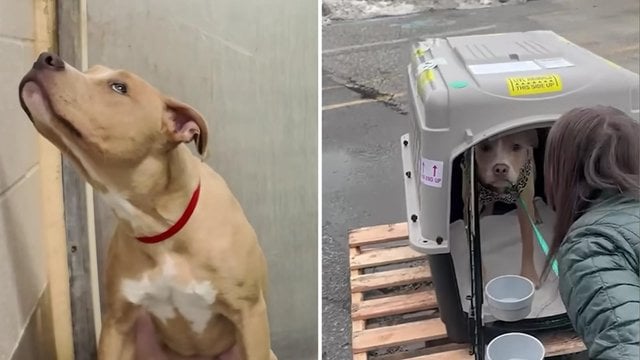
- Pre-Flight Conditioning: In the days preceding transit, shelter staff reported early behavioral recovery: Bagel began executing the "sit" command, accepting treats from handlers, and displaying tail-wagging behaviors.
- Flight Logistics: The itinerary required an early-morning transfer to a California airport, followed by a direct transcontinental flight to New York under standard live-animal transport protocols.
Phase 4: Arrival and Integration Dynamics
Upon arrival in New York, Bagel’s behavioral presentation diverged sharply from her initial shelter intake:
[Airport Hand-off] ──► Immediate tail-wagging, direct contact, treat acceptance
        │
        ▼
[Vehicle Transit]  ──► Calming behavior; slept on back seat beside adopter
        │
        ▼
[Home Arrival]     ──► Active exploration, co-sleeping patterns, snow play
        │
        ▼
[Multi-Species]    ──► Managed, curious, non-aggressive cat introduction
Within days of entering her new environment, Bagel displayed the playful baseline noted by her original owners. She successfully integrated into a household featuring multi-species interactions (a resident cat) and novel environmental conditions, such as outdoor snow.
Supporting Context & Industry Metrics
The Economics of Relinquishment
Bagel’s surrender illustrates broader systemic trends within the animal welfare sector. Financial strain remains a primary driver of pet surrenders across North American shelters.
Relinquishment Drivers in Urban Shelters:
[ Housing/Rental Restrictions ] █ █ █ █ █ █ █ █ █ 38%
[ Veterinary & Care Costs     ] █ █ █ █ █ █ █ 29%
[ Personal/Financial Crisis   ] █ █ █ █ █ 18%
[ Behavioral/Other Issues     ] █ █ █ █ 15%
Data from shelter organizations indicates that economic surrenders frequently involve well-socialized animals whose owners have exhausted their financial options. As demonstrated in Bagel’s case, owner-provided background notes significantly improve a shelter’s ability to rehome an animal appropriately.
Understanding the "Kennel Stress Phenotype"
Animal behaviorists recognize that the kennel environment can induce acute stress in canines, often masking their true temperament.
                                  ┌──► Hyper-Aggression / Reactivity
                                  │
[Shelter Environment Overload] ───┼──► Stereotypic Behaviors (Pacing, Spinning)
                                  │
└──► Psychological Shutdown / Inhibition (Bagel)- Inhibition (Shutdown): The animal suppresses natural behaviors, retreats to corners, refuses food, and avoids interaction. This profile is frequently misread as severe aggression or permanent neurological trauma.
- Reconstitution: Once removed from high-decibel, high-density housing, dogs experiencing environmental shutdown often recover their baseline demeanor rapidly, as observed during Bagel’s airport hand-off.
Key Voices and Case Insights
The Rescuer’s Assessment
Advocates note that financial surrenders demand empathy rather than judgment:
"Financial hardship can change an individual’s capacity to provide care almost overnight. The notes provided by Bagel’s original family weren’t just helpful—they provided the roadmap needed to navigate her fear and ultimately save her life."
— Rocky Kanaka, Animal Welfare Advocate
The Adopter’s Perspective
For adopters navigating pet loss, targeted digital rescue videos offer a direct visual connection that traditional adoption listings may lack:

"I wasn’t actively looking to fill the void left by Woodley, but seeing Bagel’s face made the connection immediate. Adopting her wasn’t about replacing the dog I lost; it was about extending care to another animal that desperately needed a safe place to land."
— Danielle, Adopter
Future Outlook & Industry Implications
Bagel’s case highlights evolving trends in pet adoption and shelter management across North America:
                  FUTURE DIRECTION OF RESCUE OPERATIONS
                                    │
    ┌───────────────────────────────┼───────────────────────────────┐
    ▼                               ▼                               ▼
[Intake Prevention]       [Digital Storytelling]        [Interstate Networks]
Subsidized care & food    Social media driving          Long-distance transport
banks to keep pets home targeted remote adoptions balancing regional capacity- Targeted Subsidies: Shelters are increasingly investing in intake-prevention programs—such as temporary pet food pantries and subsidized veterinary clinics—to help families retain pets during financial hardship.
- Digital-Driven Placement: The role of video storytelling continues to expand regional adoption pools into nationwide networks, connecting shelter animals in overcrowded jurisdictions with adopters in other states.
- Behavioral Intake Documentation: Standardizing owner-surrender profiles helps shelters differentiate between temporary environmental trauma and chronic behavioral needs, ensuring more accurate assessments and faster placements.
Bagel’s successful transition from a California shelter corner to a permanent home in New York showcases how targeted intervention, transparent documentation, and digital advocacy can transform outcomes for vulnerable shelter animals.