For millions of dog owners worldwide, privacy within the home is a distant memory. From trailing caregivers from room to room to standing sentinel outside closed bathroom doors, domestic dogs frequently display persistent proximity-seeking behavior—a phenomenon informally dubbed the "velcro dog" effect. While often dismissed as an endearing quirk, ethologists, veterinary behaviorists, and animal welfare scientists recognize this continuous shadow behavior as a complex manifestation of canine psychology, evolutionary adaptation, and environmental conditioning.
Proximity-seeking behavior operates across a broad spectrum ranging from healthy social bonding to acute psychological distress. At its core, the behavior is driven by a combination of evolutionary domestication, operant conditioning, breed-specific genetic predispositions, and sensory curiosity. However, sudden shifts in spatial attachment can also serve as primary clinical indicators of medical pain, sensory decline, or age-related neurological changes such as Canine Cognitive Dysfunction (CCD).
Understanding the root drivers behind a dog’s desire to maintain constant physical or visual contact requires evaluating environmental routines, emotional security, and behavioral indicators. By differentiating between benign companionship and pathological hyper-attachment, dog owners and veterinary professionals can establish balanced environments that foster canine confidence while preserving the human-animal bond.
Behavioral Dynamics and Evolutionary Development
The drive of Canis lupus familiaris to stay in close physical proximity to human caregivers is rooted in thousands of years of evolutionary history, reinforced by everyday learning patterns.
1. Evolutionary Domestication and Biological Attachment
Over millennia of co-evolution, domestic dogs underwent severe selection pressures favoring individuals capable of reading human social cues and forming intense intra-species bonds. Neurobiological studies demonstrate that mutual gaze and physical proximity between humans and dogs trigger a reciprocal release of oxytocin—the hormone responsible for maternal bonding and social trust—in both species. Unlike their wild ancestors, domestic dogs view human caregivers as primary security bases, akin to human infants seeking maternal proximity for emotional stabilization.
2. Operant Conditioning and Reinforcement History
In domestic settings, proximity-seeking is often unintentionally shaped through operant conditioning. Dogs are keen observers of human behavior. If following a owner into the kitchen historically yields a dropped food scrap, an affectionate verbal acknowledgment, or a gentle touch, the behavior is positively reinforced. Over time, the human becomes a walking variable-ratio reinforcement schedule: the dog remains close because proximity yields unpredictable yet high-value rewards.
3. Breed Genetics and Working Instincts
Selective breeding has amplified proximity-seeking traits in specific canine lineages:
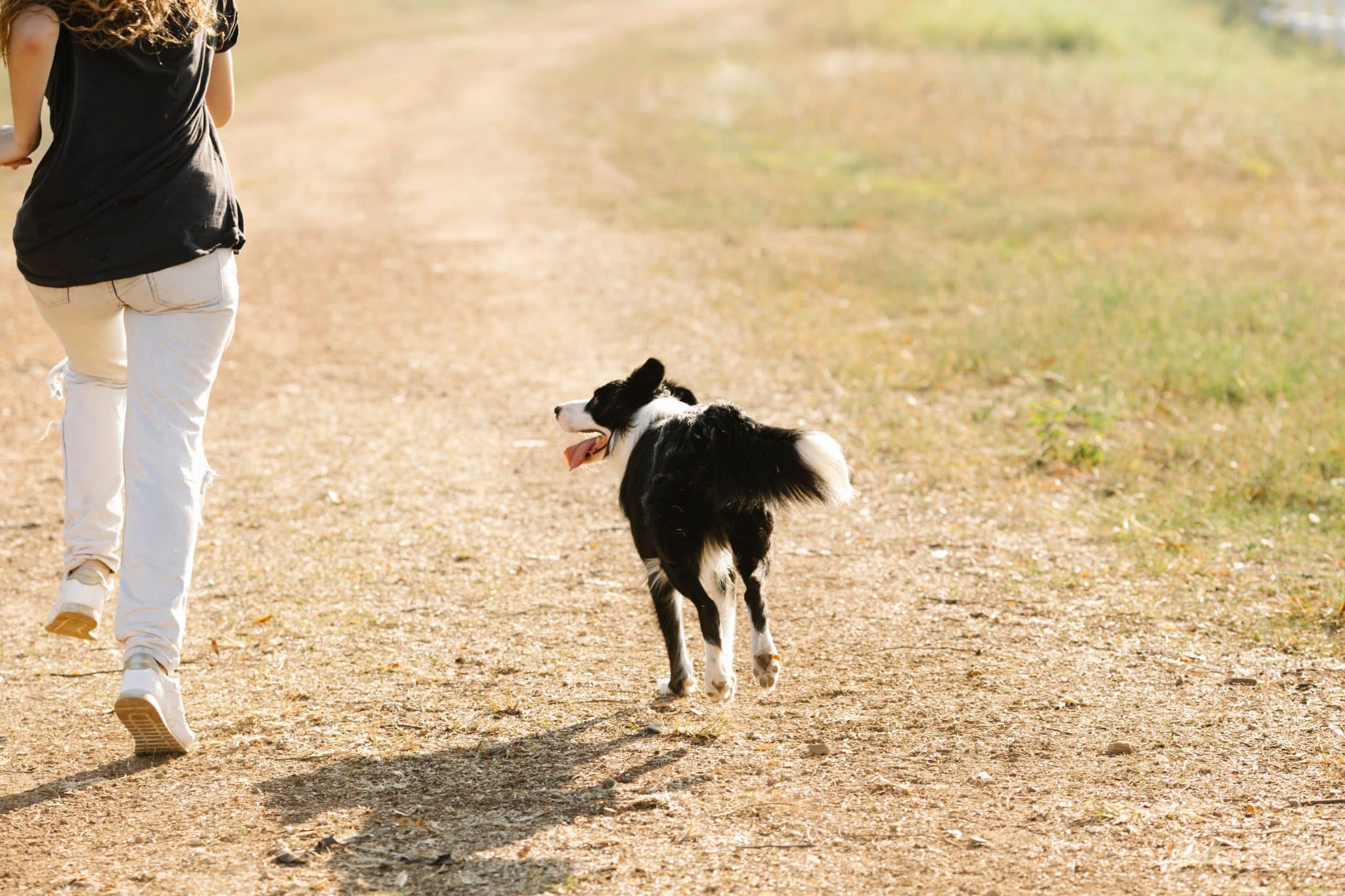
Herding Breeds (e.g., Border Collies, Australian Shepherds): Bred to monitor stock and respond to subtle handler cues, these dogs naturally shadow human movements to anticipate directions or maintain order within their "flock."
Gundogs and Retrievers (e.g., Labrador Retrievers, Golden Retrievers): Selected for cooperative hunting and constant handler focus, retaining an innate drive to remain connected to human activity.
Companion Breeds (e.g., Toy Poodles, French Bulldogs, Cavalier King Charles Spaniels): Explicitly bred for centuries to provide direct physical warmth and constant companionship, displaying minimal baseline independence.
4. Sensory Curiosity and Pattern Recognition
Dogs process their environments through hyper-acute olfactory, auditory, and visual systems. A human standing up or moving toward a door represents a dynamic shift in sensory environment. Because dogs thrive on predictable schedules, they closely monitor human movement patterns to anticipate key events—such as leashing for walks, meal preparation, or household departures.
Diagnostic Context, Metrics, and Clinical Differentiation
To properly evaluate proximity-seeking behavior, veterinary behaviorists utilize diagnostic criteria to distinguish between healthy attachment, environmental boredom, and clinical pathology.
+-----------------------------------------------------------------------------------+
|               DIAGNOSTIC MATRIX: ATTACHMENT VS. SEPARATION DISTRESS               |
+-----------------------------------------------------------------------------------+
| Behavioral Marker      | Secure Attachment / Companion | Hyper-Attachment / Anxiety|
+------------------------+-------------------------------+--------------------------+
| Posture & Body Language| Relaxed, loose muscle tone     | Tense, hyper-vigilant    |
| Separation Response    | Settles independently         | Vocalizing, pacing, drool|
| Door Boundaries        | Waits patiently or wanders away| Scratches, panics        |
| Autonomy in Home       | Rests comfortably in other room| Must maintain visual lock|
+------------------------+-------------------------------+--------------------------+
Healthy Attachment vs. Clinical Separation Distress
A key challenge for pet owners is identifying when a "shadow dog" is experiencing underlying anxiety.
Secure / Benign Shadowing: The dog accompanies the owner, displays relaxed body language (loose tail, soft eyes), and can comfortably disengage to sleep, chew a toy, or rest in an adjacent room when the owner becomes stationary.
Hyper-Attachment / Separation-Related Distress: The dog exhibits hyper-vigilance, moving instantly upon the subtle twitch of an owner’s muscle. If locked out of a room, the animal exhibits physiological stress responses, including vocalization, tachypnea (rapid breathing), lip-licking, pacing, or destructive scratching at boundaries.
Metrics of Canine Ennui (Boredom)
When dogs lack sufficient physical exercise and mental stimulation, shadowing becomes an default coping strategy. An under-stimulated dog follows its owner not out of emotional distress, but because the human provides the only source of environmental change in an otherwise static setting.
Geriatric Shifts: Cognitive Decline and Physical Vulnerability
In senior dogs, a sudden onset of shadow behavior often points to underlying medical issues:
Canine Cognitive Dysfunction (CCD): Analogous to human Alzheimer’s disease, CCD causes spatial disorientation, altered sleep-wake cycles, and heightened anxiety. Affected dogs frequently fixate on their primary caregiver as their sole stabilizing spatial landmark.
Sensory Deficits: Progressive vision loss (e.g., cataracts, retinal degeneration) or hearing impairment reduces a dog’s environmental awareness, causing them to rely physically on their owner for navigational confidence.
Somatic Pain: Musculoskeletal discomfort from osteoarthritis or visceral pain can make dogs feel vulnerable, driving them to seek proximity for physical safety.
Official Statements and Veterinary Expert Insights
Leading experts in veterinary behavior emphasize a balanced approach to managing proximity-seeking tendencies, cautioning against pathologizing normal canine sociability while advocating for early intervention when distress is evident.
Dr. Karen Overall, MA, VMD, PhD, DACVB (Diplomate of the American College of Veterinary Behaviorists): "Dogs are deeply social, obligately group-living animals. Wanting to be near members of their human family is not abnormal; in fact, it is the evolutionary default. The critical boundary we must observe is whether the dog retains the psychological resilience to settle comfortably when access to the human is temporarily restricted. Attachment becomes a clinical concern only when independence triggers panic."
American Veterinary Society of Animal Behavior (AVSAB) Consensus: "Caregivers should avoid punishment-based methods when addressing excessive clinginess. Pushing a dog away, locking them out abruptly, or using punitive tools increases emotional instability and elevates anxiety. Effective intervention relies on positive reinforcement of independent behaviors, environmental management, and gradual desensitization to physical distance."
Strategic Protocol and Future Outlook: Cultivating Canine Independence
Addressing persistent shadowing requires a multi-pronged approach focused on strengthening confidence, enriching the daily environment, and maintaining clear, predictable routines.
+-----------------------------------------------------------------------------------+
|                     STRATEGIC CLINICAL PROTOCOL FOR INDEPENDENCE                  |
+-----------------------------------------------------------------------------------+
| STEP 1: Rule Out Medical Drivers (Veterinary exam for pain/sensory/CCD)            |
| STEP 2: Establish Passive Enrichment (Lick mats, long-lasting chews, snuffle mats)|
| STEP 3: Implement Systematic Place Training (Reward calm relaxation on a bed)     |
| STEP 4: Desensitize Movement Cues (Stand up/walk around without rewarding dog)    |
| STEP 5: Build Gradual Spatial Distance (Use baby gates with high-value distractions)|
+-----------------------------------------------------------------------------------+
1. Medical Evaluation and Baseline Health Screening
Before implementing behavioral interventions, any sudden onset of clinginess must be evaluated by a licensed veterinarian. Diagnostics should assess joint mobility, ocular health, auditory responsiveness, and neurological status to rule out underlying pain or cognitive pathology.
2. Systematic "Place" and Mat Training
Teaching a reliable "place" cue directs the dog to target a specific mat or dog bed located at a distance from the owner’s immediate workspace.
Begin by rewarding the dog for stepping onto the mat.
Gradually increase the duration of the stay, feeding treats directly on the bed to build positive associations with the location.
Transition to rewarding calm down-stays while the owner moves around the room, rewarding independence rather than proximity.
3. Decoupling Departure Cues from Excitement
Dogs track movement patterns because human actions reliably predict outcomes (e.g., standing up = going to the kitchen = potential food drop). To reduce hyper-vigilance:
Periodically stand up, walk across the room, and sit back down without interacting with the dog.
Pick up keys, touch door handles, or open cabinets without initiating walks or feeding sessions.
Desensitizing these movement triggers reduces the dog’s felt need to monitor every step.
4. Implementation of Independent Enrichment
Redirect the dog’s mental energy toward autonomous activities that do not require human participation:
Olfactory Engagement: Utilize snuffle mats, scatter-feeding in the yard, or hidden treat searches to engage the dog’s natural foraging instincts.
Work-to-Eat Toys: Provide stuffed rubber toys (e.g., frozen Kongs) or puzzle feeders when the owner is seated at a desk or moving between rooms, pairing human distance with high-value solitary rewards.
5. Fostering Healthy Coexistence
Having a loyal canine companion who follows you through daily life is one of the most rewarding aspects of the human-dog bond. When rooted in affection, social connection, and shared routine, shadow behavior is a healthy reflection of canine domestication. By monitoring body language, fulfilling physical and mental needs, and encouraging independent relaxation, owners can ensure that their dog’s devotion remains a source of mutual comfort rather than emotional distress.