
Executive Overview
For millennia, the relentless expansion of human civilization has fundamentally reconfigured the face of the Earth. From sprawling metropolitan centers and intricate road networks to industrial-scale agricultural heartlands, humanity has forced wildlife to adapt to a radically altered physical landscape. Traditional conservation science has long operated on the core premise that these tangible, structural transformations are the primary drivers of wildlife displacement and behavioral change. However, a landmark study published in the prestigious journal Science shatters this long-held assumption, proving that animals are responding not only to the physical environments we build, but to the simple, pervasive fact that human beings are physically nearby.
By pioneering the use of high-resolution, anonymized cellphone geolocation data paired with extensive global positioning system (GPS) tracking records from thousands of individual animals, an interdisciplinary team of researchers from the University of California, Santa Barbara (UCSB), the Smithsonian’s National Zoo and Conservation Biology Institute, and Yale University has uncovered a hidden layer of human-wildlife dynamics. The findings reveal that wildlife responses to human populations are deeply nuanced, varying significantly depending on the species and the baseline level of landscape modification already present.
This research was made possible by the unprecedented disruptions of the COVID-19 pandemic—a period global scientists refer to as the "anthropause." When strict lockdowns abruptly altered human mobility patterns worldwide, researchers seized a generational opportunity to untangle the effects of physical human presence from permanent habitat destruction. The resulting insights offer a vital recalibration for global conservation strategies, suggesting that protecting biodiversity requires much more than merely setting aside tracts of undeveloped land; it demands a sophisticated understanding of when and where humanity needs to give wildlife literal breathing room.
Detailed Chronology: Unraveling the "Anthropause" Experiment
The Genesis of a Global Collaboration
The seeds of this discovery were planted during the early months of the COVID-19 pandemic in 2020. As global societies ground to a halt, shuttering businesses, restricting travel, and keeping billions of people indoors, ecologists recognized that a massive, unintended global experiment was unfolding. This unique window of disruption gave rise to the COVID-19 Bio-Logging Initiative, an ambitious international collaboration involving over 600 partners.
The initiative’s primary goal was to document how wildlife across the globe responded when human activity patterns shifted overnight. Earlier phases of this massive endeavor tracked widespread behavioral shifts among terrestrial mammals, documented major alterations in marine shipping traffic, and underscored the urgent need to directly measure human movement patterns in what geologists and ecologists term the Anthropocene—the geological epoch defined by humanity’s profound impact on Earth’s ecosystems. Ultimately, the broader collaboration amassed an astonishing 1 billion location records from approximately 13,000 animals worldwide.
Bridging the Data Gap
To focus specifically on the continental United States, a dedicated sub-team from UCSB, the Smithsonian, and Yale set out to analyze weekly GPS records from 4,581 individual mammals and birds across matching periods in 2019 and 2020. While tracking animal movement via GPS telemetry is a well-established scientific methodology, quantifying exact human presence in real-time presented a formidable historical roadblock.
Traditionally, conservationists and wildlife biologists have had to rely on indirect proxies to measure human impact. Metrics such as housing density, urban development indices, agricultural land coverage, or blanket lockdown restrictions have served as stand-ins for human activity. While these variables offer broad clues, they fail to capture the dynamic, fluid nature of human movement. People commute, recreate, travel, and gather in ways that static land-use maps cannot convey.
To overcome this persistent limitation, the research team secured access to an unprecedented data source: anonymized, neighborhood-level cellphone geolocation data. Made available to select academic researchers during the height of the pandemic to study the public health impacts of shutdowns, these proprietary datasets—normally guarded closely by private technology companies—provided a microscopic window into human mobility. According to the study authors, this marks the first time that granular mobile-device data has been successfully integrated with wildlife telemetry to examine the direct, localized behavioral impacts of human presence.
Supporting Context & Metrics: When Habitat Modification Meets Human Footprint
When the researchers crunched the numbers, comparing pre-pandemic baseline mobility in 2019 against the restricted movements of 2020, the results challenged foundational ecological theories. The analysis demonstrated that human impacts on wildlife cannot be accurately assessed by evaluating physical landscape modification alone. Rather, structural habitat alteration and active human presence operate as intertwined, compounding pressures.
The Statistical Reality of Human Disturbance
The scope of the study’s findings highlights how deeply intertwined human presence is with animal behavior:
- Dual Impact: Across all analyzed taxa, an overwhelming 57% of the species studied were significantly affected by the combined pressures of both human presence and physical landscape modification.
- Territorial and Niche Shifts: Active human presence was directly correlated with alterations in either the total territory occupied or the dimensional size of the environmental niche for 67% of mammal species and 68% of bird species.
- Habitat Contraction: Roughly 67% of mammal species and 41% of bird species responded to the joint pressure of humans and altered landscapes by actively contracting the amount of habitat they utilized.
Paradoxically, the data revealed that animal sensitivity to human presence was often most acute in environments with relatively low levels of structural development—such as national parks, rural fringes, and protected wilderness areas—when compared to heavily urbanized zones where wildlife has already undergone generations of forced habituation.
Species-Specific Behavioral Divergence
Crucially, the research emphasized that there is no universal behavioral template governing how wildlife reacts to humanity. Different species employ distinct evolutionary strategies, resulting in vastly divergent responses to the same human pressures.
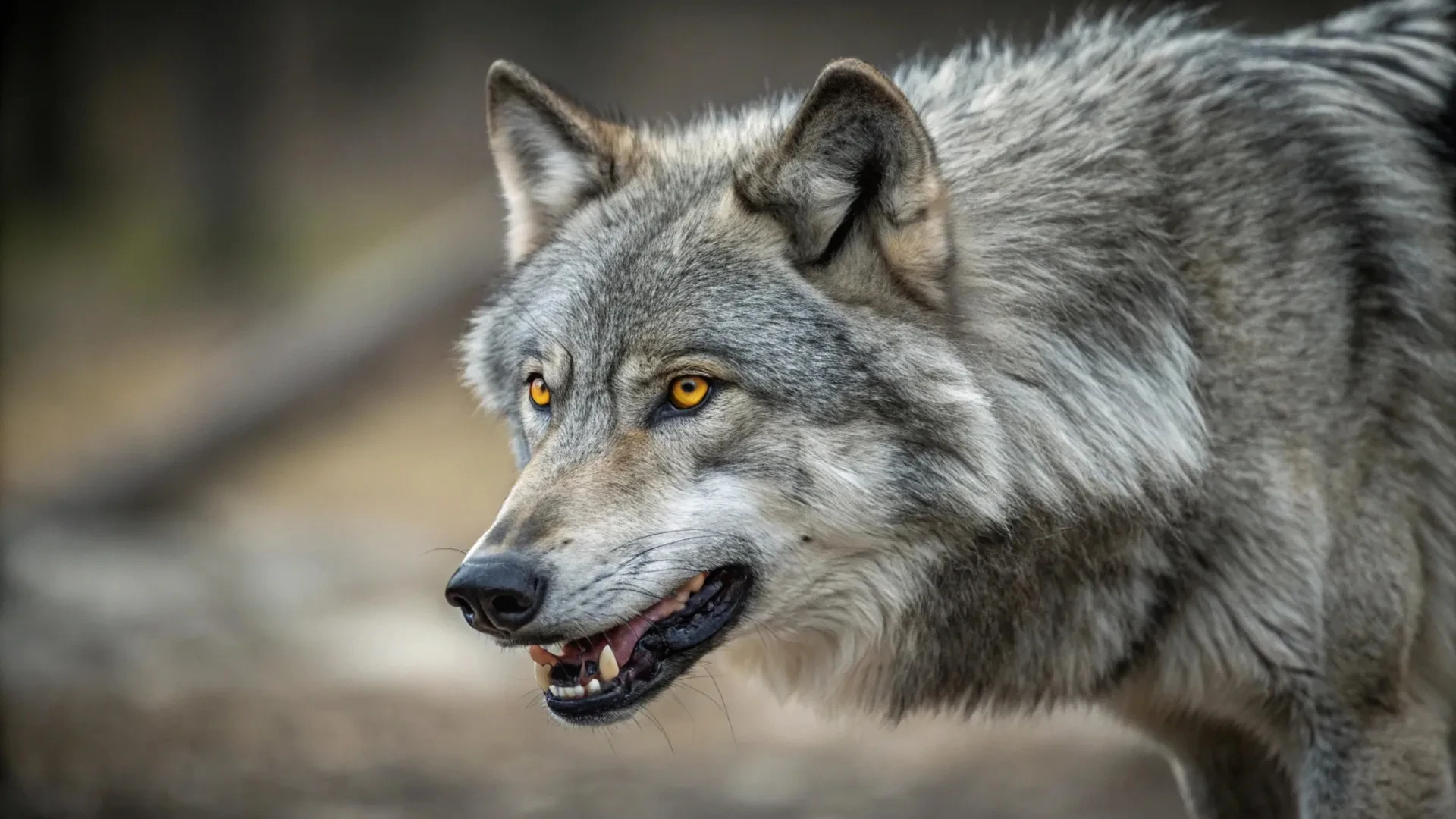
- The Gray Wolf (Canis lupus): Bucking the trend of most other mammals, wolves actually expanded their habitat use in response to human presence. Researchers hypothesize this behavior reflects the species’ long, fraught evolutionary history with humans—characterized by centuries of persecution and culling—prompting wolves to actively disperse, spread out, and carve out larger territories to maximize distance from human activity.
- White-Tailed Deer (Odocoileus virginianus): Demonstrating a complex, multi-layered reaction, white-tailed deer exhibited environmental niches that expanded as surrounding landscapes became increasingly modified by human development. However, counterintuitively, their ecological niches contracted as the sheer density of active human presence increased.
- Sandhill Cranes (Antigone canadensis): Displaying a mirror-image response to that of white-tailed deer, sandhill cranes adjusted their spatial usage and resource allocation in precisely the opposite direction, illustrating the intricate, species-specific complexities of wildlife coexistence.
Official Statements & Expert Analysis
The implications of this research extend far beyond academic journals, offering a vital framework for policymakers, wildlife managers, and conservationists tasked with balancing ecological preservation with human recreation and expansion.
"Humans have complicated effects on wildlife—from our physical presence to how we reshape habitats—but we can’t understand our full impact without information on both," stated co-lead author Ruth Oliver, an assistant professor in UCSB’s Bren School of Environmental Science & Management.
Oliver underscored that historical conservation frameworks were designed and implemented without access to real-time, high-resolution human mobility data. By leveraging modern technological tools, conservationists can finally move beyond crude estimates of human impact.
"The cell phone data we used was made available to researchers during the pandemic to help reveal the impacts of COVID-19 shutdowns," explained co-lead author Scott Yanco, a research ecologist at the Smithsonian’s National Zoo and Conservation Biology Institute. "Typically, private companies hold onto these, which made this a rare opportunity for us to quantify how human presence impacts wildlife, and to demonstrate that there is more to consider than just land modification to create robust conservation plans."
The necessity of tailored, species-centric conservation policies was a central theme emphasized by the research team. As Oliver noted:
"These findings highlight the critical importance of species-based conservation. Every species has different habitat requirements, has its own particular behavioral tendencies and faces unique threats. Effective conservation requires that we understand the particular challenges that each species faces."
Despite the sobering realization that human presence exerts a profound, invisible pressure on global fauna, the researchers maintain an optimistic outlook regarding the future of human-wildlife coexistence.
"Our results give me some optimism that we can achieve wildlife-coexistence through more nuanced policies that more smartly consider where and when we need to give animals space," Oliver concluded.
Future Outlook: Are Behavioral Adjustments Helping or Hurting?
As the scientific community digests the profound implications of this Science publication, Dr. Oliver and her colleagues are already looking toward the horizon. The completion of this study has unlocked an even more critical, pressing ecological question: Do these human-driven behavioral shifts ultimately enhance wildlife survival, or do they serve as distress signals of ecological strain?
While the current research definitively establishes that animals alter their spatial distribution, territorial ranges, and resource utilization in response to human presence, it stops short of measuring long-term demographic consequences.
"Our current study shows that animals change how they use space and resources, but we don’t know if these changes are helping them adapt or are a sign of stress," Oliver pointed out. "Our group is now digging into that question by asking whether animals that change their behavior in response to human pressures are at greater or lower risk of dying."
Answering this question will require fusing multi-year survival tracking data with the existing telemetry and cellphone mobility matrices. If researchers find that behavioral displacement correlates with elevated mortality rates, conservation policy will likely need to undergo a radical paradigm shift.
In practical terms, future conservation and land-use management will likely move past static zoning laws—such as permanent wildlife corridors or year-round park closures—toward dynamic, time-sensitive management strategies. By understanding precisely when human recreation peaks in specific ecological zones, wildlife agencies could implement temporary access restrictions during critical mating, nesting, or wintering periods, effectively dialing back human presence without shutting down public engagement entirely.
Ultimately, the research bridges a crucial knowledge gap in the Anthropocene. By acknowledging that wildlife reacts not only to the concrete and steel of our expanding cities, but to the invisible aura of human activity itself, humanity takes a vital step toward mastering the art of sharing a crowded planet.