
Executive Overview
In the heart of Kentucky’s rolling bluegrass country, a quiet agricultural revolution is taking root. Laura Freeman, a seventh-generation Kentucky landowner and a pioneer of the branded beef industry, is once again challenging conventional paradigms of livestock production. More than four decades after she launched, scaled, and ultimately sold Laura’s Lean Beef—a brand that put organic, health-conscious beef on mainstream American supermarket shelves—Freeman has returned with a venture tailored to the ecological and economic realities of the 21st century: Mt. Folly Enterprises.
Incorporated in 2017 and anchored in Winchester, Kentucky, Mt. Folly represents a holistic approach to sustainable agriculture. It merges a 1,500-acre organic farm, a dedicated pasture-raised Angus beef operation, and a farm-to-bottle spirits enterprise known as Regeneration Distilling Co. Yet, as Freeman steers this multifaceted business through its growth phase, she is operating against a formidable backdrop. The U.S. cattle industry is navigating a historic supply crunch, with the national beef cattle herd hitting a 56-year low of 27.9 million head in 2025. Concurrently, regional producers are grappling with persistent droughts, skyrocketing processing fees, and an ultra-competitive grocery landscape where shelf space is fiercely contested by a proliferation of niche and specialty brands.
Despite these macroeconomic headwinds, Mt. Folly is carving out a distinct space by solving a paradox that has long plagued the sustainable food movement: how to offer rigorously verified, regeneratively farmed beef at a price point accessible to everyday shoppers. Through strategic retail partnerships—most notably with Kroger—and an uncompromising commitment to grassland ecology, Mt. Folly is demonstrating that ecological stewardship and consumer affordability do not have to be mutually exclusive. This report examines the evolution of Mt. Folly, the mechanics of its regenerative model, the systemic challenges defining the modern cattle market, and the strategic roadmap Freeman is using to navigate an industry in transition.
Detailed Chronology: From Laura’s Lean to Mt. Folly
To understand the operational philosophy driving Mt. Folly, one must trace the arc of Laura Freeman’s career in the meat industry—a trajectory that mirrors the maturation of consumer consciousness regarding food origins, health, and environmental impact.
The Groundbreaking Era of Branded Beef
Long before "grass-fed," "organic," and "regenerative" became ubiquitous buzzwords on grocery store packaging, Freeman was laying the groundwork for alternative meat marketing. In 2008, she solidified her legacy within the American agricultural sector by successfully launching and eventually selling Laura’s Lean Beef. At the time, the concept of a branded, health-oriented beef product carrying a founder’s name and likeness was virtually unprecedented. Freeman effectively invented the modern branded beef segment, teaching consumers to look beyond anonymous cuts of red meat and consider fat content, animal welfare, and production methods.
However, the retail landscape of the late 1990s and 2000s bore little resemblance to today’s hyper-fragmented market. When Freeman built Laura’s Lean Beef, traditional media channels—print, regional television, and early digital marketing—served as the primary vehicles for consumer education and brand differentiation.
The Inception of Mt. Folly (2017)
Following her departure from her namesake brand, Freeman continued to analyze the trajectory of American agriculture. She recognized that the next evolution in sustainable farming would not merely focus on "being less bad" (the core ethos of early organic movements) but on actively repairing damaged ecosystems.
In 2017, this realization materialized as Mt. Folly Enterprises. Situated on a sprawling 1,500-acre plot of certified organic farmland in Winchester, Kentucky, the enterprise was designed as a closed-loop, diversified agricultural model. The land was dedicated to a dual purpose: cultivating organic row crops and raising purebred Angus cattle. Rather than separating crop farming from livestock production—a hallmark of industrial, monocultural agriculture—Mt. Folly integrated them, allowing cattle to graze on cover crops and pasture, thereby naturally fertilizing the soil and completing an ecological cycle.
Expanding into Value-Added Enterprises
As the business matured, Freeman expanded Mt. Folly’s footprint beyond raw commodities into value-added consumer goods. Recognizing the synergy between organic grain production and artisan distilling, the enterprise launched Regeneration Distilling Co. This farm-to-bottle operation utilizes the farm’s organic grains to produce spirits, embodying a zero-waste philosophy that transforms raw agricultural output into high-margin craft beverages.
Concurrently, the Mt. Folly beef brand was refined to meet the rigorous standards of modern ecological certification bodies. By aligning with programs like the Savory Institute’s Ecological Outcome Verification (EOV), the enterprise transitioned from an intuitive organic model to a scientifically measurable regenerative powerhouse. Today, the brand’s ground beef products occupy shelf space in major supermarkets across Kentucky, Southern Illinois, and Southern Indiana, proving that a localized, ecologically sound enterprise can scale into regional distribution channels.
Supporting Context & Metrics: Navigating Market Realities
Operating a sustainable beef enterprise in the mid-2020s requires navigating a complex matrix of ecological pressures, supply chain bottlenecks, and shifting consumer behaviors. A quantitative examination of the current agricultural and retail landscape reveals the magnitude of these challenges.
The Historic Shrinking of the U.S. Cattle Herd
The foundational challenge facing any new or expanding beef brand is a macro-level supply deficit. According to United States Department of Agriculture (USDA) data, the U.S. beef cattle herd plummeted to 27.9 million head, marking its lowest level in 56 years. This stands in stark contrast to the historical peak recorded in 1975, when the national herd reached 45.7 million head.
U.S. Beef Cattle Herd Size (Historical Comparison):
1975: 45.7 million head (Peak)
2025: 27.9 million head (56-year low)
This drastic contraction is the result of multiple compounding factors, including years of severe drought across major cattle-producing regions, high feed and operational costs, and an aging demographic of independent ranchers exiting the business. As herd sizes shrink, raw cattle prices rise, putting intense margin pressure on independent producers and regional brands attempting to keep retail prices stable.
Regional Environmental Pressures: The Kentucky Drought
Compounding the national supply crunch are localized weather anomalies. Kentucky beef producers have faced a relentless series of environmental hurdles, chief among them erratic precipitation and prolonged dry spells.
According to U.S. Drought Monitor data, weather patterns have created stark divisions across the Commonwealth:
- Eastern Kentucky: The majority of the eastern half of the state has grappled with persistent dry conditions that stunt pasture growth and force farmers to rely heavily on supplemental hay and feed earlier in the year.
- Western Kentucky: The western half has experienced a volatile combination of dry conditions and moderate drought, with localized pockets plunging into severe drought status.
For pasture-based operations like Mt. Folly, these climatic stresses directly impact carrying capacity. When grass growth slows due to lack of moisture, farmers must increase the land allocation per animal to prevent overgrazing and permanent damage to topsoil architecture.
Processing Bottlenecks and Escalating Overhead
Beyond the farm gate, the meat processing sector presents a severe operational bottleneck for independent and mid-sized cattle producers. The consolidation of the meatpacking industry over the past several decades has left producers with fewer regional processing plants, creating geographical monopolies and logistical nightmares.
Furthermore, the cost of processing has skyrocketed. Laura Freeman notes that while it historically cost between $300 and $400 to process a single head of cattle, today that expense has surged to nearly $1,000 per animal. This exponential increase in processing overhead cuts directly into the profitability of independent ranches, making scale and supply chain efficiency absolute prerequisites for survival.
Consumer Behavior and the Price-Sensitivity Paradigm
Perhaps the most formidable obstacle for a premium-positioned brand is the economic reality of the modern consumer. In an era marked by cumulative inflation, food prices dictate shopping habits more than brand loyalty or ethical considerations.
Recent empirical data underscores this shift:
- 70% of U.S. shoppers report that price is their primary purchase driver, superseding taste, brand history, and ethical attributes.
- 90% of consumers have actively adjusted their buying habits—trading down to private labels, buying smaller quantities, or cutting out specialty items entirely—in response to higher food prices, according to a Zappi consumer research report.
This data illustrates the tightrope walk required by modern food entrepreneurs. While consumers increasingly state that they value sustainability, animal welfare, and organic farming, their actual checkout behavior is governed strictly by the bottom-line cost per package.
Official Statements & Industry Insights
To navigate the chasm between sustainable production costs and consumer price sensitivity, leadership at Mt. Folly has adopted a radical approach to retail pricing and margin distribution. In recent interviews, Laura Freeman articulated the strategic philosophy guiding the brand’s market entry.
Challenging Retail Margin Structures
One of the most significant barriers for specialty food brands is the traditional grocery markup. Historically, retailers apply higher percentage margins to organic, grass-fed, or locally sourced products, categorizing them as "luxury" items intended for affluent consumers. This practice often inflates the retail price to a level that alienates the average working-class shopper.
Freeman and her team made a deliberate, calculated decision to disrupt this model during their negotiations with major retail partners.
"We made sure that the retailers weren’t going to take a higher margin on what they perceive to be rich people beef than the beef for everybody, and so that was to me a fall on the sword thing, and Kroger right now is being great with that," Freeman explained. "Our ground beef is $7.99, which is damn good."
By holding the line on retail margins, Mt. Folly and its retail partners have successfully placed certified regenerative ground beef (specifically their 80/20 and 90/10 grinds) onto Kroger shelves across Kentucky, Southern Illinois, and Southern Indiana at a price point that directly competes with conventional industrial beef.
The Evolution of Brand Differentiation and Marketing
Reflecting on the decades that have passed since she launched Laura’s Lean Beef, Freeman points out that the competitive landscape has undergone a tectonic shift. In the early days of branded beef, pioneering a niche product was largely a matter of establishing category awareness and utilizing traditional media outlets—print, radio, and regional television—to reach consumers.
Today, however, the supermarket meat aisle is crowded with competing narratives.
"I kind of invented branded beef, but now if you walk in the grocery store, there are eight brands, so it makes it harder to differentiate," Freeman noted.
In this hyper-saturated environment, traditional advertising is no longer sufficient. Emerging brands must leverage direct-to-consumer digital touchpoints, educational storytelling, and social media platforms to cut through the noise. For Mt. Folly, this means transparently communicating the science of regenerative agriculture—explaining terms like Ecological Outcome Verification and grass-on-grain feeding—directly to consumers who are increasingly skeptical of greenwashing.
Regenerative Practices at Mt. Folly Farm
At the operational core of Mt. Folly’s market resilience is its uncompromising commitment to regenerative agriculture. Unlike conventional feedlot systems—where cattle are confined in high-density environments and fed a heavy diet of corn and soy to accelerate weight gain—Mt. Folly operates on a radically different biological and ethical premise.
Land Stewardship and Ecological Outcome Verification (EOV)
Mt. Folly Farm’s 1,500 acres are managed as an integrated ecosystem. A central pillar of this management is certification through the Savory Institute’s Ecological Outcome Verification (EOV) program. EOV is not a static checklist of farming practices; rather, it is an empirical, metrics-based monitoring system designed to measure the actual health and vitality of grasslands and livestock systems over time.
Through EOV, scientists and farm managers track key ecological indicators, including:
- Soil Organic Matter: Measuring the accumulation of carbon in the soil, which enhances water retention and fertility.
- Biodiversity Index: Monitoring the return of native plant species, pollinators, and beneficial microorganisms.
- Water Infiltration Rates: Assessing how efficiently rainfall is absorbed by the soil rather than running off into local watersheds.
Animal Welfare and Rotational Grazing
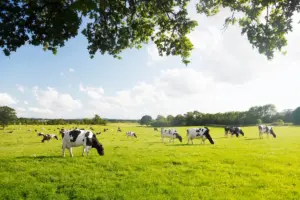
The cattle at Mt. Folly are pasture-raised and finished on a hybrid diet described as "grain-on-grass fed." This method allows animals to forage naturally on diverse perennial pastures while supplementing their nutritional intake with organic grains grown directly on the farm.
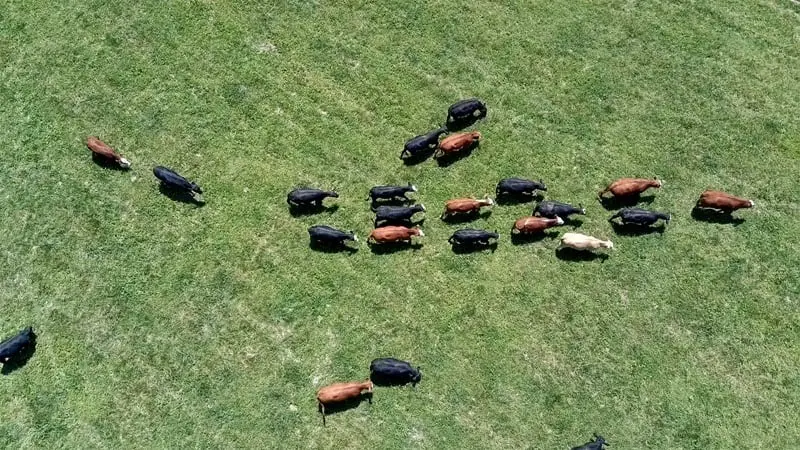
Furthermore, stocking density is strictly managed to mimic the natural migration patterns of wild ruminants. Freeman noted that Mt. Folly ensures each animal has at least one acre of land to graze upon, with allocations often expanding closer to two acres per animal. This low-density rotational grazing model prevents the overgrazing of palatable plant species, allows root systems to recover deeply, and ensures that manure is naturally distributed as an organic fertilizer rather than accumulating as an environmental pollutant.
Future Outlook & Industry Implications
As the American agricultural sector looks toward the remainder of the decade, enterprises like Mt. Folly offer a compelling blueprint for how independent producers can survive—and thrive—amid structural upheaval.
The Scaling Dilemma for Regenerative Agriculture
The central tension facing the regenerative movement is the challenge of scaling without compromising core ecological principles. Industrial agribusiness operates on economies of scale that drive down production costs through monoculture and confinement. Regenerative agriculture, by contrast, operates on economies of scope—valuing biological diversity, regional supply chains, and complex ecosystem management.
For Mt. Folly, the immediate future will test whether a regional, values-driven brand can maintain its strict ecological standards while expanding its retail footprint beyond the Ohio Valley. Success will depend heavily on the continued willingness of major supermarket chains like Kroger to maintain fair margin structures that do not penalize sustainable producers.
The Rise of the Conscious, Price-Constrained Consumer
Looking ahead, consumer market research suggests that demand for sustainably produced food will continue to grow, provided the price barrier can be dismantled. As younger demographics (Millennials and Generation Z) assume a larger share of household purchasing power, expectations for corporate and agricultural transparency will intensify.
However, as evidenced by recent economic data showing 90% of consumers adjusting buying habits due to inflation, good intentions do not automatically translate into high-ticket grocery purchases. Brands that succeed in the post-2025 landscape will be those that follow Mt. Folly’s lead: refusing to treat sustainability exclusively as a luxury good, and instead treating ecological health as a fundamental, accessible baseline for all consumers.
Conclusion
Laura Freeman’s journey from launching Laura’s Lean Beef in the late 20th century to establishing Mt. Folly Enterprises in the 21st is a testament to persistent entrepreneurial vision. By combining rigorous scientific verification (Savory EOV), holistic organic farming, and a courageous renegotiation of retail margins, Mt. Folly is proving that sustainable agriculture is not merely an idealistic philosophy—it is a viable, resilient business model capable of weathering droughts, supply crunches, and shifting market demands. In an industry currently navigating historic headwinds, Mt. Folly stands as a beacon of what is possible when agricultural tradition meets ecological innovation.