
Executive Overview
For centuries, the perennial summer grievance—"Why do mosquitoes always bite me?"—has been met with anecdotal remedies, old wives’ tales, and a general acceptance of biological roulette. Some individuals seem able to sit outdoors completely unbothered while companions a few feet away are relentlessly targeted. Historically, scientists and the public alike operated under the overarching assumption that human "mosquito magnets" emitted a universal chemical profile that acted as an indiscriminate beacon for all blood-seeking insects.
Groundbreaking new research from Florida International University (FIU) shatters this long-held paradigm. In a comprehensive study published in the journal iScience, researchers have revealed that being a mosquito magnet is not a one-size-fits-all phenomenon. Instead, susceptibility depends heavily on which species of mosquito is doing the biting.
In tests involving 119 human volunteers and three of the world’s most dangerous mosquito vectors, the research team discovered a striking reality: not a single human participant acted as a universal magnet for all three species. Rather, each mosquito species demonstrated a distinct, highly selective preference for different subsets of people, guided by individual body chemistry, volatile organic compounds, and natural skin microbiomes.
This revelation fundamentally alters our understanding of human-vector interactions. By decoding the specific chemical and microbial signals that attract distinct mosquito populations, researchers are paving the way for next-generation, species-specific repellents. In the fight against devastating vector-borne illnesses such as dengue, Zika, yellow fever, and West Nile virus, this targeted approach could soon revolutionize global public health strategies, moving away from broad-spectrum deterrents toward precision medicine for insect protection.
Detailed Chronology: Unraveling the Mosquito’s Chemical Compass
To understand how researchers arrived at this paradigm-shifting conclusion, it is necessary to examine the step-by-step methodology and evolution of the FIU study, led by neurogeneticist Matthew DeGennaro and spearheaded by Ph.D. student Kaylee Marrero.
Phase 1: Formulating the Comparative Hypothesis
For decades, laboratory studies on mosquito attraction typically isolated a single vector species—most commonly Aedes aegypti—and exposed it to a small pool of human subjects. While these studies successfully identified general attractants like lactic acid and carbon dioxide, they rarely compared how multiple species reacted to the exact same human subjects under identical conditions.
Recognizing this gap in the literature, the FIU research team set out to design a comprehensive, multi-species comparative study. They focused on three primary vectors of human disease:
- Aedes aegypti (the yellow fever mosquito)
- Aedes albopictus (the Asian tiger mosquito)
- Culex quinquefasciatus (the southern house mosquito)
The central question was straightforward yet ambitious: Do these three distinct species share the same criteria for a "preferred host," or do they navigate human scent profiles differently?
Phase 2: Recruiting Volunteers and Collecting Scent Signatures
The team recruited a diverse cohort of 119 human volunteers to serve as the study’s sensory landscape. Capturing the nuances of human scent required rigorous standardization to eliminate external variables such as scented soaps, detergents, or dietary anomalies.
Using specialized collection protocols, researchers gathered volatile organic compounds (VOCs) and skin microbiome samples from the participants. Human skin is an extraordinarily complex ecosystem; it releases a cocktail of more than 1,000 distinct chemical compounds, many of which remain uncataloged and poorly understood by science. Concurrently, the skin hosts trillions of microbes that metabolize sweat and sebum, producing the distinct secondary scents that form an individual’s unique microbial signature.
Phase 3: The Behavioral Assay and Behavioral Mapping
With the scent profiles cataloged, the researchers exposed the three mosquito species to the odor samples and physical presence markers of the 119 volunteers in controlled behavioral assays.
When the data was analyzed, the results stunned the laboratory team. The researchers found zero correlation indicating that a single human could universally attract all three species. If a volunteer proved exceptionally appealing to Aedes aegypti, they were just as likely to be utterly unappealing to Culex quinquefasciatus.
Each mosquito species carved out its own distinct preference map among the cohort. The insects were not responding to a universal distress signal or a singular human flaw; rather, they were executing finely tuned, species-specific search algorithms honed by millions of years of evolution.
Phase 4: Correlating Chemistry with Attraction
In the final analytical phase, the team cross-referenced the behavioral attraction data with the chemical and microbiological profiles of the volunteers’ skin. The statistical alignment was remarkable. The abundance and specific composition of skin bacteria directly mirrored the choices made by the mosquitoes. Every species had found its own evolutionary mechanism to decode the complex human odor signature, treating the skin microbiome as an individualized menu.
Supporting Context & Metrics: The Science of Human Scent
To fully appreciate the implications of the FIU study, one must examine the staggering complexity of human body odor and the medical burden of the vector species involved.
The Chemical Landscape of Human Skin
Human skin is far from a passive barrier; it is a dynamic chemical reactor. The average human body hosts roughly 1,000 volatile organic compounds. These compounds are generated through a combination of:
- Eccrine and Apocrine Sweat Glands: Secreting water, salts, amino acids, and lipids that are initially odorless.
- Skin Microbiota: Bacteria residing on the epidermis—such as Corynebacteria and Staphylococci—which consume these secretions and break them down into volatile fatty acids and thioalcohols, creating the distinct aromatic compounds associated with human body odor.
[Human Skin Secretions (Sweat/Sebum)]
        │
        ▼
[Skin Microbiome Metabolism (Bacteria)]
        │
        ▼
[1,000+ Volatile Organic Compounds (VOCs)]
        │
        ▼
[Species-Specific Mosquito Receptors (Aedes vs. Culex)]
Because every human possesses a unique genetic makeup, diet, lifestyle, and skin microbiome composition, no two people emit the exact same VOC ratio. The FIU study demonstrates that mosquito species have evolved specialized olfactory receptors capable of tuning into different frequencies of this complex chemical symphony.
The Vectors of Concern
The three species analyzed in the study are responsible for a massive share of global vector-borne disease transmission:
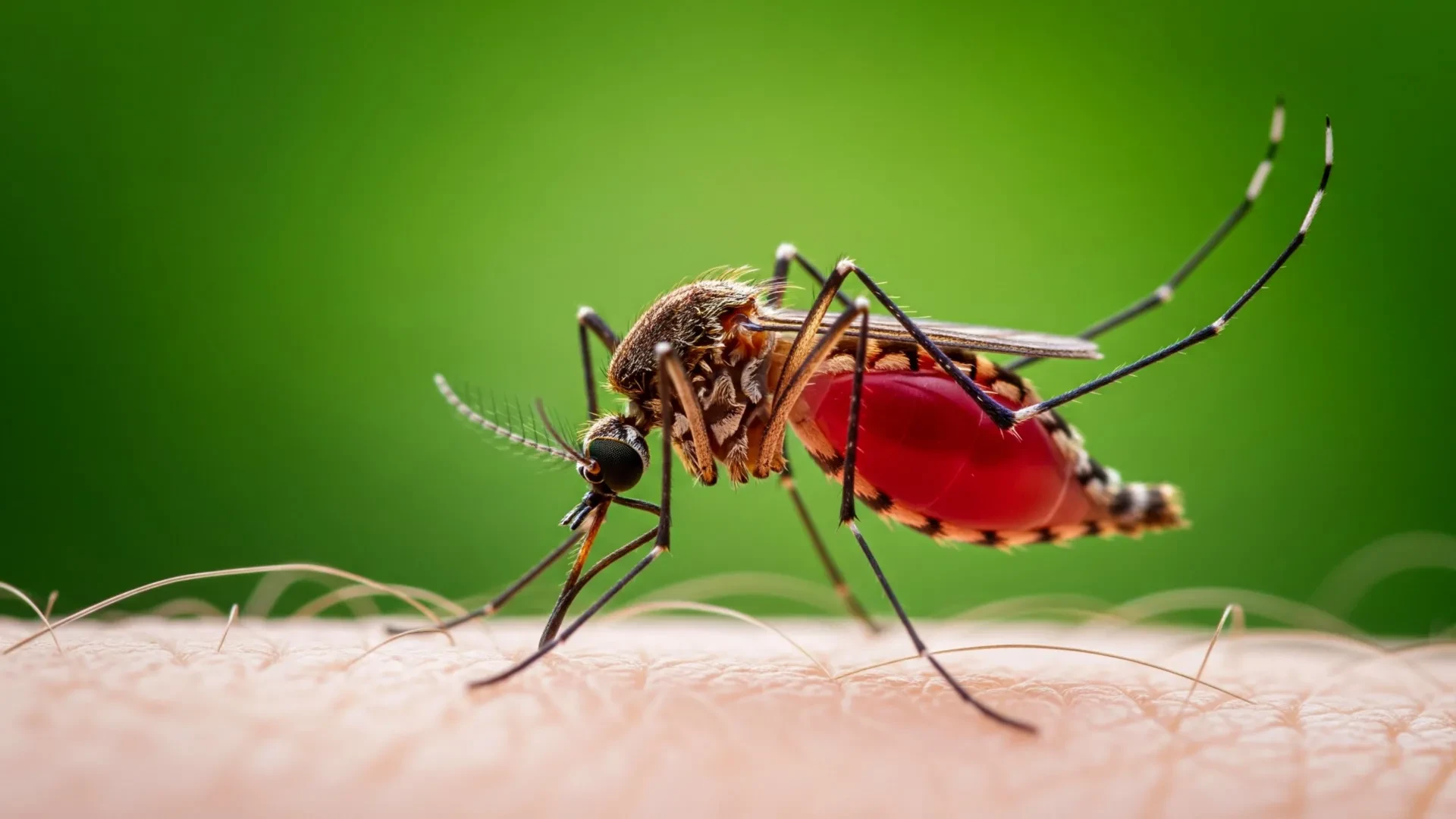
- Aedes aegypti: Known as the primary vector for yellow fever, dengue fever, Zika virus, and chikungunya. Highly anthropophilic (preferring human hosts), this species thrives in tropical and subtropical urban environments.
- Aedes albopictus (Asian Tiger Mosquito): An aggressive daytime biter capable of transmitting dengue, Zika, and West Nile virus. Known for its hardiness and adaptability to cooler temperate climates.
- Culex quinquefasciatus (Southern House Mosquito): A major vector for West Nile virus, St. Louis encephalitis, and lymphatic filariasis. Unlike Aedes species, Culex mosquitoes are primarily nocturnal feeders.
Given the public health threat posed by these insects, understanding the precise mechanisms of host selection transitions from an academic curiosity to an urgent epidemiological necessity.
Official Statements and Expert Insights
The implications of this research extend far beyond the laboratory, offering a new framework for epidemiologists, vector control agencies, and pharmaceutical developers.
Dr. Matthew DeGennaro, neurogeneticist, lead research team director, and head of the Biomolecular Sciences Institute at FIU, emphasized the translational potential of the discovery during press briefings following the publication:
"Isolating the components of human odor that attract or repel mosquitoes could lead to novel strategies to combat vector-borne diseases," DeGennaro stated. Explaining the connection between microbes and attraction, he added, "This connected so well with the differences in skin bacteria and odors. It is clear to me now that our skin microbiomes define our human odor signature. Each species found its own way to decode that signature."
Kaylee Marrero, the FIU Ph.D. student who spearheaded the comparative investigation, shared her initial astonishment regarding the behavioral divergence among the tested insect populations:
"We didn’t expect the species to prefer different people when we started the study," Marrero noted. "Each species having a distinct microbial signature that they use as a cue was so surprising to me."
Public health experts not directly involved in the study have echoed these sentiments, noting that current vector management tools—such as DEET, picaridin, and permethrin—act as broad-spectrum deterrents that overwhelm a mosquito’s general sensory apparatus rather than disrupting specific chemical dialogs. Understanding that different species rely on distinct sensory pathways opens the door to hyper-efficient, tailored interventions.
Future Outlook: The Dawn of Precision Repellents
The transition from academic discovery to commercial and public health application is already underway at research institutions worldwide. The insights garnered from the FIU study point toward several transformative developments in the near future.
1. Next-Generation, Species-Specific Repellents
Traditional insect repellents work by masking human scent or confusing the insect’s olfactory receptors, making it difficult for them to locate a host. However, these formulas often come with drawbacks, including strong odors, greasy textures, and potential degradation of synthetic materials.
Armed with the knowledge that Aedes aegypti, Aedes albopictus, and Culex quinquefasciatus target different chemical cues, scientists can now design species-specific deterrents. For example, if a traveler is visiting a region endemic to West Nile virus where Culex is the dominant threat, a targeted repellent could be formulated to block the specific chemical receptors that Culex uses to interpret skin microbiomes, offering superior, longer-lasting protection without the need for high concentrations of broad-spectrum chemicals.
2. Tailored Public Health and Vector Control Strategies
At the municipal level, vector control districts often deploy broad-spectrum insecticides or community-wide warnings during peak mosquito season. By recognizing that different neighborhoods or demographics within a city might experience varying degrees of risk depending on the local mosquito ecology, public health campaigns can become far more granular.
Communities can map local vector populations and educate residents on species-specific risks, allowing individuals to deploy targeted prevention methods based on whether they live in a zone dominated by daytime-biting Aedes or nighttime-biting Culex populations.
3. Modifying the Skin Microbiome
One of the most radical long-term possibilities emerging from this research is the potential manipulation of the human skin microbiome. Because an individual’s attractiveness to mosquitoes is heavily mediated by the bacteria living on their skin, future dermatological treatments could involve probiotic lotions or topical applications designed to temporarily alter the skin’s microbial output. By introducing non-attractive bacterial strains or suppressing volatile-producing microbes, scientists might one day be able to safely "turn off" a person’s status as a mosquito magnet.
Conclusion
The age-old mystery of why mosquitoes single out specific individuals has finally yielded its complex biological secrets. The research from Florida International University proves that attraction is not a singular phenomenon driven by a universal human scent, but rather a sophisticated interplay between diverse human skin chemistries and specialized insect olfactory systems.
As science moves away from the assumption that all mosquitoes think alike, humanity stands on the precipice of a new era in vector control. By respecting the evolutionary intricacies of these dangerous insects—and decoding the unique microbial signatures of human skin—we move ever closer to a future where mosquito-borne diseases are effectively neutralized through the power of precision science.