
Executive Overview
In an agricultural landscape increasingly battered by extreme weather, climate change, and dwindling yields, agtech innovation has shifted from a forward-looking luxury to an absolute existential necessity. Against this backdrop of growing ecological volatility, Tübingen-based biotechnology and machine learning pioneer Computomics has successfully closed a €6.3 million Series B financing round.
The funding round was spearheaded by the Convent Capital Agri Food Fund, which contributed a substantial €5 million anchor investment. They were joined by a consortium of returning backers, including High-Tech Gründerfonds (HTGF), MBG Baden-Württemberg, and Amathaon Capital, alongside key strategic investments from the company’s founders and internal scientific advisers.
This fresh injection of capital arrives at a critical inflection point for European agriculture. Across the continent, historic heatwaves, unseasonal dry spells, and systemic water shortages are rewriting the agricultural playbook. Regulatory bodies and industry cooperatives alike are sounding alarms over catastrophic yield downgrades. Computomics plans to channel its newly acquired capital directly into scaling the commercial deployment of its flagship machine learning-driven breeding platform, xSeedScore®.
By drastically shortening the traditional plant breeding cycle—transforming a process that once took more than a decade into a streamlined, predictive science—Computomics aims to equip seed developers with the digital tools required to engineer climate-resilient crops. These varieties are designed not for the stable environments of the past, but for the volatile thermal and hydrological extremes defining the agriculture of the 2030s and beyond.
Detailed Chronology: From Academic Spin-Out to Series B Milestone
Origins in Tübingen (2012)
The journey of Computomics did not begin in a venture capital boardroom, but rather within the rigorous academic corridors of Germany’s scientific elite. Founded in 2012, the company emerged as an academic spin-out originating from the prestigious Max Planck Society and the University of Tübingen. Recognizing that the burgeoning fields of bioinformatics and machine learning held untapped potential for agriculture, the founding team sought to bridge the gap between complex genomic data and practical, field-ready agronomy.
A Decade of Methodological Refinement
Rather than seeking hyper-growth early on, Computomics spent more than a decade quietly building, testing, and refining its computational models. The company developed proprietary machine learning algorithms capable of analyzing vast, multi-dimensional datasets encompassing plant genomes, local environmental variables, and historical field trials.
Over the years, this meticulous approach earned the trust of some of the most demanding entities in the global food supply chain. Computomics built a diversified, high-profile customer portfolio that today includes:
- Three of the world’s largest multinational agricultural and seed companies.
- Leading global food and beverage corporations, most notably brewing giant AB InBev.
- Prominent public-sector research organizations and international bodies, including the United States Department of Agriculture (USDA) and the International Rice Research Institute (IRRI).
The Series B Breakthrough (2026)
Following years of steady commercial validation and technological scaling, the company reached its Series B milestone in mid-2026. The €6.3 million transaction solidifies the commercial viability of AI-driven predictive breeding. By securing a €5 million anchor commitment from Convent Capital Agri Food Fund—supported by long-term partners such as HTGF, MBG Baden-Württemberg, and Amathaon Capital—Computomics has secured the financial runway necessary to take its xSeedScore® platform from specialized enterprise deployment to widespread, industry-wide commercial adoption.
Supporting Context & Metrics: The Looming Agricultural Crisis
To understand the strategic importance of Computomics’ Series B financing, one must examine the mounting macroeconomic and environmental pressures currently squeezing European agriculture. The margin for error in crop production is evaporating.
The 2026 European Drought Divide
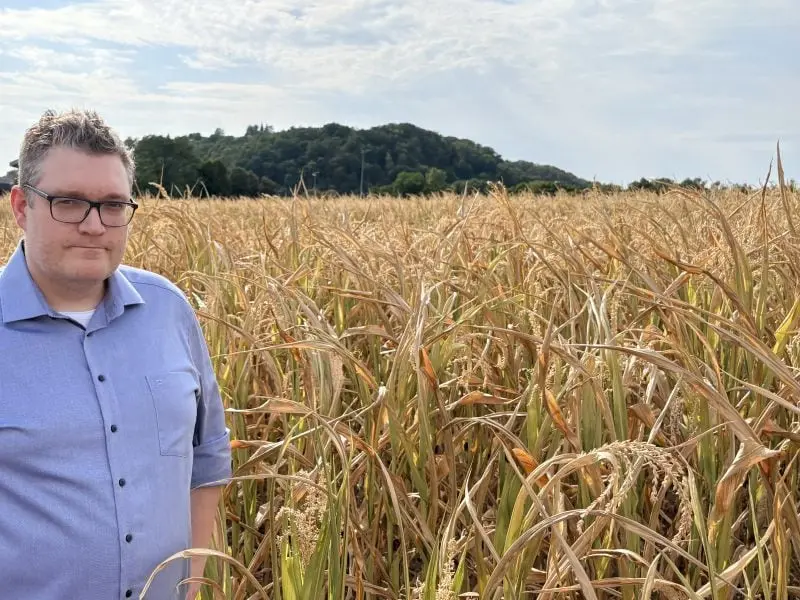
The investment arrives in the shadow of the severe 2026 European drought, an environmental crisis that has laid bare the vulnerabilities of conventional farming and traditional seed selection methods. According to data released by the European Commission’s Joint Research Centre (JRC), yield forecasts for all major spring and summer crops have been aggressively downgraded.
- Hardest Hit: Maize and sunflowers have suffered disproportionately from cumulative heat and drought stress.
- National Impacts: France, historically an agricultural powerhouse within the European Union, is bracing for one of its weakest maize harvests in decades.
- German Agricultural Losses: Germany has felt the squeeze with equal intensity. The Deutscher Raiffeisenverband—the apex organization representing German agricultural cooperatives and agribusinesses—reported that approximately three million tonnes of grain and rapeseed were lost between mid-June and mid-August alone.
- Harvest Forecasts: Consequently, Germany’s total grain harvest projections have been slashed to roughly 40.6 million tonnes, down significantly from the 45 million tonnes harvested in 2025.
The Time-Lag Dilemma in Plant Breeding
Computomics highlights a fundamental structural mismatch at the heart of modern agriculture: climate change is currently moving at a pace that vastly outstrips traditional plant breeding cycles.
Under legacy methods, developing a new commercial crop variety typically requires five to fifteen years of iterative field testing, cross-breeding, and regional trials. Consequently, many high-yielding crop varieties entering commercial markets today were selected and optimized for environmental baseline conditions that essentially no longer exist.
Furthermore, because of these lengthy biological timelines, Computomics is careful to manage expectations regarding its new capital: no amount of artificial intelligence or financial investment deployed today can magically rescue the current agricultural harvest. Breeding is a long-term game. Instead, the extreme heatwaves and prolonged droughts experienced across Europe serve as a harsh blueprint for the ecological baseline farmers will face in the early 2030s. The central question for the industry is whether breeding programs can adopt digital acceleration fast enough to bridge the widening gap.
Official Statements & Industry Perspectives
The convergence of cutting-edge artificial intelligence, venture capital, and agricultural necessity has generated strong endorsement from industry leaders, investors, and company executives alike.
The CEO’s Vision: Seeing Resilience Before the Field Does
Dr. Sebastian J. Schultheiss, co-founder and CEO of Computomics, emphasized that the core bottleneck in agriculture has never been a lack of dedication among breeders, but rather a lack of temporal foresight.
"Breeders have never lacked ambition about climate resilience," Dr. Schultheiss stated. "What they have lacked is a way to see it before the field tells them, which takes years they no longer have. This financing is about getting that capability into far more breeding programmes, faster."
Investment Rationale: Aligning Profitability with Ecological Impact
For lead investor Convent Capital Agri Food Fund, the attraction of Computomics lies in the rare synergy between ecological sustainability and hard commercial returns.
"We back companies whose environmental impact grows with their commercial success," explained Stephen McLoughlin, partner at Convent Capital Agri Food Fund. "Better breeding predictions mean fewer wasted seasons and varieties that hold up in the field, so the impact case and the business case point the same way."
Echoing these sentiments, Dr. Frank Hensel, principal at long-term investor High-Tech Gründerfonds (HTGF), emphasized the macroeconomic and governmental importance of the technology:
"AI-based breeding of stress-resistant crops is part of the German federal government’s High-Tech Agenda for good reason: it is one of the levers that matter most as the climate shifts. HTGF has supported Computomics since the seed phase and congratulates the team on this growth financing."
Future Outlook: Shortening Cycles and Scaling AI Across Crops
With fresh capital secured, Computomics is turning its attention to execution. The primary vehicle for this expansion is its proprietary xSeedScore® platform, which applies predictive machine learning models at a commercial scale across a diverse portfolio of agricultural categories, including major field crops, vital forage crops, essential vegetables, and high-value specialty crops.
Proven Success: The AB InBev Case Study
To demonstrate the transformative potential of predictive breeding, Computomics frequently points to its milestone partnership with global brewing giant AB InBev.
Malting barley—a critical raw material for beer production—is notoriously susceptible to heat stress and drought during the critical grain-filling stage. By integrating Computomics’ machine learning predictions into their developmental pipeline, AB InBev successfully slashed its barley breeding cycle from 12 years down to just 5 years—a massive operational breakthrough documented in the brewer’s 2021 ESG report. This reduction not only saved years of manual field trials but also allowed the rapid deployment of heat-tolerant barley strains capable of maintaining brewing-grade quality under thermal stress.
The Road Ahead for Computomics
As Computomics deploys its €6.3 million Series B funding, the strategic roadmap is clear:
- Commercial Expansion: Accelerate the rollout of the xSeedScore® platform to a broader base of seed developers and agricultural enterprises globally.
- Multi-Crop Optimization: Refine machine learning models to handle increasingly complex multi-stress environments (simultaneous drought, heat, and salinity pressure).
- Closing the Time Gap: Empower breeders to compress generational testing windows, ensuring that farmers in the 2030s are equipped with seeds tailor-made for tomorrow’s climate extremes rather than yesterday’s historical averages.
In a world where climate volatility threatens global food security, Computomics is providing the digital scaffolding required to future-proof the global harvest—one algorithmic prediction at a time.