
Executive Overview
For the better part of the last fifty years, the blueprint for agricultural productivity was built upon a straightforward formula: high-yielding seed varieties paired with robust chemical crop protection products. Farmers across the globe relied on synthetic fertilizers, potent insecticides, and advanced fungicides to safeguard their investments, maximize output, and feed a rapidly expanding global population.
Today, that foundational balance is shifting dramatically. Across the United Kingdom and continental Europe, a convergence of tightening regulatory frameworks, the phasing out of essential active chemical ingredients, and the accelerating volatility of climate change is rendering traditional pest and disease management models increasingly unsustainable. As the chemical toolbox shrinks, agricultural scientists and seed breeders are looking inward—literally—to the plant’s own genome.
The modern agricultural landscape is witnessing a profound pivot: resilience is joining yield at the very top of the plant breeding priority list. By harnessing cutting-edge biotechnologies such as precision gene editing, seed companies are engineering crops that possess innate defenses against insects, pathogens, and environmental extremes before a single sprayer ever enters the field.
This comprehensive report examines the structural shifts taking place within the European and UK seed sectors. Drawing from exclusive industry insights shared at the recent World Agri-Tech Innovation Summit in London—featuring insights from sector experts like Andrew Walker—we explore how next-generation genetics, public-private research partnerships, and pioneering genomic tools are forging a new paradigm for integrated pest management and sustainable food security.
Detailed Chronology: The Evolution of Agricultural Inputs and Genetics
To understand the urgency driving today’s genomic revolution, one must trace the historical trajectory of agricultural technology over the past half-century.
Phase 1: The Chemical Era and Yield Maximization (1970s–2000s)
Following the breakthroughs of the Green Revolution, agriculture entered an era where crop protection chemistry and seed breeding operated largely in parallel. Breeders focused relentlessly on maximizing genetic yield potential, assuming that any vulnerabilities to pests or diseases could be managed downstream via chemical applications. Fungicides, broad-spectrum insecticides, and herbicide-tolerant systems became the bedrock of commercial farming. Inputs were abundant, relatively inexpensive, and heavily relied upon to guarantee uniform, high-volume harvests.
Phase 2: Regulatory Pressures and the Shrinking Toolbox (2010s–Present)
As scientific understanding of environmental impacts advanced, regulatory bodies—particularly within the European Union and the UK—began reassessing the safety profiles of various agricultural chemicals. A pivotal turning point for UK agriculture was the progressive restriction and eventual loss of neonicotinoid seed treatments. Designed to protect young crops from devastating early-season pests, the removal of neonicotinoids left growers exposed and searching for alternative defenses.
Simultaneously, the climate crisis began introducing unprecedented weather extremes and shifting pest pressures northward. Prolonged droughts, unseasonal frosts, and erratic rainfall patterns undermined the efficacy of traditional crop protection models. Farmers increasingly found themselves caught between tightening environmental regulations, rising input costs, and escalating biotic and abiotic stresses.
Phase 3: The Genetic Renaissance (Present and Beyond)
Recognizing that chemical options will likely continue to face regulatory attrition, the seed industry has entered a renaissance of trait innovation. Breeders are no longer treating genetics and crop protection as separate entities. Instead, they are integrating them into holistic, multi-layered defense systems. Through advanced molecular biology and gene-editing techniques, modern seed companies are working to embed chemical-like resilience directly into the seed’s DNA, initiating a structural transformation in how agricultural commodities are produced.
Supporting Context & Metrics: The Pressures Shaping Modern Farming
The shift toward genetically embedded resilience is not merely an academic exercise; it is an economic and operational necessity dictated by compounding pressures in the field.
Regulatory Constraints in the UK and Europe
The regulatory climate for agrochemicals has grown increasingly stringent. The post-Brexit UK regulatory framework, while occasionally signaling openness to innovative breeding technologies, continues to align closely with rigorous environmental safety standards. The loss of key active ingredients—ranging from neonics to various broad-spectrum fungicides—has accelerated the vulnerability of staple crops. According to industry assessments, the UK arable sector faces an ongoing "patent cliff" and chemical phase-out schedule that threatens baseline productivity if alternative management tools are not rapidly deployed.
The Changing Climate Matrix
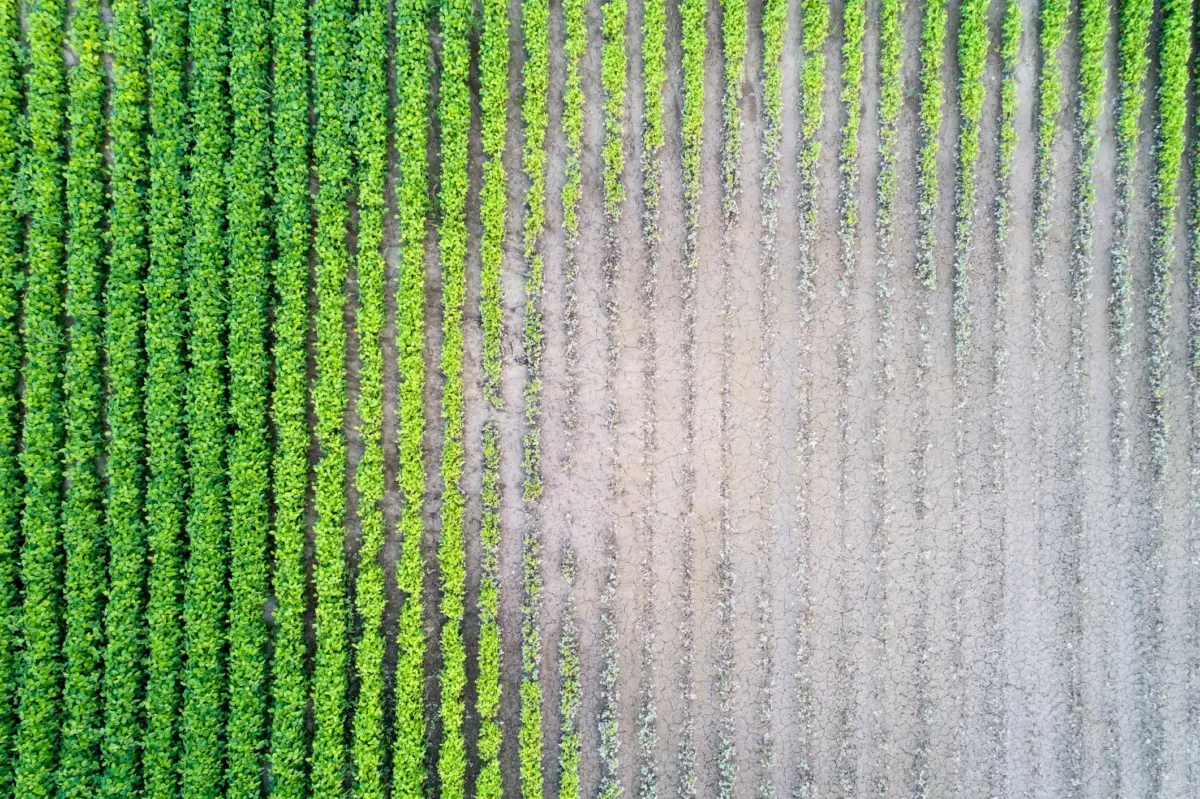
Abiotic stressors—including extreme heat waves, soil degradation, and unpredictable precipitation—are severely testing conventional crop varieties. A high-yielding seed variety optimized for stable historical weather patterns can quickly become unprofitable when subjected to severe drought or unseasonal saturation. Consequently, seed companies are re-evaluating their breeding pipelines. Traits that protect against drought stress, improve water-use efficiency, and withstand temperature spikes are commanding premium investments from research and development budgets.
The Economic Equation for Growers
For the modern farmer, profitability is no longer a simple function of gross yield. Input costs—spanning fuel, fertilizers, and increasingly restricted crop protection products—have risen dramatically. A crop that delivers record-breaking yields on paper but requires intensive, expensive chemical interventions to survive can result in net margins that are razor-thin or negative. By embedding disease and insect resistance directly into the seed, breeders aim to reduce the grower’s reliance on frequent spray passes, lowering input expenditures while protecting profitability against market volatility.
Official Statements and Industry Insights: Perspectives from the Frontline
The strategic realignment of the seed sector was a central theme at the recent World Agri-Tech Innovation Summit in London. Andrew Walker, speaking on the evolving demands of modern agricultural production, emphasized that the ultimate customer—the commercial farmer—requires solutions tailored to an increasingly complex operational environment.
"Their customers are going to be farmers and growers who need to produce their commodities at the highest possible yield," Walker observed during his summit address. "Companies are investing a lot in innovation around traits to keep up with that demand."
Bridging the Gap Left by Chemistry
Addressing the specific regulatory pressures faced by UK producers, Walker pointed directly to the withdrawal of neonicotinoid seed treatments as a catalyst for genetic adaptation. When external chemical protections are stripped away, the burden shifts entirely to the plant’s inherent biology.
"A lot of seed companies are trying to put some of those improvements into the genetics," Walker explained. "That would offset some of the losses due to these chemistry restrictions."
This philosophy extends across both insect and disease management. While fungicides and bactericides maintain a critical role in integrated pest management (IPM), breeders are engineering crops that actively complement chemical interventions rather than being wholly dependent on them.
"Seed companies are looking for ways to get the genetics to complement the use of chemical control," Walker noted, framing the strategy as a collaborative alliance between plant biology and targeted crop protection.
Case Study: Combating Oilseed Rape’s Greatest Threat
To illustrate how advanced biotechnology is translating from theory into practical agronomy, Walker highlighted a landmark collaborative project focused on oilseed rape (OSR), one of the UK’s most critical break crops.
Light leaf spot represents one of the most economically devastating fungal threats to UK oilseed production, routinely causing severe yield penalties and reducing crop viability. To combat this, a high-profile, Defra-backed initiative was established, bringing together agricultural biotech pioneer Cibus alongside esteemed research institutions—including the John Innes Centre and the University of Hertfordshire—and grower-focused networks like the British On-Farm Innovation Network (BOFIN).
Cibus has deployed its proprietary gene-editing technology within the project to identify, isolate, and engineer the genetic architecture required for robust disease resistance.
"So Cibus is actually bringing the technology to that, partnering with public institutions such as John Innes Centre and University of Hertfordshire to essentially use our gene-editing technology to engineer the basis for potential genetic resistance," Walker stated.
This collaborative model exemplifies the future of agricultural R&D: a synergy between commercial biotech innovators, world-class academic research centers, and on-the-ground farming networks working in tandem to de-risk key agricultural value chains.
Future Outlook: The Next Frontier in Seed Technology
As the agricultural industry looks toward the horizon, the trajectory of seed innovation points toward a multifaceted future where resilience, sustainability, and quality converge.
1. Scaling Gene-Editing Frameworks
The success of collaborative initiatives like the Defra-backed light leaf spot project could establish a replicable template for tackling other intractable agricultural diseases. As regulatory frameworks in the UK continue to evolve—particularly with the progressive implementation of the Genetic Technology (Precision Breeding) Act—researchers anticipate accelerated pathways for approving precision-bred traits. This regulatory modernization positions the UK as an attractive testbed for cutting-edge agricultural biotechnology.
2. Balancing Biotic and Abiotic Resilience
Future breeding pipelines will increasingly abandon single-trait focus in favor of stacked, multi-stress tolerant varieties. Breeders are developing crops capable of simultaneously resisting multiple viral and fungal pathogens while maintaining metabolic stability under extreme heat and drought conditions. The definition of a "superior seed" is shifting from sheer volume at harvest to reliable performance under distress.
3. Enhancing Nutritional and Consumer-Facing Traits
Beyond agronomic hardiness, seed companies are maintaining a strong focus on value-added characteristics that appeal further down the supply chain. Consumer and industrial demand is surging for crops featuring enhanced nutritional profiles, optimized oil compositions (such as specialized fatty acid profiles in oilseed rape and sunflowers), and improved processing qualities. By uniting yield, climatic resilience, and superior end-use quality into a single package, seed developers are providing comprehensive solutions for the entire food and feed value chain.
Conclusion
The transition currently underway in European and UK agriculture marks the end of an era where farmers could rely solely on chemical inputs to buffer crops against environmental and biological threats. Driven by regulatory shifts, climate unpredictability, and the imperative for sustainable intensification, the seed industry is executing a profound pivot. By placing resilience at the core of their innovation agendas—and harnessing advanced tools like gene-editing—breeders are equipping growers with the biological armor needed to secure the future of global food production.
Event Intel Unwrapped: World Agri-Tech London Webinar
This in-depth analysis is based on an exclusive interview conducted at the World Agri-Tech Innovation Summit in London. The full on-camera interview with Andrew Walker, alongside extended discussions with international agri-food industry leaders, will be featured in AgNavigator’s upcoming World Agri-Tech Unwrapped webinar on 4 November. The session will also be accessible on demand.
For more information or to register for free, visit the official AgNavigator Webinar Registration Portal.