
Executive Overview
Amid the stark, sun-baked expanses of California’s Coachella and Imperial Valleys lies a complex and vital ecosystem: the Salton Sea. As a critical stopover along the Pacific Flyway, this designated Important Bird Area (IBA) supports more than 300 species of birds, functioning as a biodiversity oasis in the arid landscape. Yet, protecting this fragile environment requires more than scientific research; it demands community engagement, grassroots advocacy, and locally rooted leadership.
Enter the Salton Sea Leadership Program (SSLP). Spanning a rigorous four-month curriculum each year, the program immerses a cohort of 10 local residents into the front lines of environmental science. Rather than existing merely as a series of academic lectures, the SSLP functions as an immersive educational internship. Participants learn directly from researchers, engineers, and conservationists representing organizations like Audubon California, gaining firsthand insight into how plants, animals, and human communities intersect in the desert.
Across its first two years, the program has graduated 22 alumni who are actively reshaping regional conservation. From surveying rare desert reptiles and tracking endangered birds to launching community hiking initiatives and advocating at the State Capitol, SSLP graduates prove that meaningful ecological work does not require a traditional scientific background. This report examines the journeys of three distinct alumni—Kevin Manajerro, Amanda Bautista, and Ciara Taylor—to illustrate how the SSLP opens doors, builds resilient community networks, and empowers a new generation of environmental stewards.
Detailed Chronology: In the Field with SSLP Alumni
To understand the tangible impact of the Salton Sea Leadership Program, one must follow its graduates beyond the classroom and into the demanding, sun-drenched environments they monitor.
Morning on the Transects: Kevin Manajerro’s Path to Biology
On a blistering October morning, the mercury hit 90 degrees by 7:00 a.m. Biologist Kevin Manajerro and researcher Melanie Davis loaded field gear into a truck at a survey site overlooking the Salton Sea. Framed by the Orocopia Mountains to the right and the Santa Rosa Mountains to the left, the team prepared to execute six biological transects—standardized, set routes used to survey specific habitats.
Their target: the Flat-tailed Horned Lizard (Phrynosoma mcallii), a diminutive desert reptile equipped with specialized camouflage adaptations designed to minimize its shadow against the desert floor. When Manajerro spotted a specimen, it marked the first documented sighting of the species at the site since he began conducting surveys there.
Manajerro is a 2026 SSLP alumnus. His journey into professional biology began when he met Davis, an SSLP guest speaker who presents her work on the endemic Orocopia Sage (Salvia greata) and encourages participants to enter conservation regardless of their initial career paths. Through connections forged during the program—specifically meeting Dr. Lynn Sweet through retail work at REI—Manajerro secured a position as a lab assistant in Dr. Sweet’s lab at the University of California, Riverside (UCR) Center for Conservation Biology. Today, he earns college credit through the College of the Desert’s Work Experience Program while conducting wildlife surveys across the Coachella Valley, including missions at the Coachella Valley Wildlife Refuge.
From Bird Guides to Telemetry: Amanda Bautista’s Research Evolution
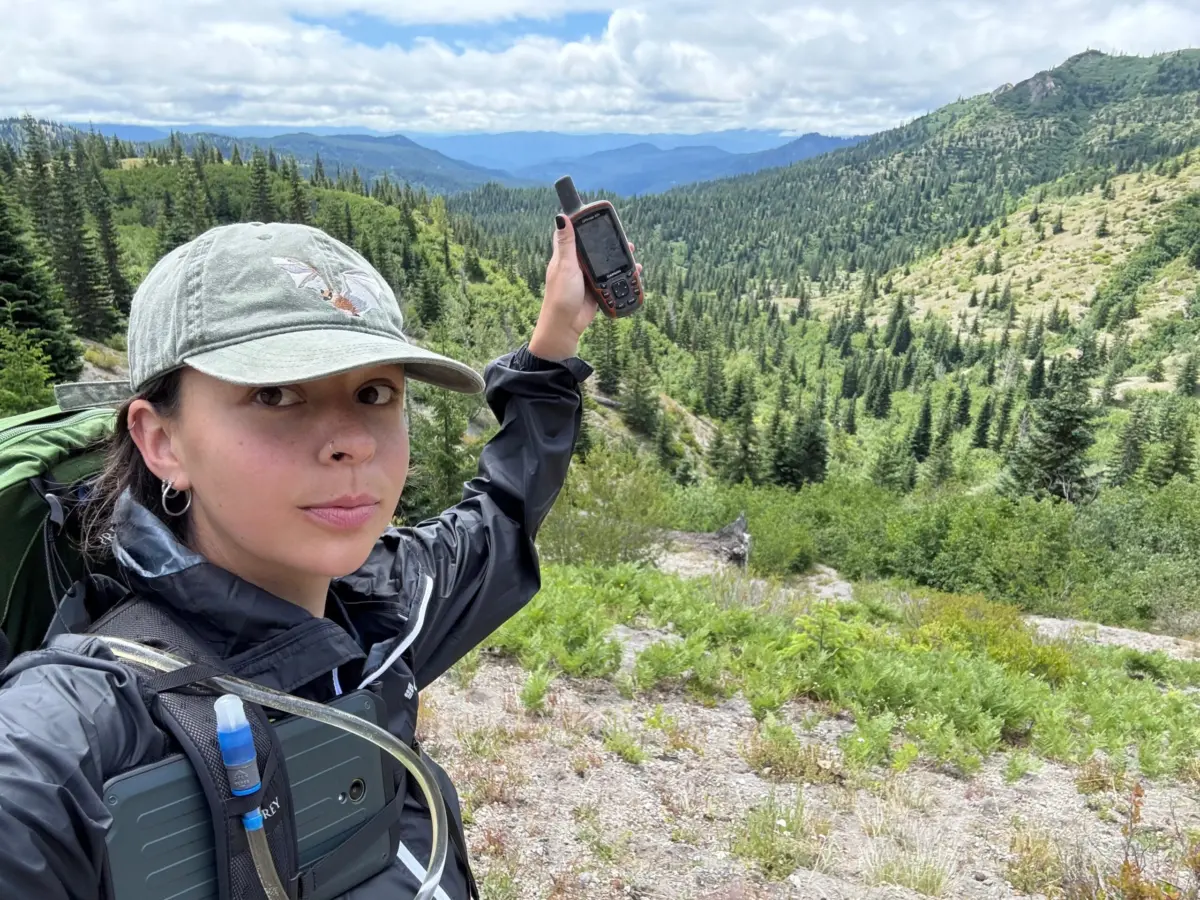
Further expanding the footprint of SSLP alumni in professional research is Amanda Bautista, a graduate of the 2025 cohort. Bautista entered the program with a strong foundation in volunteering for Audubon bird surveys. For her SSLP capstone project, she designed the inaugural Salton Sea bird guide.
Capitalizing on the networks and mentorship provided by the program, Bautista secured a role at the Pacific Northwest Research Station. There, she conducted woodpecker telemetry surveys to map nesting-season habitats and participated in trapping small mammals, including flying squirrels.
Continued alumni engagement within the SSLP network later led to a position as a seasonal survey technician for the University of Idaho’s Yuma Ridgway’s Rail research project at the Sonny Bono Salton Sea National Wildlife Refuge. Bautista recorded morphological measurements and collected biological samples to analyze selenium accumulation in the rails—an endangered marsh bird. Reflecting on the acoustic differences between field sites, Bautista noted, "In Arizona, the bird sounds were really quiet, I can hear [the Rails] splashing in the water. At the Salton Sea, it’s so loud with all the birds and biodiversity."
Bautista now works full-time as an environmental biologist for a consulting firm, conducting pre-construction surveys for reptiles, birds, and small mammals to ensure industrial and urban projects comply with stringent environmental regulations.
Building Community Resilience: Ciara Taylor and "PS Take a Hike"
Conservation is as much a social movement as it is a biological science. For 2025 SSLP alumna Ciara Taylor, the program became a vehicle for fostering deep community connections in the Coachella Valley. Taylor first crossed paths with program organizers at the Salton Sea Bird Festival in January 2025, having previously attended an Oswit Land Trust lecture. During her time in the SSLP cohort, she served as an energetic organizer, helping field trips run smoothly and providing peer support.
Combining her professional design background with a newfound passion for the outdoors, Taylor approached her capstone project through a design-thinking framework. She explored how visual and structural design concepts could raise environmental awareness and bring diverse groups together to solve complex ecological challenges.
Following graduation, Taylor partnered with fellow nature advocate Judy Gill to found PS Take a Hike, a community hiking club designed to introduce residents to local trails. What began as informal outings has rapidly scaled into a regional movement. Taylor and Gill organized the inaugural annual Take a Hike Fest at Francis Stevens Park in Palm Springs, a free community event celebrating hiking culture, active living, and environmental stewardship by uniting local conservation nonprofits, including Audubon.
Supporting Context & Metrics: Scaling Impact Across the Desert
The individual stories of Manajerro, Bautista, and Taylor reflect a broader, quantifiable wave of environmental momentum generated by the Salton Sea Leadership Program.
Program Architecture and Demographics
- Cohort Scale: Each year, the SSLP selects a highly focused cohort of 10 local residents. This intimate group size ensures personalized mentorship, direct access to field professionals, and cohesive team-building.
- Duration: A rigorous four-month curriculum blending classroom instruction, guest lectures, and hands-on field laboratories.
- Interdisciplinary Reach: The program explicitly targets individuals from non-traditional scientific backgrounds—such as design, retail, and community organizing—democratizing access to environmental careers.
Two-Year Impact Metrics (Inaugural Classes)
- Total Graduates: 22 alumni across the first two years of operation.
- Professional Placement: Graduates have transitioned into roles as university lab assistants, federal and academic research technicians, and compliance biologists for environmental consulting firms.
- Civic Engagement: Beyond field research, alumni have spearheaded community-facing initiatives, including leading Spanish-language bird-watching walks, developing Indigenous-led nature education programs, certifying as California Naturalists through UC programs, and traveling to the California State Capitol to lobby for avian conservation and habitat protections.
The Salton Sea itself remains an ecological linchpin. As an essential stopover on the Pacific Flyway supporting over 300 bird species, the health of its surrounding wetlands and desert buffers directly influences North American migratory bird populations. By embedding local residents into research and management pipelines, the SSLP ensures that the people living closest to the sea are positioned as its primary defenders.
Official Statements and Perspectives
The success of the Salton Sea Leadership Program is deeply anchored in the lived experiences and testimonies of its participants, who view the initiative not merely as an educational credential, but as a transformative life path.
Reflecting on the psychological and professional support found within her cohort, Amanda Bautista described the SSLP community as a family:
"It gave me a safe place to be a part of, and now it has become a big part of my life. I can count on my SSLP people to make me feel better being in the same field and being a woman in the field."
Ciara Taylor echoed these sentiments regarding the accessibility of environmental science for non-scientists, noting that the program acted as:
"A stepping stone to access the community and learn about things that are completely out of my wheelhouse." Taylor emphasized the utility of her capstone project, explaining how she applied design thinking to "consider how to create awareness, or how we might work together to solve a larger issue with different backgrounds."
Guest speakers and instructors, such as researcher Melanie Davis, continuously reinforce these themes during cohort sessions, urging participants to look past academic gatekeeping and recognize that grassroots conservation relies on diverse skill sets—from ecological fieldwork and data collection to public engagement and visual communication.
Future Outlook: Looking Toward the 2027 Cohort
As the Salton Sea Leadership Program prepares to launch its 2027 cohort, the horizon for regional conservation looks increasingly promising. The ripple effects of the program’s first 22 graduates demonstrate that localized environmental education yields outsized dividends. By empowering local residents with the tools, networks, and confidence required to enter professional conservation, the SSLP is bridging the historical gap between isolated ecological research and the communities that inhabit the Coachella and Imperial Valleys.
Future programming will continue to emphasize cross-sector collaboration, expanding community-led outdoor events like the Take a Hike Fest, broadening Indigenous-led nature initiatives, and maintaining an active policy advocacy presence at the state level.
Applications for the upcoming 2027 cohort open in November. The program invites local residents interested in building community, networking with environmental professionals, and exploring the vital work of Audubon California and Salton Sea conservation to step forward.
For those ready to take their place on the front lines of desert ecology and community leadership, the application window is open now. Visit the Audubon California Salton Sea Leadership Program portal to learn more and submit an application today.