
Executive Overview
In the realm of animal rescue, the trajectory of a vulnerable life can pivot entirely upon a single, compassionate decision. This principle is vividly illustrated in the recent case of a tiny tabby kitten whose harrowing street origins gave way to a deeply comforting domestic reality in the span of just four weeks. Discovered in an impoverished physical state beside sparse leftover food, the small feline faced an uncertain future typical of urban strays. However, swift intervention by a dedicated animal advocate transformed those grim circumstances into a narrative of profound physical and emotional restoration.
Documented extensively and shared with the public via the dedicated Instagram rescue handle @aurorafeline.rescue, the kitten’s recovery journey has struck a universal chord. The digital chronicle—marked by viral traction exceeding one million views and over 165,000 likes—provides an intimate look at the therapeutic power of shelter, nutrition, and unreserved affection. This report examines the critical phases of the kitten’s rehabilitation, evaluating the physiological markers of recovery, the viral socio-cultural impact of digital rescue narratives, and the broader implications for feline welfare initiatives operating within urban landscapes.
Detailed Chronology
Phase 1: The Encounter and Initial Rescue
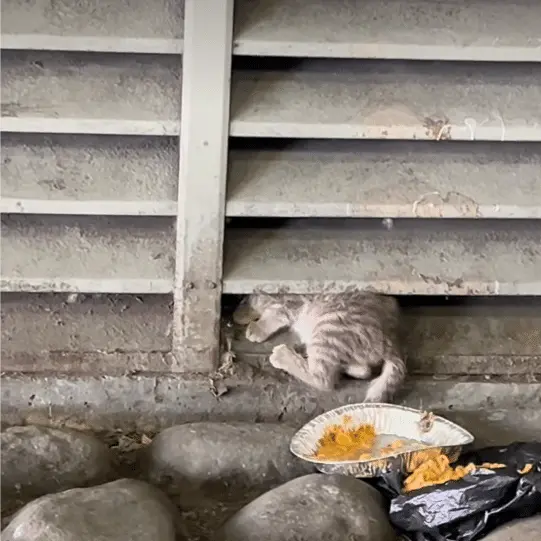
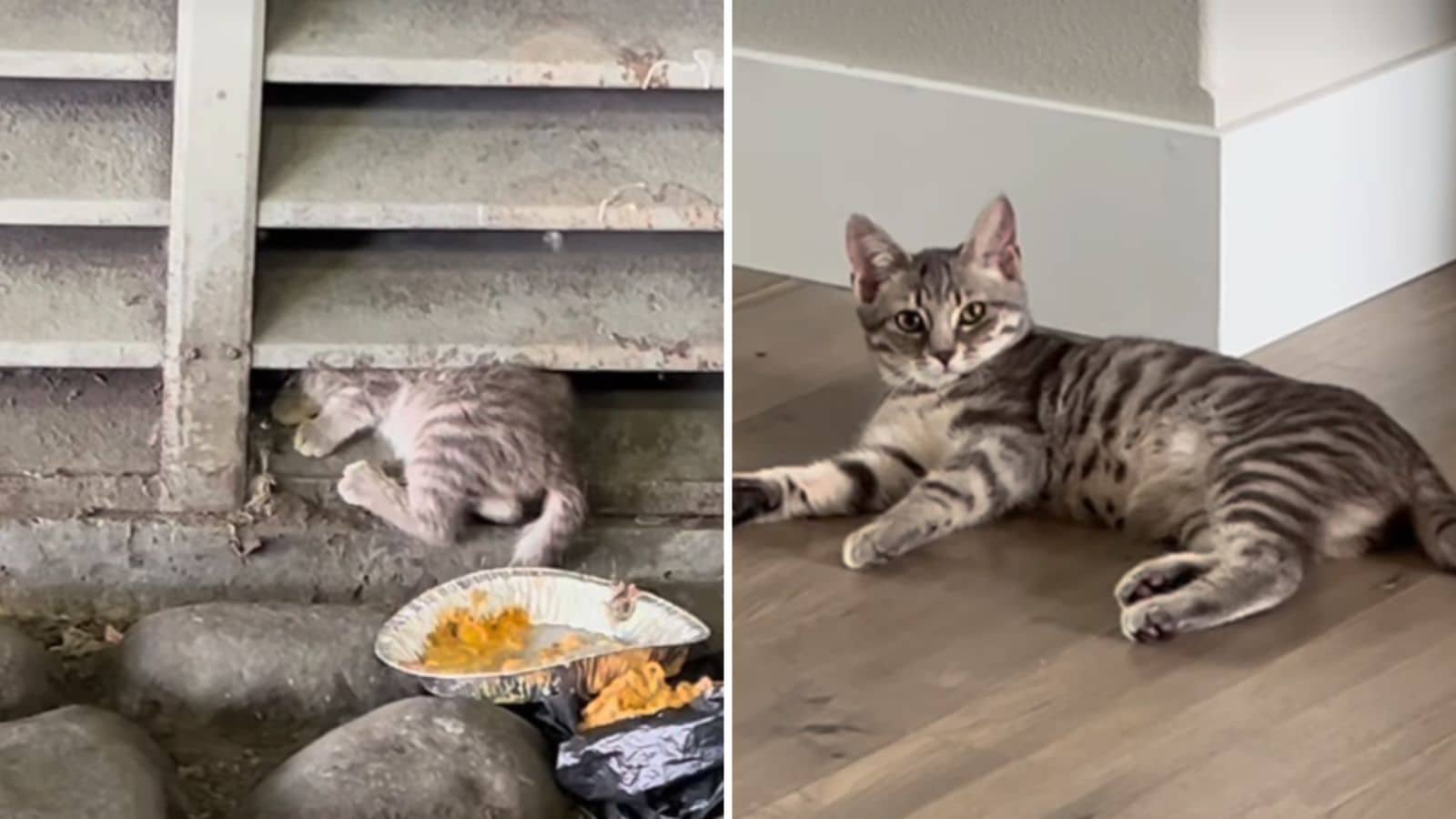
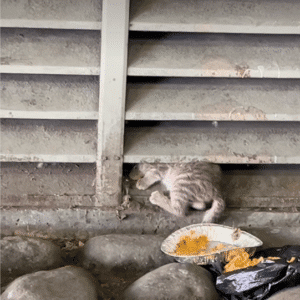
The documented sequence begins on a bleak urban street where the tiny tabby kitten was first located. Physical indicators at the scene suggested severe neglect or abandonment; the animal was visibly malnourished, weak, and situated precariously close to remnants of discarded human food. In environments of extreme scarcity, such conditions routinely prove fatal to neonates and young juveniles due to exposure, dehydration, and opportunistic pathogens.
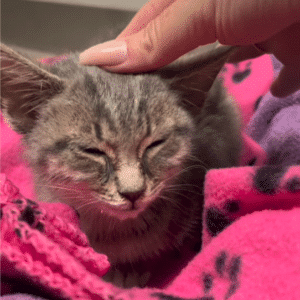
Rather than bypassing the vulnerable animal, the rescuer elected to intervene. The initial footage captures a moment of hesitant yet vital contact: a gentle hand reaching out to stroke the kitten’s frail, matted fur. This foundational interaction served as the psychological bridge between the perils of outdoor survival and the safety of domestic rehabilitation. Safely transferred into a temporary transport container, the kitten was removed from the immediate hazards of the street environment.
Phase 2: Immediate Stabilization and Indoor Acclimatization
Upon arrival at a secure indoor facility, the primary objectives shifted toward medical stabilization and psychological decompression. The transition from an unpredictable, harsh outdoor environment to a climate-controlled sanctuary was immediate.
Footage from the initial days indoors depicts the tabby resting upon soft blankets, receiving continuous, gentle tactile reassurance from its caregiver. For a feline accustomed to constant hyper-vigilance, these early hours represented a stark departure from the struggle for daily sustenance. The provision of reliable nutrition, hydration, and thermal regulation formed the bedrock of the acute stabilization phase, arresting the physical decline observed at the rescue site.
Phase 3: The Four-Week Physiological and Behavioral Evolution
Over the subsequent month, the physical transformation of the kitten became increasingly pronounced. Veterinary evaluations—implied through the steady visual documentation of health improvements—highlighted significant weight gain, muscular development, and coat conditioning.
- Dermatological and Coat Health: Initially presenting with a dull, unkempt coat reflective of nutritional deficits and parasitic burden, the tabby developed a sleek, vibrant pelage indicative of proper systemic nourishment.
- Musculoskeletal Development: Early footage revealed an animal struggling with basic mobility and stamina. By week four, the kitten demonstrated agile, confident locomotion, frequently engaging in natural exploratory behaviors throughout the living space.
- Behavioral Integration: The manifestation of trust was underscored by intimate clips of the kitten seeking physical proximity, engaging in relaxed stretching behaviors, and readily accepting belly rubs—actions fundamentally contrary to the defensive postures of a feral or traumatized stray.
The temporal arc culminated in a stark visual contrast: the frail, street-weary kitten of day one was entirely eclipsed by a robust, content domestic companion resting securely beneath cozy household blankets.
Supporting Context & Metrics
The narrative of this tabby kitten is not an isolated phenomenon; rather, it is part of a broader digital ecosystem where animal rescue content commands substantial global engagement. The metrics surrounding the @aurorafeline.rescue Instagram reel underscore a growing public appetite for transparent, compassionate documentation of animal rehabilitation.
Engagement Metrics and Digital Footprint
At the time of initial reporting by CatTime, the transformation reel achieved the following milestones:
- Total Views: Exceeded 1,000,000 views globally.
- Audience Approval: Surpassed 165,000 verified likes.
- Commentary Volume: Thousands of active interactions, predominantly reflecting emotional resonance, empathetic validation, and widespread celebration of the kitten’s recovery.
The Psychology of "Rescue Content"
Sociological and behavioral analyses of viral animal rescue videos indicate that such media fulfills a vital psychological function for audiences. Witnessing a direct mitigation of suffering—encapsulated succinctly by the rescue organization’s central ethos, "To be loved is to be changed"—triggers empathetic release and emotional restoration among viewers. Furthermore, these metrics demonstrate that digital platforms serve as powerful mobilization tools, fostering communities that actively support grassroots rescue initiatives through financial contributions, foster commitments, and permanent adoptions.
Official Statements and Perspectives
While formal veterinary bulletins or direct quotes from the primary rescue operators remain concentrated within their digital publishing channels, the philosophy governing modern animal rescue operations provides critical context to this case.
Advocacy groups and feline welfare specialists emphasize that early intervention is the single most deterministic variable in saving neonate and juvenile strays. According to community cat rescue coordinators, the physical state in which the tabby was found—isolated, exposed, and near inadequate food sources—typifies the vulnerabilities faced by millions of urban animals annually.
The core message propagated by the rescue team—"To be loved is to be changed"—serves as both a poetic caption and an operational philosophy. Animal behaviorists note that consistent, gentle handling during critical developmental windows effectively rewires a young feline’s stress response, transforming a potentially semi-feral animal into an affectionate, well-adjusted household companion. This case exemplifies how targeted micro-interventions by private citizens can yield macro-level transformations in animal welfare outcomes.
Future Outlook
As the four-week milestone concludes, the immediate chapter of intensive medical rehabilitation for the tabby kitten draws to a successful close. However, several logistical and welfare considerations remain on the horizon:
- Permanent Placement and Adoption Status: While the documented footage thoroughly establishes the success of the temporary foster and recovery phase, official confirmation regarding permanent adoption remains unfinalized in public logs. Given the high visibility of the case and the kitten’s refined social behaviors, demand for formal adoption candidacy is expected to be exceptionally high.
- Long-Term Health Monitoring: Transitioning from severe early-life malnutrition requires ongoing veterinary oversight to ensure proper skeletal maturation, preventative vaccination schedules, and eventual spay/neuter procedures.
- Advocacy and Education Scaling: The viral success of this specific narrative provides the hosting organization,
@aurorafeline.rescue, with an expanded platform to advocate for trap-neuter-return (TNR) programs, urban stray monitoring, and community-funded foster networks.
Ultimately, the journey of this tiny tabby stands as a testament to the profound resilience of animals when met with empathy, resources, and unwavering care. It reinforces the reality that within a brief span of four weeks, the trajectory of a life can be redirected from the harsh margins of the street to the secure, affectionate center of a loving home.