
Executive Overview
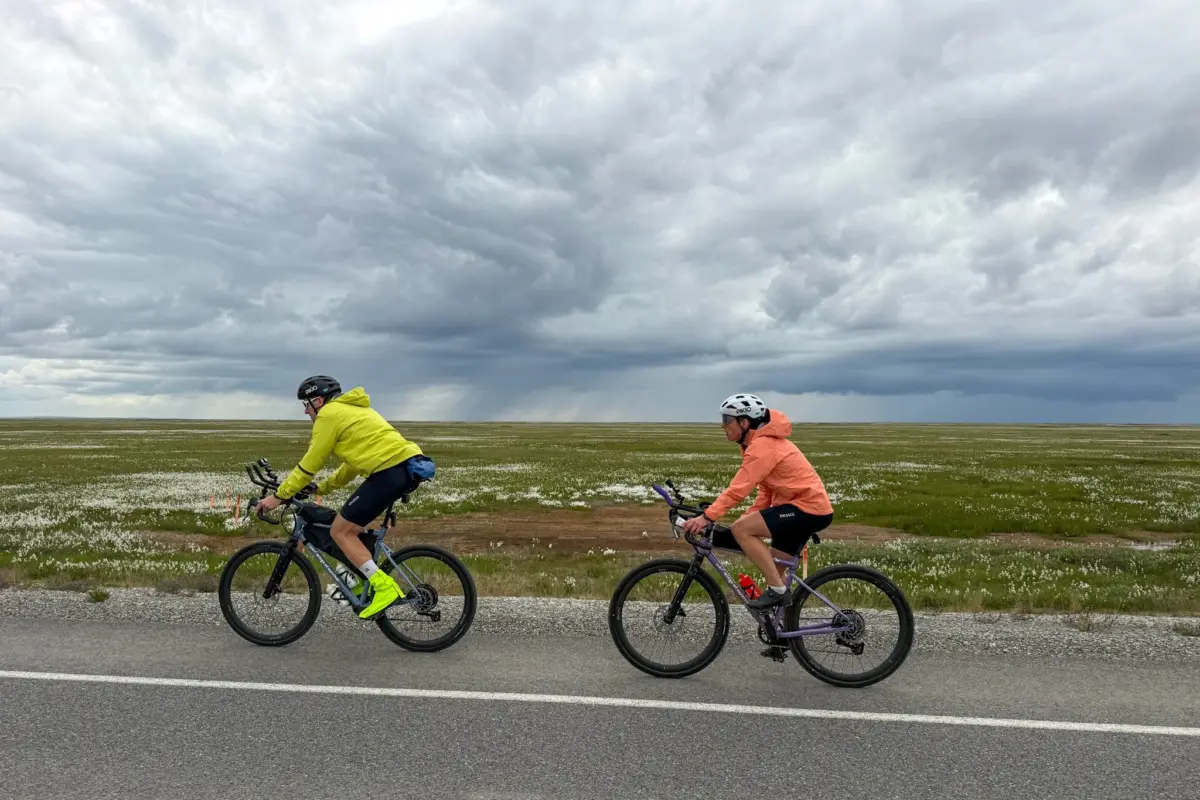
On August 1, beneath the sweeping skies of Prudhoe Bay on Alaska’s Arctic coast, University of Alberta ecologist Timm Döbert and extreme athlete Leanna Carriere clipped into their bicycle pedals and pointed their front wheels south. Ahead of them lay an arduous 18,600-mile odyssey spanning two continents, bound for the wind-swept tip of Patagonia.
Their mission, aptly titled Wings of Survival, is not merely a test of human endurance. It is a grueling, boots-on-the-ground expedition designed to shadow the migratory path of a single GPS-tracked Hudsonian Whimbrel. By tracing the migratory corridor of this imperiled shorebird, Döbert and Carriere are working alongside international scientists to map critical, yet often unprotected, stopover sites, collect physiological data, and raise global awareness about a species facing an escalating existential crisis.
The Hudsonian Whimbrel is an unassuming endurance superstar. Recognized by its long, curved bill and compact, football-shaped body, the shorebird spends its summers on the Arctic tundra before undertaking marathon flights of up to seven days nonstop, terminating on the coastal mudflats and beaches of South America. Yet, this hemispheric journey exposes the birds to an intricate web of anthropogenic threats, ranging from habitat fragmentation and agricultural expansion to intensifying storms and rising sea levels.
Following a staggering 70 percent population decline over the past two decades, the United Nations’ Convention on the Conservation of Migratory Species officially declared the Hudsonian Whimbrel endangered earlier this year. As taxonomic authorities split the species from its Eurasian counterpart, scientists like Döbert, ecologist Juan Navedo, and avian physiologist Chris Guglielmo are racing against time to uncover the ecological "connectivity" that dictates the bird’s survival.
For Döbert and Carriere, every 12-hour, 90-mile day in the saddle serves as a humbling physical parallel to the avian marvels overhead—and a profound commitment to securing a future for the birds that inspired their journey.
Detailed Chronology: From the Tundra to the End of the Earth
The genesis of Wings of Survival took shape in January, far from the Arctic north, on Chiloé Island in southern Chile. There, working alongside Dr. Juan Navedo—a Universidad Austral de Chile ecologist with two decades of experience studying migratory shorebirds—Döbert and Carriere carefully fitted satellite transmitters onto five Hudsonian Whimbrels.
These high-resolution transmitters were designed to map the birds’ subsequent northward migration back to their breeding grounds, offering unprecedented insight into individual navigational choices. The data revealed remarkable behavioral variances: while one whimbrel island-hopped along the Pacific coast from Baja California to reach Alaska, another undertook a daring, direct transoceanic flight straight to Anchorage.
As the northern summer waned, the tagged birds prepared for their return southward. Of the original five transmitters, one primary beacon continued to transmit vital telemetry data: Whimbrel 59764.
- The Breeding Grounds: Whimbrel 59764 spent its summer breeding season near Hooper Bay in southwest Alaska.
- The Descent: In July, the bird initiated its southbound journey, tracing a familiar route down to Baja California before crossing the treacherous waters of the Sea of Cortez to mainland Mexico.
- The Stopovers: The bird paused briefly in Ecuador before continuing its relentless push toward the Southern Hemisphere.
While Whimbrel 59764 completed its thousands-of-miles journey in a matter of weeks, Döbert and Carriere face a vastly slower, more deliberate route. Pedaling down coastal highways and detouring to historical and newly discovered whimbrel stopover sites, the cyclists are deliberately intersecting the bird’s path.
"There’s definitely excitement when you know you’re in a spot that the birds were," Leanna Carriere remarks. "It feels very special."
As the duo approaches the 100-day mark of their expedition, having covered more than 5,000 miles, Whimbrel 59764 has officially returned to its wintering grounds on Chiloé Island. Döbert and Carriere hope to rendezvous with the bird in Chile before pushing onward to their ultimate destination: Ushuaia, Argentina, near the southern tip of Patagonia.
Supporting Context & Metrics: The Physiology and Peril of Avian Endurance
To fully grasp the magnitude of the Wings of Survival expedition, one must understand the staggering physiological mechanics of the Hudsonian Whimbrel. On paper, according to avian aerodynamic and metabolic models, whimbrels should exhaust their fat reserves and run out of fuel after three or four days of continuous flight. Yet, satellite tracking repeatedly confirms that these shorebirds can maintain nonstop flight for over a week.
The Biological Miracle of Long-Haul Flight
In the weeks leading up to migration, whimbrels undergo a radical physical transformation. They gorge themselves on marine invertebrates, nearly doubling their body weight and packing on dense layers of subcutaneous and visceral fat. They simultaneously build up flight muscle mass and enlarge exercise-related organs.
However, the physical toll of a 5,000-plus-mile nonstop flight is catastrophic:
- Fat Depletion: Nearly all stored lipid reserves are completely incinerated.
- Organ Shrinkage: Avian physiologist Chris Guglielmo, co-director of the Advanced Facility for Avian Research at Western University, notes that after a long-haul flight, a whimbrel’s digestive system can atrophy to half its pre-flight size.
- Cardiac Reduction: Even the bird’s heart can shrink by up to 25 percent to conserve metabolic energy during recovery.
Unlocking Ecological Connectivity
Historically, tracking Hudsonian Whimbrels across their entire flyway has been severely limited by the high cost of satellite transmitters. This knowledge gap has hindered targeted conservation efforts.
"If we solve connectivity, we can focus conservation efforts in those areas," explains Dr. Juan Navedo.
The Wings of Survival project is already bridging this gap by confirming critical, previously undocumented stopover sites. Earlier this year, a local colleague in Mexico investigated a signal ping near a strawberry field close to San Quintín. There, he discovered an unprecedented congregation of 500 whimbrels—the largest concentration ever recorded in northwestern Mexico. Discoveries like this provide the empirical data needed to advocate for legal protections and land-use management in vital coastal zones.
Human Endurance Meets Avian Resilience
While whimbrels navigate transoceanic voids at speeds reaching 50 miles per hour without eating, drinking, or sleeping, Döbert and Carriere are testing the absolute limits of human endurance.
A typical day for the couple involves:
- 12 hours in the saddle
- 80 to 90 miles covered
- Consumption of several thousand calories each
"It puts things in perspective for us because we’re barely hanging in there," Carriere notes. In a unique scientific twist, the adventurers have integrated themselves into academic research, serving as test subjects for a University of Alberta colleague studying human resilience, physiological stress, and endurance adaptation along grueling expeditions.
Official Statements and Expert Perspectives
The collaborative nature of Wings of Survival binds together academic research, grassroots conservation, and extreme athletics. Leading voices in the scientific community emphasize the profound implications of the project.
Dr. Juan Navedo (Universidad Austral de Chile):
"Not many Hudsonian Whimbrels have been tracked along their entire migration, due largely to the expense involved. Scientists don’t know exactly which places the birds rely on to complete their migration successfully—something Wings of Survival aims to help with. If we solve connectivity, we can focus conservation efforts in those areas."
Chris Guglielmo (Western University):
"Though the high-resolution satellite tags required a significant investment, we hope it will pay long-term dividends and allow the team to use cheaper technology in the future. With a clearer understanding of where the whimbrels touch down in Mexico and Chile, for example, we can set up Motus stations and track more birds at a much lower price tag. Motus tags are only a few hundred dollars a tag, rather than thousands."
Timm Döbert (University of Alberta Ecologist and Co-Founder):
"You let them go, and you understand they’re going to embark now on this epic migration. There’s this bond between the birds and us. It feels like a responsibility towards them as well to hang in there and make it happen."
Leanna Carriere (Extreme Athlete and Co-Founder):
"I think it’s just a really exciting way for kids to connect the dots a little bit differently about human and planetary health. When we’re on the bike, whimbrel decals provide motivation whenever we look down, serving as a daily reminder of how our adventure started: feeling the heartbeats of the newly tagged birds in our hands."
Future Outlook: Beyond the First Flyway
As Timm Döbert and Leanna Carriere grind through the final stretches of their nine-month journey toward Ushuaia, Argentina, they are already looking toward the horizon.
The Wings of Survival initiative was conceived not as a one-off stunt, but as the inaugural chapter in a broader series of migration-tracing expeditions. Future conceptual routes under consideration include:
- The Red Knot Flyway: Tracking the perilous journey of Red Knots from their Arctic breeding grounds and European wintering sites down to coastal Africa.
- The Bar-Tled Godwit Flyway: Following the awe-inspiring transoceanic flights of Bar-tailed Godwits from East Asian staging grounds across the Pacific to New Zealand.
However, such ambitions remain secondary to the immediate completion of their current route. "Let’s see how it feels when we get to Ushuaia," Döbert reflects with cautious optimism.
Beyond conservation mapping, the duo has prioritized community engagement at every stop along their route. Eschewing a solitary riding style, they routinely take breaks to visit local schools, lead children on community bird-watching walks, and host discussions with farmers, municipal officials, and local conservation groups.
Furthermore, through weekly virtual live-streams hosted by the Canadian NGO Exploring by the Seat of Your Pants, Döbert and Carriere connect with classrooms around the world. They use the migration challenges faced by whimbrels to spark critical dialogues on overarching environmental issues—such as biodiversity loss, agricultural expansion, and air quality degradation—tying avian health directly to human well-being. A full-length documentary capturing their journey, local conservation initiatives, and the human communities along the Americas flyway is currently in production.
When Döbert and Carriere finally dismount their bicycles in the shadow of the Beagle Channel, they will close the loop on an 18,600-mile physical crucible. But more importantly, they will have woven an unbreakable thread between the fate of a fragile shorebird and the collective consciousness of a continent—proving that human empathy, powered by scientific inquiry and relentless grit, can help secure a future for wings in peril.