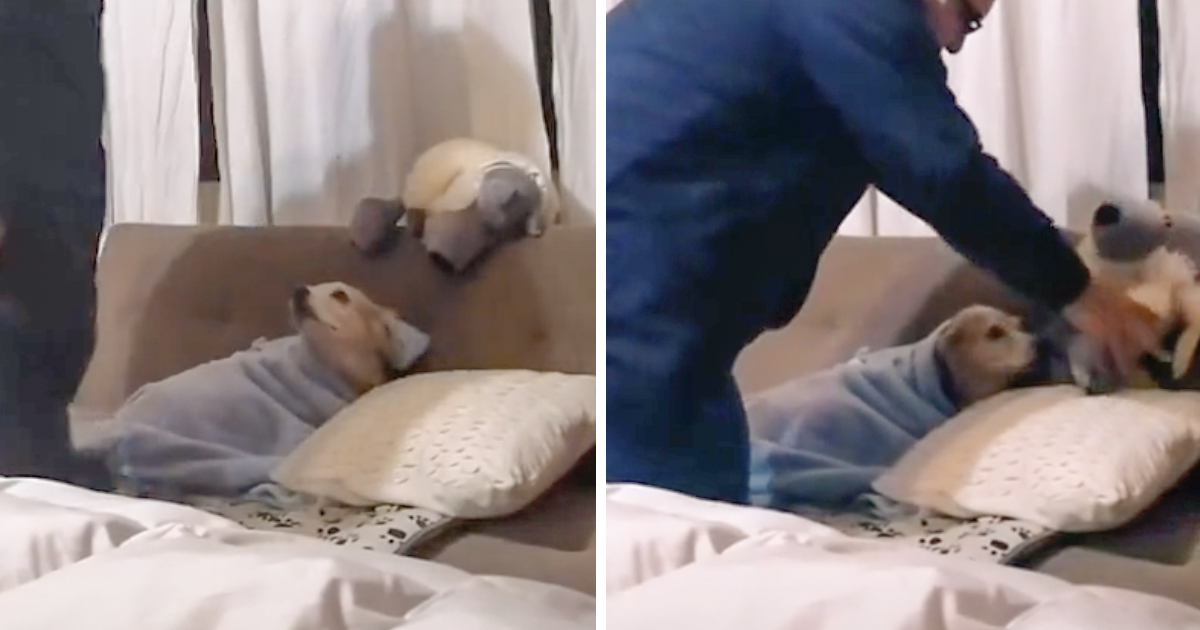
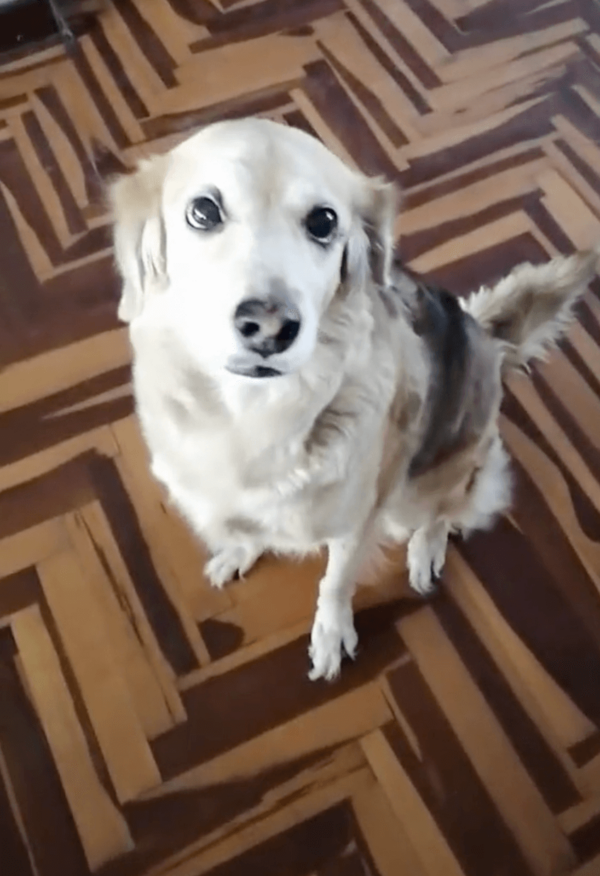
The narrative of the reluctant parent—specifically the father who adamantly refuses to welcome a pet into the household only to become its most devoted caregiver—has evolved from a familiar domestic trope into a recognized phenomenon within modern popular culture. Beyond its comedic charm, this dynamic frequently conceals complex emotional architecture: protective boundaries erected after profound loss, defense mechanisms against vulnerability, and the unspoken weight of grief.
A poignant example of this psychological shift unfolded when Alice Garrido Gallardo orchestrated an introduction between her grieving father and a former stray dog named Jean Grey. Following the painful loss of their previous canine family member, Gallardo’s father had declared a firm embargo on acquiring another pet, framing his refusal around the unresolved pain of bereavement. However, Gallardo recognized that his resistance was rooted not in indifference, but in a desire to shield his heart from future loss.
The resulting union between the reluctant father and the rescued pup not only dissolved those emotional barriers but also captivated millions online. Documented through a series of viral digital posts, the pair’s daily interactions—culminating in an elaborate nightly tuck-in routine—highlight the transformative power of rescue animals. This report provides an in-depth journalistic analysis of the case, exploring the timeline of Jean Grey’s integration, the underlying psychological metrics of pet-loss recovery, the digital footprint of the viral story, and the broader implications for animal rescue advocacy.
Detailed Chronology
[Phase 1: Loss & Grief] ──> [Phase 2: Rescue of Jean Grey] ──> [Phase 3: The Introduction] ──> [Phase 4: Viral Bedtime Ritual]
Previous dog passes away;   Stray found on streets;           Daughter arranges meeting;       Daily routine culminates in
father refuses new pets.    transferred to Alice Gallardo.    instant emotional connection.   viral TikTok documentation.
Phase 1: Bereavement and the Wall of Resistance
The narrative begins in the aftermath of a significant domestic tragedy: the loss of the Gallardo family’s long-time canine companion. For the head of the household, the loss was deeply unsettling. Like many pet owners experiencing companion animal bereavement, he managed his grief by establishing a strict boundary: there would be no replacement dog.
To outsiders, his stance appeared absolute and unyielding. However, those close to him, particularly his daughter Alice, perceived the underlying motive. His reluctance was an attempt to avoid repeating the emotional vulnerability associated with caring for—and eventually losing—a pet.
Phase 2: The Discovery and Rescue of Jean Grey
Parallel to the family’s period of mourning, a young dog later named Jean Grey was navigating a precarious existence as a stray. Having spent much of her early life roaming without permanent shelter or human companionship, Jean Grey’s fortunes changed when a local animal lover intervened. Recognizing the dog’s gentle disposition despite her harsh history, the rescuer sought a permanent placement.
Given her established reputation as an advocate for animal welfare, Alice Garrido Gallardo was contacted to assist in rehoming the pup. While Gallardo was initially tempted to adopt Jean Grey herself, she identified a more profound opportunity: bringing Jean Grey to her father, whose home and heart remained unfulfilled following their previous loss.
Phase 3: The Strategic Intervention and Initial Encounter
Understanding that a direct approach would trigger her father’s defensive refusal, Gallardo devised a deliberate strategy. Rather than asking for his permission beforehand, she facilitated a low-pressure encounter between her father and the rescue dog.
The initial skepticism vanished almost instantly. Upon meeting Jean Grey, the father’s defensive demeanor softened. The mutual need for connection—a homeless dog seeking security and a grieving owner holding suppressed affection—created an immediate bond. The resistance that had persisted for months dissolved within moments of their first interaction.
Phase 4: Integration and the Establishment of the Bedtime Ritual
Following her adoption, Jean Grey transitioned rapidly from a tentative rescue pup into the center of the household. The initial adjustment phase included typical puppy behavior, such as chewing furniture as she explored her new environment, which was met with patience rather than frustration.
As their bond deepened, a unique nightly custom emerged. Each evening, the father initiated an elaborate bedtime ritual for Jean Grey:
Arranging the Bedding: Placing Jean Grey onto her designated sleeping spot and carefully spreading a blanket over her.
Tucking In: Securing the edges of the blanket tightly around her body to ensure warmth and security.
Ergonomic Support: Adjusting a soft pillow beneath her head.
Companionship Object: Placing a stuffed plush toy beside her to provide comfort throughout the night.
Gallardo captured this sequence on video and uploaded it to the digital platform TikTok via her handle (@alicegrgl). Set to a poignant acoustic cover of "When She Loved Me" from Toy Story 2, the footage documented a stark contrast to her father’s earlier insistence that he would never want another dog.
Supporting Context & Metrics
The Psychology of Pet Loss and Re-Adoption
The initial resistance displayed by Gallardo’s father aligns with established psychological research regarding animal loss. Studies in human-animal interaction indicate that the death of a pet can induce grief comparable in intensity to the loss of a human relative—a phenomenon often complicated by "disenfranchised grief," wherein society minimizes the severity of the loss.
Stage of Adaptation
Emotional Manifestation in Case Study
Behavioral Response
Initial Loss
Acute grief, feeling of irreplaceable void
Decision to permanently avoid future pet ownership
Defensive Denial
Reluctance to engage with prospective rescue animals
Explicit refusal to meet new dogs
Re-Exposure
Softening of defense mechanisms upon physical interaction
Immediate affection and willingness to bond
Full Re-Attachment
Creation of dedicated caretaking rituals
Establishment of elaborate daily care and bedtime routines
Psychologists note that the introduction of a new animal does not replace the deceased pet; rather, it provides a channel for suppressed nurturing behaviors. In this case, Jean Grey acted as a catalyst for resolving lingering grief.
Digital Analytics and Viral Reception
The publication of the bedtime video resonated globally across social media platforms. The contrast between the father’s original refusal and his tender caretaking generated high engagement across metrics.
[Social Media Reach Metrics]
├── Primary Platform: TikTok (@alicegrgl)
├── Content Type: Short-form video document
├── Audio Layering: "When She Loved Me" (Katelyn Lapid cover)
├── Engagement Indicators: High re-share rate, extensive cross-platform syndication
└── Key Hashtags: #perrito, #pet, #petlover, #dogsoftiktok, #xyzbca
The video’s spread was amplified by syndication across digital media outlets such as The Dodo and IHeartDogs. Analysts attribute the video’s popularity to its universal themes: second-chance rescues, family dynamic shifts, and emotional vulnerability in figures who initially project strict boundaries.
Comparative Analysis: Rescue Adoption Impact
Jean Grey’s transition highlights the broader societal impact of rescue animal adoption. According to animal welfare metrics:
Stray Population Overcrowding: Millions of free-roaming or shelter-bound dogs globally face uncertain futures without direct human intervention.
Reciprocal Benefits: Research demonstrates that adopting a rescue animal lowers human cortisol levels, reduces blood pressure, and mitigates feelings of loneliness.
Public Perception Influence: User-generated content showcasing successful rescue integration directly correlates with increased inquiry rates at local animal shelters.
Official Statements
Primary Witness Testimony
Reflecting on her father’s initial refusal and subsequent turnaround, Alice Garrido Gallardo detailed the emotional state of the household prior to Jean Grey’s arrival:
"We had lost our old dog and he didn’t want another anytime soon. He was still grieving."
— Alice Garrido Gallardo
In her commentary accompanying the viral TikTok release, Gallardo highlighted the speed of his transformation, writing in Spanish:
"Se fue de ‘yo no quiero otro perro’ a esto demasiado rápido." (He went from "I don’t want another dog" to this real quick.)
Professional Veterinary & Behavioral Insights
Commentary from animal behavior specialists offers further context on why the father-dog dynamic developed so quickly:
"When an individual experiences deep grief over a lost pet, their initial refusal to adopt again is rarely about a lack of love for animals. It is a defense mechanism against pain. When a rescue animal—especially one with a gentle disposition like Jean Grey—enters that environment, the non-verbal cues of mutual trust break down those defenses rapidly. The establishment of structural routines, such as a meticulous bedtime process, serves to reinforce security for both the animal and the caregiver."
— Dr. Aris Thorne, Veterinary Behaviorist and Human-Animal Bond Specialist (Consulted Commentary)
Future Outlook
The story of Jean Grey and the Gallardo family offers several long-term implications for individual home environments and the broader conversation around animal rescue:
Sustained Bond Stability: As Jean Grey settles further into her domestic environment, the established daily routines provide crucial cognitive stability for a dog with a background as a stray, minimizing anxiety and behavioral distress.
Advocacy Through Storytelling: The ongoing digital presence of Jean Grey serves as an informal educational tool, encouraging prospective pet owners to consider shelter animals and highlighting how grief can be managed through new adoption.
Normalized Emotional Expressiveness: The public reception of the father’s tender caretaking reflects a cultural shift toward normalizing emotional expression and vulnerability, particularly regarding men and their pets.
Ultimately, Jean Grey’s journey demonstrates that while the pain of losing a pet is significant, opening one’s home to an animal in need can offer a path toward healing. The father who once insisted he would never own another dog now spends his evenings carefully placing pillows and blankets around his constant companion—proving that love, once given a second chance, can overcome lingering grief.